REVIEW · DELPHI
Delphi: Audiovisual self-guided tour with 3D models
Book on GetYourGuide →Operated by Culture App · Bookable on GetYourGuide
Delphi feels closer when your phone speaks. This self-guided audiovisual experience brings 6th-century BC mythology to life with 3D models and audio narration in multiple languages. You’re not just reading about the oracle of Apollo—you’re watching, listening, and turning ruined stone into something you can actually picture.
I also like that the tour is structured around monuments, not vague “walk around and hope” sightseeing. You get an integrated map plus written info, audio tracks, 360° panoramic views, and videos tied to specific stops. One thing to consider: it’s smartphone-dependent, and you need internet access (and enough storage) to make the most of it.
In This Review
- Key highlights at a glance
- How Delphi’s oracle story makes sense with 3D and 360° views
- Apollo’s sanctuary and the oracle: your self-guided “main storyline”
- Pythia and bay leaves: turning legend into a moment you can picture
- Sculpture stops you can actually recognize: Charioteer and Sphinx of Naxos
- The Pythian Games: why Delphi was more than an oracle stop
- What the Culture App format gives you on-site
- Practicalities: getting to Delphi and setting up your phone
- Price and value: what $7.89 buys you (and what it doesn’t)
- Who this self-guided Delphi tour suits best
- Should you book this Delphi audiovisual self-guided tour?
- FAQ
- Is the Delphi entrance fee included?
- What languages is the audio guide available in?
- Do I need internet to use the tour?
- How much storage does the tour need on my phone?
- What phones work for this self-guided tour?
- Can I use the tour content before or after my visit?
Key highlights at a glance
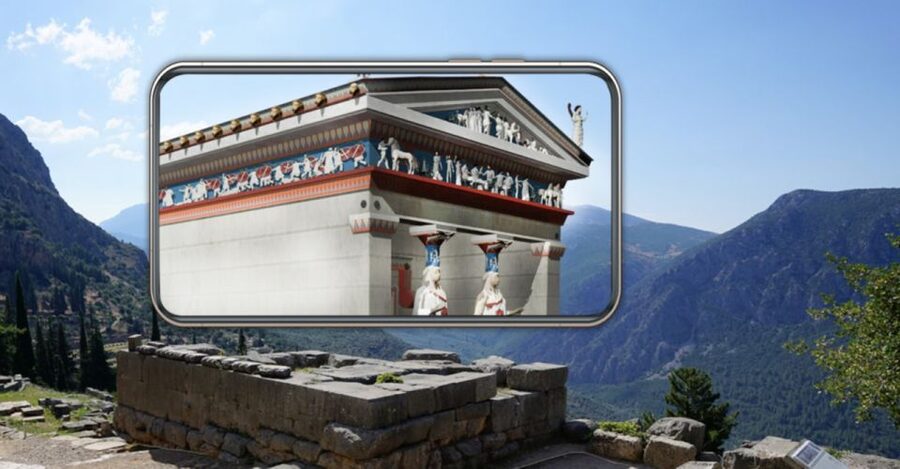
- 3D models for 14 monuments that help you visualize what’s missing or broken
- 360° panoramic views from 14 spots, so you can understand where you stand
- Apollo and the oracle of Pythia, including the bay-leaf divination angle
- Famous art stops like the Charioteer of Delphi and the Sphinx of Naxos
- Festival context on the Pythian Games, one of antiquity’s major panhellenic events
- A large bundle of extra facts (a gift of 68 written and audio culture notes)
How Delphi’s oracle story makes sense with 3D and 360° views
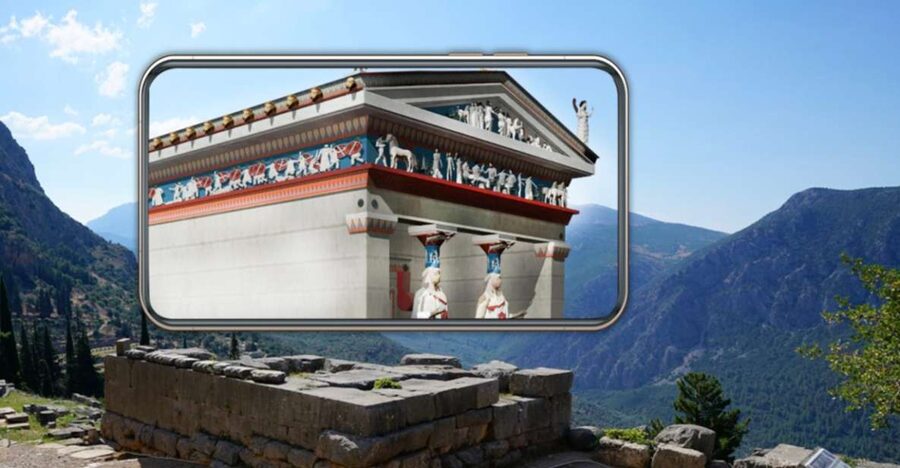
Delphi is one of those places where your brain keeps asking basic questions: What am I looking at? Where was this in relation to that? What did it feel like in the days when people traveled here on purpose?
This tour answers those questions in a practical way. Instead of relying only on your eyes and a few signs, you’ll get audiovisual content tied to monuments across the site. The 3D models help you picture structures as they once looked, and the 360° panoramic views make you orient yourself fast—less wandering, more understanding.
The other big advantage is pacing. You can move at your speed and replay audio when you want to catch a detail again. And because the guide content includes audio narration across many monuments, you’re not constantly reading and trying to watch your footing on uneven ground.
If you want Delphi to feel like a guided walkthrough without paying for a live group tour, this format is a strong match.
You can also read our reviews of more tours and experiences in Delphi.

Apollo’s sanctuary and the oracle: your self-guided “main storyline”
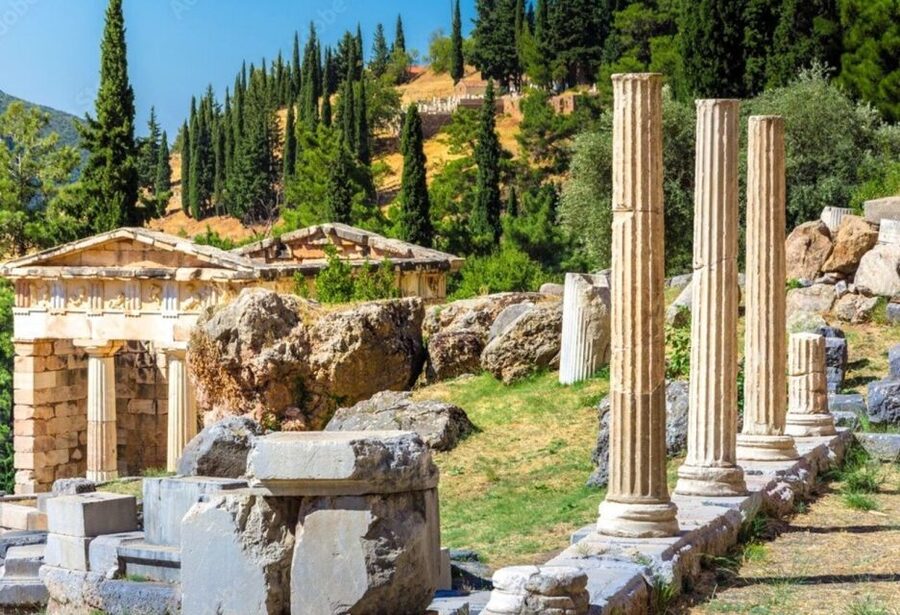
The heart of the experience is Apollo’s sanctuary and Delphi’s long-running oracle tradition. Delphi mattered for roughly a thousand-plus years in the ancient Greek world, and this tour is built around that core story.
Here’s how to get the most out of this section while staying self-guided:
First, follow the monument prompts through the integrated map. Each stop comes with written historical information and, for many monuments, audio explanation plus visuals. That matters because Delphi’s layout can be confusing if you’re only using generic pointers.
Second, pay attention to the legend that connects Delphi to the “navel of the world” idea. The story says Zeus sent two eagles from opposite ends of the universe, and they met at the foot of Mount Parnassos—making Delphi the symbolic center. Even if you treat myths as myths, it explains why people kept coming back for answers.
Third, focus on Apollo as more than a name. The content frames Apollo as the god of the sun and music, then ties that to why the sanctuary became an oracle site. Once you connect Apollo to the setting, the whole place starts feeling intentional.
Finally, don’t rush the oracle portion. The seeress—Pythia—is central, and this tour specifically includes the bay-leaf detail tied to the divination process. You’ll get much more from the story when you pause long enough to let the audio and visuals do their job.
Pythia and bay leaves: turning legend into a moment you can picture
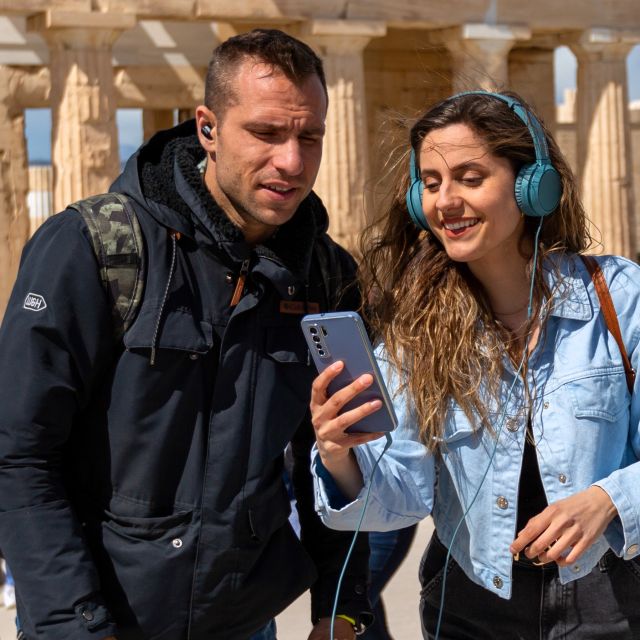
One reason Delphi stays famous is that it wasn’t just temple architecture and sculpture. It was a service—people came from far away to ask questions and seek guidance.
The tour’s treatment of Pythia helps you understand what kind of moment this was supposed to be. You’re guided through the oracle idea via narration and supporting content that emphasizes the eccentric priestess role and the bay leaves used in the divination.
For you, the payoff is simple: you start to “see” the social theater of it. This wasn’t a casual stop on a travel route. People flocked to Delphi across the ancient world to receive an oracle, which means the experience of arriving, waiting, and interpreting the answer was part of the drama.
Self-guided format means you can linger here. If you get a strong mental picture from the audio, stay put and re-check the monument info until it clicks.
Potential drawback: if you’re hoping for step-by-step reenactment or a live actor scenario, you won’t get that. This is media-based interpretation. But the tradeoff is freedom, and the content is structured to keep you from getting lost.
Sculpture stops you can actually recognize: Charioteer and Sphinx of Naxos
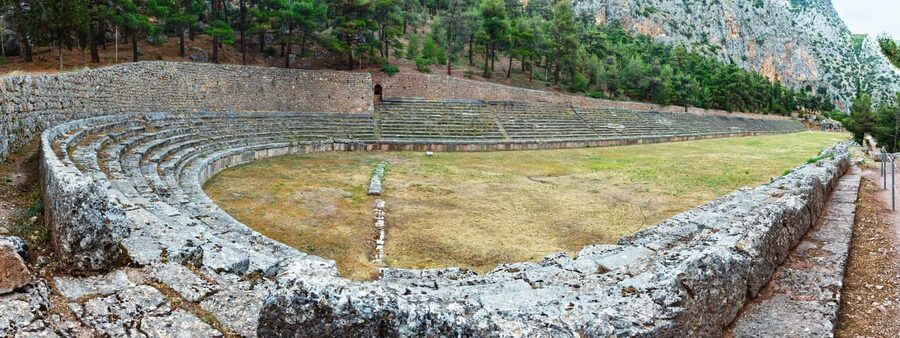
Delphi isn’t only about temples and myths. It’s also a key place for ancient art, and this tour highlights some of the most recognized works.
Two of the standouts named in the content are:
- Charioteer of Delphi
- Sphinx of Naxos
These names matter because they give you anchors. Instead of walking through stone fragments and wondering what matters most, you have specific works to look for—and the 3D models help you understand what you’re seeing even when pieces are worn, damaged, or partially restored.
How to use this section well:
- Slow down at each monument and match the physical view to what the 3D model suggests.
- Use the 360° panoramic views to understand positioning. Sculpture doesn’t exist in a vacuum—where it sat, how it was viewed, and what it faced changes how it lands in your mind.
- Listen to the audio narration first, then read the monument notes if you want extra context.
The Charioteer name alone tells you this is not generic sightseeing. You’re dealing with an artwork with enough fame that it’s likely on many art lovers’ wish lists. The Sphinx of Naxos similarly signals that Delphi was not just a religious site; it was also a stage for dedication and high-level craftsmanship.
The Pythian Games: why Delphi was more than an oracle stop
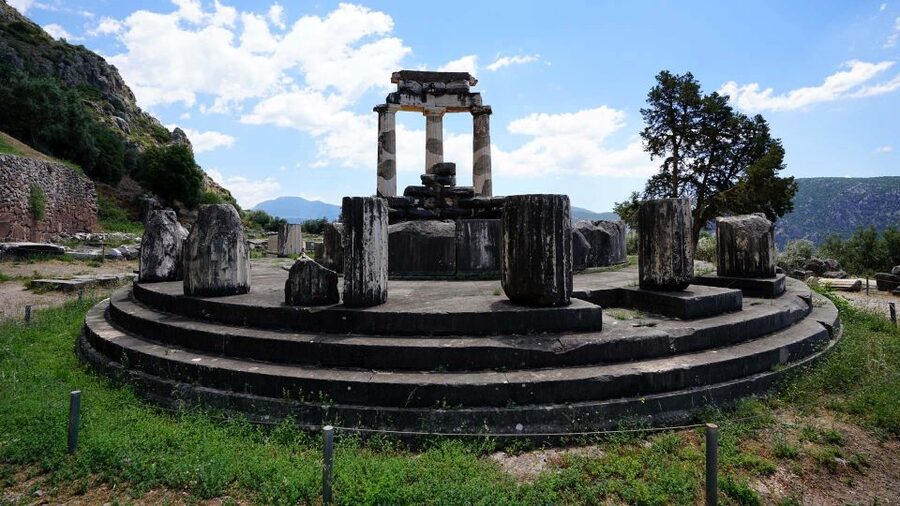
The oracle draws people in, but the sanctuary’s life didn’t stop at prophecy. Delphi hosted the Pythian Games, described here as one of the biggest panhellenic festivals in antiquity.
This is the part you’ll feel in your imagination more than anything physical, because festivals are about energy—crowds, rituals, competition, music, and public ceremony. A self-guided app can’t recreate the noise, but it can give you the missing framework so you’re not just staring at empty space and guessing what happened there.
When you reach the game-related content, look for these connections:
- Apollo’s cultural identity (music and sun) fits naturally with a major festival.
- A panhellenic event implies wide interest across the Greek world, similar to how the oracle pulled in visitors from far away.
- The site’s religious power overlaps with civic pride and public performance.
If you enjoy history when it’s more than dates—if you like the “how would this have felt?” side—this section is likely to be one of your favorite moments.
What the Culture App format gives you on-site
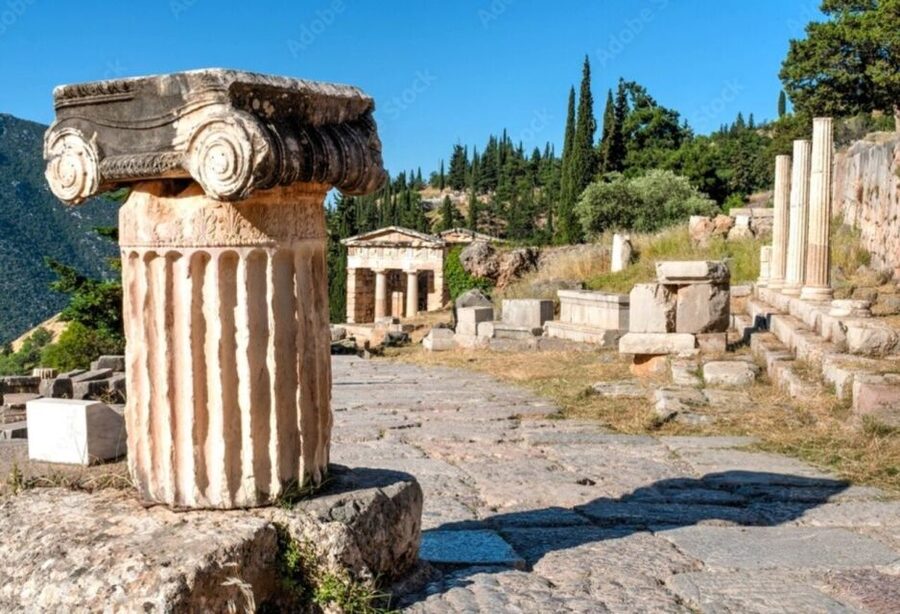
The mechanics of the tour are actually part of the value. You’re getting a structured system for learning without a guide standing over you.
Here’s what’s included for monument-by-monument understanding:
- An integrated map for monument identification
- Written historical info for 16 monuments
- Audio historical info for 14 monuments
- 3D models for 14 monuments
- 360° panoramic views from 14 monuments
- Immersive videos for 14 monuments (video-driven context to clarify what you’re seeing)
- Related stories for 12 monuments
Then there’s the extra “gift” bundle: 68 written and audio facts and culture notes about ancient Greece. That’s helpful when you want to keep learning during downtime on your way through the site.
Language options are also a big deal for a self-guided experience. Audio narration is available in English, Spanish, Greek, German, Italian, Dutch, French, and Chinese. If you’ve struggled to match your listening language to your surroundings in other apps, this list covers a lot of bases.
Practicalities: getting to Delphi and setting up your phone
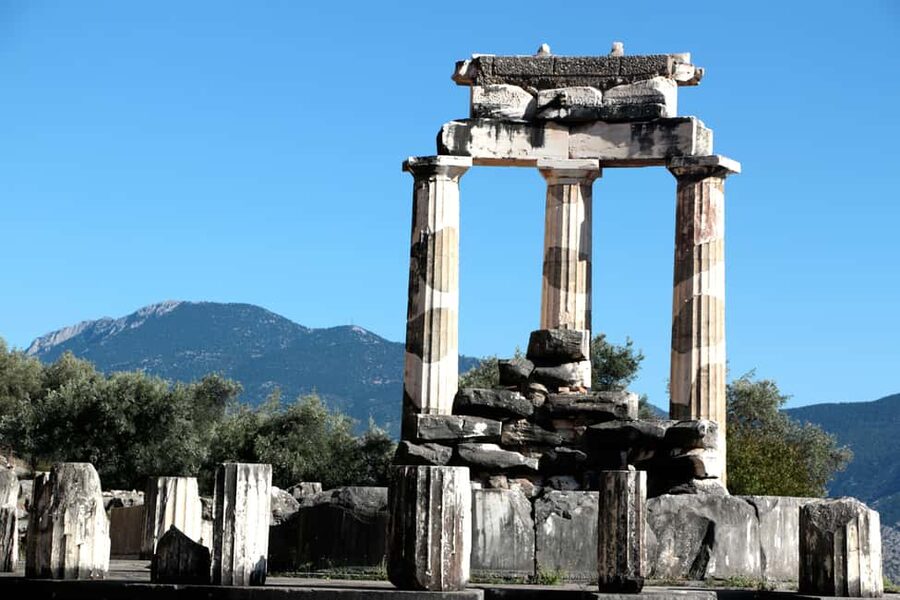
Delphi’s meeting point is designed around getting you to the archaeological site area. The easiest plan is by car or taxi: take the exit to Livadia after the Athens–Thessaloniki motorway. If you’re using maps and GPS, there are other indicated options too, and public transport by bus is also available.
A practical strategy: pick your transport method first, then handle the phone setup. Self-guided tours feel easy when the tech is ready and annoying when it isn’t.
Before you go:
- Bring a charged smartphone.
- Bring water and a sun hat.
- Wear comfortable shoes.
- Make sure you have earphones, since smartphone/headphones aren’t included.
Tech requirements you should take seriously:
- You need internet access to use the tours effectively.
- Download the tour content while on Wi‑Fi before your visit if possible.
- You need about 200MB of storage space.
- iOS 11.0+ or Android 5.1+ is required.
After booking, you’ll receive an email from the tour provider with instructions to download the content. Check your spam folder. That one step prevents a lot of last-minute frustration.
Price and value: what $7.89 buys you (and what it doesn’t)
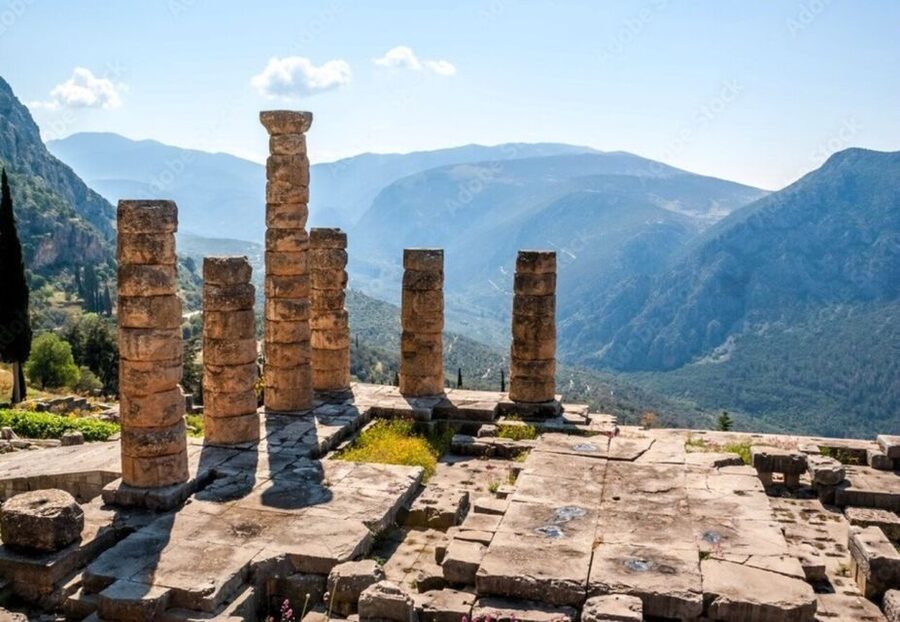
At $7.89 per person, this is priced for the content access itself—not for site entry. Entrance fees are not included, so you’ll still need to handle any required admission separately.
So is $7.89 worth it? For many people, yes, because you’re not just buying audio. You’re buying a package that includes:
- Audio for 14 monuments
- Written info for 16 monuments
- 3D models and 360° views for 14 monuments
- Videos tied to multiple stops
- Extra culture facts (68 pieces)
If you’re the type who likes to understand what you’re looking at—especially in a complex site like Delphi—this format can save you from doing your own research on the fly. You also avoid the cost and scheduling hassle that can come with guided tours.
If you’re expecting a live guide, this won’t replace that. But if you want control, flexible timing, and a clearer route through the site, the value is in the structure of the media.
Who this self-guided Delphi tour suits best
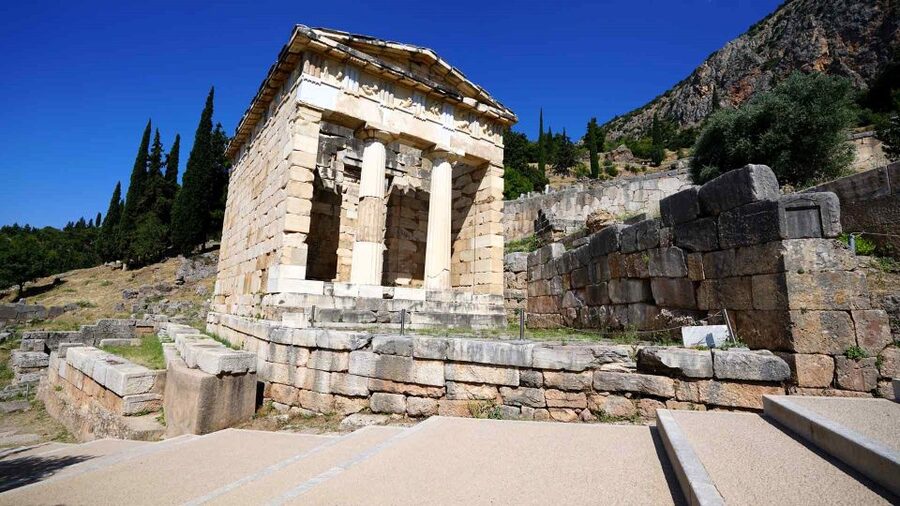
This tour fits best if you:
- Want to learn about Delphi’s oracle tradition and major art and festival touchpoints without committing to a tour schedule.
- Enjoy audio explanations and want multiple language options.
- Like using visuals to interpret ruins, not just reading placards.
- Prefer self-paced stops so you can linger at Apollo-related content and sculpture moments like the Charioteer and Sphinx of Naxos.
It may feel less satisfying if you:
- Prefer a person-led guide to answer questions on the spot.
- Don’t want to manage a smartphone during your visit.
- Don’t plan to handle internet requirements and downloading ahead of time.
Should you book this Delphi audiovisual self-guided tour?
I’d book it if you’re coming to Delphi with curiosity and you want a guided-feeling experience without paying for a live guide. The mix of 3D models, 360° views, audio narration, and monument-based structure is exactly what you need to make Delphi readable. It’s especially strong for the Apollo oracle story, Pythia’s bay-leaf element, and named art highlights like the Charioteer and Sphinx of Naxos.
I’d skip it only if you know you’ll struggle with smartphone setup, storage, or internet access. If you can handle basic tech prep—download on Wi‑Fi when you can, charge your phone, bring earphones—you’ll likely get your money’s worth quickly.
FAQ
Is the Delphi entrance fee included?
No. Entrance fees are not included, so you’ll need to pay any required site admission separately.
What languages is the audio guide available in?
The audio guide is available in English, Spanish, Greek, German, Italian, Dutch, French, and Chinese.
Do I need internet to use the tour?
Yes. Internet access is required to use the tours effectively. The instructions also suggest downloading the content on Wi‑Fi before your visit if you can.
How much storage does the tour need on my phone?
You’ll need approximately 200MB of storage space.
What phones work for this self-guided tour?
It requires iOS 11.0 or later or Android 5.1 or later.
Can I use the tour content before or after my visit?
Yes. The self-guided tour can be used anywhere and anytime, before, during, or after your visit.