REVIEW · EAST OF ENGLAND
Letchworth Garden City: Self-Guided History Puzzle Walk
Book on Viator →Operated by Questo · Bookable on Viator
A walk that turns history into a game. I like how this self-guided puzzle walk lets you explore Letchworth Garden City at your own pace while learning the real story behind iconic sites. I also love that it works like an outdoor escape challenge with offline play, so you’re not stuck hunting Wi‑Fi. One thing to consider: you’re doing the work yourself. If you want a person to explain everything step by step, this is not that kind of tour.
What makes it extra workable is the flexibility built in. You can choose your start time, take a break, and come back later, and the format is private so you can dodge the worst of the crowd energy. Expect an easy-to-moderate walking loop, lots of looking around for clues, and a few moments where you might even spot local wildlife (people mention black squirrels along the way).
In This Review
- Key highlights to know before you go
- Why Letchworth turns into a great puzzle walk
- Price and timing: what $5.90 gets you in real value
- Starting at Station Place: the first clue ties to 1903–1913
- Broadway Gardens and Walk: how Howard’s ideas show up in layout
- The History of the College: why a Belgian order reached Letchworth
- The cinema stop: from a 1909 Palace to a 1936 opening gala
- Church of St Mary the Virgin: medieval roots in the middle of town
- International Garden Cities Institute: planners’ offices and worldwide influence
- St Michael’s Church: mission church history that connects different eras
- How to play the offline puzzle smoothly (and not get stuck)
- Who this self-guided walk suits best
- A few practical notes before you go
- Should you book this Letchworth puzzle walk?
- FAQ
- How long is the Letchworth Garden City self-guided history puzzle walk?
- How much does it cost?
- Do I need internet access to play?
- Can I choose my own start time?
- Is there a physical guide with you during the walk?
- Can I get a full refund if I cancel?
Key highlights to know before you go
- Offline puzzle play: You can use it without an internet connection, which makes for a smoother walk.
- Private, no human contact: You’re with only your group, so it feels low-stress and crowd-light.
- History + escape-game style clues: Each stop turns a landmark into a solvable question.
- Flexible timing: Start at any hour and pause/resume whenever you want.
- Garden City planning in the mix: You’ll hit the early station story, major gardens, churches, a cinema, and planner-related sites.
Why Letchworth turns into a great puzzle walk
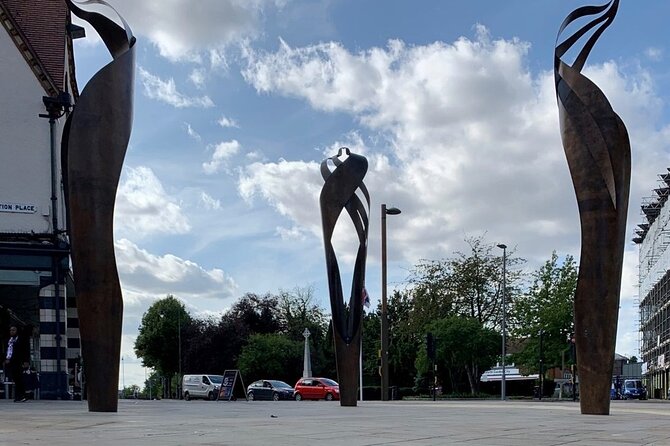
Letchworth Garden City is the kind of place where the streets and buildings carry meaning. But instead of handing you a script, this experience makes you earn the story. You walk from one meaningful spot to the next, and at each one you look around to find the answer to a challenge.
That changes how you experience architecture. A church stops being just a church. A garden layout stops being just pretty. You start noticing details that you’d normally glide past, like dates, institutional history, and how design decisions shaped a whole community.
The format is also practical for real travel days. No waiting around for a group. No clock-punching. You can stretch it if you want photos, or shorten it if you only have an hour and change.
Price and timing: what $5.90 gets you in real value
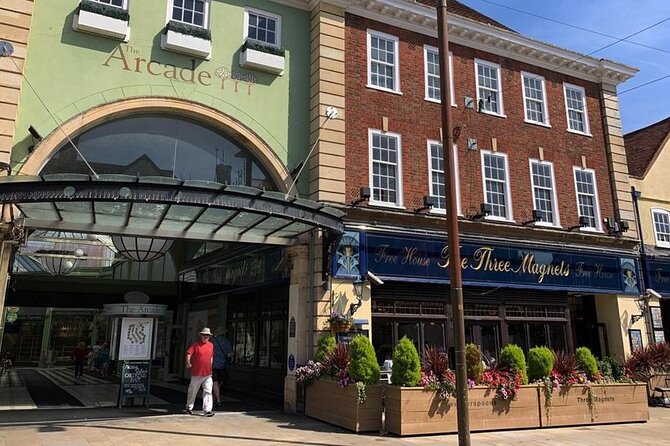
The price is $5.90 per person, and for a self-guided activity, it’s hard to beat. You’re paying for two things: access to a game-style route and the convenience of doing it on your own schedule.
The tour runs about 1 hour 30 minutes on average. That’s a sweet spot. Long enough to feel like you did something meaningful, short enough that you won’t dread getting back to your next plan.
You’ll also see that the experience is designed for flexibility. Start at any hour, resume after a break, and keep going when your energy returns. For families, this matters. For couples, it matters too. For anyone traveling with a phone that needs occasional rest, it matters even more.
Starting at Station Place: the first clue ties to 1903–1913
Your walk begins near Station Place (Station Pl) in Letchworth Garden City. The first stop focuses on the original station story. It opened in 1903 with a restricted service, then gained a full passenger service on 15 April 1905, and later was replaced on 18 May 1913 by a station at a different site.
This is a smart opening. It roots the whole day in the town’s transport heartbeat. Garden City stories often get framed as pure design ideology. Here, you get the practical reality: places form around movement, access, and jobs, and stations are usually where that starts.
Your job is simple: look around the station area and find the answer that moves you forward. I like openings like this because they set your brain to puzzle mode fast. If you’re visiting for the first time, you also get immediate orientation for the rest of the route.
Broadway Gardens and Walk: how Howard’s ideas show up in layout
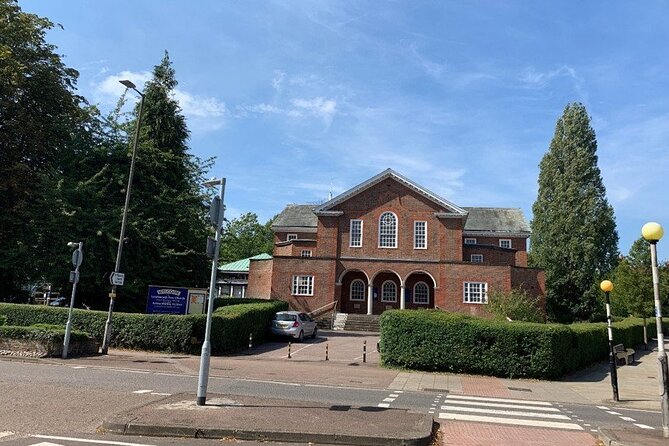
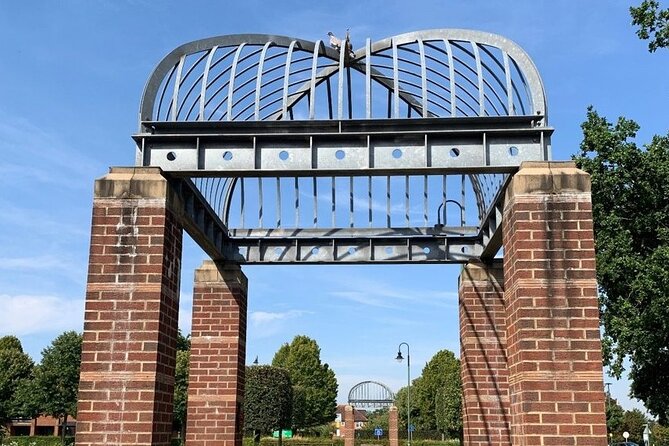
Next you head toward Broadway Gardens and Walk. The garden space was developed after the town received a £1 million grant from the Heritage Lottery Fund. What makes this stop more than a nice stroll is the link to Ebenezer Howard, whose principles and design ambitions fed into the world’s first Garden City.
Even if you don’t know much about Howard, you’ll see why planners’ ideas matter here. The gardens aren’t just decoration. They represent a specific way of thinking about healthy community life—space, breathing room, and a layout that supports how people actually move.
Again, you’re hunting for an answer on-site. This “look around and solve” method does something subtle: it nudges you to read the space itself as information. You start noticing edges, pathways, and how the layout encourages strolling rather than rushing.
The History of the College: why a Belgian order reached Letchworth
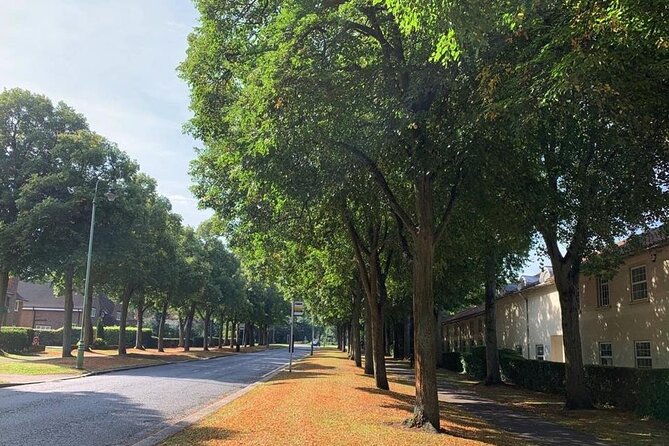
One stop shifts from design to people and institutions: the History of the College. The order behind it was founded in 1803 in Belgium by Canon Triest and grew through international outposts via missions. In the UK, the Sisters were already running schools in Devon and Lancashire, and a Letchworth site became part of the picture when it came to their attention.
This is the kind of history that adds depth without turning the day into a textbook. It helps you understand how a town with big planning ideals still had to build schools, care systems, and everyday community institutions to keep functioning.
For the puzzle, you’re again looking around for the specific clue that advances you. It’s a good reminder that history lives in more than statues. It lives in mission work, education, and the quieter infrastructure of daily life.
The cinema stop: from a 1909 Palace to a 1936 opening gala

Then you’ll reach the cinema story. The dates here are specific and fun. The cinema dates back to 1936, after the neighboring Palace Cinema (built in 1909) struggled to fit the local crowds. The 1936 opening featured a black-tie gala screening of Follow the Fleet, starring Fred Astaire and Ginger Rogers.
This stop is great if you like social history—the kind that tells you what people did for fun and how entertainment evolved as the town grew. A cinema is a cultural barometer. It reflects population pressure, changing tastes, and the development of local infrastructure.
Your challenge is still straightforward: look around and answer the puzzle question tied to this site’s story. The payoff is that you’ll connect the Hollywood name-dropping to a real, local reason. This isn’t just trivia; it’s a small window into how community life scaled up.
Church of St Mary the Virgin: medieval roots in the middle of town

The route includes the Church of St Mary the Virgin, described as the former Church of England parish church for Old Letchworth. The current church is from the late 12th century and is Grade II listed, under the Diocese of St Albans.
Church stops can go two ways on a self-guided activity. They can either feel like a quick photo and move on, or they can become a meaningful chapter. Here, it’s set up to become a chapter. The age of the building alone tells you this community had deep roots, even before Garden City branding became a headline.
For the puzzle, you’ll look around to find the answer the challenge wants. I recommend slowing down here. Even without reading every label, you’ll notice that older churches often have features that feel deliberate and permanent in a way newer buildings don’t.
International Garden Cities Institute: planners’ offices and worldwide influence
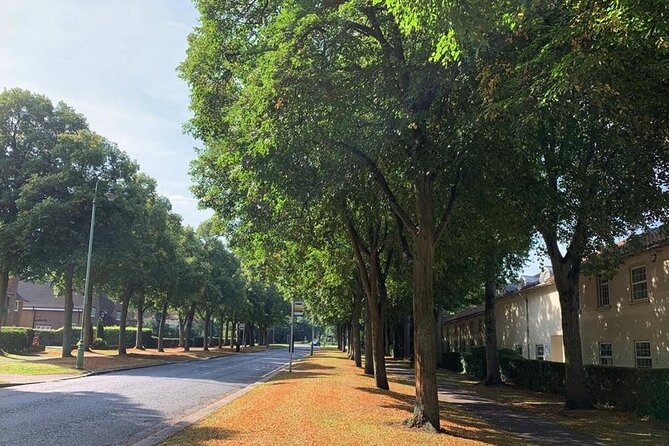
A major highlight of the walk is the International Garden Cities Institute on Norton Way South. It’s positioned as the ideal start for your understanding of the Garden City story, and it carries that credibility because it was formerly the offices of Letchworth’s town-planners and architects: Raymond Unwin and Barry Parker.
This matters because you’re not only learning what Garden Cities became. You’re walking where some of the planning thinking happened. You can trace how Letchworth’s streets and open spaces were designed, and you can also explore how Letchworth influenced other Garden City developments around the world.
Your puzzle answer still comes from observation on-site. That’s key. It’s the difference between passively reading and actively paying attention. If you like architecture and planning, this stop is the one you’ll likely remember after the walk ends.
St Michael’s Church: mission church history that connects different eras
The final church stop is St. Michaels Church. It was dedicated on 22 February 1908 and designed by Courtenay Crickmer. It started as a mission church to St Mary’s. Later, it developed a permanent site on Town Square between 1966–68.
This is a nice closing chapter because it shows how towns evolve by adding needs over time. Even when a plan is “the big idea,” communities still have to grow, shift, and reorganize services as the population changes.
For the puzzle, you’ll look around and find the answer that advances you to completion. I like the way the route ends with this sort of layered story. It leaves you thinking about Letchworth not as a museum of early ideas, but as a living place where new chapters keep getting written.
How to play the offline puzzle smoothly (and not get stuck)
This experience is built around a mobile game format, with offline play and a mobile ticket. That’s useful because you can keep your attention on the walk, not your data plan.
Here’s how I suggest you make it enjoyable rather than frustrating:
- Start with comfortable shoes. It’s a walking tour, and you’ll spend time looking closely at stops.
- Read the clue once, then look around deliberately. Don’t scan like you’re speed-running.
- If you’re stuck, use any hints provided inside the game. The goal is to keep the momentum.
- Take a break if you need one. The experience supports pausing and resuming, and it works well when you’re traveling with kids or a slower pace.
A fun detail from real play: several people mention seeing black squirrels along the way. You might get lucky, and it adds a playful “local legend” feeling to the route. Even if you don’t spot one, the walking and problem-solving are the main event.
Who this self-guided walk suits best
This is a strong fit if you want:
- A low-crowd activity with a private setup (only your group participates).
- History without a lecture, because the story is embedded in puzzles.
- Something family-friendly, since kids can enjoy the hunt-style format.
It’s also a good choice for travelers who like independent time. You pick the start, you control the pace, and you don’t have to coordinate with a guide’s schedule.
One caveat: because there’s no physical tour guide, you’ll have to accept that you’re the interpreter. The game gives you prompts, but it won’t replace the in-person context a dedicated guide might provide.
A few practical notes before you go
The experience is offered in English and is described as open every day with flexible start times. The meeting point is near public transportation, which helps if you’re building a bigger day around Letchworth.
You’ll also see that service animals are allowed, and the activity says most travelers can participate. Since the format involves walking between sites and looking around for answers, you’ll want to plan for a comfortable strolling pace rather than a pure sightseeing ride.
Duration is listed at about 1 hour 30 minutes. If you’re prone to lingering for photos or chatting with locals, build in extra time.
Should you book this Letchworth puzzle walk?
I’d book it if you want Letchworth Garden City in a way that feels active, not passive. For the money, you get an offline, self-guided route that blends planning-era sites, churches, and even cinema history into a puzzle-and-treasure format. It’s also a smart pick when you’d rather avoid crowds but still want structure.
Skip it if you need a live guide to explain everything, or if you hate phone-based clue hunting. This experience is designed for people who enjoy solving, scanning, and turning a normal walk into a small quest.
If you’re visiting Letchworth and want a fun way to remember what you saw—especially the Garden City story from planning through daily life—this is an easy “yes” to consider.
FAQ
How long is the Letchworth Garden City self-guided history puzzle walk?
It takes about 1 hour 30 minutes on average.
How much does it cost?
The price is $5.90 per person.
Do I need internet access to play?
No. The tour is designed so you can play offline without an internet connection.
Can I choose my own start time?
Yes. The start time is flexible, and you can start at any hour.
Is there a physical guide with you during the walk?
No. This is a private, self-guided experience with no physical tour guide.
Can I get a full refund if I cancel?
Yes. You can cancel up to 24 hours in advance for a full refund. If you cancel less than 24 hours before the start time, the amount paid is not refunded.