REVIEW · LEEDS
Houdini’s Golden Handcuffs Leeds Self-Guided Treasure Hunt
Book on Viator →Operated by Mystery Guides · Bookable on Viator
One good mystery can turn a regular city walk into something memorable. This self-guided treasure hunt in Leeds turns the historic centre into a puzzle path, with 16 cryptic clues and a story that builds toward a final reveal.
I like that it’s pick your own start time and you move at your pace. I also love the way the route points you toward major landmarks like Leeds Corn Exchange, Victoria Leeds, and Leeds Cathedral, then asks you to notice details instead of just passing by.
One consideration: it’s meant to be solved on foot, so if you dislike walking (it’s about 3 km) or you want a full-service guided narration, this may feel a bit DIY.
In This Review
- Key things to know before you start
- What the Houdini Golden Handcuffs hunt is really like
- Leeds Art Gallery: your launchpad and your navigation anchor
- Leeds Corn Exchange: where the clues start to click
- Victoria Leeds: a puzzle route through the city’s “in-between” spaces
- Leeds Cathedral: solving while the city feels most dramatic
- The case-building arc and the wow moment at the end
- Walking distance, timing, and how to pace yourself
- What’s included: the booklet that does the heavy lifting
- The itinerary stops, in context (and where they could slow you down)
- Food, taverns, and keeping the hunt flexible
- Who this hunt is best for (and who might not love it)
- Practical tips to solve more smoothly
- Should you book Houdini’s Golden Handcuffs in Leeds?
- FAQ
- How long is Houdini’s Golden Handcuffs Leeds self-guided treasure hunt?
- Where does the treasure hunt start and end?
- What’s included in the experience?
- Do I need a guide with me?
- Is it suitable for people with moderate fitness?
- Are service animals allowed?
Key things to know before you start

- Self-guided format: you only need the mobile ticket and the 40-page booklet, not a live guide.
- 16 cryptic clues across the historic centre, with a story unfolding as you go.
- Landmark-rich route that includes Leeds Corn Exchange, Victoria Leeds, and Leeds Cathedral.
- Designed for a 3-hour finish with a moderate walking pace and a clear end back at the start.
- A case-ending wow moment where the villain is revealed before your eyes.
What the Houdini Golden Handcuffs hunt is really like
This isn’t a “follow the map and check boxes” walk. You’re working a case: solve clue after clue, narrow down who’s involved, and stay on track toward that final moment when the story closes. The adventure is built around a crime theme and a bit of theatrical suspense.
What makes it work so well is the balance. The clues are cryptic enough to feel like a real challenge, but the booklet gives you the structure—story, clues, historical notes, and maps—so you’re not stuck wandering without help. If you like figuring things out while you walk, it’s a fun way to see Leeds with your brain switched on.
You should also know the experience leans into atmosphere. It nudges you toward Leeds’ “hidden” layers and the kind of local storytelling that makes buildings feel like characters, not just backdrops.
Leeds Art Gallery: your launchpad and your navigation anchor
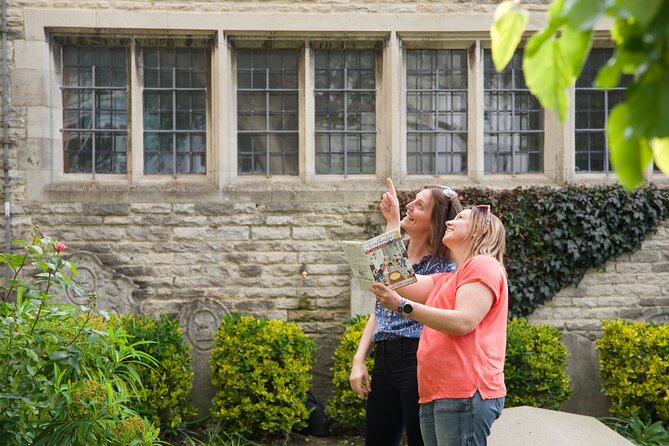
You begin outside Leeds Art Gallery on The Headrow (LS1 3AA). That’s helpful because it’s a clear, recognizable meeting point with long open hours listed, from early morning until late evening.
You also end back at the meeting point. That matters more than it sounds. It keeps the walk feeling contained and lets you plan dinner after without guessing how to get back.
From a practical standpoint, this is a good format for groups too. Since you’re solving together, you can spread out to spot details, then regroup to compare answers and theories.
Leeds Corn Exchange: where the clues start to click

Your first landmark is the Leeds Corn Exchange. This is a smart opener because it’s a place that naturally makes you look around—architecture, lines, and old-city character are the kind of setting that pairs well with cryptic clue hunting.
This is also where the story tone typically becomes clear. The booklet isn’t just a list of questions; it’s a “guided in print” narrative. As you start solving, you’re also absorbing the local historical snippets that make the city feel older and more layered than a quick sightseeing lap.
If you’ve ever walked through a famous building without really seeing it, this is the opposite. The format pushes you to pause. That pause is the whole point.
Victoria Leeds: a puzzle route through the city’s “in-between” spaces
Next up is Victoria Leeds. The route here helps you experience the contrast that makes Leeds interesting: major shopping/modern surroundings next to older street patterns and stories you wouldn’t automatically pick up.
A key tip: keep reading the clue directions carefully and don’t rely on memory. One review experience described having to adjust when seasonal changes made certain spots look different, and that’s common with any city walk. In practice, the easiest fix is to use the phone when you truly need it—especially for orientation—then get back to solving.
This is also a good stretch for taking your time. If you’re walking with friends, it’s where you can split tasks: one person reads the cryptic clue, another scans the immediate area for the exact detail the clue is pointing to, and you compare before you commit.
Leeds Cathedral: solving while the city feels most dramatic

Your third major stop is Leeds Cathedral. Even if you only view it briefly on a puzzle route, it adds gravity to the case. The hunt is clearly designed so the story escalates as you progress, and a place like this works naturally for that build.
This leg is also where the “eliminate suspects” feel starts to become more satisfying. You’re not just answering questions—you’re using answers as evidence. When you’re doing it right, you’ll start to see how earlier clues connect to what the final reveal is setting up.
If you’re the kind of person who likes looking up and around, this part can be extra fun. Reviews from people who did the trail in different seasons highlighted the value of scanning your surroundings—above eye level, along street edges, and in the details you normally walk past.
The case-building arc and the wow moment at the end

The final part of the hunt is the payoff: a case is solved and the villain is revealed before your eyes. That’s the signature of these Mystery Guides style experiences: you don’t just learn facts, you reach a conclusion that feels earned.
I think that wow factor is what keeps people recommending the hunt. It turns the walking time into a story you’re actively shaping. Even if some clues take longer than you expect, you’re still working toward a clear end point, not aimless sightseeing.
And because the experience ends back at your start point, you can easily wrap it up and celebrate with food. One review even described finishing at a pub that felt like a local favorite and noted the fun of taking photos outside to capture the ending moment—proof that the final section can be memorable even if you’re not planning to make a whole night of it.
Walking distance, timing, and how to pace yourself
The stated walking distance is 3 km, and the experience is about 3 hours. That’s a comfortable target for most people with moderate fitness, especially since the pace is flexible. You’re not being herded along; you’re pausing to solve.
Still, don’t underestimate “puzzle time.” Cryptic clues can slow you down if you want to be exact. One review described finishing in around 3 hours even with a pub stop, and another mentioned an expected duration that was longer than the clock because of clue-solving—so treat 3 hours as a good planning estimate, not a stopwatch promise.
If you go in wet weather, bring a light layer and keep your booklet dry. The hunt format is simple, but paper + drizzle isn’t a great combo.
What’s included: the booklet that does the heavy lifting
You get a 40-page activity booklet in English. It includes the story, clues, historical information, and maps. That’s a big deal because this is self-guided, so the booklet is your instructor, storyline, and navigation aid all at once.
The booklet also contains 16 cryptic clues, and the story gradually unfolds through the adventure. That design matters because it prevents the usual self-guided problem: you might solve a clue, but not understand why it matters. Here, each step pulls you closer to the final reveal.
You also have a mobile ticket, which helps with check-in and keeps everything light. You’re not hunting for paperwork at the start.
The itinerary stops, in context (and where they could slow you down)
Here’s the practical way to think about the stops:
- Leeds Art Gallery (start/end): easy anchor point and a comfy place to begin. If you want to do this as a date, you can also grab coffee or a quick bite before you start.
- Leeds Corn Exchange: a strong first puzzle setting because the environment encourages careful noticing. It’s also a spot where you can settle into the hunt style.
- Victoria Leeds: good for keeping momentum—less “museum” and more everyday city energy. This can be where you’ll notice changes in streetscapes during seasonal periods.
- Leeds Cathedral: a dramatic-feeling checkpoint that fits the mystery escalation. It also gives you a clear, memorable landmark to orient by.
Where it might slow you down? The exact pace depends on how cryptic you like your puzzles. If your group enjoys discussion and debate, expect to spend longer per clue. If you prefer quick answers, you’ll likely move faster.
Food, taverns, and keeping the hunt flexible
The hunt is designed with atmospheric taverns in mind, but it doesn’t include alcohol. That’s a nice boundary because it keeps the experience accessible for people who don’t drink.
You’ll also find that the route lends itself to practical breaks. One review specifically called out getting good food at Kirkgate Market as part of their day. So if you want lunch that feels local (not just a chain meal), the surrounding area can work well for it.
My advice: decide early what kind of break you want. If you’re solving as a team, a short snack stop that doesn’t derail the storyline is better than a long sit-down meal mid-case.
Who this hunt is best for (and who might not love it)
This is a great choice if you want a fun, light competition without needing to be “good at puzzles” in advance. It’s also ideal for:
- couples looking for a date activity
- groups who want shared time and plenty to talk about
- visitors who want to see a student city vibe with historic anchors
- anyone who likes architecture and “how did this place evolve?” storytelling
It’s less ideal if you want a traditional guided tour with deep expert narration and a strict schedule. Because it’s self-guided, you’re responsible for keeping everyone together and moving between clue points.
Also, the experience suggests a moderate physical fitness level. If you have mobility limits, the distance is manageable, but you should still think about comfort on uneven pavements and frequent stops.
Practical tips to solve more smoothly
These are the things that make the hunt feel smoother, not harder:
- Use the booklet properly: each clue and historical note is part of the same storyline. Treat it like a single experience, not 16 separate questions.
- Look up, down, and around: multiple experiences highlighted that the answers aren’t always at eye level.
- Take photos only when helpful: if you’re documenting the case, it’s easier to match details later.
- Keep one person on clue-reading duty: it reduces the chance of missing a small instruction.
- If the city looks different seasonally, adjust: one person noted having to look up a couple of answers due to holiday installations. If you hit a wall, use your phone to re-orient, then try again.
And finally: don’t panic if you get stuck. The hunt’s design is meant to guide you back into progress.
Should you book Houdini’s Golden Handcuffs in Leeds?
If you want a high-recommendation way to see Leeds that mixes landmarks, cryptic problem-solving, and a proper story ending, this is an easy yes. The combination of a clear start/end point, a structured 40-page booklet, and a final reveal is exactly what keeps self-guided experiences from feeling frustrating.
I’d pass only if you strongly prefer live guiding or if you’d rather spend your time on quick photos than patient walking and clue-solving. For everyone else—couples, friends, families looking for a shared challenge, and people who like local character—this is a smart, memorable way to experience the city for a few hours.
FAQ
How long is Houdini’s Golden Handcuffs Leeds self-guided treasure hunt?
It takes about 3 hours (approx.) and covers around 3 km on foot.
Where does the treasure hunt start and end?
It starts outside Leeds Art Gallery on The Headrow (Leeds LS1 3AA, UK) and ends back at the same meeting point.
What’s included in the experience?
You get a 40-page activity booklet in English with the story, 16 cryptic clues, historical information, and maps. You also receive a mobile ticket.
Do I need a guide with me?
No. It’s self-guided, and no guide is included. You follow the booklet and solve the clues yourself with your group.
Is it suitable for people with moderate fitness?
The experience is listed as requiring moderate physical fitness. The walking distance is 3 km.
Are service animals allowed?
Yes, service animals are allowed.