REVIEW · FREDERICK
Harpers Ferry Audio Tour History, Ruins and River Views
Book on Viator →Operated by Drives & Detours · Bookable on Viator
Harpers Ferry sounds different with your own audio guide. You follow the story stop by stop, from the Appalachian Trail midpoint to river-and-ruin overlooks, at the pace that fits your legs and attention span. It’s self-paced history you can pause, re-listen, and read along the way.
Two things I really like: the way the audio frames the town’s most intense moments—John Brown’s raid sites, the armory foundations, and the arsenal square—so you can tell what’s where and why it mattered. I also love the built-in “view payoffs,” like the Potomac-and-Shenandoah junction at The Point and the cliff perch at Jefferson Rock.
One drawback to plan for: this is not a flat walk. There are uphill stretches, and if you’re trying to move slowly or avoid steep grades, you may skip a few stops. Also, since cell service is spotty, you’ll want to download the tour before you arrive.
In This Review
- Key highlights before you go
- Value in a $9.99 audio walk: what you’re really buying
- Lower Town Train Station and the best way to start
- Stop-by-stop: from Appalachian Trail icon to Harpers Ferry’s fiercest moments
- Appalachian Trail Conservancy Headquarters: the trail midpoint mindset
- Harper Cemetery: views plus solemn scale
- US Armory Site: foundations with shock value
- Harpers Ferry Historical Museum: everyday life plus big events
- Jefferson Rock and John Brown’s Fort: iconic views meet intense meaning
- Education, faith, and community: Storer College and the people behind the story
- The African American history museum stop (closed during renovations)
- Lockwood House and Storer College campus
- St. Peter’s Roman Catholic Church: an Irish immigrant sanctuary angle
- Views that match the map: Harpers Ferry overlooks you can’t fake
- The Point: Potomac and Shenandoah meeting place
- Bolivar Heights: strategic ridge seating
- Murphy Farm: battlefield, then speeches
- Ruins, taverns, trains, and ferry origins: the rest of the route’s texture
- Virginius Island: ruins and the water-powered economy
- White Hall Tavern: politics and pints
- Harpers Ferry Public Square and Lower Town Train Station
- Original Site and the Appalachian Trail Staircase
- Arsenal Square: charged ground, even when it’s quiet
- Walking reality, phone tips, and how to make this tour actually enjoyable
- Final verdict: should you book this Harpers Ferry audio tour?
- FAQ
- What is the price of the Harpers Ferry Audio Tour?
- How long does the tour take?
- Where do I start the tour?
- Does the tour end back at the start point?
- What language is the audio guide in?
- Do I need to bring a smartphone?
- Is cell service required during the tour?
- Are admissions to the stops included?
- What are the opening hours?
- Can I get a refund if I cancel?
- Is this tour private?
Key highlights before you go
- Auto-start audio at locations: the narration is triggered when you reach the right spots, so you don’t have to micromanage your phone all the time.
- Frequent short stops: most stops run 5–10 minutes, which makes it easier to keep your energy for the views.
- A story thread that links abolition, education, and Civil War strategy: the route bounces between people and power, not just buildings.
- Lots of free-entry sites: the stops you visit show free admission tickets, so your $9.99 mainly buys the audio experience.
- River-meets-town geography: the route repeatedly pulls you toward key overlooks, not just museum rooms.
- Download first, then wander: the guide works best when your media is ready before you step into weaker reception.
Value in a $9.99 audio walk: what you’re really buying
This tour costs $9.99 per person and runs about 2 hours. That price is refreshingly simple: you’re paying for the audio guide and the app-based tour, not for a pricey ticket bundle at each historic stop.
Here’s the good value math. The route includes stops like the Armory site, John Brown’s Fort, Storer College campus, The Point, and more, and the stop descriptions show free admission tickets for what you’re visiting. In other words, the paid part is mostly the interpretation—your phone becomes the “extra voice” that connects the dots between sites you’d otherwise see as scattered monuments.
You also get unlimited access (flexible usage), which matters if you want to do one quick pass now and revisit later without paying again. And the tour provides a mobile ticket, so you’re not hunting for a paper voucher.
Just keep one practical expectation in mind: this isn’t a bus tour with a guide hanging around for Q&A. It’s a smart self-guided route. If you want the freedom to stop and walk at your own pace, that’s exactly what this format is built for.
Lower Town Train Station and the best way to start
The tour’s start (and end) point is Lower Town Train Station, at 182 Potomac St, Harpers Ferry, WV 25425. It’s a smart anchor because you’ll return there, and it’s listed as near public transportation.
Even if the app technically lets you start from more than one place, the story flows best in order. The narration is designed like a chain: earlier stops give context that makes later stops hit harder, especially around the John Brown raid timeline and the way the town’s institutions fit together.
Timing matters too. The tour is listed as running 8:00 AM to 8:00 PM (Monday through Sunday) for the operating window shown. If you arrive near closing, you may feel rushed between the steeper-looking spots and the overlooks.
One more tip that’s not optional: download before you go. The data here calls out spotty cell service, and that matches real-world Harpers Ferry—weak reception in some stretches can make a “streamed” audio plan go sideways. Before you leave, open the app, grab the tour content, and confirm it’s ready offline.
Stop-by-stop: from Appalachian Trail icon to Harpers Ferry’s fiercest moments
The route has a strong spine: it begins where the Appalachian Trail is honored, then moves you through the events and locations tied to the town’s most explosive chapter.
Appalachian Trail Conservancy Headquarters: the trail midpoint mindset
Your first meaningful landing zone is the Appalachian Trail Conservancy Headquarters, which frames Harpers Ferry as the symbolic midpoint of the 2,190-mile Appalachian Trail. This is a nice reset stop. Even if you’re not hiking the whole trail, it helps you understand why Harpers Ferry draws walkers from far beyond the region.
The tone here is welcoming and practical, not just ceremonial. You get 10 minutes here, so think of it as a quick orientation before the route pushes into more tense historical territory.
Harper Cemetery: views plus solemn scale
High above town, Harper Cemetery gives you two things at once: quiet reflection and a set of sweeping views. It’s listed as a short stop, about 5 minutes, but it works well if you like to take in the space before you move on to the more “loud” history sites.
US Armory Site: foundations with shock value
At the US Armory Site, you’re looking at what remains—foundations from when the area functioned as a major U.S. weapons factory. The narration centers the site as a key flashpoint for John Brown’s raid. Seeing even partial remnants makes the event feel less like a textbook line and more like something tied to real ground.
Harpers Ferry Historical Museum: everyday life plus big events
Next, the Harpers Ferry Historical Museum sits in Lower Town. It’s described as having hands-on exhibits and eclectic artifacts, which is helpful because you’re not only chasing major moments. You also get context for daily life—how a town like this worked before, during, and after the conflict.
This stop is about 10 minutes. If you’re trying to conserve energy for the hikes and overlooks, this is the kind of museum break that won’t swallow your afternoon.
Jefferson Rock and John Brown’s Fort: iconic views meet intense meaning
Jefferson Rock is a cliffside perch with one of the region’s most iconic views. The key detail is that the stop is more than photos; it’s described as a moment to see the landscape through history’s eyes. Use it as your “pause and read” moment—look out, then listen again if you want the geography to click.
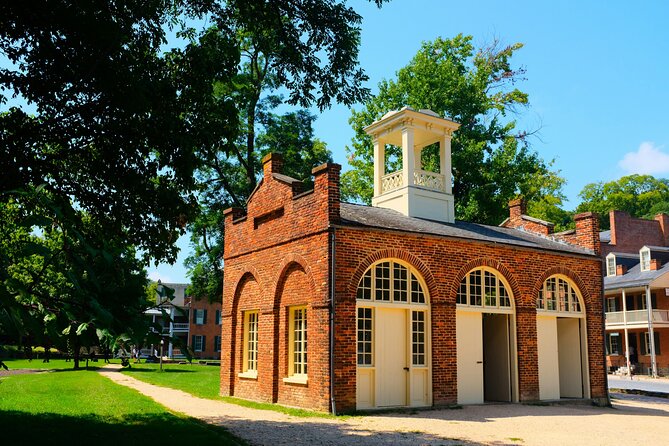
Then comes John Brown’s Fort. It’s a modest brick building that was once a fire engine house, and it became John Brown’s final stronghold. This is one of the route’s emotional anchors: the description emphasizes tension and meaning, and the short time slot means you’ll likely want to stand still and take it in rather than rush.
Education, faith, and community: Storer College and the people behind the story

One reason this audio tour works is that it doesn’t treat history like a parade of battles. It spends real attention on institutions and people—especially the post–Civil War thread of education and resilience.
The African American history museum stop (closed during renovations)
There’s a museum stop focused on the stories of African Americans, including enslaved, freed, educated, and resilient experiences. The practical catch is blunt: this museum is currently closed for renovations. If you’re traveling with a plan to do every stop, treat this as a reason to expect at least one “skip” without panic.
Even with that closure, the rest of the route keeps moving the story forward through other stops.
Lockwood House and Storer College campus
Lockwood House ties education and leadership to physical space. It’s described as having been used by Union officers and educators and as housing leadership of Storer College. That puts the spotlight on how learning and strategy could occupy the same period of time.
Then you visit the Storer College Campus. Founded after the Civil War to educate formerly enslaved individuals, it’s presented as a beacon of hope and empowerment—directly connected to learning, leadership, and civil rights in Reconstruction.
These two stops are short (about 5 minutes each), so I’d use them like this: stand still, take one good look at the setting, and let the audio narration give you the “why it mattered” framework before you move on.
St. Peter’s Roman Catholic Church: an Irish immigrant sanctuary angle
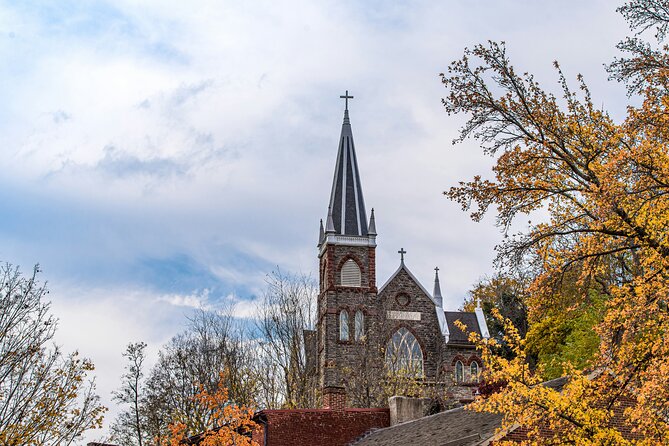
St. Peter’s Roman Catholic Church sits on a dramatic hillside perch with a wide overlook of the town. It’s described as serving Irish immigrant families and being spared during the Civil War. For many visitors, the value here is how it adds another community layer to what can otherwise feel like a story focused only on military sites.
It’s a quick stop, but it balances the route.
Views that match the map: Harpers Ferry overlooks you can’t fake
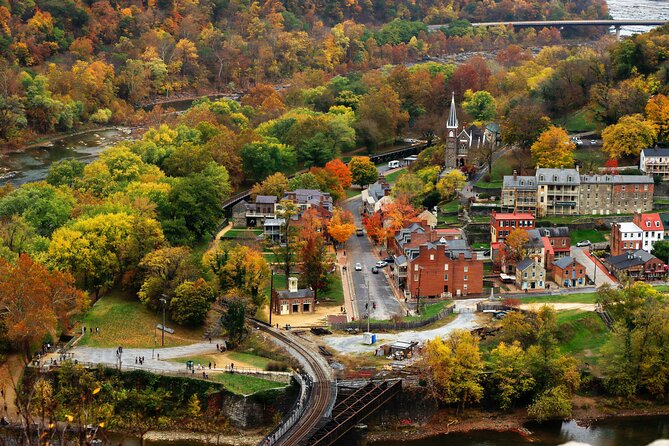
Harpers Ferry is geography first. This audio tour keeps pulling you toward the places where the land shapes the story.
The Point: Potomac and Shenandoah meeting place
The Point is exactly what you want it to be: the meeting place of the Potomac and Shenandoah Rivers. The narration ties that geography to trade and strategy. For me, stops like this are where the whole area finally clicks—you start to understand why this small town mattered so much.
It’s a 5-minute stop, so give yourself a small buffer. Arrive a bit earlier than you think you need so you can listen without juggling your timing.
Bolivar Heights: strategic ridge seating
Bolivar Heights is one of the most fought-over ridges in Civil War history and is presented as more than scenery. You’re getting a front-row seat to Harpers Ferry’s strategic significance and stunning vistas.
If you’re the kind of traveler who wants to look at a place first, then connect the historical explanation, this stop rewards that habit.
Murphy Farm: battlefield, then speeches
Murphy Farm is described as a peaceful landscape with a turbulent past, including serving as a battlefield and later as a place for powerful Civil Rights speeches. Today it’s framed as a spot for reflection and panoramic views.
That mix of uses over time is exactly why an audio guide helps. Even when you’re only there briefly, the narration can help you hold more than one meaning in your head at once.
Ruins, taverns, trains, and ferry origins: the rest of the route’s texture

After the big landmarks, the route rounds out with the stuff that makes a town feel like a town.
Virginius Island: ruins and the water-powered economy
At Virginius Island in West Virginia, the stop shifts into ruins and trails. The description calls it a peaceful woodland of remnants, once a bustling industrial village. You’re meant to uncover the rise and fall of Harpers Ferry’s water-powered economy.
This is a good stop if you like seeing the in-between evidence—places where industry is no longer in full operation but still visible in the remnants.
White Hall Tavern: politics and pints
The route includes White Hall Tavern, a 19th-century tavern described as a lively gathering spot for travelers, locals, and even Union soldiers. The audio frames it as a place where pints were poured and politics debated.
It’s a small stop, but it adds tone. Not every stop here is about command decisions. Some are about how people talked and lived.
Harpers Ferry Public Square and Lower Town Train Station
The Harpers Ferry Public Square functions as the heart of town life across centuries. The stop description mentions markets, militias, protests, and parades. If you want one place in town to feel like the center of civic pressure and everyday life, this is it.
Then there’s Lower Town Train Station again. This stop is described as still active today and connected to the region’s rail legacy. That matters because you’re reminded that the town’s importance didn’t end with the Civil War era.
Original Site and the Appalachian Trail Staircase
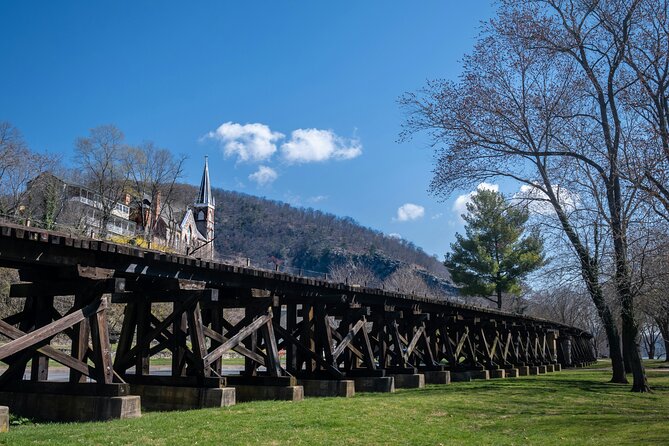
Toward the end, you visit the Original Site, Shenandoah River Bridge, described as where Robert Harper’s 18th-century ferry launched the town. The audio ties that to commerce, conflict, and change—basically, the starting point for the crossroads idea.
Finally, the Appalachian Trail Staircase is carved into the cliffside, connecting Lower Town to the trail. It’s described as steep, scenic, and symbolic of the perspective the trail demands. If your route energy is low at this stage, consider it a choose-your-own-adventure moment: you can pause, listen, and decide how far to go based on your comfort.
Arsenal Square: charged ground, even when it’s quiet
The last historical anchor is Arsenal Square, once the site of a sprawling U.S. arsenal and a place where the explosive beginnings of John Brown’s raid started. Today it’s described as quiet, but heavy with meaning.
This is a good place to slow down and let the earlier stops assemble into a clearer timeline.
Walking reality, phone tips, and how to make this tour actually enjoyable
This is where you’ll decide if the format fits you.
The tour is listed as having most travelers able to participate, but the practical feedback pattern is consistent with the route descriptions: there are hills and some uphill hiking. If your knees don’t love steep grades, you might choose to skip a couple of the steeper stretches or shorten the route.
Also, the app interface matters. Some people find the map and start controls less intuitive at first. The practical fix is simple: take a minute before you start walking to get comfortable with the app screens, confirm the tour is running, and learn where the map is so you can re-check your bearings fast.
One helpful detail: the audio is triggered as you reach certain places. That reduces the need to constantly look at your screen while walking. It also means you can focus more on the view, the markers, and the narration.
My best advice: wear shoes you trust on uneven ground, keep your phone battery topped up, and accept that you’re not racing between sites. The experience is designed around short stops, but the hills still set the rhythm.
Final verdict: should you book this Harpers Ferry audio tour?

Book it if you want a low-cost, flexible way to connect Harpers Ferry’s Civil War and abolition landmarks with the local institutions that shaped education and community life. The route’s biggest strength is how it pairs interpretation with real views—especially The Point, Jefferson Rock, Bolivar Heights, and Murphy Farm.
Skip or rethink if steep walking is a deal-breaker for you. Even with short stop times, the hillside portions can be too much. Also, if you hate smartphone-based navigation or you’re worried about using an app with spotty reception, plan to download everything before you go or consider a different format.
If you’re curious, book it in advance. The tour notes an average booking window of about 6 days, and Harpers Ferry can get busy, especially when hikers and day-trippers overlap.
FAQ
What is the price of the Harpers Ferry Audio Tour?
It costs $9.99 per person.
How long does the tour take?
The duration is about 2 hours.
Where do I start the tour?
You start at Lower Town Train Station, 182 Potomac St, Harpers Ferry, WV 25425.
Does the tour end back at the start point?
Yes. The activity ends back at the meeting point.
What language is the audio guide in?
The tour is offered in English.
Do I need to bring a smartphone?
Yes. You’ll need your own smartphone to use the app and audio.
Is cell service required during the tour?
Cell service can be spotty, so the guidance is to download before you go.
Are admissions to the stops included?
The stop descriptions list Admission Ticket Free for the sites on the route.
What are the opening hours?
The tour runs 8:00 AM–8:00 PM, Monday–Sunday for the listed operating window.
Can I get a refund if I cancel?
Yes. Free cancellation is available up to 24 hours in advance for a full refund. Canceling less than 24 hours before the start time won’t be refunded.
Is this tour private?
It’s listed as a private tour/activity, meaning only your group participates.