REVIEW · WEST GLACIER
Glacier National Park Going-to-the-Sun Road Self-Guided Tour
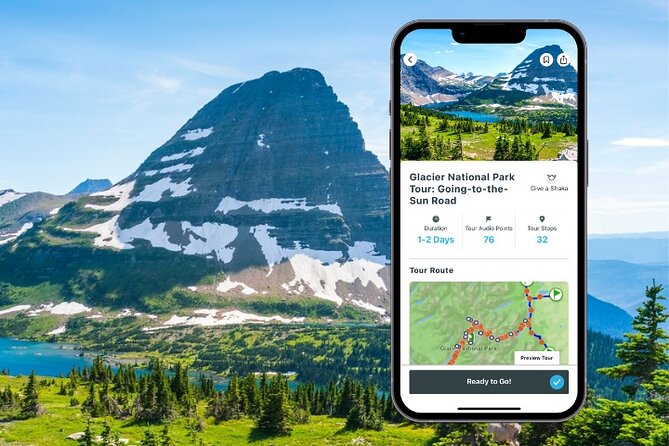
Book on Viator →Operated by Shaka Guide Apps · Bookable on Viator
Turn your car ride into guided glacier hikes. This self-guided tour uses GPS-activated audio plus an offline map so you get stories, directions, and timely stop ideas as you drive the Going-to-the-Sun Road corridor.
I love two things most: the turn-by-turn guidance that helps you know when to pull over, and the built-in pacing that mixes short viewpoints with optional longer walks like Trail of the Cedars and Avalanche Lake. I also like that key facilities show up right on the route, so you can use visitor centers for planning, restrooms, and water.
One thing to consider: the experience depends on getting the app set up correctly on your phone before you start, so phone-tech stress can slow you down—especially at the beginning.
In This Review
- Key Things I’d Pay Attention To Before You Go
- What You’re Really Buying: A Self-Guided Audio Guide for the Sun Road
- West Glacier and Apgar: Start Smart Before the Road Eats Your Day
- Lake McDonald: The Road’s First Real Payoff
- Short Walks That Don’t Feel Short: Trail of the Cedars to Avalanche Lake
- Trail of the Cedars (easy, flat loop)
- Avalanche Lake (more serious hike)
- Red Rocks to Mount Cannon: Roadside Stops With Story Texture
- Logan Pass and Oberlin Bend: High Altitude, Big Attention
- Highline and Lunch Creek: When You Want More Than a Pullout
- Highline Trail highlight
- Lunch Creek Pullover
- Piegan Pass and Jackson Glacier Overlook: Learning While You Look
- St. Mary Side: Falls, Passes, and Sun Point Views
- Wrapping Up at St. Mary Visitor Center and a Historic Ranger Station
- Price and Value: When $7.99 Makes Sense
- App Reality Check: The Best Way to Avoid Tech Friction
- Practical Timing for a 10–11 Hour Sun Road Day
- Who Should Book This (and Who Might Want Something Else)
- Should You Book This Going-to-the-Sun Road Audio Tour?
- FAQ
- Does this audio tour include park admission or a Going-to-the-Sun Road pass?
- How does the audio work while I’m driving?
- Can I use the tour without cell service?
- How long does the tour take?
- Is it priced per person?
- Can I cancel and get a refund?
Key Things I’d Pay Attention To Before You Go
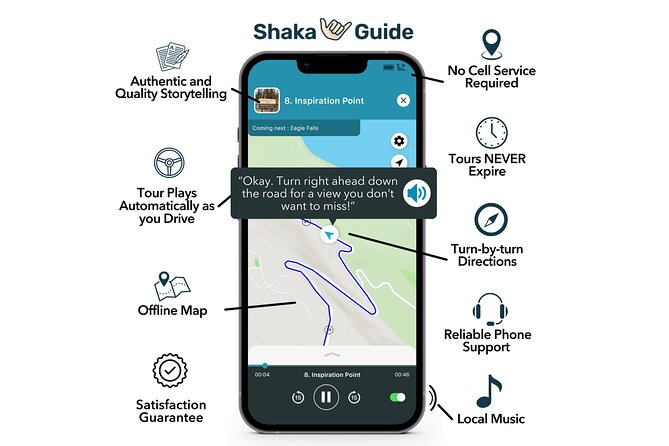
- Audio plays automatically as you drive, so you don’t have to keep tapping your screen.
- A single per-group price covers your whole vehicle up to 15 people, which can be great value for families and friends.
- You get both quick pullouts and real hike options, including Avalanche Lake and the Loop Trailhead area.
- Visitor centers are built into the route, including Apgar and St. Mary, which helps with restrooms and trip planning.
- You’re responsible for park/road access costs since the tour includes narration and navigation only, not admission or parking.
What You’re Really Buying: A Self-Guided Audio Guide for the Sun Road
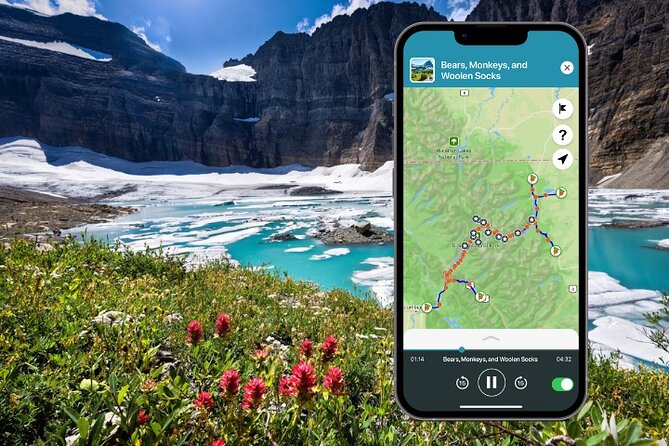
This is not a bus tour with a guide walking beside you. It’s an in-car, self-guided audio experience that follows your route with GPS directions and auto-play narration. That matters, because your day becomes more flexible: you can linger at a waterfall pullout, zip past a meadow stop, or swap your focus to views versus walking.
You’ll start in West Glacier, then work your way along the Going-to-the-Sun Road corridor with stops that range from quick “look here” moments to longer hikes. Some stops are designed as roadside breaks, while others connect to trails like Trail of the Cedars, Avalanche Lake, and the Highline Trail area. If you like a road trip feel but still want guidance, this hits the sweet spot.
The big practical advantage is that the narration doesn’t just describe scenery. It’s tied to driving—so the story shows up right when you’re at the right place. That helps you move from stop to stop without constantly checking your phone for what’s next.
You can also read our reviews of more tours and experiences in West Glacier.

West Glacier and Apgar: Start Smart Before the Road Eats Your Day
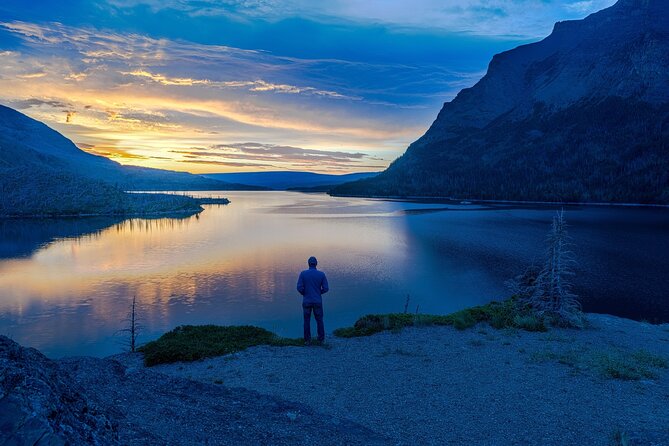
West Glacier is the gateway town outside the west Going-to-the-Sun entrance. It’s also the last full-service place you’ll see before a long stretch of driving. If you need coffee, gas, or bear spray, this is the time to do it. A small, unglamorous move like that can save you from scrambling later.
The first major “reset point” is Apgar, at the Apgar Visitor Center. This stop is especially useful because it’s not just about a view. You get a place to browse exhibits, do trip planning, hit the restroom, and refill your water bottle. It’s also the spot where you can board the Going-to-the-Sun Shuttle, which can help if you’re trying to reduce driving and parking pressure.
This matters because a Sun Road day can turn into a parking puzzle fast. Having an early visitor-center stop gives you a chance to get your bearings and decide how aggressive you want to be with hikes.
Lake McDonald: The Road’s First Real Payoff
After you leave Apgar, Lake McDonald starts showing up in pieces—first a classic “wow” view, then a pebble-shore break at Apgar Beach on Lake McDonald. This is where many people start understanding the scale of Glacier. The lake is huge, and it’s right there, close enough to feel immediate.
Then the tour moves you through a string of short, satisfying stops along Lake McDonald’s edges:
- Sprague Creek Campground: a shady lakeside pause with picnic tables, good for a quick snack or just regrouping.
- Lake McDonald Lodge: a standout for history and architecture. The lodge was originally called the Lewis Glacier Hotel, built in 1914 by prospector John Lewis. You’ll see parkitecture made with local stone and cedar, which gives the whole area a sturdy, old-park feel.
- McDonald Falls and Sacred Dancing Cascade: two short-but-stunning rushing cascades along McDonald Creek. The water’s blue-green tone and white foam are especially striking on clear, sunny days.
A smart way to use these stops is to treat them as separate “photo moments,” not as one long time sink. Ten to thirty minutes at a time is enough to enjoy the falls and still keep the rest of the day on track.
Short Walks That Don’t Feel Short: Trail of the Cedars to Avalanche Lake
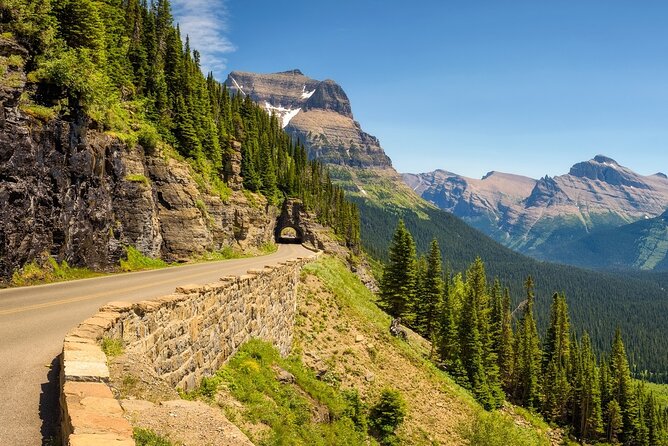
Once you’re past the early lake stops, the experience gives you a real choice: stay with easy walking, or go bigger.
Trail of the Cedars (easy, flat loop)
This is an easy, flat half-mile loop known for Western Red Cedar and Hemlock rainforest. Even if you’re not chasing distance, it’s worth it because it’s a gentle way to get that rainforest feeling without committing to a long hike. If you’re thinking Avalanche Lake might be too much, Trail of the Cedars still feels complete.
Avalanche Lake (more serious hike)
Avalanche Lake is the tour’s big hiking moment. You start at the Trail of the Cedars Trailhead, then head out on a trail that’s listed as about 4.5 miles one way. Expect it to pass through rainforest, multiple waterfalls, and up to a crystal-clear glacial lake reflecting Avalanche Peak.
You’ll want to plan your day around this because it’s not a quick leg-stretch. In a typical 10–11 hour pacing, Avalanche Lake can be the portion that decides whether you keep the rest of the day relaxed or rush the remaining viewpoints.
Red Rocks to Mount Cannon: Roadside Stops With Story Texture
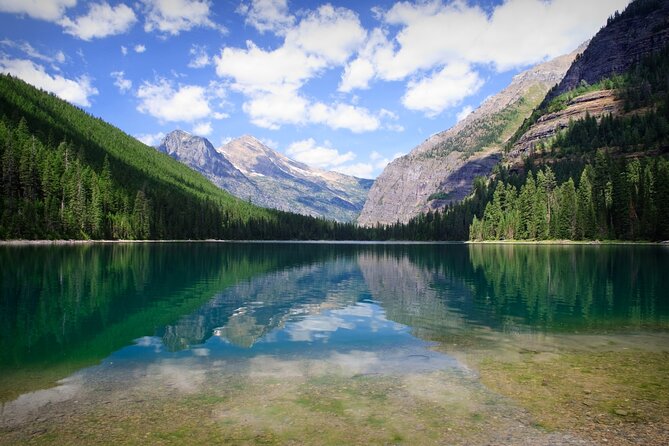
Between larger hikes, the tour adds a run of roadside highlights that are quick but meaningful. You’ll see:
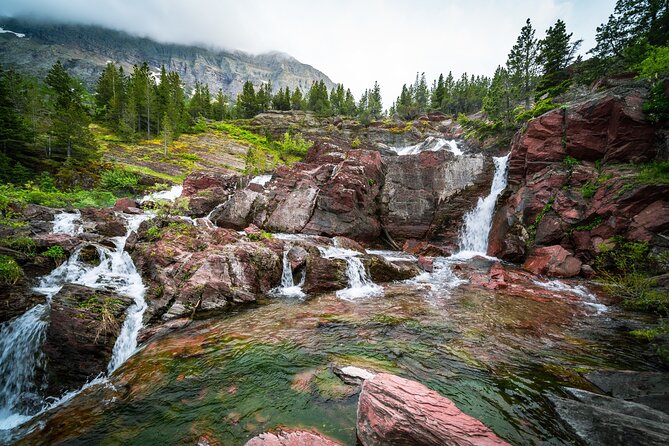
- Red Rock Point: compacted clay and oxidized iron create that rusty red look. From here, you also get clear-blue water and cascading McDonald Creek over the red Grinnell rocks.
- Mount Cannon: a brief overlook for the triple-peaked mountain. The tour notes its former name, Mount Goat, and a colorful early-summit story tied to two newlyweds who reached the summit in 1901.
- Garden Wall: a short viewpoint that gives you an early look toward the McDonald Valley before climbing toward higher altitudes.
- The Loop Trailhead: the road’s steepest hairpin turn, and a major highlight if you like classic Glacier trail targets. This area is also a starting point for trails such as The Loop, Granite Park, and the Highline.
Even though these stops are short on time, they’re not random. They’re placed to “flip the switch” between what you can see from the road and what you can hike into next.
Logan Pass and Oberlin Bend: High Altitude, Big Attention
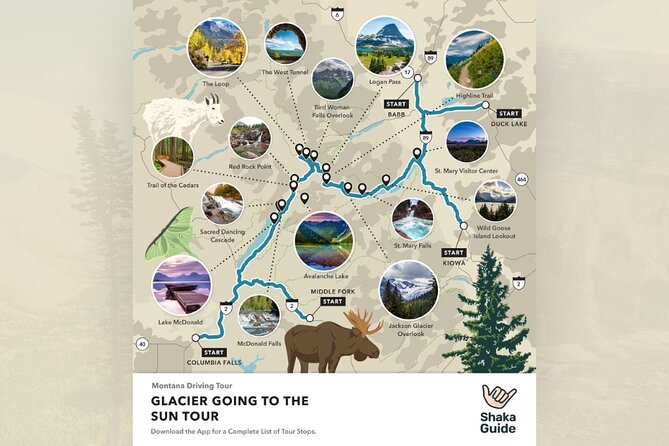
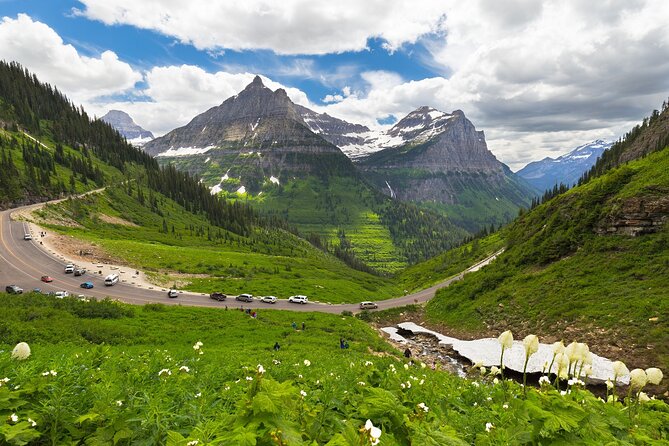
At Logan Pass, you’re up at 6,600 feet—the highest point on the road. The tour gives you about an hour here, which is enough time to take in viewpoints, walk a bit, and use the Logan Pass Visitor Center if you want more context before heading further.
Two nearby additions make this zone especially useful:
- Bird Woman Falls: a viewpoint across the valley, fed by snowmelt from Mount Oberlin and Mount Cannon. The falls are described as especially spectacular in late spring and early summer.
- Oberlin Bend: a ten-minute boardwalk trail offering views of Logan Pass and the McDonald Valley. Sometimes you may see mountain goats, which is one of those Glacier moments that can turn a normal stop into a memory.
This section is where the audio tour really pays off. At high altitude, you’re scanning for everything—peaks, trails, and wildlife. Guidance that tells you which viewpoint matters and what you’re looking at helps you make the most of limited daylight.
Highline and Lunch Creek: When You Want More Than a Pullout
The tour also points you toward longer, more demanding experiences if you’re up for it.
Highline Trail highlight
You’ll get a description of the Highline Trail, known for following the Continental Divide for an 11.8-mile route. The focus is on alpine meadows, rugged peaks, and diverse wildlife. This isn’t a “do it in ten minutes” kind of stop, so treat it as either a target for a future hike or a reason to adjust your day’s time budget.
Lunch Creek Pullover
Lunch Creek is a hidden-in-a-hairpin kind of stop. There’s a short walk down to an observation deck, and you can hear and see water cascading down Pollock Mountain. It’s a great example of how the tour uses small roadside moments to add variety.
Piegan Pass and Jackson Glacier Overlook: Learning While You Look
If you’re the type who likes to understand what makes a place tick, this part of the drive delivers.
- Piegan Pass is described as a popular hike over nine miles long, which means it’s a full-day commitment. The trail follows Siyeh Creek through spruce-fir forest and rises to a rocky pass between Siyeh and the Cataract Mountains.
- Jackson Glacier Overlook gives you a closer look at Jackson Glacier, described as the park’s 7th largest remaining glacier. The tour also frames what happens to glaciers and their fate in the park.
This is the kind of information that makes the views feel less like a postcard and more like a changing system you’re watching in real time.
St. Mary Side: Falls, Passes, and Sun Point Views
On the eastern side, the tour shifts toward St. Mary with a set of stops geared for both quick peeks and short hikes.
You’ll see short pullover moments like Sun Point—a promontory over St. Mary Lake. You can also choose the Sun Point Nature Trail, described as about two miles (or three kilometers), with views of Saint Mary Lake, Baring Falls, and Red Eagle Mountain.
For falls, the tour suggests flexible hike choices:
- St. Mary Falls Trail: about 1.5 miles round trip with less than 200 feet of elevation change.
- Virginia Falls extension: you can double up for a total of about 3 miles round trip.
Then there’s Siyeh Pass, which pairs nicely with the St. Mary falls idea. It’s listed as just over a mile to Baring Falls and back, and you can combine these if you want a fuller hike without committing to a long trek.
Other scenic stops add variety:
- Wild Goose Island Lookout: a photo-friendly lookout with named mountains across the view—Red Eagle, Mahtotopa, Little Chief, Dusty Star, and Citadel.
- The Narrows: a quick look at The Narrows and the Golden Staircase, described as a narrow channel of the lake and a retaining wall supporting the banks.
- Rising Sun Boat Dock: a spot to dip your toes in St. Mary Lake, watch boaters, and enjoy the calm feel before the drive ends.
Wrapping Up at St. Mary Visitor Center and a Historic Ranger Station
Your final stretch comes together in two satisfying ways: practical and historical.
At Rising Sun Picnic Area, you get one last lakeside break before heading out through the eastern Going-to-the-Sun gate. Then you land at Saint Mary Visitor Center, where you can browse the bookstore and exhibits, watch a film about park history, use the restroom, and refill water bottles.
Finally, there’s a “secret stop” style moment: Saint Mary Historic Ranger Station. It’s described as about 500 feet down Beaver Pond Trail and built in 1913, once housing one of the earliest park rangers. This is the kind of place that gives you a sense of time depth without needing a full museum visit.
If you’ve been hiking and driving all day, that end-of-route combo makes the experience feel complete instead of just “I got off the road at the end.”
Price and Value: When $7.99 Makes Sense
The price is $7.99 per group (up to 15 people). That framing is why this can be a very good deal. If you’re traveling as a vehicle group—family, friends, or a small tour inside your own group—you’re not paying per person for narration and directions.
You also get several value-boosters:
- Offline map and GPS-activated audio, so you aren’t stuck when you lose service.
- Turn-by-turn directions, which reduces the mental load of guessing where to pull over.
- Tours never expire, so you can keep it for future trips.
- It’s designed for a private group experience, meaning you’re not sharing with strangers.
But there’s a catch people sometimes miss: this is an audio guide. It does not include the park entrance fee or parking fees, and it also doesn’t replace the need for any road access requirements you normally handle. In other words, you’ll still plan your actual park entry and logistics. The tour helps you use the time once you’re there.
App Reality Check: The Best Way to Avoid Tech Friction
The tour’s biggest practical dependency is your phone. The upside is that it’s built to work offline once downloaded. The downside is that if you wait until you’re already in the car to figure out the app, you’ll burn time.
Here’s what you can do to keep it smooth:
- Download the tour using strong Wi‑Fi before you start driving.
- Use the email instructions to redeem your tour code in the Shaka Guide app.
- Plan to open the app, pick your starting point, and follow GPS directions for the best results.
If you stop partway through because of weather or visibility, the app support guidance includes using a Join Tour in Progress option to pick back up where you left off.
In short: test the setup early, then let the narration carry you.
Practical Timing for a 10–11 Hour Sun Road Day
The tour is listed as about 10 to 11 hours. That’s a full day, not a quick drive-by. Your timing will swing based on how you handle longer hikes.
Two stops heavily influence your day:
- Trail of the Cedars is about an hour.
- Avalanche Lake is about two hours.
Meanwhile, several stops are quick (5 to 10 minutes), and others are medium (30 minutes). Treat this like a menu. If you do Avalanche Lake, you may want to keep some of the later pullouts short so you don’t feel rushed.
Also note: you’re starting in West Glacier and the tour ends back at the meeting point. That means your “out and back” logistics are tied to where you begin.
Who Should Book This (and Who Might Want Something Else)
I think this is a great fit if you:
- Want a self-guided day with structure.
- Like learning as you go, not after the fact.
- Prefer driving your own pace but still want a plan for stops, restrooms, and timing.
- Travel as a small group/vehicle where the per-group pricing really helps.
You might skip this if you:
- Hate relying on apps on the road.
- Want a live guide who can answer spontaneous questions on the spot.
- Are expecting the tour to cover entrance and road access costs.
Overall, it’s best for independent travelers who still want their day to feel guided.
Should You Book This Going-to-the-Sun Road Audio Tour?
If you want maximum flexibility plus clear stop-by-stop help, this is an easy yes. The cost is sensible for a group, and the route mixes quick scenic pulls with real hike targets like Trail of the Cedars and Avalanche Lake. The narration and GPS guidance are exactly what reduce stress on a long, famous drive.
But don’t treat it like a ticket. Budget for park entrance and parking yourself, and spend a few minutes getting the app ready before you hit the road. Do that, and you’ll get a smarter Glacier day—one where you stop at the right moments instead of just driving past them.
FAQ
Does this audio tour include park admission or a Going-to-the-Sun Road pass?
No. The tour does not include the park entrance fee, and it provides narration and directions only.
How does the audio work while I’m driving?
The audio narration plays automatically as you drive, using GPS activation for stories, directions, and music.
Can I use the tour without cell service?
Yes. You get an offline map, so you don’t need continuous Wi‑Fi or data during the drive (as long as you download ahead of time).
How long does the tour take?
It’s listed as about 10 to 11 hours.
Is it priced per person?
It’s priced per group for up to 15 people, and it’s described as a private tour/activity with only your group participating.
Can I cancel and get a refund?
Yes. You can cancel up to 24 hours in advance for a full refund.