REVIEW · CAEN
D-Day private tour Omaha + Utah Beach from Caen with audio guide
Book on Viator →Operated by Normandy Private Tours · Bookable on Viator
Few days hit like Normandy. This private D-Day route from Caen links Utah Beach to the quieter stops that make the story stick, with an audio guide plus a driver who keeps you on schedule.
What I like most is the balance: you get the big-impact sites (Utah, Omaha, Pointe du Hoc) plus the supporting cast (American Cemetery, Longues-sur-Mer battery, and the Arromanches Mulberry port area). Another win is the human touch—your guide can shape the day around your interests, and the audio track helps you follow what you’re seeing without needing a history degree.
One thing to consider: it’s a full day with short visits at each place, so if you want long, slow museum time (or you hate moving on), you may feel a bit rushed. Also, lunch isn’t included, and the optional Airborne Museum costs extra.
In This Review
- Key Things You’ll Notice on This Tour
- Why This D-Day Day Trip Works So Well from Caen
- Utah Beach First: The Story Starts at the Right Shore
- Sainte-Mère-Église: Paratroopers and the Town That Holds the Scene
- Airborne Museum Option: C-47, Gliders, and a Real Sense of Night Operations
- Pointe du Hoc: The Cliff, the Battery, and the Aftermath
- Omaha Beach and the American Cemetery: The Weight of Bloody Omaha
- Longues-sur-Mer Battery: Seeing the Other Side’s Hardware
- Arromanches Falaises and the Mulberry Port Story
- Price and Logistics: Is $415.42 Per Person Good Value?
- Guide Style: Why It Feels Personal Without Turning Chaotic
- Timing, Pace, and What to Watch for on a 9-Hour Schedule
- Who This Tour Fits Best
- Should You Book This D-Day Private Tour from Caen?
- FAQ
- What time does the tour start, and how long is it?
- Is this a private tour?
- What areas do you pick up from around Caen?
- Where does the tour start and end?
- What’s included in the price?
- What’s not included?
- Do I pay admission at each stop?
- Can I add the Airborne Museum?
- Is the tour offered in English?
- What is the cancellation policy?
Key Things You’ll Notice on This Tour
- Private, all-in-one transportation from Caen (air-conditioned vehicle, bottled water included)
- Audio guide in the car before you reach each site, so you get context fast
- Utah + Omaha in one day, plus the key “why it mattered” stops around them
- Pointe du Hoc up close, with the feel of the cliff and what remains
- American Cemetery at Colleville-sur-Mer, including the perfectly aligned graves
- Arromanches and the Mulberry harbor story after the landing
Why This D-Day Day Trip Works So Well from Caen
This tour is built for people who want a clear D-Day arc without doing route math all day. You start in Caen at the Office de Tourisme de Caen, and you’re picked up from places like hotels, Caen station, or Carpiquet Airport (so you’re not scrambling right at 9:00 am). The tour runs about 9 hours, which is long enough to cover both Utah and Omaha—and short enough that you’re not exhausted by the next day.
The private format matters more than you might think. It means your time is actually about your group: you don’t have to wait for other people, and your guide can adjust the order or emphasis when you ask for it. If you like facts but also want breaks, this kind of structure is a big help.
You also get a mobile ticket and confirmation at booking, so the day feels organized from the start. Plus, it’s offered in English, and service animals are allowed.
Utah Beach First: The Story Starts at the Right Shore
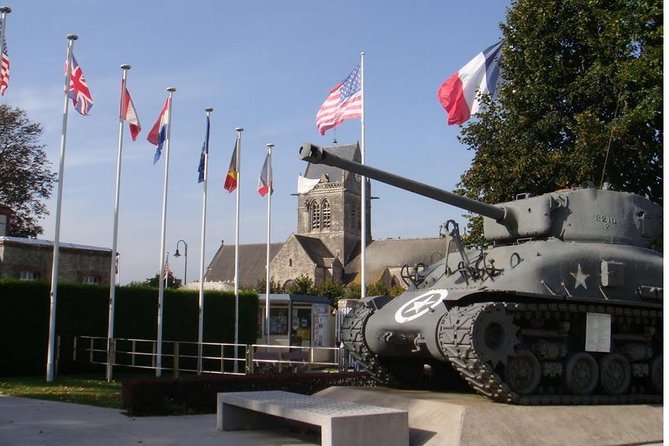
Most D-Day days start with the famous beaches. This one does something smart: it opens at Utah Beach at the Musee du Debarquement Utah Beach area.
You’re assigned to the American troops here, and the stop is designed to give you immediate context for the landing—what soldiers faced and why Utah Beach became part of the plan. The museum admission for this stop is listed as free, and the time on-site is about 30 minutes. That might sound short, but it’s usually enough to get oriented, see key exhibits, and understand the terrain before you move on.
Practical tip: Utah Beach is one of those places where the setting explains the tactics. If you’re the type who needs a “why” before you look closely, the audio guidance helps you get your bearings quickly.
Sainte-Mère-Église: Paratroopers and the Town That Holds the Scene
Next comes Sainte-Mère-Église, where the American paratroopers of the 82nd and 101st Airborne are tied to the town’s most recognizable moment. If you’ve heard stories from series like Band of Brothers, this is where those names stop being trivia and start being human-scale history.
This stop is also about 30 minutes, and admission is free. The value here isn’t big artifacts—it’s location. You walk the kind of town geography where drops, movement, and communication would have played out. It’s the kind of stop that makes the day feel less like a checklist and more like a path through real events.
If you’re traveling with teens or family, this is often a great moment because the story is easy to picture. If you’re a history-only person, it still works because you’re seeing the environment where airborne operations intersected with local ground reality.
Airborne Museum Option: C-47, Gliders, and a Real Sense of Night Operations
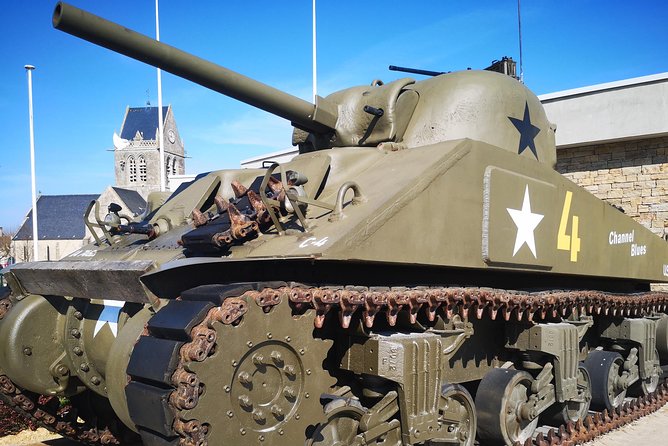
After the paratrooper story, you get an optional add-on: the Airborne Museum in Sainte-Mère-Église. This is where you can switch from outdoor sites to museum-style interpretation.
The museum option is listed as not included, and it costs €8 per person. The time on-site is about 1 hour, which is a proper chunk compared to the other stops. The big reason I’d consider adding it is the type of objects and aircraft context you get—especially the mention of a glider and the chance to experience the theme of night operations via a real C-47 plane.
This stop is also described as having realistic museography, meaning it’s meant to feel like operations, not just a room of labeled history. If you skip it, you’ll still get the main story—but you’ll miss the deeper “what it felt like” layer that museums can provide.
Pointe du Hoc: The Cliff, the Battery, and the Aftermath
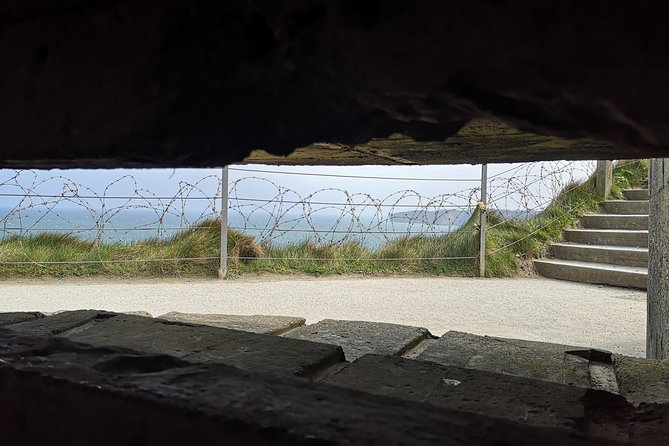
Then you hit one of the most intense stops on the route: Pointe du Hoc.
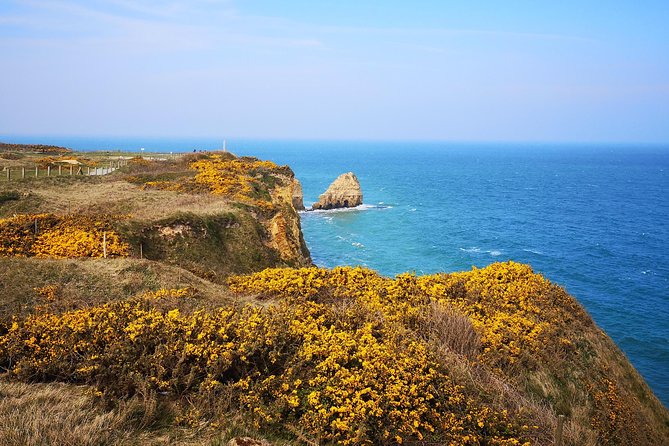
The place is famous for the 30-meter-high cliffs—a natural piece of the defenses that the Allies had to deal with. The point of the operation was to neutralize German guns that were believed to be installed in blockhouses. Today, you see the remains of the German battery and deep traces of fierce fighting.
Time here is about 30 minutes, with admission listed as free. The short visit can feel just right. Pointe du Hoc has a lot of “look, then re-try to picture the action” built in, so you don’t need hours to get the message. If you linger, though, it’s easy to do. The site has the kind of physical presence that makes you pause without trying.
Omaha Beach and the American Cemetery: The Weight of Bloody Omaha
After Pointe du Hoc, the tour reaches Omaha Beach, described as the beach where the Allies lost the most troops, earning the nickname Bloody Omaha.
The stop duration is about 30 minutes, with admission free. Again, that’s not “museum time,” but it’s enough to connect what you learned and what you see in front of you. Omaha Beach tends to hit people differently than other D-Day areas. Even without extra exhibits, the scale and the shoreline shape make the losses feel more immediate.
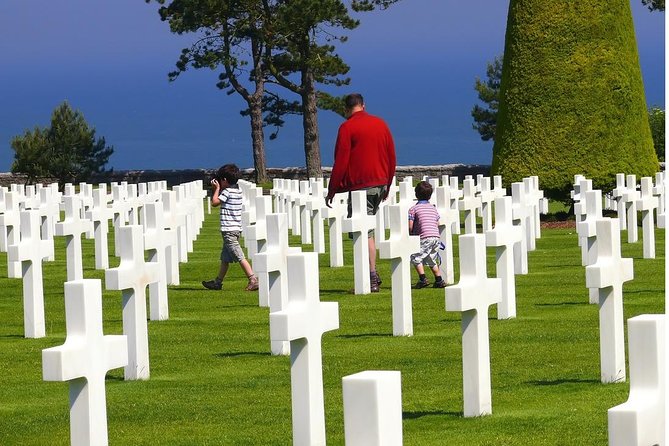
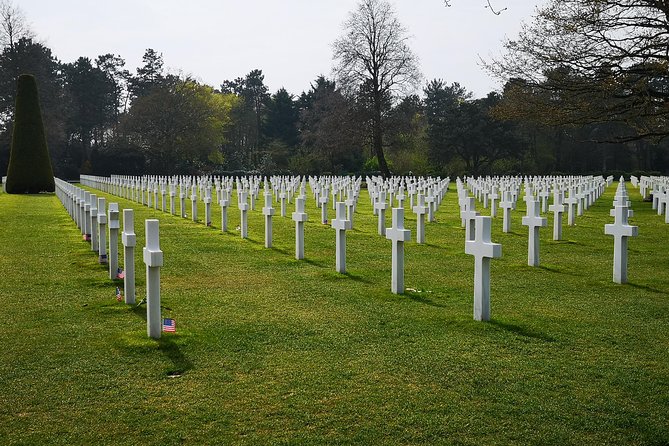
Then you move to Cimetiere Americain de Colleville-sur-Mer, right above the beach. This is one of those places that asks for quiet attention, not multitasking. The cemetery honors American soldiers who died during the Battle of Normandy, with 9387 soldiers laid out in perfectly aligned tombstones.
You’ll have about 1 hour here, and admission is listed as free. If you’re tempted to rush, don’t. This is one of the stops that turns your knowledge into memory. I also like that the route pairs Omaha Beach with the cemetery: you don’t just look at the battlefield aftermath; you also see what the battlefield meant.
Longues-sur-Mer Battery: Seeing the Other Side’s Hardware
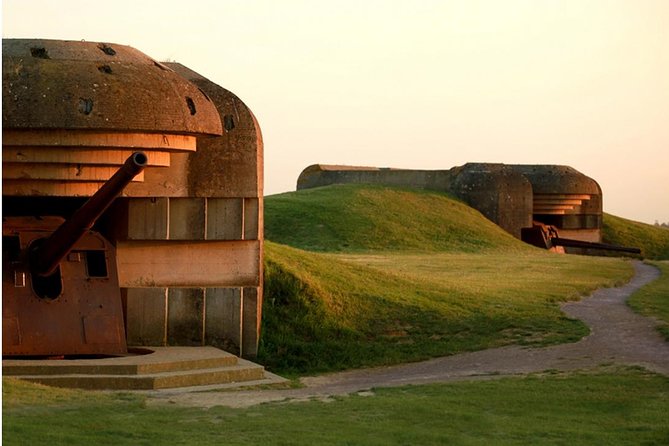
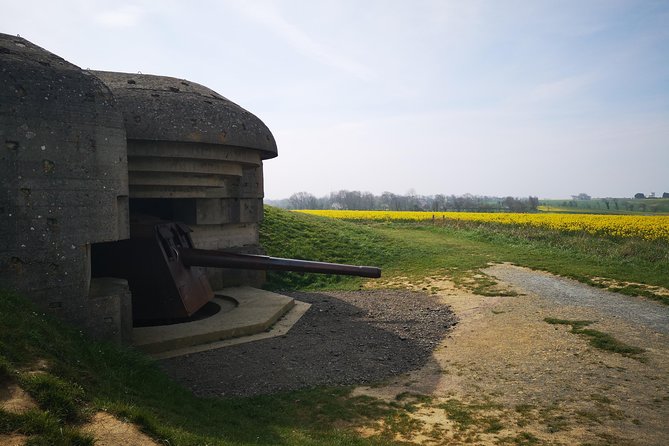
The tour doesn’t ignore the German defensive story. You get to Batterie Allemande de Longues-Sure-Mer, a Historical Monument stop featuring a command post and four casemates holding a long-range 150mm artillery piece.
Time here is about 20 minutes, with admission listed as free. That short window can work well because the architecture does a lot of the teaching: heavy concrete, fixed positions, and the logic of long-range fire.
If you’re the type who likes to understand how both sides thought, this is a good counterbalance after the American-focused stops. It helps explain why certain beaches and cliffs mattered so much.
Arromanches Falaises and the Mulberry Port Story
Next is Les Falaises d’Arromanches, about 45 minutes. This area is tied to the Mulberry port—an artificial harbor built at Arromanches to keep supplies flowing in the days after the landing.
The stop time suggests a mix of viewpoint time and interpretive time. You get the “how it worked” concept: the Allies weren’t just landing troops; they were also solving the supply problem fast. For me, that’s what makes Arromanches feel essential rather than optional.
One extra bonus you might find here is the chance to watch a 360 movie about the occupation and the long run-up to the Norman battle. If you’re interested in turning big events into a timeline you can follow, that kind of format can be a big help.
Price and Logistics: Is $415.42 Per Person Good Value?
At $415.42 per person for a roughly 9-hour private tour, you’re paying for more than a driver and a car. You’re paying for:
- Private transportation with an air-conditioned vehicle
- Bottled water
- A structured route covering multiple key sites
- The support of an audio guide
- Time-efficient sequencing, so you’re not spending your day stuck in parking lines or figuring out which stop comes next
Many of the stops here list admission as free, which increases value. The main add-on cost you might face is the Airborne Museum (€8 per person). Lunch isn’t included, so plan for that separately.
Is it pricey? Yes, compared to self-driving. But if your time matters, and if you want the day organized around understanding what you’re seeing, the value often feels fair. This is especially true for first-timers in Normandy or anyone who doesn’t want to spend hours coordinating logistics.
Also, the tour includes group discounts, which can help if you’re traveling with friends or family who want the same plan.
Guide Style: Why It Feels Personal Without Turning Chaotic
A strong part of this experience is the way the guidance is delivered. The tour is private, and the guide is described as both local and attentive—Mathieu is named in multiple notes about the day.
I like this setup because it avoids the two extremes: you don’t get vague lectures, and you also don’t get a rushed “you’re on your own” experience. Mathieu is described as customizing the trip based on interests and what you’ve already seen, while still keeping the timing tight enough to cover every planned stop.
Even better, the tour includes an audio guide that’s played before you reach each spot in the car. That means you’re not arriving cold. You can start listening, then immediately connect the explanation to the view outside your window. It’s one of those small details that makes a big difference when you’re moving from place to place.
Timing, Pace, and What to Watch for on a 9-Hour Schedule
A 9-hour private tour with many stops will always have a rhythm: you’ll spend about 20 to 45 minutes at most places, with the cemetery and optional museum being the longest blocks.
Here’s the practical reality:
- If you like to read every sign and take lots of photos, you might want to focus your attention and accept that you can’t do everything at once.
- If you’re okay with a “see it, understand it, move on” pace, this schedule will feel well-balanced.
One thing to plan around is meals. Since lunch isn’t included, build in time and energy for eating. Also, the tour includes bottled water, which is helpful in warmer months, but you’ll still want to dress for the weather because Normandy conditions can change quickly.
Who This Tour Fits Best
This is a strong fit if you:
- Want Utah and Omaha in one day without stress
- Like a guided narrative with an audio layer
- Prefer a route that hits major sites and adds key supporting stops (cemetery, battery, Mulberry harbor)
It’s also a good choice for families and teens. One of the best parts of the design is that it keeps the story moving while still giving time for meaningful stops like the American Cemetery.
Who might not love it? If you’re the kind of traveler who wants to spend half a day in one museum alone, you may find the stop lengths limiting. In that case, you could prefer a more museum-heavy or fewer-stops itinerary.
Should You Book This D-Day Private Tour from Caen?
If you want a clear, well-paced way to see the most important D-Day sites—with context, not just photos—this is a solid booking. The private format reduces wasted time, the audio support helps you understand what you’re looking at on arrival, and the route covers both American and German defensive viewpoints, plus the supply-story piece at Arromanches.
Book it if you value structure and you’d rather spend your time in Normandy than planning routes. Consider a different style if you want long stays in fewer museums, or you know you’ll struggle with a full-day schedule.
In short: for many visitors starting from Caen, this is an efficient way to get the story of the landings, the fighting, and the aftermath into one memorable day.
FAQ
What time does the tour start, and how long is it?
The tour starts at 9:00 am and lasts about 9 hours.
Is this a private tour?
Yes. It’s a private tour/activity, meaning only your group participates.
What areas do you pick up from around Caen?
Pickup is offered in Caen and the surrounding area, including hotels, Caen station, and Carpiquet Airport.
Where does the tour start and end?
It starts and ends at the Office de Tourisme de Caen.
What’s included in the price?
Included are bottled water, an air-conditioned vehicle, and private transportation.
What’s not included?
Lunch is not included, and the Airborne Museum entrance is not included.
Do I pay admission at each stop?
Most listed stops have admission marked as free, but the Airborne Museum has an extra cost of €8 per person.
Can I add the Airborne Museum?
Yes. It’s an optional stop, and it costs €8 per person.
Is the tour offered in English?
Yes, the tour is offered in English.
What is the cancellation policy?
It’s non-refundable and cannot be changed for any reason.