REVIEW · CAPE COD
Cape Cod & Provincetown Self-Guided Driving & Walking Audio Tour
Book on Viator →Operated by Stories with Action · Bookable on Viator
Cape Cod finally makes sense with audio. This self-guided driving-and-walking audio tour strings together Pilgrims, Nauset legends, and lighthouse landmarks as you move at your own pace. I love the hands-free GPS-triggered storytelling—it helps you enjoy the scenery without constantly checking your phone—and I love the value-per-vehicle setup, since one purchase covers up to four people in a car and works on future trips. One drawback to plan for: the app can be harder to follow if you start on the wrong direction/version, go far off-route, or your stop-and-restart timing gets out of sync.
Start and end at the same historic spot in Provincetown’s Pilgrim story, then continue with a mix of short beach breaks and key landmarks. You should expect about 3 to 4 hours if you keep things moving, but it can stretch longer if you park, walk, and linger for photos (which is the whole point).
In This Review
- Key things to know before you go
- Why a self-guided audio tour fits Cape Cod so well
- Price and what $24.99 per group really buys you
- Setup tips that prevent most app headaches
- Driving reality: speed limits, stop length, and parking friction
- Cape Cod Visitor Center: starting the Pilgrim story on the right foot
- Scargo Tower and Scargo Lake: fish-shaped legend with a quick scenic detour
- Harwich: lavender farm trails and a beach stop you can actually use
- Eastham and First Encounter Beach: where the meeting became a truce
- Salt Pond Visitor Center: the practical break that keeps your day smooth
- Nauset Light and the lighthouse-photo payoff
- Three Sisters Lighthouses: the inland lighthouse oddball
- Wellfleet Bay Wildlife Sanctuary: optional, but great if you’re a walker
- Marconi Wireless Station: radio history with a Titanic connection
- Atlantic White Cedar Swamp Trail: one short mile, many environments
- Pilgrim Spring Trail and the jump to Provincetown ships
- Provincetown on foot: Monument views, First Landing Park, and town icons
- Pilgrim Monument: the climb with the ocean payoff
- Pilgrim’s First Landing Park: imagining November 11, 1620
- A quick reality check on timing in town
- How long it takes and how to pace yourself
- Crowd timing: when the Cape is easy and when it can fight you
- App troubleshooting tips that save your day
- Who this tour is best for
- Should you book this Cape Cod & Provincetown self-guided audio tour?
- FAQ
- FAQ
- How many people can use one tour purchase?
- Where does the tour start and end?
- Do I need cell service during the tour?
- What do I need to do before I arrive?
- Can I pause the tour and continue later?
- Do I need to connect my phone to my car stereo?
- Are attraction tickets included?
- What phone systems are recommended?
Key things to know before you go

- GPS-triggered audio that responds to where you are
- One purchase per car, up to 4 people
- A strong mix of history and Cape nature stops
- Optional detours that let you choose lavender and beaches
- Offline maps after you download the app
- Best results if you stick close to the route and speed cues
Why a self-guided audio tour fits Cape Cod so well
Cape Cod can feel like one long scenic drive… until you add context. This tour works because it does not just name places. It connects them, so you start to notice how the Cape’s Native history, Pilgrim arrival, and later fishing and radio-era tech all line up along the same roads.
I also like the pacing. You’re not stuck behind a group or listening to a guide speed through stops. When you want a quick photo at Nauset Light, you get a quick photo. When you want a restroom break at a visitor center, you can take it without asking permission.
Price and what $24.99 per group really buys you

At $24.99 per group (up to 4 people), the math is simple: it’s priced for a family or small group in one vehicle. If you’d otherwise do a guided bus tour, you usually end up paying per person and still feel rushed. Here, you buy one tour and let the car be your ticket.
The other value move is lifetime access. That means you’re not paying just for a single day. If you return to Cape Cod next summer, or you come back in a different season (rainy day, windy day, crowd season), you can reuse the same download.
Plan your time like this: the core route is built to cover “the essentials” in about 2 to 3 hours, but the stops, optional detours, and walking can easily stretch it to a full half-day to full day.
Setup tips that prevent most app headaches

Before you leave home, download the app using strong Wi‑Fi or cellular. The tour’s core promise is offline use, but you only get that if the download actually finishes properly.
When you arrive, you’ll use Action’s Tour Guide App and enter the password sent by email and text. Then you open the right tour version for your starting point and direction. One issue I’d watch for based on real experiences: if you pick the wrong direction/version, the navigation can feel like it’s arguing with you.
For audio, you’ll get the best experience by connecting your phone to your car stereo using Bluetooth, USB, or AUX. If you’re walking (especially in Provincetown), use headphones/earbuds so you don’t miss the next cue.
Driving reality: speed limits, stop length, and parking friction

This tour triggers audio based on location, and it’s designed to work best when you follow the speed limit cues shown in the app. If you hammer the road or treat every story as optional, the timing can drift.
Also watch your stop length. Some people reported that after a longer break (around half an hour), the system didn’t automatically resume the way they expected, which turns a fun day into problem-solving. If you know you’ll be gone for a while, keep your phone ready and check the app screen before you walk away.
Parking matters, too. Provincetown can mean narrow streets and walking-heavy areas, so you’ll want to plan for short car moments and then commit to foot time.
Cape Cod Visitor Center: starting the Pilgrim story on the right foot
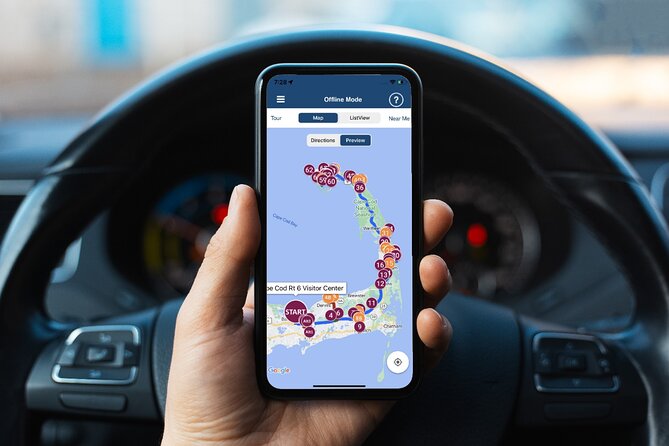
You begin at Pilgrims’ First Landing Park in Provincetown, then the driving portion leads you to the Cape’s major story points. Your first stop is the Cape Cod Visitor Center, where you set the historical stage for what comes next.
This is where the tour frames the Cape as more than postcard scenery. You get the backstory of Native people (including Nauset legends) and why the arrival of strange ships triggered fear and caution on the eastern horizon.
This stop is short, and that’s fine. It’s meant to get you oriented so the later stops make sense.
Scargo Tower and Scargo Lake: fish-shaped legend with a quick scenic detour
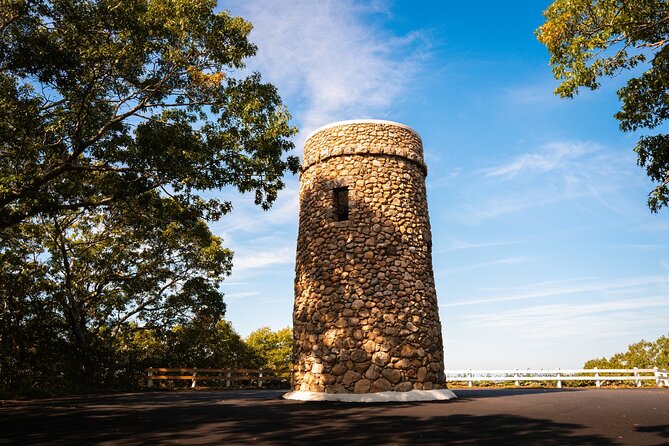
Past the visitor center, there’s an optional detour for Scargo Tower, with a look at the fish-shaped Scargo Lake. The story ties into Nauset legend, including the idea of three dead fish and a chieftain building something to comfort his daughter.
There’s not much time built in here, but it’s one of those Cape moments that feels like it was made for a short walk and a photo. If you’re the type who likes myth plus view, you’ll probably enjoy this.
Harwich: lavender farm trails and a beach stop you can actually use

The tour gives you a convenient Harwich section with two optional-style nature breaks: the Cape Cod Lavender Farm and Bank Street Beach.
At the lavender farm, you can walk woodland trails for free. You’re mostly there for the smell, the calm, and the chance to grab a few souvenirs without it feeling like a hard-sell shopping stop.
Then you have Bank Street Beach as a simple Atlantic reset—relax or dip your toes if conditions and season allow. It’s a good place to stretch after time on the road.
One practical note: lavender attractions may have their own ticketing expectations at the farm level, so plan ahead if you want to add anything beyond the free trails.
Eastham and First Encounter Beach: where the meeting became a truce

Next comes Eastham, a colonial-feeling town that sets up the Pilgrims’ early Cape encounter. You’ll hear about the first tense meeting with Nauset people, Squanto’s assistance, and the story’s link to a truce that gets remembered as early Thanksgiving.
Then you reach First Encounter Beach, where the tour points you to the location tied to that dramatic skirmish and eventual truce. There’s a plaque here, and it’s exactly the kind of small detail audio helps with: you’re not just staring at water—you know what you’re looking at.
This is one of the stops where “listening while moving” really works. You’ll feel the connection between the earlier legend and the shoreline in front of you.
Salt Pond Visitor Center: the practical break that keeps your day smooth
Salt Pond Visitor Center is small on purpose: it’s a convenient history stop plus a real-world break. You can use the bathroom, stretch your legs, and catch up on a little extra context before you drive onward.
If your tour has ever fallen apart because you ran out of time or needed a restroom at the wrong moment, this stop helps protect against that. Even if you’re not a museum person, it’s a nice reset.
Nauset Light and the lighthouse-photo payoff
A big part of Cape Cod is lighthouses, and the tour hits the most famous-photo area with Nauset Light.
You’ll get the lighthouse importance and the way Cape waters earned the nickname ocean graveyard before the lighthouse was built. That makes the photo feel more meaningful. It’s not just the classic image; it’s part of a survival story.
Timing-wise, it’s short and sweet. You’ll get enough time to watch light and water, then get back in the car.
Three Sisters Lighthouses: the inland lighthouse oddball
The tour takes you next to the Three Sisters Lighthouses, which are unusual because they’re not on the coast. They’re set among trees inland.
The story explains why they ended up there, and the tour also connects the shift from Nauset land to colonial fishing towns, then to the Cape as a tourist hotspot. This is the kind of explanation that keeps you from feeling like you’re chasing random roadside sights.
If you like quirky facts and want a lighthouse moment that’s not just seaside scenery, this is a strong stop.
Wellfleet Bay Wildlife Sanctuary: optional, but great if you’re a walker
If you want nature time, there’s an optional detour to Mass Audubon’s Wellfleet Bay Wildlife Sanctuary. It includes about five miles of trails across four different biomes, with lots of birds and other wildlife.
This works best for you if your idea of a good tour includes walking breaks that aren’t just for exercise. If you’re traveling with someone who enjoys birdwatching, this stop can become the highlight.
It’s also a good hedge against fog or overcast. Instead of only driving, you’ll get real ground-level variety.
Marconi Wireless Station: radio history with a Titanic connection
Next up is Marconi Wireless Station, the first radio station to send a wireless message across the Atlantic. You’ll also hear the connection to the 1912 Titanic sinking and how radio links helped save lives.
This stop is a reminder that Cape Cod isn’t only about sailing and beaches. It’s also about technology and communication that mattered at sea.
If you’re the kind of person who likes learning why a place mattered beyond the obvious, this is where you’ll feel rewarded.
Atlantic White Cedar Swamp Trail: one short mile, many environments
The Atlantic White Cedar Swamp Trail is described as a short hike where you get a mix of beach, freshwater marsh, deciduous forest, and salt plain in about a mile. It’s also tied to Cape Cod’s whaling history.
That combination is what makes this stop worth considering. You don’t need a long hike to feel like you got variety. And if the weather turns, it still offers a changing scene while you walk.
Pilgrim Spring Trail and the jump to Provincetown ships
Pilgrim Spring Trail is a short walk tied to the first places the Pilgrims came after landing. You’ll learn about that first freshwater spring and why it mattered for survival.
Then the tour pushes you toward Provincetown, where MacMillan Pier brings the story back to ships. You’ll see how past and present connect, and you’ll learn the pier is now mostly used to launch whale watching expeditions.
This is a good mental transition from survival and encounter to the Cape as maritime activity and tourism.
Provincetown on foot: Monument views, First Landing Park, and town icons
Once you’re in Provincetown, the tour becomes more walk-friendly and more focused on landmarks.
Pilgrim Monument: the climb with the ocean payoff
You reach the Pilgrim Monument, the tallest all-granite monument in the United States. Each year since it opened in 1910, thousands climb its steps for panoramic ocean views.
If you like viewpoints, plan for time here. Reviews also mention the climb as an energetic highlight, so don’t treat it as a quick stop unless you’re truly moving fast.
The tour also covers the Mayflower Contract, the laws the Pilgrims set for themselves after landing.
Pilgrim’s First Landing Park: imagining November 11, 1620
You end at Pilgrim’s First Landing Park, tied to the Mayflower striking land on November 11, 1620. It’s one of those places where audio makes your imagination work harder, because you’re not just walking around—you’re walking into the story’s starting point.
The tour also loops you back through Provincetown stops after major landmarks:
- Adams Pharmacy: In service from 1875 to 2009, with a soda-fountain vibe and twirling stools. You’ll hear the trivia about famous customers, including a connection to playwright Tennessee Williams through A Streetcar Named Desire.
- Whalers Wharf: A pocket of souvenir shops and local restaurants that can lead out toward the beach. If it’s crowded or loud, you can still use it as a walking corridor while the audio continues.
- 2 Masonic Pl: A historic Freemason lodge tied to Paul Revere’s involvement, plus later local conflict history.
A quick reality check on timing in town
Provincetown can slow you down. One reason: narrow streets where most people walk or bike. Another: parking and leaving certain stops can be awkward, especially if you decide not to pay for parking close to a landmark.
If you want to keep the day on track, treat Provincetown as a walking sequence. Park once, then do your landmark time on foot.
How long it takes and how to pace yourself
The tour is listed around 3 to 4 hours, but that’s the “keep moving” version. You should expect it to take longer if you:
- stop for lunch,
- walk to a lighthouse viewpoint area,
- detour into the nature stops,
- or linger for photos.
Some people recommend planning a half-day or more to get the most out of it. If you’re traveling in winter or off-peak months, a December day can work nicely because you have fewer distractions and less crowd pressure.
For a smooth day, I’d do this: prioritize the lighthouse and the Pilgrim landmarks, then choose one optional nature detour and one beach/harvesty stop. You’ll still feel like you covered a lot without turning it into a nonstop sprint.
Crowd timing: when the Cape is easy and when it can fight you
Season matters. One specific warning from real experience: the first weekend of August can be miserable because of a bike tour event that can slow everything down.
If you’re flexible, go on a weekday or later in the day after the morning rush. If you’re set on early August, build in more time for traffic and extra patience.
Weather is also a factor. Even if you get rain, the audio helps you keep moving without waiting for perfect conditions.
App troubleshooting tips that save your day
Here are the practical fixes that help when things go sideways:
- If audio and directions feel out of sync, slow down and follow the app’s speed cues.
- If you start and then realize you’re going the wrong way, don’t keep guessing. Stop, find the correct tour version/direction, then restart.
- If the app resets after a longer stop, restart it and relaunch the tour again using the passcode you were sent.
- If you’re worried about navigation, do an offline preview of the narration before you start. It helps your brain match the story to the scenery.
- If you lose the starting point, use the provided map link to find the correct location for your tour start.
Some people reported issues like skipped stops or inconsistent directions. That’s exactly why I’d rather you keep the day simple: follow the route closely, and treat detours as bonus time, not replacements for missing cues.
Who this tour is best for
This works best if you:
- like history but don’t want a formal guided lecture,
- enjoy self-paced exploring,
- want a single value purchase for a family or small car group,
- and enjoy lighthouse, Native history context, and maritime stories.
It may be less ideal if you need very strict turn-by-turn navigation or you struggle with smartphone app flow. If you’re nervous about tech, you can still do it, but you should prepare your phone early, download the app properly, and bring a charger.
Also, if you really dislike Provincetown driving and want to keep things car-light there, you’ll need to plan your parking and walking carefully.
Should you book this Cape Cod & Provincetown self-guided audio tour?
Book it if you want Cape Cod to feel like a connected story, not a list of roadside stops. The mix of lighthouses, Pilgrim-era landmarks, Marconi radio history, and short nature walks makes it a strong way to learn without feeling trapped on a schedule. The $24.99 per car price is hard to beat for what you get, and lifetime access gives you a safety net if you return.
Skip it (or plan carefully) if you know you get frustrated with app navigation, you hate parking and town walking, or you’re traveling at a time when traffic and events can wreck driving rhythm—early August is the caution flag here.
If you’re the type who likes to hit the key moments and still wander off for a beach toe-dip, this tour fits your style.
FAQ
FAQ
How many people can use one tour purchase?
The tour is $24.99 per group, up to 4 people, and it’s designed so you buy once per vehicle.
Where does the tour start and end?
The tour starts and ends at Pilgrims’ First Landing Park in Provincetown, MA.
Do I need cell service during the tour?
No. The tour includes offline maps and is designed to work without cellular or Wi‑Fi after you download the app.
What do I need to do before I arrive?
After booking, you’ll receive setup instructions and a password by email and text. You must download the tour while you have strong Wi‑Fi or cellular, then open the Action’s Tour Guide App on-site.
Can I pause the tour and continue later?
Yes. You can start and pause whenever you want, and the audio is designed to play based on your location.
Do I need to connect my phone to my car stereo?
For the best driving experience, you can connect your phone to your car stereo system using Bluetooth, USB, or AUX. Audio playback is also compatible with Apple CarPlay, with Android Auto support described as in progress.
Are attraction tickets included?
No. Attraction passes, entry tickets, and reservations are not included. The tour notes that many stops have free admission, but the tour does not include extra paid tickets.
What phone systems are recommended?
The tour recommends an iPhone running iOS 15 or later, an Android device version 9 or later, or an iPad/tablet with GPS and cellular connectivity for navigation.