REVIEW · RAPID CITY
Black Hills Self Guided Driving Audio Tour
Book on Viator →Operated by Travel with Action · Bookable on Viator
Tunnels, bridges, and history—on your phone. This self-guided Black Hills driving audio tour strings together scenic roads with story stops, so your drive feels like a guided loop without the bus. I especially like the hands-free, location-based playback, and I also like that the route includes real payoffs like multiple tunnel moments and overlook time. One thing to consider: the narration is GPS-based, so if you take a detour off-route, audio may pause or not trigger until you’re back on the planned stretch.
You’ll love the flexibility of starting when you want and pacing it your way. The tour is priced per group up to 4, so it can beat guided options fast if you’re traveling with family or friends, and it’s designed for about 2 to 3 hours over roughly 66 miles. The biggest practical drawback is also the most fixable one: you need solid Wi‑Fi/cellular to download the tour first, or you may feel stuck before you even leave town.
Plan a quick tech check before you park. After booking, you get setup instructions and a password by email/text, and the app download must happen onsite in strong signal. If you handle that step, the rest is simple: start the app at the first story point, connect your phone to your car stereo, and then follow the audio cues at your speed and on the posted limits.
In This Review
- Key highlights to know before you go
- Why this driving audio tour works in the Black Hills
- Price and value: paying per group, not per person
- The route basics: how long it takes and what you’re actually covering
- Getting the audio to work: the setup step you cannot skip
- Stop-by-stop: Iron Mountain Road, bridges, and tunnel moments
- Stop 1: Iron Mountain Road and the Custer State Park spirit
- Stop 2: Pigtail Bridge sequence and Doane Robinson Tunnel area
- Stop 3: Iron Mountain Picnic Area
- Stop 4: Norbeck Overlook at the 5400-foot high point
- Stop 5: Scovel Johnson Tunnel
- The story stops you’ll actually feel while you drive
- Galena Fire context (1988)
- Jewel Cave mention
- Stop 6: The Gordon Stockade and Custer-era context
- Badger Clark’s home and Badger’s Hole
- Black Hills Playhouse timing
- Vehicle restrictions: tunnels mean you should plan your car choices
- Sylvan Lake, Crazy Horse decision point, and finishing near Hill City
- Sylvan Lake area and the state park boundary feel
- Crazy Horse Memorial: detour or continue the loop
- Hill City: the town blocks portion
- What the best reviews point to (and where things can go wrong)
- Who should book this Black Hills driving audio tour
- Should you book it? My practical call
- FAQ
- How much does the Black Hills self-guided driving audio tour cost?
- How long does the driving tour take?
- Where does the tour start and end?
- Do I need cell service during the drive?
- What if I have trouble downloading on arrival?
- How do I start the tour once I arrive?
- Can I listen through my car stereo?
- Are there vehicle size limits for the route?
- Are attraction tickets included?
- What is the cancellation policy?
Key highlights to know before you go

- GPS-triggered audio stories that start and continue as you pass story points
- Offline-ready experience once you download the tour properly
- Iron Mountain Road tunnel sequence plus a highpoint stop at Norbeck Overlook
- Practical detour moments, including the Crazy Horse Memorial choice
- Strong value for up to 4 people per purchase
- History themes you can actually feel while driving, including the Galena Fire and Custer-era context
Why this driving audio tour works in the Black Hills
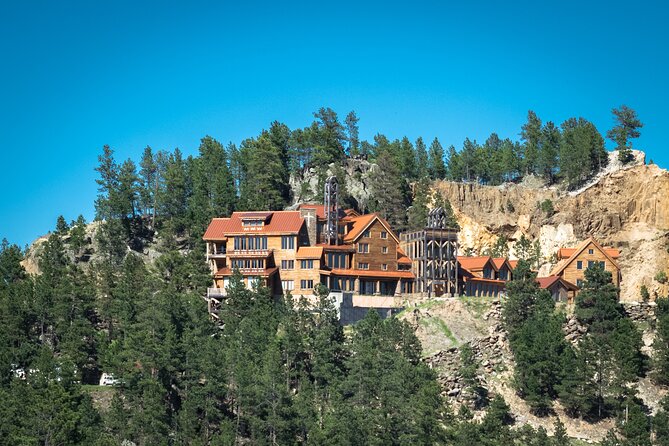
In the Black Hills, the best kind of guiding is the kind that doesn’t slow you down. This tour is built around a classic loop feel: you drive, you stop when you want, and your phone handles the narration timing. The result is that you spend less brainpower tracking facts and more attention on what you’re passing—tunnels, switchbacks, overlooks, and small roadside sites that you might miss on a quick drive.
The other big win is how it handles variety. You get a scenic road experience (Iron Mountain Road), plus history anchors (Custer-era locations), plus a few “pause and look” stops like Norbeck Overlook. That mix matters. If you only wanted driving scenery, you could get it for free with your own playlist. This adds the context that makes those same turns and structures feel purposeful.
Price and value: paying per group, not per person
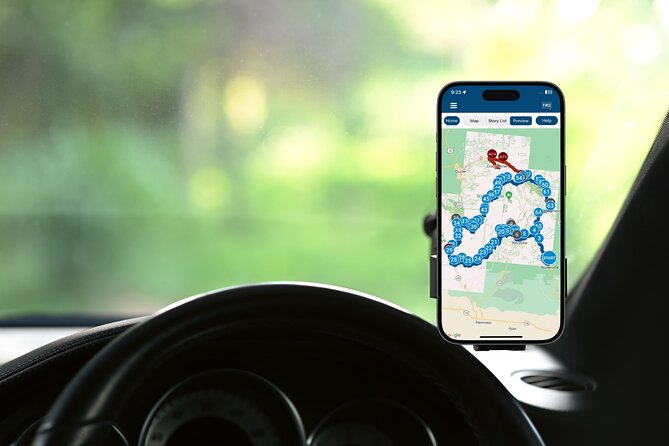
The price is $19.99 per group (up to 4). That’s the type of setup that can turn into real savings because two people often pay almost the same as four. If you’re traveling as a small carload, your cost per head drops quickly, and you’re not stuck with a fixed schedule like many tours.
You’re also not paying for attraction tickets inside the tour cost. The experience includes storytelling and a guided route structure, but it doesn’t include paid entry fees or reservations for specific sites. In practice, that means you should budget separately only if you decide to enter a museum, monument, or attraction that charges.
The route basics: how long it takes and what you’re actually covering

This driving tour runs about 2 to 3 hours for an approximately 66-mile drive, with 65+ audio stories along the way. The stop pacing is designed around short audio segments—many of the listed story moments are around 10 minutes each.
That timing is helpful because it matches the rhythm of the Black Hills roads. You can do a quick stop to take a photo or stretch your legs, then get back in and keep moving. If you’re the type who likes to stop often, you can stretch the time. If you’re trying to fit it into a half-day, you still have enough flexibility to move efficiently.
Getting the audio to work: the setup step you cannot skip
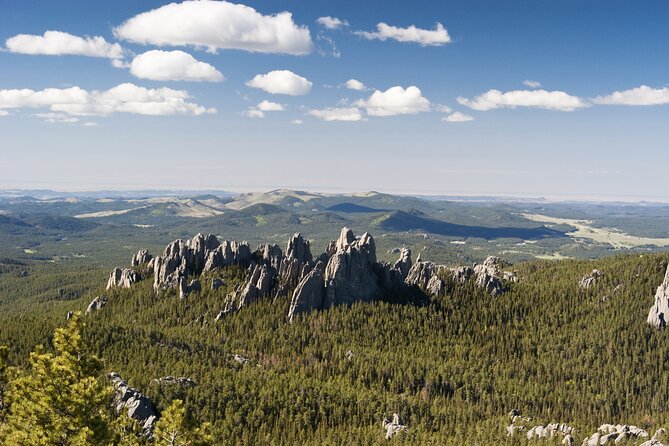
The tour is self-guided, so no one meets you at the starting point. You’ll start at 13620 US-16, Rapid City, SD 57702, and end near Keystone, SD (the end point is listed as WGHW+X8G).
Here’s the part that makes or breaks your day: after booking, follow the email/text instructions and download the tour while you have strong Wi‑Fi/cellular. The tour is then designed to work offline afterward. If you wait until you’re onsite without a good signal, you may face an app download failure and lose time you can’t really spare.
Once downloaded:
- Open Action’s Tour Guide App
- Enter the password sent by email/text
- Start the correct version if you see more than one tour option
- Connect your phone to your car audio using Bluetooth, USB, or AUX
Compatibility is mentioned for Apple CarPlay, with Android Auto support on the way. If you plan to use car audio, it’s worth testing your connection before you start rolling, so you don’t troubleshoot while you’re driving.
Stop-by-stop: Iron Mountain Road, bridges, and tunnel moments
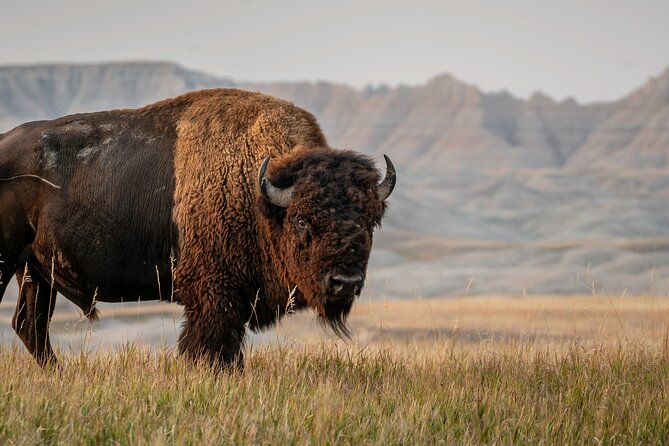
This is where the tour really grabs your attention, because Iron Mountain Road is already photogenic. The audio just makes you notice details you’d otherwise gloss over.
Stop 1: Iron Mountain Road and the Custer State Park spirit
The tour kicks off on Iron Mountain Road, described as a stretch that, together with the Needles Highway, captures the spirit of Custer State Park. Expect lots of driving interest here—this is the kind of road where the shape of the drive matters as much as the view.
Practical tip: since this is stop-and-story based, you don’t need a long ticket line or formal entry. Your “admission” is simply arriving and following the prompts.
Stop 2: Pigtail Bridge sequence and Doane Robinson Tunnel area
Next comes a classic combo: the second Pigtail Bridge, followed immediately by the first tunnel (the guide also points you toward Doane Robinson Tunnel in this phase). If you like places where engineering meets scenery, this is a strong stretch to pay attention in real time.
Why it’s worth it: tunnels on these roads can feel the same once you’re driving, so having a story trigger near them keeps your brain engaged. You’re not just passing stone—you’re learning why it’s here while you’re still in the moment.
Stop 3: Iron Mountain Picnic Area
You’ll reach the Iron Mountain Picnic Area, described as the end of single-lane roller-coaster driving through the forest. That description is spot-on for what it feels like: the road seems to play with your speed and attention, then opens into a more pause-friendly setting.
This is a good stop for a short break. If you’re traveling with anyone who gets restless in the car, this is one place where stepping out for a few minutes makes the rest of the drive easier.
Stop 4: Norbeck Overlook at the 5400-foot high point
The tour then heads to Norbeck Overlook, listed as the highpoint of Iron Mountain Road at 5400 ft. The audio highlights that there’s a large parking lot here, and the best advice is to actually get out of the car for this one.
Why: overlooks are one of those travel moments where pictures never quite replace being able to look around slowly. Even if you take only 5 minutes, you’ll feel the change in elevation and the bigger Black Hills scale.
Stop 5: Scovel Johnson Tunnel
The final tunnel on Iron Mountain Road in the sequence is Scovel Johnson Tunnel, named for the chief engineer and surveyor of the Black Hills scenic drives. This kind of naming context helps you connect the dots between the roads you’re driving and the people who designed them.
If you’ve ever wondered how some roads became famous, that’s usually because someone solved a terrain problem in a way that also looks good.
The story stops you’ll actually feel while you drive
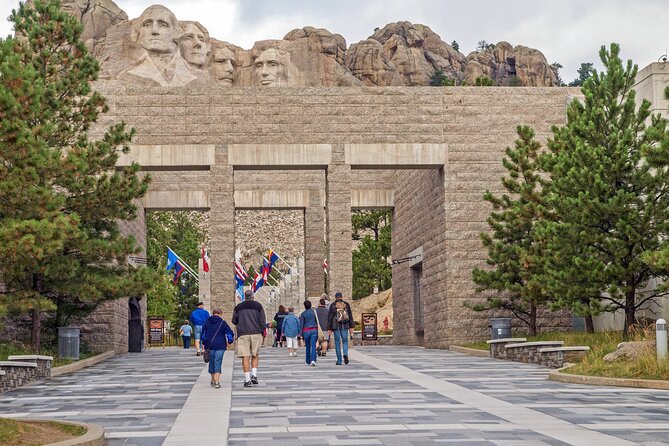
After the tunnel run, the tour pivots into history and regional context. This is where audio tours can feel either like trivia, or like a useful lens. This one leans useful.
Galena Fire context (1988)
You’ll be driving through the heart of the Galena Fire from 1988, one of the largest wildfires in Custer State Park history. Even if you’ve heard about it before, having it as a story marker while you’re out there changes how you interpret what you see.
You might not always spot burn scars from the road, but your understanding changes. It becomes a landscape you can read as part of living change, not just a pretty backdrop.
Jewel Cave mention
The tour also brings up Jewel Cave, described as the third largest cave system in the world. You’re not being told you must enter it here, but the timing makes sense: caves often feel like an optional detour—until someone reminds you how significant they are.
Stop 6: The Gordon Stockade and Custer-era context
Next is the Gordon Stockade. The audio frames 1874 as a moment when Lieutenant Colonel George Custer changed the fate of the Black Hills, and it references the 1868 Treaty of Fort Laramie and the fact that the Black Hills belonged to the Sioux at that time.
This stop works best when you treat it as a story anchor, not a checklist. Even if you only pause for the audio moment, it adds weight to the general region you’ve been driving through.
Badger Clark’s home and Badger’s Hole
Later in the drive, the tour points out a turn and sign for Badger Clark’s home, specifically mentioning the sign Badger’s Hole. That kind of detail is exactly why a driving audio guide is more satisfying than a basic map—small places get named, not skipped.
Black Hills Playhouse timing
The tour also flags the Black Hills Playhouse, described as possibly the most obscure drama location in the world, with plays staged between June and mid-August and a tradition going since 1946. If your dates overlap, this is the sort of note that helps you plan the next evening without scrambling later.
Vehicle restrictions: tunnels mean you should plan your car choices
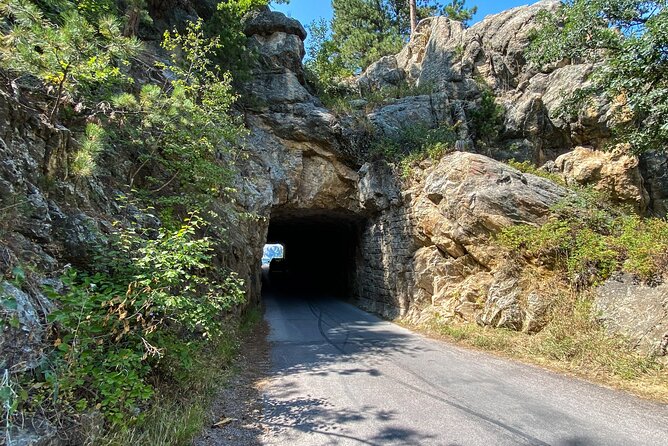
One practical warning matters here: height restrictions apply along the Black Hills Loop Drive. Large RVs may not fit through tunnels on Needles Highway and Iron Mountain Road.
If you’re traveling with a tall vehicle, don’t assume you’ll get through just because a road looks open. If you’re towing, the guidance suggests detaching and leaving the trailer behind when possible. If you want extra practical details, the tour notes there’s an existing guide focused on the narrow tunnels of Needles Highway.
If you want stress-free audio listening, choose a regular car when you can. It’s the simplest way to keep the drive smooth and match the route design.
Sylvan Lake, Crazy Horse decision point, and finishing near Hill City

After the history and fire context, the tour gives you a natural pivot toward classic Black Hills highlights.
Sylvan Lake area and the state park boundary feel
The tour notes that you’ll soon reach Sylvan Lake, marking the state park boundary. It also points out that you’ll pass the historic Sylvan Lake Lodge on the right, though you likely won’t see much through the trees.
This is a good spot to reset your pace. If you’ve been focused on audio triggers, you can now switch to scenic scanning and quick photo stops.
Crazy Horse Memorial: detour or continue the loop
You’ll face a choice: take a detour to Crazy Horse Memorial or continue following the loop. The tour notes that Crazy Horse is about a ten-minute drive from the junction.
This is one of those decisions that depends on your trip goals. If you want one big headline stop, the detour is easy. If your goal is more classic scenic driving and fewer parking hassles, you may prefer to stay on the loop and keep the audio flow.
Hill City: the town blocks portion
The tour then moves you into Hill City, described as the next blocks where most things are pretty self-explanatory. Think of this phase as where your Black Hills driving day turns into practical sightseeing and food-and-stroll possibilities.
What the best reviews point to (and where things can go wrong)
The most praised aspects are consistent: the audio makes the drive feel more meaningful, it’s easy to use, it works offline after download, and the GPS audio cues tend to kick in as you reach story stops.
But the issues aren’t random. The most common problem is GPS timing when your driving route changes. One example described a frustration when taking an alternate route through Custer State Park on a wildlife loop, where the app didn’t pick up immediately on the other side. The fix is simple: if you go off-route, you may need to start the audio at a nearby story point when you’re back on track, or drive past a missed trigger so the GPS cues realign.
There’s also the download problem category. If you can’t download beforehand, you can end up calling for help with too little time left in the day. The tour is set up so downloading ahead matters. Do that, and the rest runs more smoothly.
Who should book this Black Hills driving audio tour
This tour fits best if you:
- Want car-based flexibility without a group schedule
- Like learning history and road engineering while you drive
- Have a small group (up to 4) and want to split the cost by buying once per car
- Prefer offline reliability for areas where signal can be spotty
It may be less ideal if you:
- Plan to take lots of detours and bounce around off-route often
- Rely on a fast cellular connection at the last minute for setup
- Want a strictly guided, stop-in-order experience with staff supervision
Should you book it? My practical call
If your goal is to drive the Black Hills loop with more meaning, this is a strong buy for the money. The combination of 65+ story stops, tunnel and overlook pacing, offline-ready design, and the ability to go at your own speed is the right mix for a region where you’ll want your hands on the steering wheel and your eyes on what you pass.
But treat the download step as non-negotiable. Do it with good signal before you start driving. If you’re the kind of traveler who changes routes a lot, stay mindful: GPS-based narration works best when you follow the intended road sequence.
If you do that, you’ll get a drive that feels guided in the best way—stories timed to your reality, not a script that forces you to rush.
FAQ
How much does the Black Hills self-guided driving audio tour cost?
It costs $19.99 per group, valid for up to 4 people.
How long does the driving tour take?
Plan on about 2 to 3 hours for the full loop experience.
Where does the tour start and end?
It starts at 13620 US-16, Rapid City, SD 57702 and ends near Keystone, SD (listed end point: WGHW+X8G).
Do I need cell service during the drive?
After you download the tour while you have strong Wi‑Fi/cellular, it works offline.
What if I have trouble downloading on arrival?
The instructions emphasize downloading first with Wi‑Fi/cellular. If audio isn’t working because the tour didn’t download, you may need support and should not assume it will work without the prior download.
How do I start the tour once I arrive?
Open Action’s Tour Guide App, launch the correct tour version if prompted, then enter the password from your email/text and go to the first story point. Audio starts automatically and plays based on your location.
Can I listen through my car stereo?
Yes. The setup instructions note connecting your phone using Bluetooth, USB, or AUX. Apple CarPlay is listed as compatible.
Are there vehicle size limits for the route?
Yes. Height restrictions apply along the Black Hills Loop Drive because large RVs cannot fit through the tunnels on Needles Highway and Iron Mountain Road.
Are attraction tickets included?
No. The tour does not include attraction passes, entry tickets, or reservations.
What is the cancellation policy?
You can cancel for a full refund up to 24 hours in advance of the experience start time. Cancellation within 24 hours isn’t refunded.