REVIEW · BATH
Bath: Roman Baths Entry Ticket with Audio Guide
Book on GetYourGuide →Operated by Bath and North East Somerset Council · Bookable on GetYourGuide
Two thousand years of Bath is one ticket. I love the audio guide in 12 languages, because it turns a self-paced route into a clear story. I also love that you can end with a tasting from the mineral spa water right on site.
One possible drawback: the audio device is a handheld style, and on longer visits that can get uncomfortable for some people. If you’re bringing kids or you’re sensitive to arm fatigue, plan for breaks.
If you want a smart, low-stress way to see the Roman Baths, this ticket format is hard to beat. It’s not a lecture. It’s a guided walk, with enough freedom to pause when something grabs your eye.
In This Review
- Key things to know before you go
- Roman Baths audio ticket: what you’re really buying
- Redeeming your voucher and getting your bearings fast
- Museum route: Gorgon’s head and Sulis Minerva’s cult world
- Great Bath: the main scene, and why it feels different in person
- East Baths and Roman Gym: heated rooms with purpose
- West Baths plunge pools and Circular Bath details
- Costumed Roman characters: fun Q and A, plus better photos
- Spa water tasting: the 43-mineral moment
- Audio guide comfort: how to make the handheld device work for you
- Timing and crowds: when to start so you enjoy it
- Shop and souvenirs: practical buys tied to the site
- Value check: why this ticket makes sense at about $30 per person
- Who this experience suits best (and who might want a different plan)
- Booking decision: should you book this audio ticket?
- FAQ
- How long is the ticket valid?
- What is included with the Bath Roman Baths entry ticket?
- What audio guide languages and formats are available?
- Is the Roman Baths wheelchair accessible?
- Are pets, strollers, or luggage allowed?
- When is the last entry time?
- Is this experience refundable?
Key things to know before you go

- Audio guide that labels the route so you can find each stop without getting lost
- Museum powerhouses like the Gorgon’s head and the gilt bronze Sulis Minerva figure
- The Great Bath at walking level, with views of Bath rooftops and sky
- A full circuit of bathing rooms, including the East Baths, Roman Gym, laconicum, West Baths, and Circular Bath
- Spa water tasting from the dedicated drinking tap with 43 minerals
- Costumed Roman characters who answer questions and are great for photos
Roman Baths audio ticket: what you’re really buying

This isn’t just a ticket to look at old stones. You’re getting an entry pass plus a structured audio experience that helps you understand what you’re seeing as you move through the Roman Baths’ museum areas and bathing complex.
That matters, because the site is big. From the outside, the Roman Baths can look compact. Inside, you’ll find multiple areas with different functions and different kinds of heat, water, and ritual. The audio guide keeps you from wasting time reading tiny labels and guessing what each space was for.
It’s also a good value choice if you like to go at your own pace. You can slow down for the Great Bath, speed through the museum rooms when you’re tired, then circle back if you want to focus on one theme.
You can also read our reviews of more tours and experiences in Bath.


Redeeming your voucher and getting your bearings fast
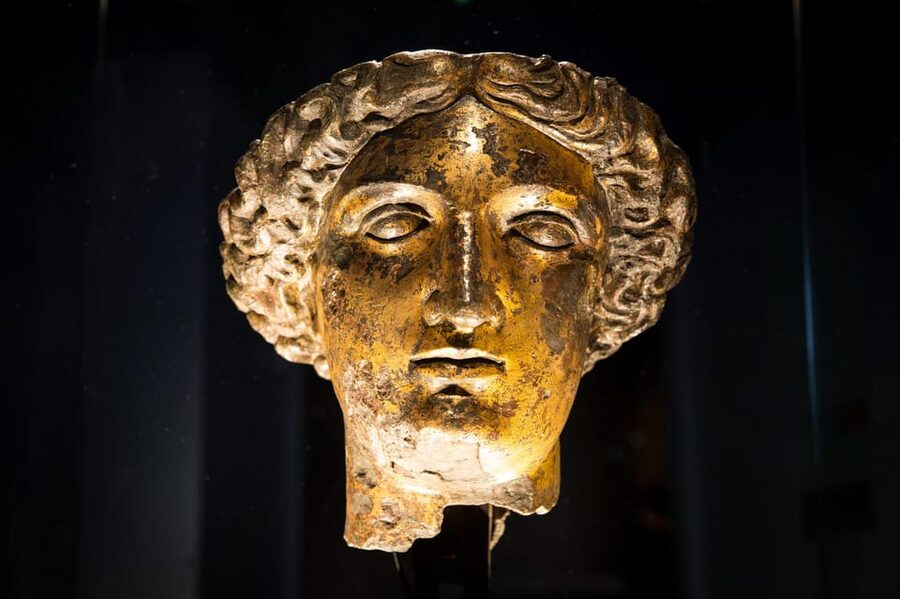
Your start is simple: go to the Roman Baths to redeem your voucher. From there, you follow the route through the museum first, then out to the bathing complex.
A small group setup helps the experience feel easier to manage, with limited capacity on the activity side. Even so, Bath is popular, and the Roman Baths can get busy. If you can, plan for an early entry time. One visitor noted opening time around 9am, and that crowds build quickly afterward.
Once you have the audio guide, look for how the route is marked. The audio is designed so you can follow along at each stop, with labels and navigation cues. That reduces the usual “where am I supposed to stand?” frustration.
Museum route: Gorgon’s head and Sulis Minerva’s cult world
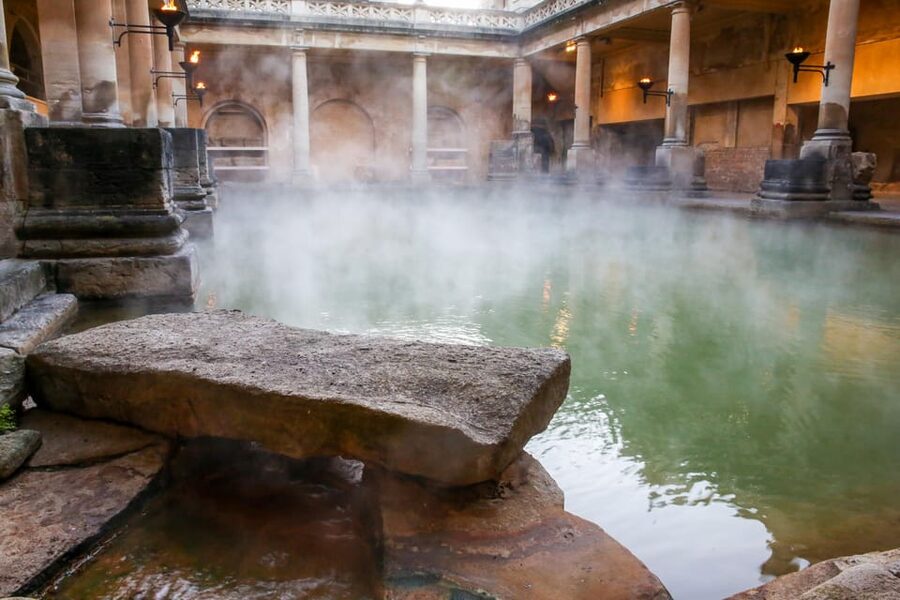
The museum is where you should start, because it gives you the meaning behind the spaces you’ll walk through next.
You’ll see key Roman Britain artifacts and get context about the people who lived with these rituals and routines. The exhibits are arranged so each room has its own focus, and the audio guide helps you connect the dots.
Two highlights are truly eye-catching. First is the Gorgon’s head—an intense piece that once adorned a temple pediment, positioned high above people approaching the goddess’ temple. It’s the kind of sculpture that makes you stop, look up, and wonder what message it was meant to send.
Second is the gilt bronze head of Sulis Minerva. This one is special not just because it’s detailed, but because it connects you to the goddess at the center of the site’s worship. The audio helps you understand what it would’ve meant for Roman visitors to see her represented so powerfully.
Practical tip: if you want to get the most from the museum, give yourself time to listen at fewer stops rather than rushing every track. The audio is made for your ears, not just as background noise.
Great Bath: the main scene, and why it feels different in person

When you step out from the museum into the bathing complex, the Great Bath is the star. It’s the iconic centerpiece, and you get to see it from a stone walkway that lets you take in the full scale.
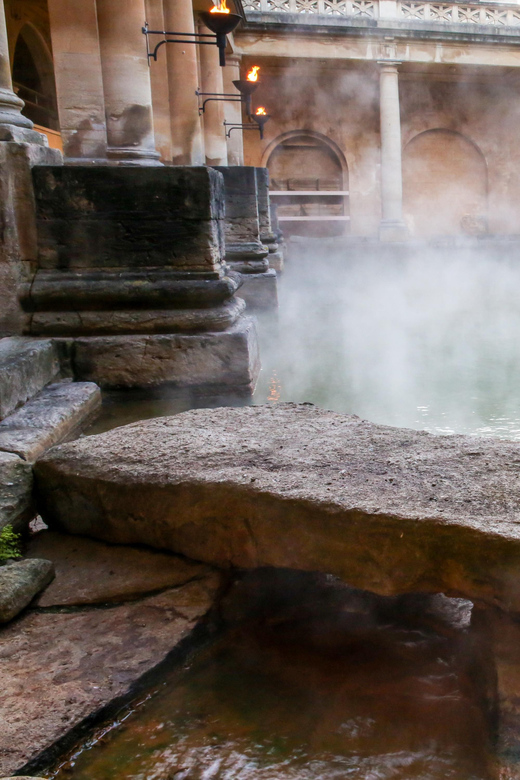
This is one of those places where the atmosphere does work on you. On colder mornings, steam spirals can rise from the hot water, and the setting of Bath’s sky and rooftops above makes the view feel very real. Even if the weather is plain, the Great Bath still does that rare thing: it looks both ancient and alive.
Walking the area gives you a sense of how the Romans moved through the space. You’re not stepping into a reenactment. You’re moving through the footprint of a functional bathing and religious setting that kept drawing people for centuries.
If you tend to get restless in museums, this is your payoff zone. It’s open-air, it has clear visual anchors, and you can pause whenever you want a better angle for your photos.
East Baths and Roman Gym: heated rooms with purpose
After the Great Bath, the route expands into the rest of the bathing complex. The East Baths are where you’ll notice the focus on heated rooms and facilities like massage areas. The audio guide helps explain why heat and water mattered in Roman life here, not just as comfort but as part of a system.
Then comes the Roman Gym and the ancient sauna, called a laconicum. This is one of the best places to listen carefully, because the name might be new, but the idea is easy to grasp: different rooms with different kinds of heat, each with a role.
What I like about this part of the route is that it helps you picture a day, not just a moment. This wasn’t one quick soak. It was a whole routine.
Potential drawback to plan around: because you’ll be moving from room to room, you may want to take micro-breaks. The site is fairly walkable, but it still adds up when you listen to every stop.
West Baths plunge pools and Circular Bath details

The West Baths add another layer: plunge pools. This contrast helps you understand the flow of temperature changes and how visitors might shift between spaces depending on what they wanted to feel.
Then there’s the Circular Bath. It’s a quieter visual moment compared to the Great Bath, but it’s the kind of stop that rewards people who like to notice structure and layout. The audio gives context so you don’t just see a round basin and move on.
If you’re the type who likes to read architectural facts, don’t rely only on your eyes here. Use the audio cues to understand why each area exists. The route is built so you naturally learn the site’s logic as you go.
Costumed Roman characters: fun Q and A, plus better photos

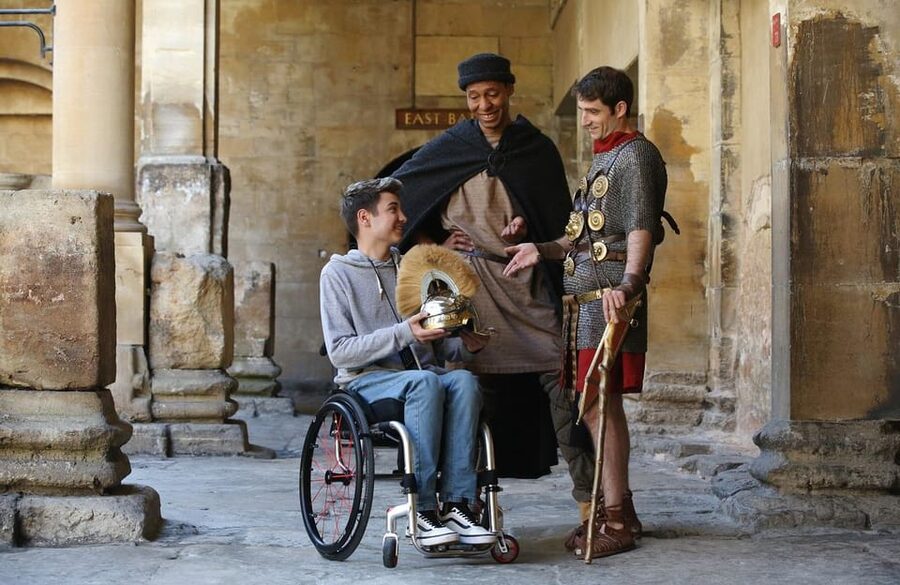
One of the most enjoyable additions to this experience is the chance to meet costumed Roman characters. You can ask questions about life in Roman Britain and get a photo.
This is especially handy if you’re traveling with kids or you want a human layer to the story. The museum and ruins are fascinating, but there’s something different about having someone answer in character and make the past feel less like a textbook.
Just treat this as a bonus, not the main plan. Your ticket is set up around the museum and bathing route with the audio guide. If you catch the characters, great. If you don’t, you’ll still have a full experience.
Spa water tasting: the 43-mineral moment

At the end of the walk, you’ll reach the dedicated drinking tap for spa water tasting. The water is known for containing 43 minerals, and the site has attracted visitors for hundreds of years because of that reputation.
You’re not just sampling for novelty. The tasting is part of the experience’s original logic: the baths weren’t only for bathing. They were also for ritual and belief around the springs.
How to make this feel worth it: treat the tasting as your final checkpoint. After walking the complex, you’ll understand why this little act is such a big deal here. The water is a “now you get it” moment.
If you’re sensitive to strong flavors, keep it simple and take the smallest taste. You’re there for the full experience, not to chug mineral water like it’s a sports drink.
Audio guide comfort: how to make the handheld device work for you
The audio guide is a big reason this ticket works so well. It’s available in 12 languages (English, Dutch, French, German, Italian, Japanese, Chinese, Korean, Polish, Russian, Portuguese, Spanish) and there’s also a handheld BSL video guide option.
The format is designed for navigation. Points are labeled, and there are arrows to help you move between rooms and outdoor sections. Some projected videos also support the audio, which helps if you learn better by pairing your ears with visuals.
One practical problem shows up for some people: the device is handheld, and it can cause shoulder fatigue during long listening stretches. If that’s you, plan for breaks and don’t try to listen to every track back-to-back. Also consider adjusting how you hold the device so your wrist and shoulder aren’t locked in one position for too long.
If you’re traveling with parents, the hands-free problem can be real. You may find it easier to do short listening bursts, then regroup.
Timing and crowds: when to start so you enjoy it
This is one of those attractions that feels better when you’re not fighting shoulder-to-shoulder groups.
The Roman Baths can get crowded quickly. One visitor suggested the early morning slot, including noting opening around 9am, as the museum can become busy fast. If you want clear views of the Great Bath and a calmer time in the museum rooms, start early.
Also keep in mind the last entry rule: last entry is 1 hour before closing time. Don’t plan to wander in right at the end and assume you’ll finish comfortably. Give yourself buffer time so you can still listen and stop for photos.
Shop and souvenirs: practical buys tied to the site
After the tasting and route finish, there’s a shop with products inspired by the museum. You can find items like jewelry, prints, books, homeware, games, and bathing products.
If you like souvenirs that actually connect to what you saw, this is the right place for that. There are also local independent craft items such as honey, botanical gin, and handmade soaps.
This shop isn’t just extra. It’s a nice way to carry a piece of the place home, especially if you don’t want generic mass-market trinkets.
Value check: why this ticket makes sense at about $30 per person
At around $30.31 per person, the value comes from combining three things in one package:
- entry to the Roman Baths
- an audio guide in many languages (or BSL video option)
- the spa water tasting experience
If you’re used to paying for guided tours on top of admission, this format can feel like a win. You’re not paying for someone to walk alongside you and talk at you for an hour. You’re paying for a guide system that lets you control your pace while still covering the important spots.
Another value point: the audio guide reduces the need to read lots of small interpretive boards. Reviews singled out how easy navigation is and how extensive the audio content feels, which translates into more time looking and less time decoding text.
So for most people, the best use of value is this: listen to enough tracks to understand the big themes, then spend extra time where you visually care most—Great Bath and the key temple-related objects.
Who this experience suits best (and who might want a different plan)
This Roman Baths audio ticket fits you well if:
- you like self-paced sightseeing with real structure
- you want audio support rather than relying on signboards
- you’re traveling with kids and want an entertaining child audio option
- you enjoy museums where the artifacts connect directly to a physical site
You might want a different approach if you strongly prefer guided tours with a live guide. This is not set up as a guided walkthrough; it’s an audio-led route you follow yourself.
Also, think about how you handle handheld devices and time on your feet. It’s wheelchair accessible to a large extent, but like any indoor-outdoor historic site, you’ll still be moving around.
Booking decision: should you book this audio ticket?
Yes, you should book it if you want maximum meaning per minute. The audio guide format is built to help you understand the Gorgon’s head, the goddess Sulis Minerva, and what each bathing space was for, then tie it together with the spa water tasting.
Book it now if:
- you’re trying to fit the Roman Baths into a tight Bath itinerary
- you want a smart way to handle crowds by going early
- you appreciate structured self-guided sightseeing rather than a lecture
Skip it (or consider a different style of tour) if:
- you dislike carrying handheld audio devices for a long walk
- you prefer a live guide answering questions on the fly the whole time
FAQ
How long is the ticket valid?
The entry ticket is valid for 1 day. You’ll want to check available starting times before you lock in your slot.
What is included with the Bath Roman Baths entry ticket?
Your ticket includes entry to the Roman Baths, an audio guide (12 languages) or a handheld BSL video guide, and spa water tasting.
What audio guide languages and formats are available?
Audio is available in English, Dutch, French, German, Italian, Japanese, Chinese, Korean, Polish, Russian, Portuguese, and Spanish. There is also a handheld BSL video guide option.
Is the Roman Baths wheelchair accessible?
The Roman Baths are 90% accessible for wheelchair users. Elevators are on site to help you access different levels.
Are pets, strollers, or luggage allowed?
Pets are not allowed. Baby strollers are not allowed. Luggage or large bags are also not allowed.
When is the last entry time?
Last entry is 1 hour before closing time.
Is this experience refundable?
No. This activity is non-refundable.
If you tell me your travel dates and whether you’re going with kids or someone who uses a wheelchair, I can suggest the best way to pace the route inside the time you have.