REVIEW · BASEL
Basel: Sightseeing Bus Tour with Audio Guide
Book on GetYourGuide →Operated by BaselCitytour · Bookable on GetYourGuide
Basel moves fast when you’re on a bus. This 2-hour Basel sightseeing bus tour with audio guide turns quick window views into a clear story of the city, with stops you can actually use in your plans. I like the iPad audio guide format, with multilingual narration and visual support, and I also appreciate the small extras like onboard Läckerli.
The main catch is that the audio doesn’t always match the exact moment you’re passing each spot, so you may need to watch the scenery a bit as you go. Still, it’s a solid way to get your bearings without committing to a long walking day.
You start by the Tinguely Fountain near Stadtcasino, ride a panorama bus through Basel’s center, and end back at the same meeting point. If you want an efficient first look at landmarks like the Basel Cathedral and museum areas, this is built for that.
In This Review
- Key Points to Know Before You Ride
- How This Basel Bus Tour Works (and Why It’s Worth Your Time)
- Price and time: value for first-timers
- Meeting Point and Ride Setup: Where to Start
- The Audio Guide: iPad, Languages, and the Stories You’ll Remember
- A real caution: audio timing vs. street reality
- From Markets to Synagogues: The Oldest Layers You Pass in Basel’s Center
- Rathaus, Bridges, and City Gates: Where Basel Feels Like Basel
- Basel’s Best Photo Moments: Short Stops You Can Use
- Pharma Power Meets Heritage: Novartis, Roche, and the Modern City Thread
- Tinguely and the Art Circuit: Museum Stops That Make the Tour Click
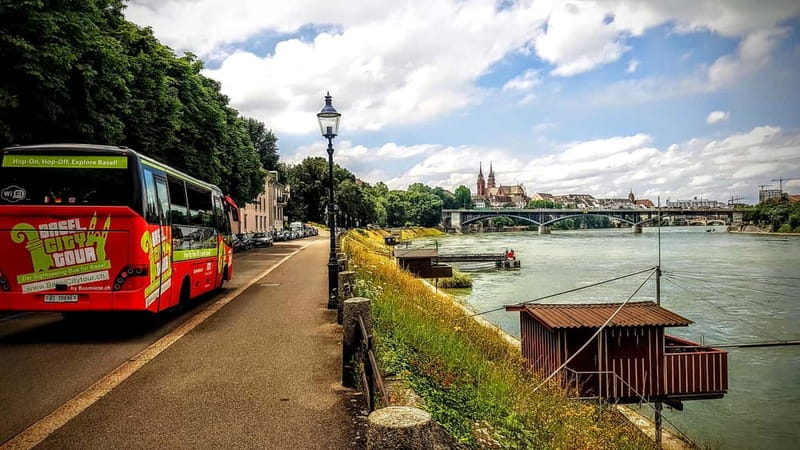
- Industry and Waterways: Paper Mill Museum, City Wall, and Riverside Views
- The Extra Flavor Stops: Läckerli and a Factory Tasting
- What I’d Pair This With in Your Basel Plans
- Who This Tour Is Best For (and Who Might Want Something Else)
- Should You Book the Basel Sightseeing Bus Tour with Audio Guide?
- FAQ
- FAQ
- How long is the Basel sightseeing bus tour?
- What is the price per person?
- Where do I meet for the tour?
- What does the tour include?
- Which languages are available for the audio guide?
- Do I need to download an app before the tour?
- Are there stops where I can take photos or get off?
- Is WiFi included on the bus?
- Is food included besides the Läckerli?
Key Points to Know Before You Ride
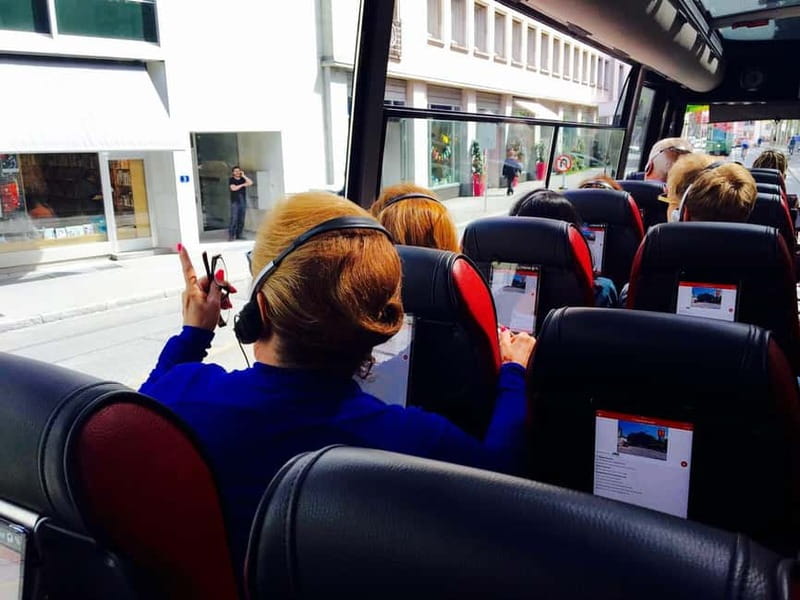
- iPad audio guide app is included (plus free WiFi onboard), with multiple language options
- 12 boarding/alighting stops let you hop off for photos or to visit key sights later
- A dedicated factory stop with a Läckerli food tasting adds a fun local-food moment
- The route mixes major old-town landmarks with modern Basel icons like Roche and Novartis areas
- Expect short photo stops at a couple of scenic points, including a longer look area by the water
How This Basel Bus Tour Works (and Why It’s Worth Your Time)
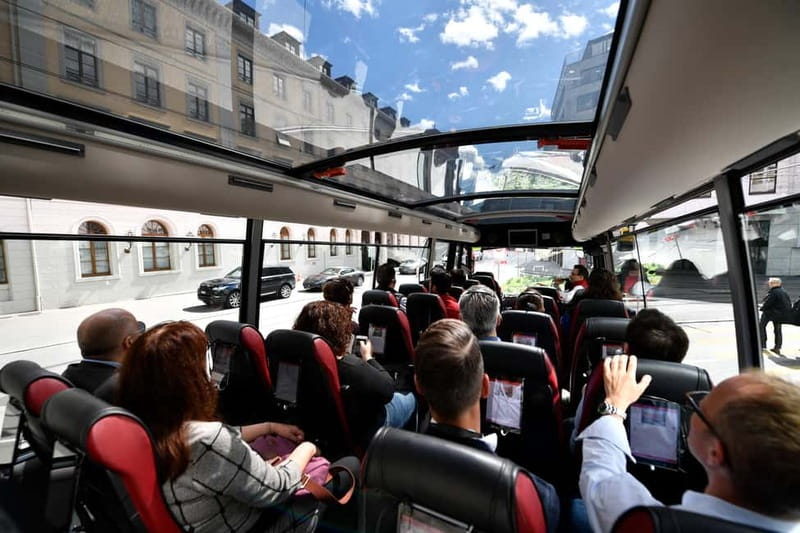
This is a classic orientation tour, designed for the time-crunched traveler. You stay seated on a panorama bus and let the audio guide do the teaching, while you pass major districts and famous buildings across Basel’s central arc. It’s not a detailed walking lecture. It’s more like a high-quality street-level briefing—then you decide what to explore later.
What makes it work well is how Basel’s layout supports bus views. You get to see the city’s layers: early religious sites, university architecture, bridges and market squares, plus the modern economic muscle around pharma and biotech. The audio guide ties those layers together with names and themes, so the city stops feeling like a random list of monuments.
And yes, you’re also getting a few Basel-friendly treats. You get free hard spice biscuits (Läckerli) on board, and the route includes a stop for a food tasting at Jakob’s Basler Leckerly Manufaktur. That’s a small add-on, but it helps the tour feel local rather than generic.
You can also read our reviews of more tours and experiences in Basel.

Price and time: value for first-timers
The price is about $30 per person for a 2-hour ride. In practical terms, you’re paying for three things at once:
- Transport around the center (so you’re not constantly re-routing trams or walking in the rain)
- An iPad audio guide with narration in many languages
- A tour route that hits enough landmarks to help you plan the rest of your day(s)
If your alternative is riding buses without an audio story, this feels like better value. If your alternative is a long guided walking tour, this won’t replace that. But it’s a great starter when you want quick context.
Meeting Point and Ride Setup: Where to Start
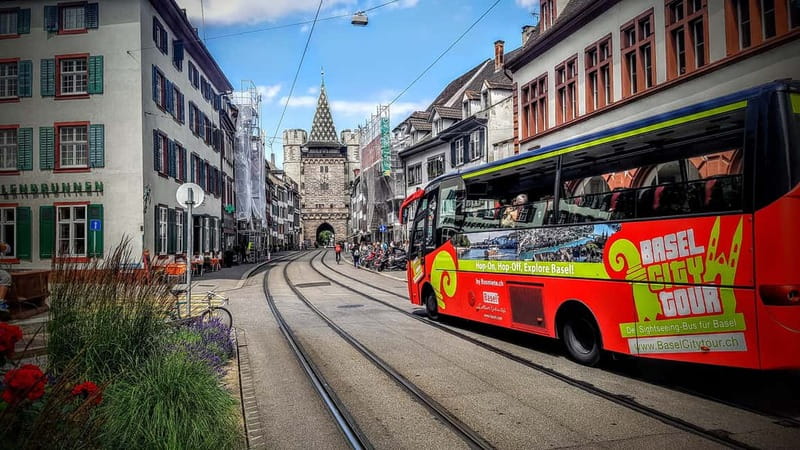
You meet at the bus stop opposite the Tinguely Fountain, in front of Stadtcasino, in the bus parking zone. The tour begins at BaselCitytour’s Bus-Stop 01, at the Tinguely Brunnen area, and you return there at the end.
Bring weather-appropriate clothing. Basel weather can swing, and you’ll want to step out during photo stops. Also keep a charged smartphone with you—use it for maps and quick research between stops, especially if you plan to revisit one of the landmarks later.
The ride itself is comfortable and designed for sightseeing. You’re not stuck doing all the work: the audio guide and the scenery do most of the heavy lifting.
The Audio Guide: iPad, Languages, and the Stories You’ll Remember
The audio guide is delivered through an iPad app included with the tour. You’ll get the audio directly in multiple languages: Chinese, English, German, Italian, Japanese, Arabic, French, and Spanish. There’s also free WiFi onboard, which is helpful for checking opening times or looking up a landmark after you hear its story.
What you hear isn’t just dry facts. The narration brings in people and threads you can connect to the buildings. You’ll get stories involving names like Lenin, Felix Sarasin, Wettstein, and Basilisk, plus figures tied to the city’s culture and ideas such as C.G. Jung, Theodor Herzl, Paracelsus, Wolfgang Goethe, Hermann Hesse, and Johann Peter Hebel.
You also get art and architecture context tied to Basel’s institutions and personalities, including Jean-Tinguely and Christoph Merian. In other words, it’s not just what you see—it’s why it matters, and how it fits into Basel’s development.
A real caution: audio timing vs. street reality
One drawback that shows up in feedback: the audio narration doesn’t always sync perfectly with your exact position. If you’re the type who loves precise timing—like hearing something right when the bus turns past a façade—keep your eyes on the landmarks too. Use the audio as guidance, not a radar.
This doesn’t ruin the tour, but it’s worth knowing so you can adjust your expectations. Think of it like a guided ride with flexibility, not a metronome.
From Markets to Synagogues: The Oldest Layers You Pass in Basel’s Center
You start near the Tinguely Fountain area and begin moving through the city’s core. Early on, the bus route threads past market and religious landmarks that show how Basel grew as a trading and cultural hub.
On the way you pass places like:
- Markthalle Basel (market hall energy, right in the center of things)
- St. Paul’s Church Basel
- The Synagogue of Basel
- The University of Basel and the Bernoullianum
- The Fischmarkt fountain and then on to key square areas
These spots matter because they aren’t just pretty stops. They show Basel’s mix of scholarship, commerce, and community life. You also get narrative context about how the city’s economy and politics shaped what got built and preserved.
If you’ve never been to Basel, this segment is where the tour helps the most. It turns the center from a blur into a set of recognizable “zones” you can point to later.
Rathaus, Bridges, and City Gates: Where Basel Feels Like Basel
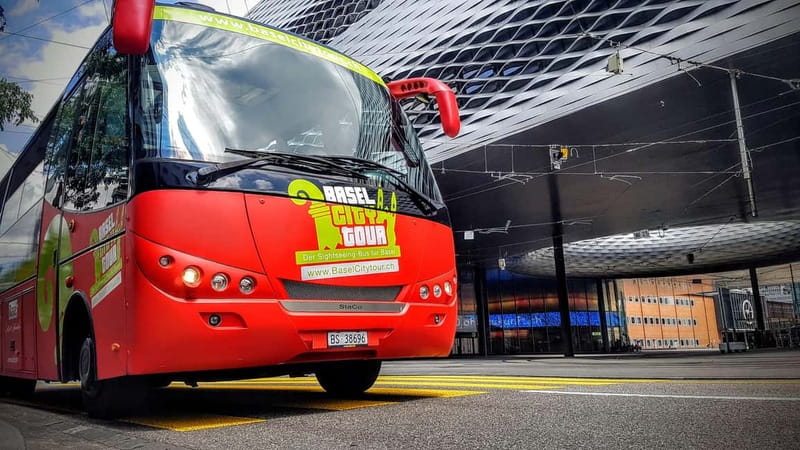
Next you reach the classic older-town feel—squares, government buildings, and bridge crossings that connect districts. Basel’s center is compact, but the differences between neighborhoods feel big once you’re seeing them from the bus.
You pass and get context around:
- Marktplatz Basel
- Kanton Basel-Stadt
- Middle Bridge (Mittlere Brücke)
- Town Hall areas
- St. Johanns-Tor and the surrounding St. Johanns-Park region
This is the part of the tour where the architecture starts to feel personal. The stories explain why certain buildings took shape where they did, and how Basel’s civic identity formed around trade and governance.
There’s also a practical advantage here: these are the sights you’re likely to want to revisit. With the 12 stops system, you can jump off later if something catches your eye from the road.
Basel’s Best Photo Moments: Short Stops You Can Use
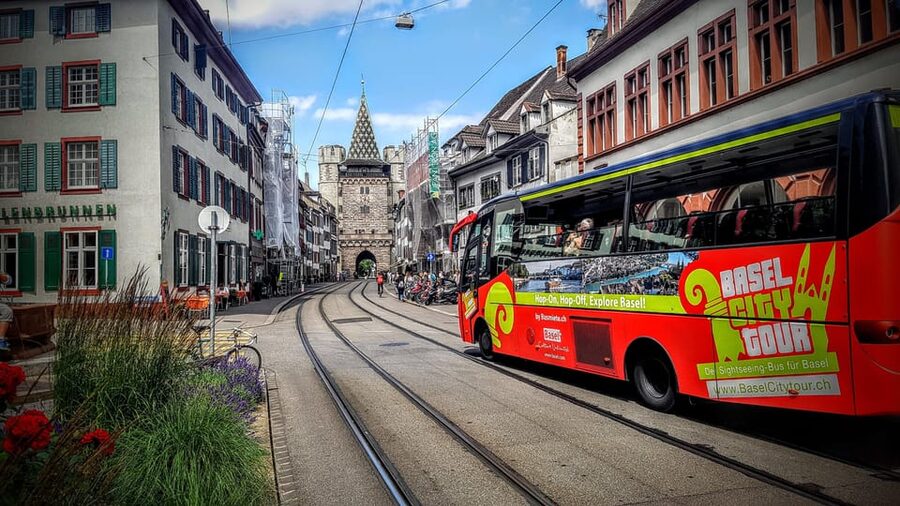
This tour includes specific moments where you can step off for photos. Two are called out with set timing:
- St. Johanns-Park has a photo stop of about 7 minutes
- Dreiländereck has a photo stop of about 10 minutes
Both are worth using quickly. For these stops, don’t plan a long detour. Instead, pick your camera angles fast and move on. Basel can be photo-friendly, but these windows of time are short by design—so efficiency matters.
If you’re hoping for long walking time at every stop, you’ll feel constrained. This tour is built for passing, viewing, and selecting. Use those photo stops as a sampler.
Pharma Power Meets Heritage: Novartis, Roche, and the Modern City Thread
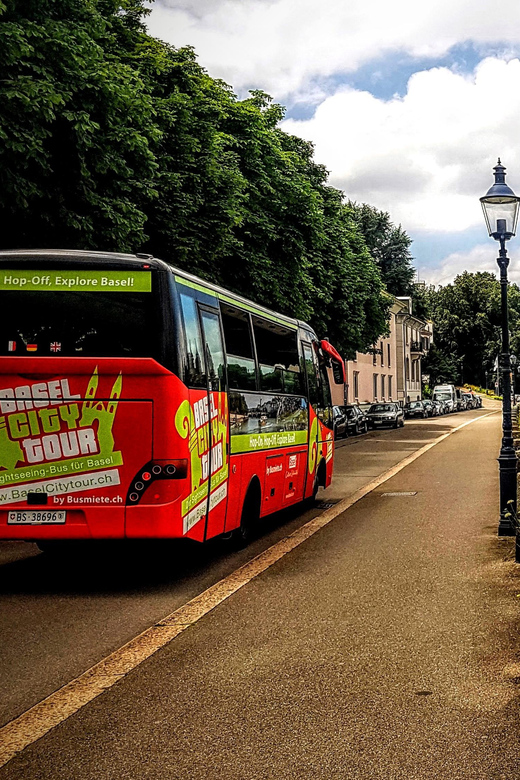
Basel today isn’t only cathedral stone and old gates. It’s also labs, campuses, and global industry—then it’s art and museums, and then it’s back to the old town.
You pass modern landmarks and areas including:
- Novartis Campus
- Dreiländereck (a memorable viewpoint area tied to Basel’s geography)
- Roche Tower and the Hoffmann-La Roche area
The audio guide ties these parts into the city’s story so you understand why modern Basel looks the way it does. Instead of feeling like a random industrial detour, the narration helps you treat it as another era of Basel’s growth—one that built jobs, shaped policy conversations, and influenced how the city developed.
If you’re the type who likes seeing contrast—old and new side by side—this section delivers.
Tinguely and the Art Circuit: Museum Stops That Make the Tour Click
Basel is famous for art, and this bus tour doesn’t ignore that. You pass or visit parts of the museum circuit, with attention to both famous names and the places tied to them.
You’ll encounter:
- The Tinguely Museum area (via the route)
- Fine Arts Museum Basel (Art Museum area)
- Tinguely Fountain (near the starting zone and a key identifier for the tour)
The audio guide also brings in Basel’s creative personalities, so when you reach the art-related parts of the route, you’re not just seeing buildings. You’re hearing how the city’s institutions shaped its cultural reputation.
This is one reason the iPad format works: it helps you keep track of the “why” while you’re moving. It’s easier to remember Jean-Tinguely’s name when you’ve just been reminded of where the city connects his work to the landscape around you.
Industry and Waterways: Paper Mill Museum, City Wall, and Riverside Views
One of the most interesting route concepts is that Basel’s industrial past isn’t treated as dead history. It’s folded into what you see now.
You pass areas tied to:
- Basel City Wall
- Basel Paper Mill and the Paper Mill Museum area
- Sankt Alban-Fähre
- Schöneck Brunnen
- The city wall and other structural traces in the center
This segment helps if you like understanding a city’s practical roots—how trade, industry, and water management influenced what still stands. It also adds variety to the tour. After seeing markets, churches, and modern campuses, the paper and wall stories feel like a different kind of Basel puzzle.
The Extra Flavor Stops: Läckerli and a Factory Tasting
Small food moments can make an orientation tour feel more real. Here, you get onboard Läckerli—traditional Basel hard spice biscuits—and you also have a stop connected with Jakob’s Basler Leckerly Manufaktur that includes a food tasting.
Even if you skip the tasting details, the main value is the taste. Läckerli is a recognizable Basel souvenir that doesn’t feel like a random candy shop pick. It’s also a good way to break up the ride so the tour doesn’t feel like only sitting and listening.
If you’re watching budgets or food timing, remember this tour doesn’t include full meals. Treat the biscuits/tasting as a snack-style bonus.
What I’d Pair This With in Your Basel Plans
This tour is best when you use it as a planning tool. After the ride, you’ll know which neighborhoods to target next. Here are smart pairings:
- If the cathedral area caught your attention, plan a closer visit later on foot.
- If you liked the art parts, choose one museum and give it real time. The bus will point you, but it won’t replace museum hours.
- If you were more intrigued by modern Basel, consider spending some time in the areas near Roche and Novartis to see how campus-style architecture shapes the city.
Because you have 12 boarding/alighting stops, you can also decide on the spot if you want to jump off for a closer look and return later. That flexibility is one of the most useful parts of this kind of tour.
Who This Tour Is Best For (and Who Might Want Something Else)
This is ideal for:
- First-time visitors who want a fast orientation
- People who prefer to sit and listen rather than walk for hours
- Travelers who want a route that includes both old Basel landmarks and modern economic icons
- Anyone who values an audio guide in their language and wants the convenience of onboard WiFi and an iPad
It might be less ideal if:
- You require perfect audio-to-street synchronization
- You’re hoping for long stops at every landmark
- You’re sensitive to how certain historical topics are presented. The narration includes many major political and historical figures, and one segment has been flagged as needing more careful, balanced handling of a specific contemporary humanitarian angle.
That last point doesn’t mean you shouldn’t take the tour. It just means go in knowing the audio tells stories with a chosen tone, like any guided format.
Should You Book the Basel Sightseeing Bus Tour with Audio Guide?
If you want to get your bearings quickly in Basel, this is a good buy. For $30 you get a 2-hour panorama ride, an iPad audio guide in many languages, free onboard WiFi, and local touches like Läckerli plus a tasting stop. The mix of cathedral-era landmarks, bridges, museum areas, and modern Basel institutions gives you a well-rounded first snapshot.
I’d book it if your goal is to learn enough to plan the rest of your visit. I wouldn’t book it as your only Basel activity if you’re craving deep, stop-by-stop walking exploration. As a starting point, though? It’s practical, and it helps you fall into Basel faster.
FAQ
FAQ
How long is the Basel sightseeing bus tour?
The tour lasts about 2 hours.
What is the price per person?
The price is listed as $30 per person.
Where do I meet for the tour?
Meet at the bus stop opposite the Tinguely Fountain in front of Stadtcasino, in the bus parking zone.
What does the tour include?
It includes a panorama bus ride around the center of Basel, an iPad with the audio guide app, free WiFi onboard, free Läckerli, and 12 stops for boarding and alighting.
Which languages are available for the audio guide?
The audio guide is available in Chinese, English, German, Italian, Japanese, Arabic, French, and Spanish.
Do I need to download an app before the tour?
The tour provides a free audio guide app download.
Are there stops where I can take photos or get off?
Yes. There are 12 stops for boarding and alighting, including photo stops such as about 7 minutes at St. Johanns-Park and about 10 minutes at Dreiländereck.
Is WiFi included on the bus?
Yes, free WiFi is included onboard.
Is food included besides the Läckerli?
The tour includes free Läckerli and includes a food tasting stop at Jakob’s Basler Leckerly Manufaktur, but meals and drinks are not included.