REVIEW · JACKSON
Yellowstone and Grand Teton Self-Guided Audio Tour Bundle
Book on Viator →Operated by Shaka Guide Apps · Bookable on Viator
Yellowstone is full of noise and wonder. This self-guided audio route turns that chaos into a clear, easy plan as you drive between top sights in Yellowstone and Grand Teton from Jackson Hole to Signal Mountain Lodge. You get GPS-activated narration and directions, so you can keep moving without hunting for what’s next.
I love the flexibility of a private, group-based tour that you can start on your schedule and skip stops that don’t fit your day. I also like that the tour uses an offline map and plays automatically as you drive, which makes the whole experience feel hands-free and low-stress.
One drawback to keep in mind: park access costs extra. The Yellowstone and Grand Teton entrance fees are not included, and this route also assumes you are comfortable doing a lot of short drives plus quick walks at pullouts and boardwalks.
In This Review
- Key highlights I think matter
- A two-park road trip built for flexibility from Jackson Hole
- Price and value: $19.19 per group plus park entrance fees
- How the offline audio tour works while you drive
- Day 1 Yellowstone: from Madison River to Old Faithful and beyond
- Midway Geyser Basin and Old Faithful: two stops that change the mood
- The “less crowded” Yellowstone moments: West Thumb, Mud Volcano, and Fishing Bridge
- Grand Canyon of the Yellowstone: viewpoints that reward patience
- Tower Falls, Soda Butte, Mammoth Terraces: where the route spreads out
- Day 2 Grand Teton: Teton “Famous Four” and classic homesteads
- Mormon Row barns, Moose visitor center, and a quiet chapel
- Jenny Lake and Signal Mountain: when driving turns into views
- Practical pacing: what to plan for so the day feels good
- Who should book this self-guided Yellowstone and Teton audio tour
- Should you book it? My decision guide
- FAQ
- Is this tour fully offline?
- Do I need internet to download and start the tour?
- Is the tour narrated automatically?
- What’s included in the bundle?
- What park fees are not included?
- Where does the tour start and end?
Key highlights I think matter
- Offline GPS + auto narration means fewer stops wasted on phone screens
- Private per group (up to 15) keeps your car ride calmer than bus-style touring
- Two big days, two iconic parks: Yellowstone hydrothermal stars and Grand Teton viewpoints
- Turn-by-turn directions help you stay on route through long park loops
- Practical stop mix: major classics like Old Faithful plus quick “side quests” like Mud Volcano
- You control the pace with a tour you can pause, resume, and pick only the stops you want
A two-park road trip built for flexibility from Jackson Hole

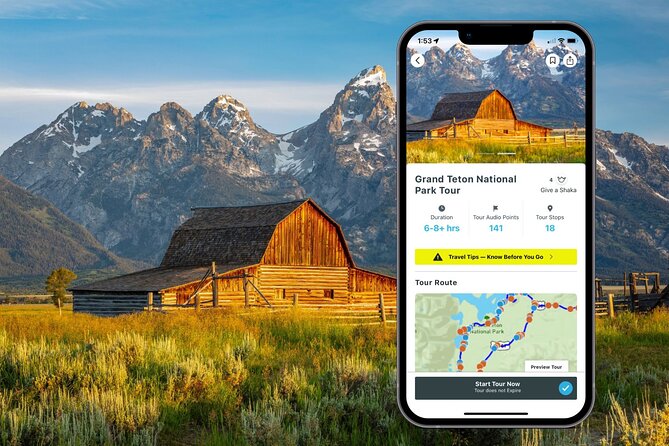
This bundle is designed for one thing: getting you through Yellowstone and Grand Teton with less decision fatigue. The tour runs about 2 days, starting in Jackson Hole, Wyoming, and finishing at Signal Mountain Lodge in Grand Teton. You can use the last stop to keep exploring Jackson Hole or head back toward West Yellowstone, depending on your plan.
It’s self-guided, private, and priced per group, not per person. That matters because a lot of “guide-heavy” tours charge per seat, and this keeps your cost more predictable when you’re traveling with family or friends.
The route also includes a wide range of stop types. Some are short pullouts, some are roadside lookouts, and some involve boardwalks or short hikes. That mix is great because it gives you options if your energy level changes mid-day.
You can also read our reviews of more tours and experiences in Jackson.
Price and value: $19.19 per group plus park entrance fees
The audio tour bundle costs $19.19 per group (up to 15 people). For a two-day route across two major national parks, that’s a strong value if you want guidance without paying for a live guide for every hour.
Two key costs are separate. The Yellowstone Entrance Fee is listed as $35.00 per booking, and the Grand Teton Entrance Fee is also $35.00 per booking. If you’re doing both parks on the same trip, you should plan on both entrance fees in your budget.
Also note what you are paying for. This isn’t just a playlist of facts. You’re getting offline navigation, GPS-triggered audio, and an organized route that strings together practical stops like restrooms, viewpoints, and short walks.
How the offline audio tour works while you drive
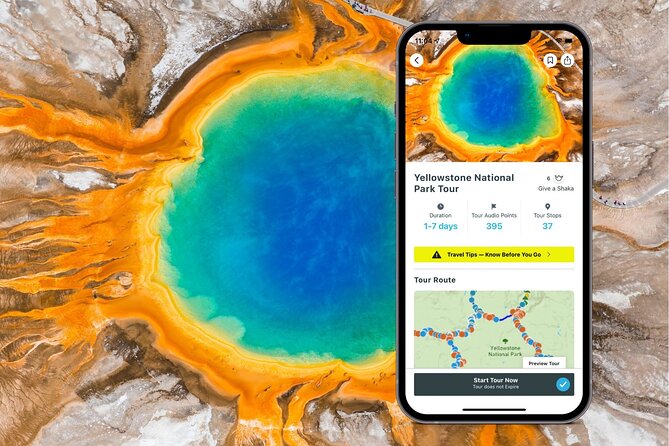
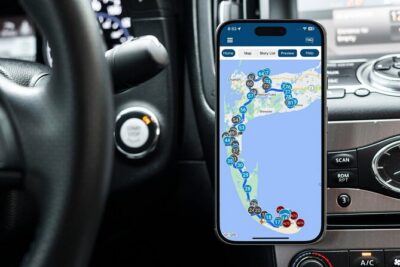
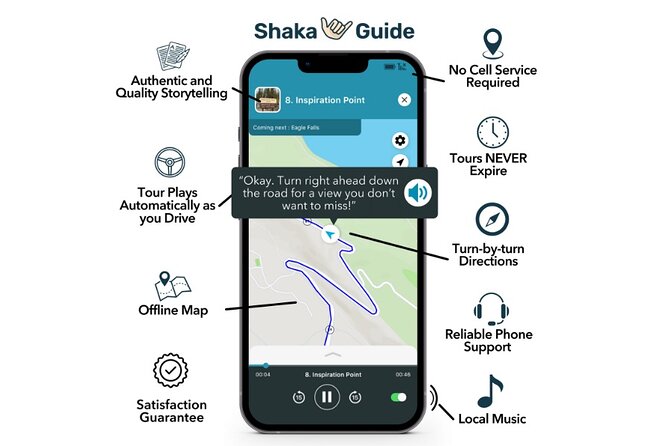
The core promise here is simplicity: download the tour and let it run while you drive. You get an offline map and GPS-based directions, and narration plays automatically as you reach each stop.
Because it works offline, you’re not stuck in the cycle of searching for Wi-Fi or watching your data disappear. That’s a real advantage in Yellowstone and Grand Teton, where cell service can be inconsistent.
You can also pause and resume when needed. That means you can stop for photos, use a restroom, or linger at a viewpoint without the tour feeling broken or “out of sync.”
The tour start is customizable too. So instead of forcing one exact schedule, you can choose the day that fits your trip and begin from the starting point you want in the Jackson Hole area.
Day 1 Yellowstone: from Madison River to Old Faithful and beyond
Day 1 is where the driving feels nonstop, but in a good way. Yellowstone’s hydrothermal system is spread out, so the value of an organized route is that you spend less time figuring out connections and more time enjoying the sights.
The day begins with the Madison River, a Blue Ribbon Fishery known for fly fishing. Along the drive, you’ll pass landmarks like Talus Mountain, Mount Haynes, and National Park Mountain. This is also a good “set the tone” start because it lets you get moving and see Yellowstone’s river country before you jump into geothermal areas.
Next comes Madison Junction, with a quick route decision point and a reminder to stop for restrooms if you need them. After that, the route shifts into Yellowstone’s classic “white terraces” zone with Firehole Canyon Drive, a short drive featuring Orange Spring Mound, Angel Terrace, and Aphrodite Terrace. This is one of those areas where you want to be ready with your camera because the color and textures can look almost unreal.
Then you hit Fountain Flat Drive, with a grassy meadow, small hot springs, and the famous Maiden’s Grave. A bonus here is the feel of variety: it’s not only geysers and domes, you also get river life vibes and trout activity by the Firehole River.
From there, Firehole Lake Drive gives you a loop into hydrothermal features like the White and Pink Dome Geysers and the Great Dome Geyser. This is a “look from the road or do short boardwalk steps” kind of stop, so it works well even if you have limited time.
Midway Geyser Basin and Old Faithful: two stops that change the mood
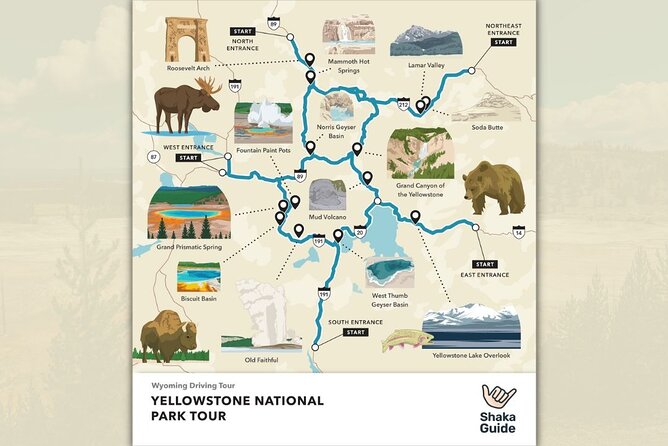
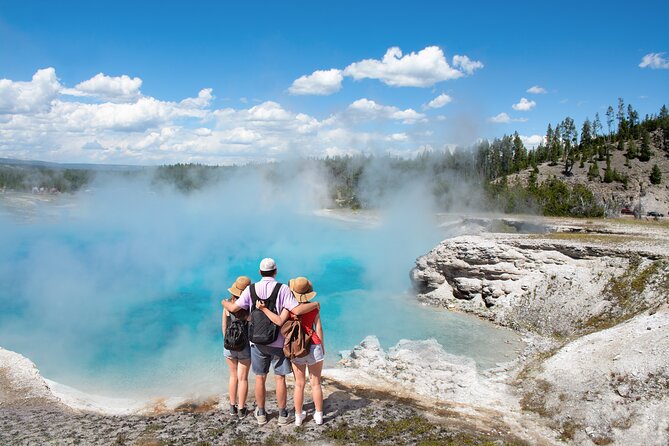
Midway Geyser Basin is a highlight because of Grand Prismatic Spring’s scale. You’ll circle it on boardwalks around a huge 370-foot feature, and you’ll also see smaller nearby hot springs. If you want a one-stop moment that feels like Yellowstone’s calling card, this is it.
If you have extra time, there’s an option from the Fairy Falls Trailhead to reach a Grand Prismatic Overlook, and the trail can continue on toward Fairy Falls. Even if you do only the shorter version, the change in elevation and viewpoint tends to make the whole area feel more real.
Then you’re at Old Faithful, the park’s reliable show. The geyser erupts about every 60 to 110 minutes, and arriving early helps you avoid waiting in a crowd for too long. From Old Faithful, you can also check visitor info at the nearby Visitor Center and Tribal Heritage Center, or use the Old Faithful Lodge for coffee, snacks, and restrooms.
The tour keeps moving after that with Kepler Cascades, a multi-tier fall viewable from a short boardwalk. It’s not the same kind of spectacle as a geyser, but it adds that satisfying roar-and-water component.
The “less crowded” Yellowstone moments: West Thumb, Mud Volcano, and Fishing Bridge
After Old Faithful, you shift toward Continental Divide at Isa Lake. This is a neat stop because it’s the only lake in the world that drains into two different oceans, with western and eastern flow to the Atlantic and Pacific. It’s a quick fact that feels like a cheat code once you’re standing there.
Next is West Thumb Geyser Basin, which the route calls out as a best-kept secret type experience. You’ll see famous Fishing Cone Geyser and also have the chance to do a 1.7-mile Yellowstone Lake Overlook loop if you have time. This is a good place to slow down because it blends geothermal features with the lake setting.
Then you drive to Gull Point for a picnic stop, and Fishing Bridge RV Park for the ranger station, general store, and the fishing bridge itself. Walking the bridge to scan for cutthroat trout is one of those simple activities that can pay off if wildlife decides to show up.
From there comes Hayden Valley, a wildlife-focused area where grazers draw predators. If you like the rhythm of stop, scan, and wait for movement, this section is for you.
Grand Canyon of the Yellowstone: viewpoints that reward patience
As the route continues, you reach LeHardy Rapids, where the boardwalk down to the river lets you hear the energy and look for jumping cutthroat trout in early spring. Then it’s time for the big canyon sequence with Grand Canyon of the Yellowstone.
This includes the canyon viewpoints of the Upper Falls View and Artist Point. There’s also an optional recommendation for Uncle Tom’s Trail, which is a classic viewpoint hike option for getting closer to the falls.
After the main canyon stops, the route points you to Brink of the Upper Falls. This one is specifically described as one of the best in the park, with an easy walk of just over a quarter mile to reach the viewing platform. If you only pick one “falls edge” moment, this is a strong choice.
The tour also adds Canyon Village and its Visitor Center displays. The diorama and information there can help you make sense of how a caldera and canyon form, especially if Yellowstone’s geology feels hard to picture.
Then you get Washburn Hot Springs Overlook for a caldera view plus a restroom break. After that, the route climbs with Mount Washburn for sweeping views over peaks and valleys.
Tower Falls, Soda Butte, Mammoth Terraces: where the route spreads out
Continuing north, the tour includes Tower Falls, with a short boardwalk to overlooks and an optional one-mile there-and-back trail to the river. The falls are listed at 132 feet, so you get both height and access options depending on your time.
Soda Butte follows, with a hot spring cone that is no longer active but still worth the stop, plus cliff swallows using it as a bird site. It’s quick, but it’s the kind of detail that makes Yellowstone feel alive beyond just geothermal action.
Next up: Petrified Tree, a fossilized remnant from when the area supported redwoods and warm-weather forests. Then you might choose Undine Falls, reached by steps down to a basaltic overlook, near the Lava Creek Trail and picnic area.
Finally, you reach Mammoth and its Lower and Upper Terraces. The tour highlights photo-famous snow-white terraces, plus Minerva Terrace and Jupiter Terrace. If you have time, it advises strolling the 2.2-mile boardwalk, and that’s a good call because these terraces look different as you move along them instead of only from one spot.
The day continues with Blacktail Drive as an optional side-trip that’s accessible to all vehicles but caution is advised after rain. It’s a gravel road and one-way, so you’ll need to turn around if you choose it.
Then you end Day 1 at West Yellowstone, which is useful as a reset point. It’s a long day, and stopping here makes Day 2 in the Tetons feel more realistic.
Day 2 Grand Teton: Teton “Famous Four” and classic homesteads
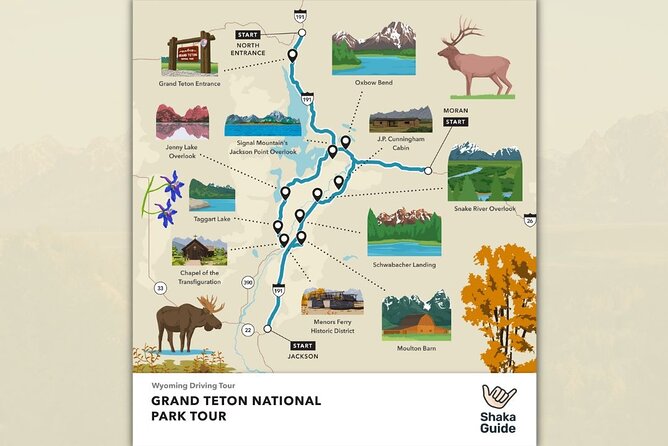
Day 2 starts with Jackson Lake Overlook. This is a fast first look at the Teton Mountain Range over the historic Jackson Lake. Even a short stop here helps you orient yourself before you go hunting for the best viewpoints.
Then you hit Colter Bay Village for fuel and snacks. It’s also a hub for activities listed in the tour info, like kayaking, canoeing, motorboats, lake cruises, horseback riding, fishing, swimming, and hiking. If your day needs flexibility, this is a good place to pause and decide what energy you have left.
Next are the Grand Teton’s “Famous Four” stops. The tour clearly treats them like must-see photo points, and that’s fair.
Oxbow Bend is one of them, famous for dramatic sunrise and sunset viewing. The guide notes the turnout gets very busy around sunset, so plan accordingly if you hate crowds and want breathing room.
Cunningham Cabin is another “Famous Four” stop. It’s a short walk through history and one of the early homesteads in the area. This is one of those stops that works even if you don’t want to hike all day.
Schwabacher Landing is the third. The tour explains that it used to be a boat launch, but the Snake River shifted enough that boats can’t access it now. You get reflected views of the Teton Range and nearby forest, plus wildlife viewing potential.
Finally, Snake River Overlook, made famous by Ansel Adams. The view is calm, but the tour also reminds you that early fur trappers called the Snake River the Accursed Mad River because of its unpredictable nature. That contrast makes the stop feel deeper than just a pretty postcard.
Mormon Row barns, Moose visitor center, and a quiet chapel
After the big photo points, the tour shifts into historic and educational stops.
Mormon Row includes the Moulton Barns and the Chambers Homestead, and the tour notes these buildings are on the National Registry of Historic Places. It also points out the Moulton Barn as the most photographed barn in the United States, and it’s a good reminder that this is a place where your own photo will look like it belongs in a calendar.
Then you arrive at the Craig Thomas Discovery and Visitor Center in Moose. This is heavy on exhibits, including a raised relief map and Native American artifacts from the Vernon Collection. There’s also a 24-minute high-definition movie listed, plus a bookstore run by the Grand Teton Association.
The tour mentions ranger-led programs at the center, but it suggests checking the ranger-led program page for current schedules. So if you care about live programming, you’d still want to verify the day-of schedule.
Murie Ranch follows, a historic home tied to conservation history. Then there’s Chapel of the Transfiguration, built in 1925 and still an active Episcopal congregation. If you want a pause from the road-and-view cycle, this is one of the best resets on the whole itinerary.
Jenny Lake and Signal Mountain: when driving turns into views
Next is Menors Ferry Historic District, which includes historic buildings built by William Menor and the ferry’s role in connecting trade routes. It’s another “history with a geography reason” stop.
Then the route adds Cottonwood Creek Picnic Area, with the star attraction being wild burros across the street. The tour calls out safety tips and keeping your distance, which is smart because wild animals don’t come with warning signs.
Jenny Lake is the big nature stop of Day 2. The tour lists a wide range of things you can do there, including hiking, biking, cycling, swimming, and exploring trails in the area. It suggests a longer stretch of time at this stop, so it’s your chance to trade driving for walking.
Then the route takes you up Signal Mountain Summit Road, a seven-mile drive that climbs nearly 1,000 feet. The tour also warns that the road is narrow with sharp switchbacks and steep sides, so you’ll want to go slow and be comfortable driving before you commit to it.
At the top, you get sweeping Teton Valley views, and then you can continue to Signal Mountain Lodge. The lodge is a practical end-of-route pit stop with dining, lodging, shopping, and a marina for kayaking and boating options listed in the tour info.
Practical pacing: what to plan for so the day feels good
This kind of two-day audio drive can feel perfect or exhausting, depending on how you handle timing.
First, treat Yellowstone like a “short stops, many stops” park. The route includes boardwalks and short walks at places like Midway Geyser Basin, West Thumb, and the Grand Prismatic area. Build in time to get out of the car, look, and then move on before you get tired.
Second, don’t assume you’ll do every option. The tour is built to let you pick the stops you want, and you’ll likely appreciate that. If your morning gets late, prioritize the big sights listed in the route and skip the extra detours.
Third, roads matter. In Grand Teton, Signal Mountain Summit Road is specifically described as scary due to narrow lanes, sharp switchbacks, and steep drop-offs. If you’re nervous behind the wheel, think about doing the viewpoint without rushing or consider skipping the drive if weather is bad.
Fourth, manage wildlife and animals. The tour includes wildlife-friendly zones like Hayden Valley and wildlife-adjacent stops like Cottonwood Creek with wild burros. Go slower at wildlife areas, scan often, and follow the basic rule: don’t crowd animals for photos.
Finally, use the provided “break” stops. The Yellowstone route repeatedly points you toward lodges and facilities for snacks, coffee, and restrooms, like Old Faithful Lodge and Canyon Village. That kind of built-in timing helps you keep the whole day enjoyable.
Who should book this self-guided Yellowstone and Teton audio tour
This is a great fit if you want a guided feel without paying for a live guide. The private, one-group setup is ideal for couples and small groups who want time together and fewer crowd dynamics.
It’s also a strong option for people who like structure. The route strings together stops in a way that helps you stay oriented across long loops, and the GPS turn-by-turn reduces stress when you’re driving between basins.
It may not be the best choice if you want lots of ranger-led interaction. The tour is self-guided, so while you can use visitor centers for information, the experience itself is audio-based.
Should you book it? My decision guide
Book it if you want two days of Yellowstone and Grand Teton at your own pace with offline GPS audio and a practical route that links major geysers and Tetons viewpoints. The price per group makes it easy to justify, especially if you’re traveling as more than one person.
Consider another option if you need live instruction throughout the trip, or if you hate driving long loops and making quick stop decisions. This bundle rewards flexible, car-based sightseeing.
If you’re aiming for a calm, organized road trip where your phone stays mostly in your pocket, this one checks a lot of boxes.
FAQ
Is this tour fully offline?
Yes. It includes an offline map and GPS works offline, with no need for continuous Wi-Fi or data.
Do I need internet to download and start the tour?
You download the tour ahead of time using strong Wi-Fi, then you can take it later without data.
Is the tour narrated automatically?
Yes. The audio narration plays automatically as you drive, with GPS-activated stories and directions.
What’s included in the bundle?
You get the offline audio tour with narration, automatic stop-based playback, turn-by-turn GPS directions, an offline map, and the ability to pause/resume and explore at your own pace.
What park fees are not included?
The Yellowstone entrance fee and the Grand Teton entrance fee are not included, each listed as $35.00 per booking.
Where does the tour start and end?
It starts in Jackson Hole, Wyoming 83001, and the last stop is Signal Mountain Lodge in Grand Teton National Park, Wyoming. From there you can continue exploring Jackson Hole or head back toward West Yellowstone.