REVIEW · OLYMPIC NATIONAL PARK
Self-Guided Audio Driving Tour in Olympic National Park
Book on Viator →Operated by GuideAlong (GyPSy Guide) · Bookable on Viator
A GPS audio tour turns driving into storytime. This self-guided drive in Olympic National Park turns your phone into a location-aware guide, so the best stories and tips play as you reach each spot. You can also shape the day around your interests instead of marching to a fixed schedule.
I love the location-based autoplay approach, because it keeps you oriented even when you change where you park or how long you linger. I also like the value: $19.99 per group (up to 8), with 420+ audio moments covering nature, history, and more than a little humor.
One thing to watch: you still need to handle the National Park vehicle pass and the Dungeness Spit entrance fee, and some stops include short walks where footwear and tide timing matter.
In This Review
- Key highlights worth your attention
- How the GPS audio tour works across Olympic
- Price and value: $19.99 per group makes the driving day easier
- Olympic National Park kickoff: use the audio to shape your day
- Dungeness National Wildlife Refuge: the long sandspit payoff at low effort
- Madison Creek Falls and the Elwha Valley story of restoration
- Hoh Rain Forest: where the audio helps you read the forest
- Hurricane Ridge: the easiest alpine access with real choices
- Lake Quinault and Quinault Rain Forest: glacier-shaped scenery and giant trees
- Rialto Beach and Ruby Beach: tide timing is the whole game
- Rialto Beach: photo-famous, but enjoyable anytime
- Ruby Beach: quick access and a low-tide treasure hunt
- Sol Duc Falls: waterfall classic plus a hot-springs finish
- Tech tips that make this kind of drive tour actually work
- Who this self-guided Olympic drive is best for
- Should you book this Olympic National Park audio driving tour?
Key highlights worth your attention
- GPS-timed commentary that plays as you drive (no need to press buttons)
- 420+ audio points mixing science, history, and local culture
- Works offline once you download, which is big in Olympic’s low-signal zones
- One purchase per vehicle for group savings
- A practical mix of ecosystems in one loop day: temperate rainforest, alpine, and beaches
- Wildlife and tidepool stops where the audio helps you look in the right places
How the GPS audio tour works across Olympic
This tour is built around your phone’s GPS. As you drive, commentary triggers based on where you are, so you don’t need to keep checking a map for “what’s next.” You also get the flexibility to start and end anywhere along the route, because the audio is tied to location rather than a single exact parking spot.
That matters in Olympic National Park, where weather can change fast and viewpoints can be crowded at predictable times. With an audio-first approach, you’re not locked into a stopwatch. If you want more time at Hoh Rain Forest or you’d rather skip ahead to the beaches, you can.
The audio is in English and includes stories, tips, and directions, plus trip planners in-app, on the web, and as a PDF. It’s also designed so you can download ahead and go offline, which is a practical win in areas where cell service can be spotty.
Practical tip: bring a USB/car charger and start the day with a well-charged phone. The tour’s quality hinges on your device staying powered long enough to listen.
Price and value: $19.99 per group makes the driving day easier
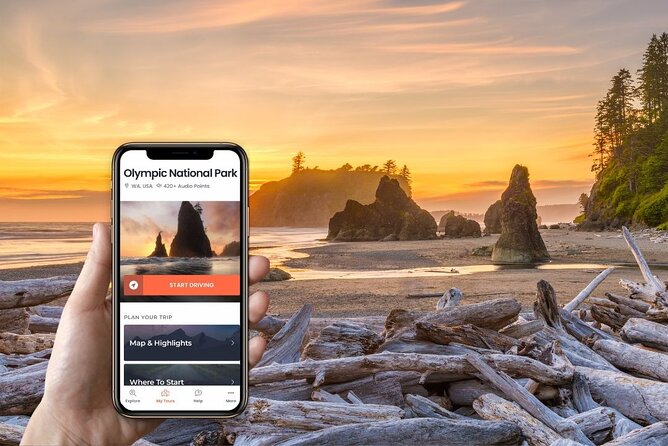
The cost is $19.99 per group for up to 8 people, which is what makes this feel like a bargain if you’re traveling as a family or with friends. For a park-heavy day like this, the biggest expenses can be the admission fees and parking—so paying one low per-vehicle amount for the guide content helps you stretch your budget.
Two costs are not included:
- The National Park pass (varies by length of stay, ages, and group size; about $30 per vehicle in 2024)
- Dungeness Spit entrance fees: about $3 daily per family or group (2024)
That means the audio tour is not the whole trip cost, but it often covers the “I don’t want to waste my time” part. The audio helps you spot what to pay attention to—wildlife signs, key features on trails, and why certain places look the way they do.
If you’re the type who hates doing research the night before, this can save effort. You get a ready-made narrative that helps you see more than “pretty trees” or “a nice beach.”
Olympic National Park kickoff: use the audio to shape your day
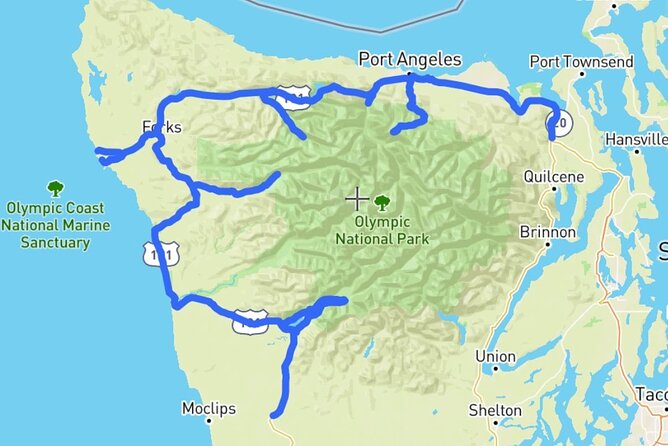
The tour’s first stop is within Olympic National Park itself. Here’s the benefit: the audio doesn’t just describe one view and move on. It gives you context so you can decide your pace. The commentary is designed to play automatically based on your position, so you can treat this as a moving itinerary and still hop your schedule.
Even when you think you know Olympic, this kind of guidance can help you avoid the common mistake: spending time at the wrong place for the weather you’re dealing with. Olympic’s coast and rainforest can be misty, while the inland drive may feel clearer—or the opposite. The GPS-driven narration makes it easier to adjust without feeling lost.
You’ll also get enough direction to know what’s worth a short walk versus what you can enjoy from the road.
Dungeness National Wildlife Refuge: the long sandspit payoff at low effort
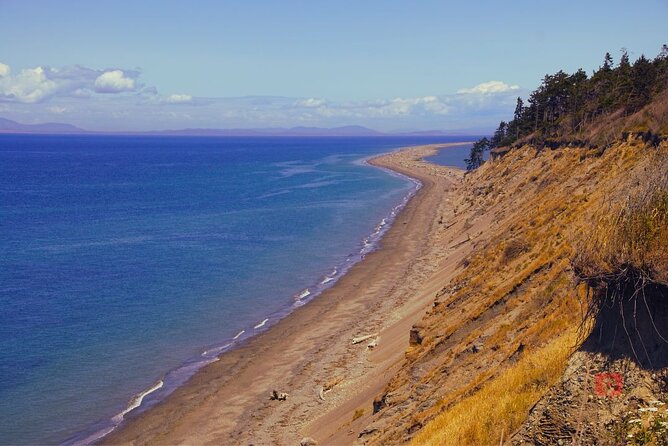
Next up is Dungeness Spit and the Dungeness National Wildlife Refuge. Even though it’s not officially inside the national park, it’s the kind of detour Olympic does well: a quick drive that feels unusual.
This sandspit extends about 5 narrow miles into the Strait of Juan de Fuca. The fun part isn’t only the scale (it’s described as the world’s longest sandspit). It’s also the way the spit functions as habitat. The area is known for abundant birdlife—about 90 bird species are known to nest here—and you might also spot harbor seals, orcas, or minke whales offshore, though those are naturally harder to see.
What I like about this stop in an audio-guided format is how it reframes what you’re looking for. You’re encouraged to treat the shoreline like a living system: small mammals like rodents, and the possibility of deer and skunks.
Drawback: if you go all the way down the spit, it can take longer than you expect, and you’ll need to watch conditions. The tour description makes it clear you can walk the whole length for the lighthouse, but it also says you don’t have to to get the idea. So keep it flexible.
Madison Creek Falls and the Elwha Valley story of restoration
From Dungeness, the tour heads toward Madison Creek Falls via the Elwha Valley area near Port Angeles. This is a gentler walk and rewards you with Madison Falls without demanding a big hike.
What makes the stop interesting is the human history layered into the landscape. You’ll see remaining buildings from early homesteaders drawn to the valley, but the main storyline is nature’s recovery. The area was dammed for about a century, and then Congress ordered two dams removed so the river could run freely to the ocean again. That reopened access for salmon and helped restore fertile deposits through flooding.
If you care about how conservation decisions change what you see on the ground, this is the stop that adds weight. Instead of treating the waterfall as just a photo op, you get a reason for why the place looks the way it does now.
Practical consideration: as with many Olympic “reward at the end of the road” spots, your time is limited by how long you want to stroll and how crowded the parking area gets.
Hoh Rain Forest: where the audio helps you read the forest
Then comes one of the most iconic parts of Olympic: Hoh Rain Forest. This is a temperate rainforest experience with a heavy emphasis on how it looks and feels—giant trees, moss, ferns, and a dense green groundcover.
The tour is smart here: it pushes you to spend real time. It suggests at least 2 hours for Hoh, even though the stop is outlined as 1 hour in the overall route. In practice, that means you can treat the audio as a foundation and then let your own curiosity take over.
You’ll also get wildlife pointers. The description notes you can watch for elk and black bears. Even if you never see animals, those reminders change how you walk: slower steps, more scanning, and more patience with the quiet details.
Possible drawback: it’s called rainforest for a reason. Wet trails and slippery ground are part of the reality. Bring appropriate footwear and be ready for a damp day.
Hurricane Ridge: the easiest alpine access with real choices
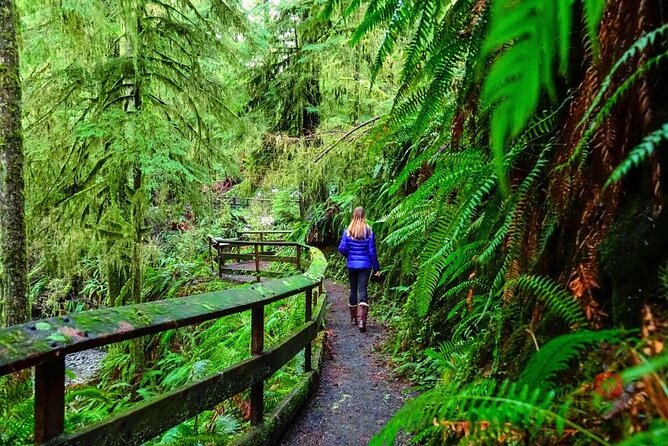
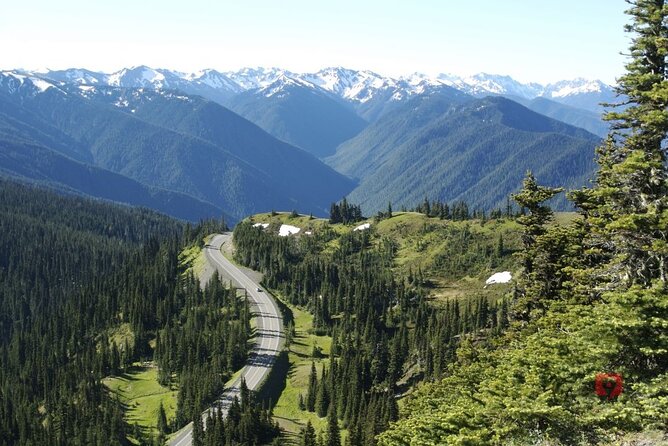
Hurricane Ridge is Olympic’s alpine area with an easier entry point. The audio sets this up as the most accessible high-country experience, reached via an 18-mile drive from Port Angeles.
At the top, you get superb views and a range of trail options that start right near parking. The tour highlights Meadow Trails as the easiest way to sample the alpine without a big effort. That’s useful if you want mountain scenery but your group doesn’t all want a strenuous hike.
If you do want to work a little harder, there are more challenging options too. This is where having audio-based context helps, because you’re not only looking at scenery—you’re learning what you’re looking at.
One consideration: wind and weather can make exposed viewpoints feel colder than the drive suggests. Build buffer time so you’re not rushing while the forecast is changing.
And yes, Olympic being Olympic, this is also a good place to hope for wildlife. The experience notes include spotting a bear on Hurricane Ridge as a highlight.
Lake Quinault and Quinault Rain Forest: glacier-shaped scenery and giant trees
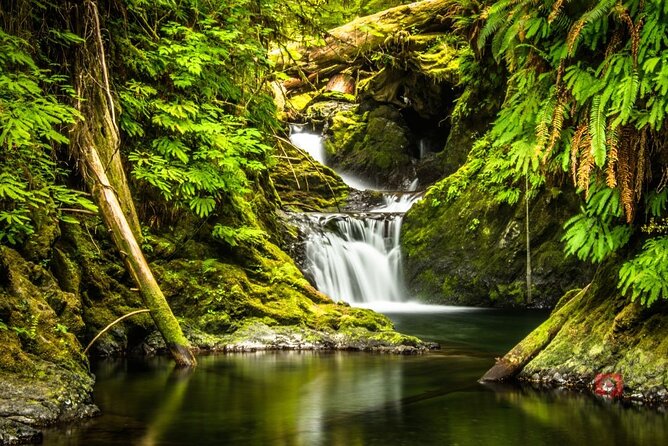
After the alpine air, the tour shifts back into big trees and water. Lake Quinault gets a loop circuit drive, with time to stop for short hikes if you want. The description explains the lake was gouged out by ancient glaciation, and that glacial runoff still feeds it today, dammed by a moraine left behind.
That’s more than trivia. It helps you understand why the water and shoreline features look the way they do. You start to notice the “shape” of the place rather than only the view.
Then you move into Quinault Rain Forest, described as similar to Hoh and known for heavy rainfall—up to 12 feet per year is mentioned. The audio also calls out the presence of the world’s largest Sitka spruce along the way.
If you’re only going to allocate a limited part of your day to rainforest, these two stops help you compare ecosystems without changing regions too much. You get lake scenery in one pocket and towering-tree atmosphere in another.
Practical drawback: because it’s rainforest country, conditions can affect visibility and trail traction. Give yourself extra time if the ground is muddy or if you’re waiting for weather to shift.
Rialto Beach and Ruby Beach: tide timing is the whole game
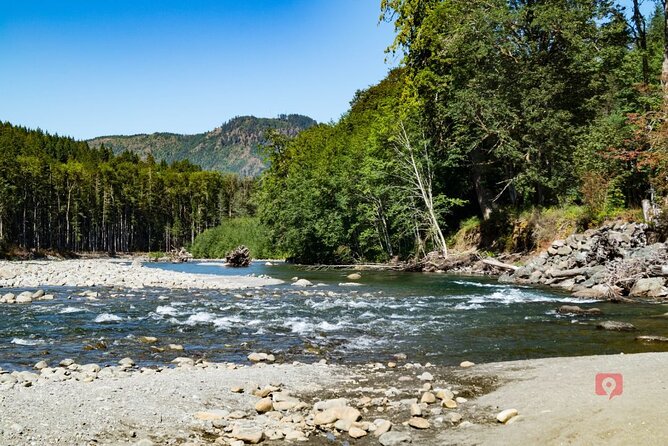
Olympic’s beaches are a world apart from its forests, and this tour gives you two very different flavors.
Rialto Beach: photo-famous, but enjoyable anytime
The tour calls out the classic idea of sunset from Rialto Beach, but it also encourages visiting at any time, especially if the weather is warm and sunny. You’ll see rock pillars and a half-mile walk leads to Hole-in-the-Wall (described as an arch that will eventually become two new pillars, or haystacks). Tidepools can be excellent, too.
What I like here is the balance: you can go for a short, scenic walk and still get a satisfying payoff. The audio helps you focus on the features that make Rialto one of the most photographed stops in Olympic.
Ruby Beach: quick access and a low-tide treasure hunt
Ruby Beach is set up for easy logistics: parking is accessed right from the highway, and you walk straight onto the beach. The standout here is Abbey Island, a giant sandstone block in the water. At low tide, you can walk right to it—just make sure you’re back before the tide rises too high.
The tour also mentions a fun twist: you won’t find actual rubies. Instead, you can look for almandite, a type of garnet that is pretty but not precious. That’s the kind of audio detail that turns a beach stroll into a scavenger hunt.
Possible drawback: tide timing. If you show up at the wrong moment, Abbey Island may be unreachable. The tour doesn’t give exact tide times here, so you’ll want to use your own tide info when planning your exact arrival window.
Sol Duc Falls: waterfall classic plus a hot-springs finish
The final major stop is Sol Duc Falls, reached via a scenic valley off Highway 101. If you’re lucky enough to visit during spawning season, the audio hints you might see salmon battling their way up the Sol Duc River.
The focus for most people is the waterfall. The tour describes a top-quality option with triple-tier Sol Duc Falls, less than a mile from the car park. It’s short enough for a satisfying walk, but long enough that you’ll feel like you earned the viewpoint.
Then you get a classic Olympic-style finish: the description points you toward Sol Duc Hot Springs Resort for a relaxing soak after the falls.
Why this works as a tour ending: the last stops are often the hardest (coast roads, variable weather, long days). Sol Duc gives you a close, clear payoff and a way to end the day comfortably.
Tech tips that make this kind of drive tour actually work
This is the practical side that decides whether the audio feels like a guide or a hassle.
1) Download first over WiFi or cellular, then start the tour after everything is saved in the GuideAlong app under My Tours.
2) Charge your phone. A USB/car charger is the simplest fix, and you won’t have to play power games mid-drive.
3) Use the app to preview start locations and the route before you begin. It can help your brain feel less “behind schedule.”
4) When the audio volume feels too loud, adjust through your phone’s settings or your car speaker settings. One helpful note from user feedback is that volume controls can be easier to fix at the device level than inside the app itself.
5) Since commentary triggers by GPS, plan for slight lag when turning into parking lots. It’s still accurate overall, including even when the tour is run with limited cell service.
The overall goal is simple: you’re not managing tech while also trying to spot sea birds, read mossy tree trunks, and watch for tides.
Who this self-guided Olympic drive is best for
This tour format fits travelers who want structure without rigidity. If you don’t want to read guidebooks and still want a deep sense of place, the audio points you at the right details.
It’s especially good if:
- You’re traveling as a group and want cost sharing (up to 8 in a vehicle)
- You want a day that includes rainforest, alpine views, and beaches without planning separate outings
- Your group includes people who may not want long, strenuous hikes every stop, since several options are short walks from parking
Keep expectations realistic: Olympic beaches and forests still require you to walk a bit. Rialto includes a half-mile walk to Hole-in-the-Wall, and Sol Duc Falls is under a mile. The tour helps you choose what to do with your time, but it doesn’t turn a car day into a fully doorstep experience.
Should you book this Olympic National Park audio driving tour?
I’d book this if you want an easy-to-run day plan and you like learning while you go. The GPS-synced narration, the mix of ecosystems, and the strong “you can drive at your pace” flexibility make it a smart value, especially at $19.99 per group.
I’d think twice if you want a guided tour with a human in the car, or if your schedule is extremely tight and you’re worried about tide-dependent beach access. You’ll also want to factor in the park pass and the Dungeness fee, since those are real add-ons.
Bottom line: this is a practical way to turn a Port Angeles–Olympic road day into something more thoughtful than a long drive with a few photo stops.