REVIEW · CAMBRIDGE
Scholars & Secrets of Cambridge: Self-Guided Puzzle Adventure
Book on Viator →Bookable on Viator
Cambridge can feel like a maze. This puzzle walk turns it into a scavenger hunt with smartphone riddles that guide you between the city’s most famous college fronts. I like that you can start on your schedule and wander at your own pace, and I especially like that each stop is admission-free and mostly outdoors, so the game is low-stress and budget-friendly. One thing to consider: if you like straight, clear directions with no guessing, a few puzzle steps may feel a bit vague or rely on you doing a little detective work.
The best part for first-timers is how the story threads through the colleges, so you don’t just look at buildings—you read them. You’ll also be moving with GPS-based prompts on your phone, and the experience is designed to work offline, so you’re not stuck hunting Wi‑Fi in the middle of Cambridge.
In This Review
- Key points that make this puzzle walk worth your time
- A riddle-led Cambridge walk with offline GPS prompts
- Price and timing: great value for a short, focused loop
- Corpus Clock: the Taylor Library starting spark
- King’s College: the parade-facing landmark that rewards careful looking
- Gonville & Caius and Clare College: getting the age and the details right
- Trinity College and St John’s: major campuses, quick puzzle beats
- The Round Church Visitor Centre: The Holy Sepulchre at street level
- Christ’s College and the finish back where you started
- How the smartphone puzzles actually feel in real life
- Crowds, privacy, and the no-guide advantage
- Who should book this Cambridge puzzle walk?
- Should you book Scholars & Secrets of Cambridge?
- FAQ
- Where does the experience start?
- How long does the puzzle walk take?
- Does it require an internet connection?
- Is there a physical tour guide?
- Is admission included for the stops?
- Can I start at any time?
- Do I have to finish at the same place?
- Is this a private experience or a group tour with others?
- Is it appropriate for families?
- Are service animals allowed?
Key points that make this puzzle walk worth your time
- Offline play means you can keep going without internet
- Start anytime within the daily activity window and pause/resume when you want
- Free sights at each stop so you avoid surprise ticket costs
- A private experience: only your group plays, with no physical guide
- College-front hopping gives you a compact, walkable loop for 1 to 2 hours
A riddle-led Cambridge walk with offline GPS prompts
This is a smartphone puzzle adventure, not a traditional tour. The format is simple: you follow clue steps, solve a puzzle at each location, and then get the next direction and new info once you’re on the right spot. It’s designed to be flexible—if you want a short break to watch students pass or grab a drink near King’s Parade, you can stop and come back.
In practice, you’ll use your phone screen like a quiet guide. It’s not all about speed; it’s about noticing details as you walk. That matters in Cambridge, because the architecture is beautiful but also easy to gloss over when you’re rushing to the next photo spot. The “secret society” theme (the game’s thread) is what keeps you paying attention while you move from one college to the next.
I also appreciate the “no human contact” setup. You’re not coordinating with a guide, and you’re not trapped in a loud group pace. If you prefer slow travel—stopping for a closer look at stonework, iron gates, or the angle of a façade—this fits that style.
One caution: puzzle games depend on you being comfortable with a bit of trial and error. There’s no guarantee that every clue will feel perfectly tailored to your exact viewing spot, especially when you’re looking from the street at college grounds.
You can also read our reviews of more tours and experiences in Cambridge.


Price and timing: great value for a short, focused loop
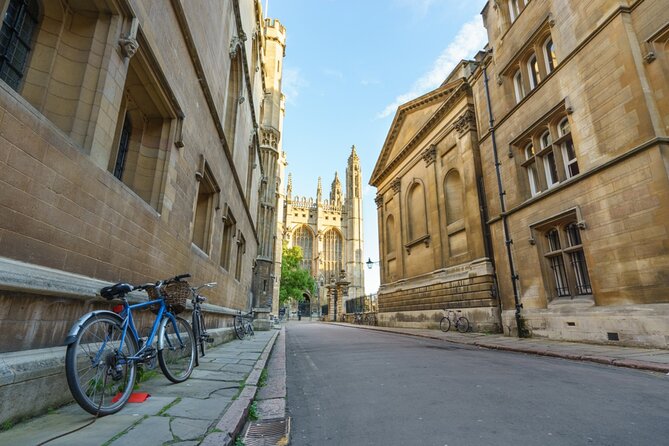
At $8.68 per person for a 1 to 2 hour walk, you’re paying for guidance-by-puzzle, not for expensive entry tickets. And in this case, the listed highlights are free to view at street level or from outside the grounds. That’s a big deal in Cambridge, where guided access and paid attractions can add up quickly.
Why I think it’s good value: you’re getting structure for a classic Cambridge walking area. Instead of building your own route and then wondering what to look for, the game gives you a sequence and a reason to pay attention. For many visitors, it works as an easy “first day” activity that helps you understand where everything sits relative to each other.
The timing is also forgiving. The experience is always available during the day window, and you can play across that span. If your day is packed—punctuated by museum time or afternoon punting plans—this kind of shorter puzzle walk can slot in neatly without stealing half your schedule.
Corpus Clock: the Taylor Library starting spark
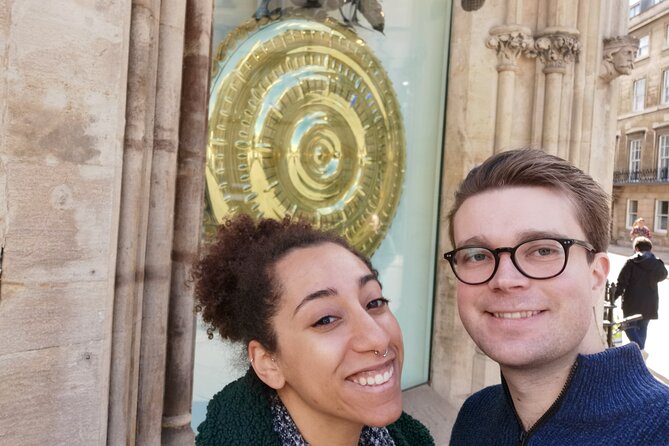
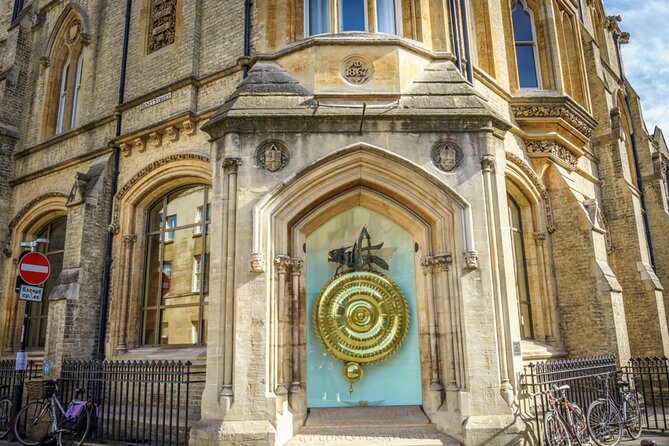
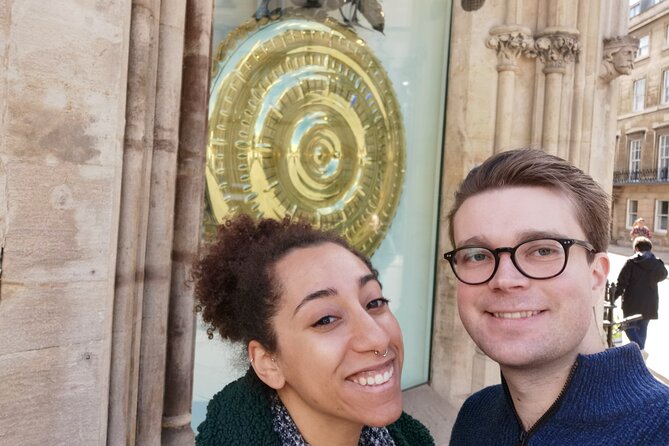
You begin at the Corpus Clock on Trumpington Street, outside the Taylor Library of Corpus Christi College (58 Trumpington St). This is a great opener because it’s instantly recognizable and sits right at street level, so you’re not scrambling to find a hidden entrance.
The Corpus Clock itself is a clever “first clue” kind of landmark. Even if you’ve heard of it before, seeing it in person helps anchor your route. Then the game immediately starts training your eyes: you’re not just walking, you’re hunting for the next answer.
Why this first stop works: it sets the tone for how the puzzles will behave—think symbolism, observation, and small details you might otherwise miss. And because it’s free to view, it lowers friction. You can start, get oriented, and begin the story without paying an admission fee or entering any building.
Practical tip: arrive with your phone charged. You’ll want your map and GPS to behave smoothly, and you may be checking the screen often as the game nudges you from one location to the next.
King’s College: the parade-facing landmark that rewards careful looking
Next up is King’s College, the college that faces out onto King’s Parade in central Cambridge. The big advantage here is context: you get a classic postcard view while also being close to the city’s main walking flow.
In the puzzle format, this stop is about more than taking in the façade. You’re solving something at the right moment and then getting your next pointer forward. That makes your time feel purposeful instead of wandering.
What I like about choosing King’s as a mid-walk anchor: it’s a recognizable Cambridge landmark, but it also helps you understand how the colleges line up around the city’s routes. As you move from stop to stop, the places start to relate to each other—where the river sits, how the streets angle, and why some college fronts feel more open to foot traffic.
One consideration: King’s College grounds can limit your viewing depending on what’s accessible at the time you play. The game is designed around outdoor sightlines, but if certain areas are restricted, you may have to rely more on what you can see from outside.
Gonville & Caius and Clare College: getting the age and the details right
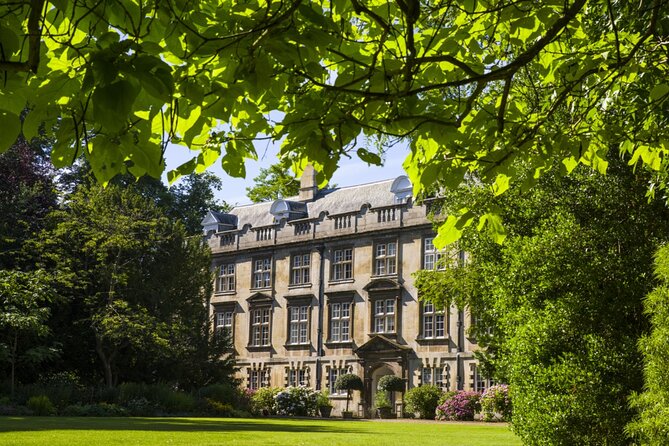
After King’s, you’ll hit Gonville & Caius College, described as the fourth-oldest college at the University. Then you’ll continue to Clare College, founded in 1326 as University Hall, making it the second-oldest surviving college after Peterhouse.
These are the kinds of facts that would normally get lost in a “here’s a fun fact” lecture. In a puzzle adventure, you’re more likely to remember them because you meet them at a specific place and use them to solve the next step.
How the experience feels at these stops:
- At Gonville & Caius, you’ll likely focus on identifying the right angle or element the clue is pointing you toward.
- At Clare, you’ll be more likely to pay attention to signs, shapes, and directional hints as you work through the puzzle sequence.
A small heads-up from how this kind of game can play: some clue visuals can feel a little odd (for example, direction arrows that point upward rather than clearly toward a single object at eye level). If you’re traveling with kids or teens, that can also be the fun part. It turns a simple photo stop into an actual problem to solve.
Trinity College and St John’s: major campuses, quick puzzle beats
Next comes Trinity College, which is the largest Oxbridge college by undergraduate numbers, with about 600 undergraduates, 300 graduates, and over 180 fellows. Then you move on to St John’s College, founded by Lady Margaret Beaufort.
These two stops are where the game’s pace matters. Trinity has a big identity in Cambridge, so the clue steps here tend to feel like a “test” of your attention: you’re trying to solve the right piece while standing in a busy, high-recognition location.
Why this part of the walk can feel great:
- Trinity’s scale makes it satisfying when the puzzle finally clicks.
- St John’s adds a different historical thread, so the “secret society” storyline has more texture than a simple sightseeing loop.
One practical consideration: clear in-app directions are crucial at gate areas. If the puzzle points you near a specific gate and the route doesn’t match what you expect, it can interrupt the flow. If you hit that kind of snag, don’t force it—step back, re-check the GPS position in the game, and look for an alternate safe viewing spot that matches where the clue wants you to stand.
The Round Church Visitor Centre: The Holy Sepulchre at street level
Your next step is the Round Church Visitor Centre, tied to the Church of the Holy Sepulchre, also known as the Round Church. This is a smart inclusion because it breaks the rhythm of college architecture. You’re still in historic Cambridge, but the shape and feel are different, so it refreshes your eyes.
The game’s puzzle approach works well here because the Round Church’s defining features are visible from outside. You’re not required to find hidden interiors. That keeps the experience moving even if you’d rather not deal with museum-style entry lines.
What I like about this stop: it’s a reminder that Cambridge isn’t only colleges. It’s also churches, streets, and city-scale landmarks that give the town its character.
One timing note: this stop is shorter in the sequence, so plan to keep your phone out and your attention sharp. If you linger too long elsewhere, you might feel rushed here.
Christ’s College and the finish back where you started
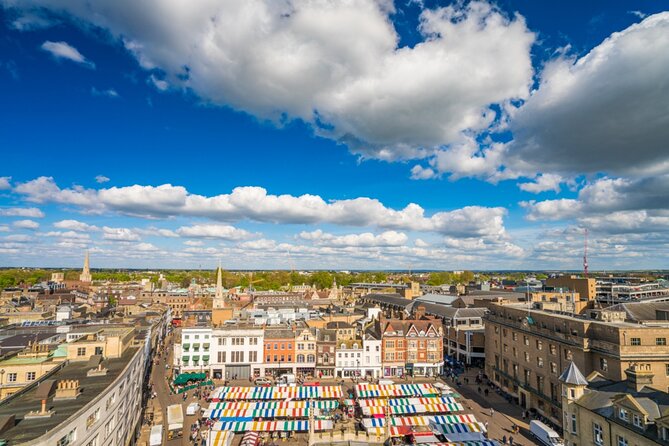
The final college stop is Christ’s College, followed by the walk ending back at the Corpus Clock meeting point. Ending where you began makes the whole puzzle loop feel complete, like you’ve closed a circle instead of starting and then wandering off into unknown streets.
This is a good moment to review what you learned. If you’ve done even a few clues successfully, you’ll likely start to recognize Cambridge patterns: college fronts often face major streets, stonework repeats in different ways across campuses, and street-level sightlines are enough to understand the town’s layout.
Why this closing stretch matters: it helps you transition from “I solved the puzzles” to “I understand the city.” That’s the main payoff of this format. It’s not about collecting photos; it’s about building a mental map fast.
How the smartphone puzzles actually feel in real life
This experience combines riddle clues with GPS technology. The design is meant to guide your walk while still letting you choose your pace. You’ll be checking your phone, answering clue steps, and then following the next indication.
What works best:
- When you treat each stop like a small mission
- When you pause for a minute and look around before guessing
- When you accept that you might need to reposition yourself to match the view the game expects
What can go wrong (and what to do):
- If directions at a key gate feel off, take it slow. Confirm your GPS location in the app, and try a safe nearby vantage instead of forcing the route.
- If a puzzle clue seems to point to something that isn’t there or isn’t visible from the street, don’t keep tapping randomly. Step back and look for the nearest matching detail; then proceed using what the clue hints at, not just the first assumption.
The reviews overall show a split between people who love the story-and-clue structure and people who find parts dull or unclear. That’s not unusual for puzzle experiences. Your enjoyment will depend on whether you like being a detective rather than following a guide.
Crowds, privacy, and the no-guide advantage
One of the strongest selling points is that it’s a private experience: only your group participates. That matters in Cambridge, where popular landmarks can get crowded fast. Here, you can play without being folded into someone else’s schedule.
The “no physical tour guide” angle can be a plus or minus. It’s a plus if you want independence. It’s a minus if you want live clarification when you get stuck. In some puzzle walks, when directions aren’t crystal clear, a real person on the ground can help. This one leans on the app.
I think it’s safest to choose this if:
- You’re comfortable figuring things out on your phone
- You like interactive play, especially with families
- You want to avoid crowds and keep control of your timing
Who should book this Cambridge puzzle walk?
I think this works best for:
- First-time visitors who want a quick route through central college Cambridge
- Families with kids or teens who enjoy a challenge and don’t want a lecture
- Travelers who prefer a self-guided structure instead of a full guided tour
- Anyone looking for a low-cost way to understand the city layout in about 1 to 2 hours
If you’re the type who wants a smooth, guaranteed walkthrough with zero uncertainty, you might find puzzle steps frustrating. And if you already know every college façade by memory, you may feel the walk is more about play than discovery.
Should you book Scholars & Secrets of Cambridge?
Yes—if you want a short, structured walk that teaches you Cambridge through puzzles. The combination of offline GPS, admission-free stops, and a private, no-crowds vibe is a strong value play for the price. It’s also a fun way to help kids or teens engage with the colleges without getting bored.
Book it with two expectations set:
1) You’re going to do some thinking as you go.
2) You’ll mostly be viewing buildings from outside, since it’s built around street-level sightseeing.
If you like riddles, enjoy observation, and want to get oriented fast, this is an easy recommendation.
FAQ
Where does the experience start?
It starts at the Corpus Clock, 58 Trumpington St, Cambridge CB2 1RH, UK.
How long does the puzzle walk take?
Plan on about 1 to 2 hours.
Does it require an internet connection?
No. You can play offline and do not need internet to play the city game.
Is there a physical tour guide?
No. It is a private self-guided smartphone experience with no physical guide.
Is admission included for the stops?
The listed stops have free admission for visitors.
Can I start at any time?
You can start at any hour, and the activity window runs daily from 8:00 AM to 9:00 PM.
Do I have to finish at the same place?
Yes. The activity ends back at the meeting point.
Is this a private experience or a group tour with others?
It’s private. Only your group participates.
Is it appropriate for families?
Yes. It’s positioned as a good introduction to Cambridge for first-time visitors and families.
Are service animals allowed?
Yes, service animals are allowed.