REVIEW · SANTORINI
Santorini: Akrotiri Ticket with Optional Self-Guided Audios
Book on GetYourGuide →Operated by Key Tours · Bookable on GetYourGuide
Akrotiri hits hard for anyone who likes archaeology and a good mystery. This is Santorini’s lost Minoan town, buried and preserved in volcanic ash, with indoor walkways that let you look closely without baking in the sun. I especially like how the suspended paths shape your route, keeping the visit orderly even though the ruins are anything but. The one thing to watch: if you skip the optional audio, you may find the on-site explanation a bit thin for the ticket price.
The best part is how much you can control your pace. With an optional self-guided audio tour in English (and a Thera Town audio included with all options), you can slow down for daily life details instead of just scanning plaques. If your priority is a fast photo stop, plan for a shorter visit; if you want the full story, budget enough time to actually listen.
In This Review
- Key Things I’d Plan Around
- Akrotiri: Santorini’s Pompeii, and why it feels different
- How the self-guided audios fit: Thera Town included, Akrotiri optional
- Entering smoothly: time slots, opening hours, and bus-crowd strategy
- Inside the shelter: raised routes, preserved buildings, and suspended walkways
- How long you should plan, and how to pace it without feeling rushed
- Price and value: is $30 worth it?
- Where to go next in Santorini: Museum of Prehistoric Thera in Fira
- Should you book this Akrotiri ticket with self-guided audios?
- FAQ
- What do I receive with the ticket?
- Is the audio included automatically?
- What language is the self-guided audio?
- Do I get an audio device or earphones?
- How long is the entry ticket valid?
- What are the opening hours?
- Is Akrotiri wheelchair accessible?
- What should I bring?
- Is there a reduced-price admission option?
- Can I get a refund if plans change?
Key Things I’d Plan Around
- A time-slot ticket helps you avoid the worst entry scrambles
- Indoor, airy shelter makes it a lot more comfortable in heat
- Raised, suspended walkways change how you see the ruins
- Optional English audio can turn “interesting” into “memorable”
- Arrive early if you want space to read and take in the exhibits
Akrotiri: Santorini’s Pompeii, and why it feels different
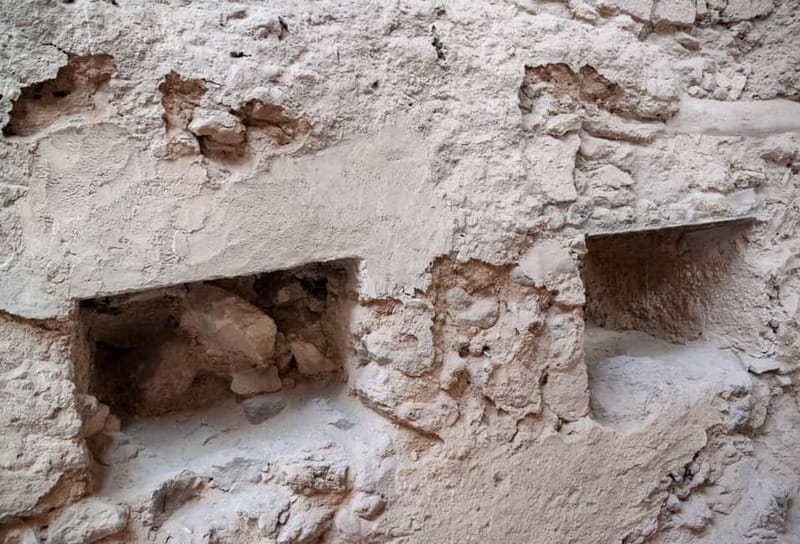
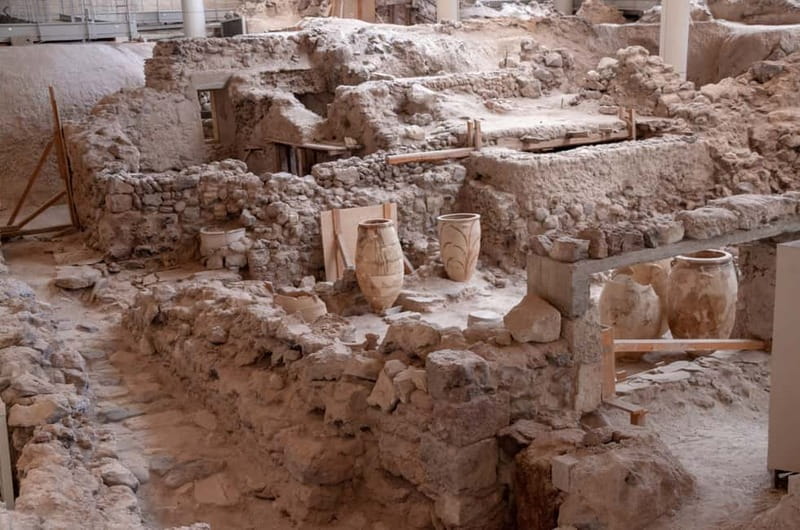
Akrotiri is one of those rare archaeology sites where the setting matters as much as the finds. The big reason is simple: a whole Minoan settlement was covered in volcanic ash and preserved well enough to read the layout of everyday life. Instead of random walls, you get a sense of how people moved through streets, homes, and work areas.
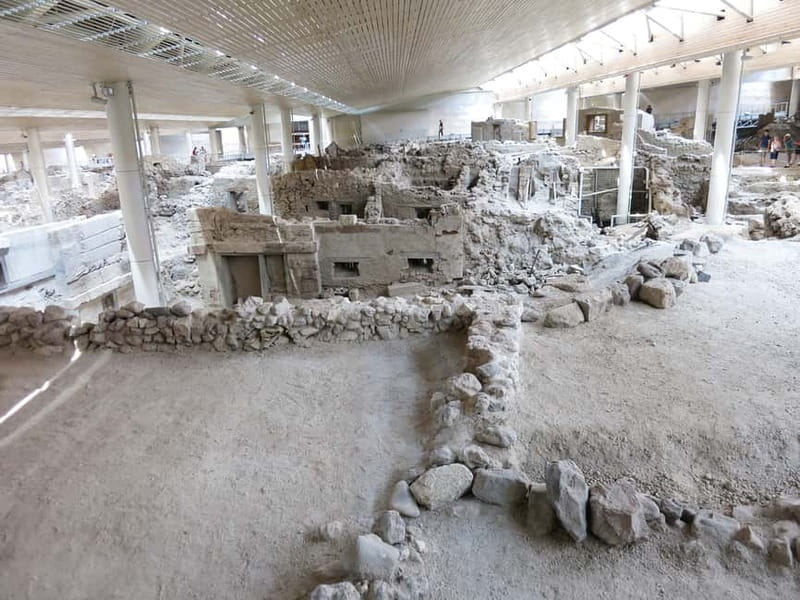
What makes this place feel different from many open-air ruins is the design of the visit. You’re not walking through a dusty field of broken stones. You’re touring an organized archaeological footprint inside a large shelter, with clear viewing routes. That means you can see more per hour, and you can focus on the story rather than dodging uneven ground.
And yes, the “Pompeii of the Aegean” label is earned—not because it’s the same culture, but because the preservation gives you that rare snapshot of daily life before a catastrophe. Here, the shock comes from the volcanic eruption and the events around it, which left the town buried and frozen in time.
How the self-guided audios fit: Thera Town included, Akrotiri optional
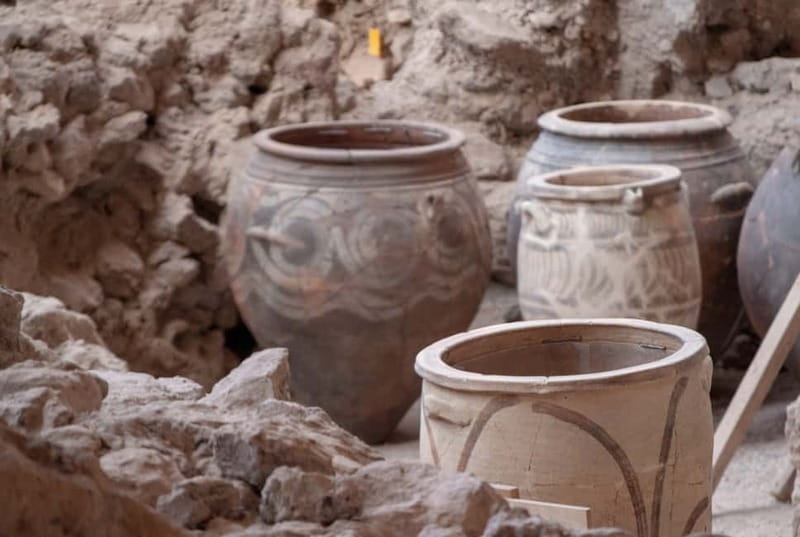
You’ll get self-guided audio content for Thera Town with all options. If you add the option for Akrotiri, you also get the self-guided audio tour for the Akrotiri Archaeological Site. The audio is available in English.
This matters because the site is expansive, and the layout can be confusing if you’re moving fast. Audio helps you connect what you’re seeing—streets, buildings, and the preserved remnants—to the bigger picture: what daily life likely looked like and how the catastrophe shaped the archaeological record you’re standing on.
My practical advice: if you want more than a quick walk and photos, choose the optional Akrotiri audio. If you’re the type who reads every sign and doesn’t want to listen to anything, you can still have a good visit. But multiple comments point to the same theme: the best experience comes from combining the walk with audio context.
One more important note for planning: the audio device or earphones are not included. So you’ll want to check what’s available on-site and plan accordingly.
Entering smoothly: time slots, opening hours, and bus-crowd strategy
This is a pre-booked, time-slot entry. That’s not a detail you ignore when you’re on Santorini—your day can get eaten alive by lines, shuttles, and late surprises. With a selected date and time slot, you can aim to arrive when the gates are just opening and enjoy the ruins before the bigger waves.
Opening hours are listed by day:
- Monday, Wednesday, Thursday: 8:30 AM to 3:30 PM
- Tuesday, Friday, Saturday, Sunday: 8 AM to 8 PM
Hours can vary for special occasions, so it’s smart to double-check close to your visit.
If you want space to read and take photos without weaving through groups, arrive early. When buses show up, the site can feel busier fast because it’s a single, guided-by-signage kind of route. Going in close to opening tends to give you that quiet window where you can actually absorb what’s in front of you.
Finally, if you’re using GPS, be prepared for some frustration. One clear tip: it can be hard to find in-app directions, but it’s often easiest to just follow the right approach on foot—walk up and you’ll see it.
Inside the shelter: raised routes, preserved buildings, and suspended walkways
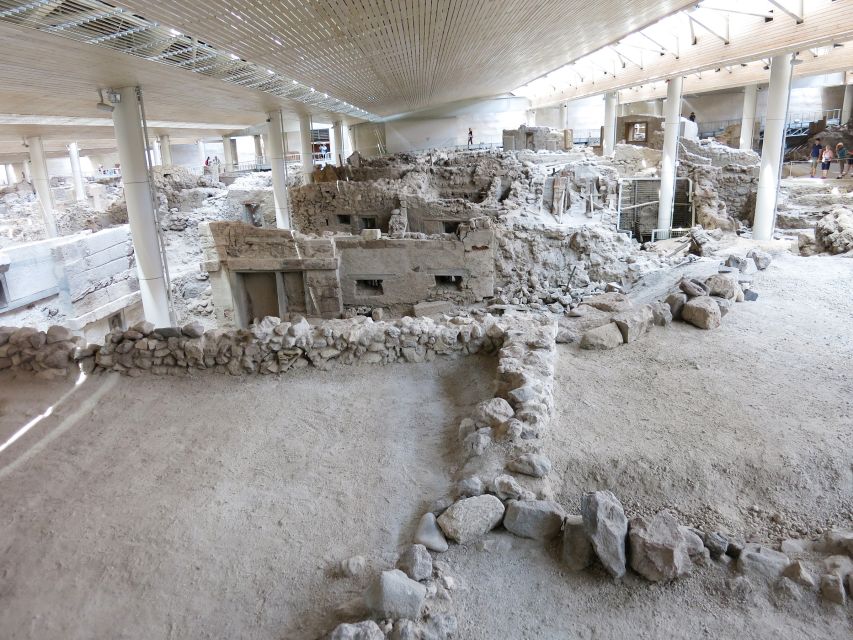
The heart of the experience is the preserved city laid out in a way you can explore. You’ll walk around the archaeological site inside the massive shelter, with raised paths that keep you above the ruins. That design helps you see details without physically getting in the way of the excavation areas.
A standout feature is the suspended walkways above the ruins. These aren’t just architectural flourishes. They guide your viewing angles so you can understand how spaces connect—rooms and corridors, building edges, and the overall footprint of the settlement. It’s one of those cases where the structure of the visit shapes how much you take in.
Expect to spend time at multiple “edges” of the city layout too. The experience isn’t only about moving forward; it’s about pausing at viewpoints that show different sides and levels. If you like to study patterns—how people built, how they organized a town—this place can keep you occupied longer than you’d guess.
Can you step into the ruins? No. You can’t treat this like a theme park where you wander freely through the original rooms. What you can do is look closely from the walkways, and use audio and signage to understand what you’re seeing.
Also, the site is wheelchair accessible, and the raised, level paths can make the visit more comfortable than many uneven ruin sites.
How long you should plan, and how to pace it without feeling rushed
A full visit can fit into about one to one-and-a-half hours if you keep moving. That lines up with the reality of this kind of site: there are a lot of points of interest, but the main viewing route is still manageable.
Here’s the pacing approach I recommend:
- Start with the “big picture” sections so you understand the town’s layout.
- Then slow down for specific details—especially if you have the Akrotiri audio. Audio turns the walk from a checklist into a guided story.
- Save a final segment for reconstructions and short videos if they’re available in your route that day. One helpful point: there’s at least one short reconstruction video at the end, and it can tie together what you’ve been seeing.
If you’re someone who reads signs carefully, you’ll probably land on the longer end. If you’re sensitive to crowds, going early makes a noticeable difference because you can ask staff questions and take your time without constant crowd pressure.
Price and value: is $30 worth it?
At around $30 per person for a regular-priced ticket, the value depends on how you visit. If you treat it like a quick sightseeing stop—walk, glance, photos, out—you may feel like the price is steep for the time you’re on-site.
But if you show up ready to learn, the same ticket can feel like a bargain. Why? The site is expansive, well-preserved, and set inside a shelter that makes the visit comfortable. The raised walkways and the organized viewing areas let you see far more than you might expect for an indoor ruins site.
The optional audio is the deciding factor for many people. When the audio is part of your plan, you’re not relying on plaques alone, and you don’t miss the connection between what the ruins look like and what life there likely meant. One practical lesson from experience patterns: if you skip audio, some visitors feel the signage doesn’t give enough background to make everything click.
If you love archaeology, you’ll likely feel the value immediately. If your interest is more casual, you’ll want to manage expectations and plan to spend enough time to actually get the story.
Where to go next in Santorini: Museum of Prehistoric Thera in Fira
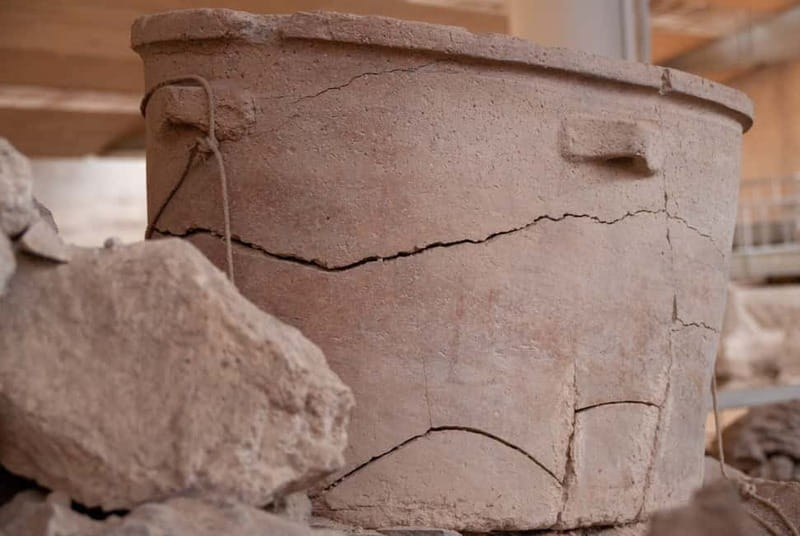
If you want the Akrotiri story to fully click, pair the site with a museum stop in Fira. A very helpful tip: follow up at the Museum of Prehistoric Thera, where many artefacts from Akrotiri are housed.
This pairing is smart because the ruins show you the town’s structure; the museum helps you connect objects to that daily life. It’s also a great way to make your day feel complete, especially if you’re visiting during the hot hours when an outdoor-only itinerary can get exhausting.
Even if you’re short on time, the museum can turn your Akrotiri walk from “I saw old walls” into “I can picture what people used daily.” That’s the moment when the price and time start to feel justified.
Should you book this Akrotiri ticket with self-guided audios?
Book it if:
- You’re interested in Minoan history and want a preserved site rather than scattered ruins.
- You like self-guided travel and want to control your pace with English audio.
- You want indoor ruins viewing with comfortable walkways, not a sunburn contest.
Think twice if:
- You want a fast stop with minimal learning and you’re unlikely to use the audio.
- You’re easily disappointed by sites that need interpretation to feel alive.
My bottom line: this is a solid choice for value when you use it like a learning visit. If you can arrive early and add the Akrotiri audio option, you’ll get much more than a glance at ancient stones.
FAQ
What do I receive with the ticket?
You’ll receive your pre-booked entry ticket for your selected date and time slot. You also get a self-guided audio tour for Thera Town with all options, and the self-guided audio for Akrotiri only if you choose that option.
Is the audio included automatically?
Thera Town audio is included with all options. Akrotiri audio is included only if you select the optional audio tour for the Akrotiri Archaeological Site.
What language is the self-guided audio?
The self-guided audio option is available in English.
Do I get an audio device or earphones?
No. The audio device/earphones are not included.
How long is the entry ticket valid?
It’s valid for 1 day, and you’ll need to check availability for the starting times.
What are the opening hours?
Opening hours are listed as:
- Monday, Wednesday, Thursday: 8:30 AM to 3:30 PM
- Tuesday, Friday, Saturday, Sunday: 8 AM to 8 PM
Hours may vary due to special occasions.
Is Akrotiri wheelchair accessible?
Yes, the experience is marked as wheelchair accessible.
What should I bring?
Bring a passport or ID card, sunglasses, a sun hat, and water.
Is there a reduced-price admission option?
Yes. There is mention of reduced admission for infants aged 0–5 and EU citizens aged 6–24, but you’ll need to get a special printed ticket from the ticket booth to use that offer.
Can I get a refund if plans change?
No. This activity is listed as non-refundable.