Rouen is more fun when you have questions. This self-guided scavenger hunt mixes walk-around sightseeing with a puzzle game, so you don’t just pass by Rouen’s key places—you learn as you go. I really like that the app handles navigation with a map function, and I also love the built-in prompts: you’ll solve clue questions on-site and there are photo tasks that turn the city into a game board. One thing to think about: it’s self-run, so you’ll want to confirm you can access your code in time and plan on using your phone comfortably outdoors.
You’ll start at Place du Général de Gaulle and finish back there, working through a route of Rouen highlights at your own pace. After you buy, you get an access code for the Explorial-App, and the hunt is flexible—good for breaks, coffee stops, and slowing down when something catches your eye. The main drawback is timing: even though it averages 1–2 hours, you may stretch it to 3 hours if you detour or linger, so give yourself a comfortable window.
In This Review
- Key Things I’d Focus On Before You Go
- How the smartphone hunt changes Rouen sightseeing
- Where the tour starts in Rouen (and why the location matters)
- What your phone becomes: the Explorial-App workflow
- The route in real life: how you move between Rouen’s highlights
- Street Art Jaw: seeing color and style with a purpose
- Musée des Beaux Arts: learning by reading what’s in front of you
- Cathédrale Notre-Dame de Rouen: getting more out of the main icon
- Photo tasks and points: a playful way to remember
- Timing: give yourself 1–2 hours, but plan like it’s 2–3
- English or French: how the language part actually helps
- Value check: is $5.84 per person worth it?
- A candid heads-up: when the code and meeting point get messy
- Who should book this Rouen scavenger hunt
- Should you book it?
- FAQ
- How long is the Rouen scavenger hunt and sights tour?
- Where does the tour start and end?
- What do I do after I book?
- Do I need to solve puzzles at each stop?
- Is the tour timed?
- What sights are included?
- Is it available in English and French?
- Is it a private activity?
- Is there free cancellation?
Key Things I’d Focus On Before You Go
- Puzzle-guided route: clues and hints push you from place to place instead of wandering randomly
- On-site question prompts: answers are usually visible on signs, pictures, and display text nearby
- Photo tasks for points: creative snapshot challenges make the walk feel less like homework
- Smartphone navigation: the app’s map helps you find each stop with less stress
- Flexible timing: not limited in time, so you can pause for snacks or photos
How the smartphone hunt changes Rouen sightseeing
This isn’t a traditional guided tour where you stand in one spot and listen. You walk, you look, and you answer. The “game” format matters because Rouen has plenty to see, but it’s easy to skim over details when you’re just moving from landmark to landmark. Here, the app nudges you into the right mindset: slow down enough to read what’s in front of you, then solve the next clue and keep going.
I like that the hunt is built around a mix of sightseeing and learning. You’re not memorizing facts from a screen. Instead, you’re usually searching for the information in the physical setting—signs, pictures, and display material tied to each stop. That means you get the satisfaction of figuring things out yourself, and you end up noticing details you might otherwise miss.
And yes, it’s fun. Photo tasks add a light, creative edge. They also make the walk feel like a shared activity, even when you’re traveling solo or as a small group. If you enjoy playful challenges, you’ll feel it right away.
Where the tour starts in Rouen (and why the location matters)
You begin at Place du Général de Gaulle and you end back at the same meeting point. That’s convenient. You don’t need to solve the logistics of “how do we get back?” after a self-guided walk. It’s also a practical choice because starting in a central public square makes it easier to arrive by foot or public transportation.
The hunt itself uses a smartphone and a map function, so your start point needs to be easy to find. Place du Général de Gaulle is straightforward for that reason: you have a recognizable anchor and you can regroup there if you get turned around (even though the app is meant to reduce that risk).
What your phone becomes: the Explorial-App workflow
After purchase, you get an access code that you use inside the app. Then you download the Explorial-App, go to the starting point, and start the game. The concept is simple, but it affects how smoothly your experience goes.
Here’s what I recommend to make it painless:
- Before you set off, check that you can log into the app and that the access code works.
- Bring a charged phone and consider a power bank for a 1–2 hour walk (and potentially longer).
- Make sure you’re okay using your screen outdoors; you’ll be checking prompts and navigation as you go.
The experience isn’t limited in time. That’s a big deal if you prefer to travel without rushing. If you need a break, you can take one and come back to the hunt when you’re ready.
The route in real life: how you move between Rouen’s highlights
The hunt is designed as a chain of stops. You’ll find sights using hints, then get questions once you arrive. Most of the time, those questions are answered using what’s physically around you—signs, pictures, and other details displayed at the location.
The app’s map function helps you get to each next location. This reduces the stress of figuring out the order yourself and lets you focus on the fun part: spotting the information and solving the clue.
Your route will include major Rouen highlights, such as:
- Cathédrale Notre-Dame de Rouen
- Musée des Beaux Arts
- Street art at a stop described as Street Art Jaw
…and additional places along the way.
Because you’re solving the next step through clues, the route can feel more like a storyline than a checklist. If you tend to remember cities by neighborhoods and moments, this format can help you build a stronger mental map of Rouen.
Street Art Jaw: seeing color and style with a purpose
One of the stops called out is Street Art Jaw. Even if you don’t usually chase street art, a designated puzzle stop changes how you look at it. Instead of snapping a photo and moving on, you’re prompted to notice specific elements that tie into the question the app asks.
This is one of the reasons I think this hunt works well: it gives equal “attention time” to different kinds of places. Rouen isn’t only about grand monuments. Street art brings personality, texture, and contemporary storytelling into the mix. A scavenger format also helps you find these spots without relying on word-of-mouth.
Drawback to consider: if you’re the type who wants maximum time at one or two big monuments, a short street art stop might feel like a detour. The good news is that the tour is self-paced, so if street art grabs you, you can slow down while still staying within the game.
Musée des Beaux Arts: learning by reading what’s in front of you
The Musée des Beaux Arts stop fits the hunt style perfectly because museums are full of text, labels, and visual cues. Your experience here is less about “absorbing everything in a museum” (that’s not realistic in a 2-hour walk) and more about spotting what the game asks you to find.
Expect the app to ask questions tied to what you can observe during your visit. Those answers are often hidden in the museum’s signage or picture details. That approach makes the museum visit feel focused. You’re not trying to see it all. You’re hunting for specific information, then moving on.
Practical tip: museums can be quiet and sometimes a bit dim. If you’re squinting at tiny labels, take a moment to zoom in on your phone screen for the clue context, but still look at the physical materials so you’re not purely relying on the device.
Cathédrale Notre-Dame de Rouen: getting more out of the main icon
The Cathédrale Notre-Dame de Rouen is the kind of landmark that can swallow an itinerary. When you’re just walking past, it’s easy to think you’ve already “seen the cathedral” once you spot it. The hunt format changes that.
Here, you’ll get into the cathedral experience with prompts that ask questions about what you can find in the environment. In other words, you’re encouraged to look carefully at what’s near you—signs, pictures, and display details—so the time spent inside (or around the area) becomes more than just sightseeing.
This is also where I think the scavenger idea really pays off for first-time visitors. If you’re new to Rouen, the cathedral is a must-see. But the game helps you connect with it through learning prompts rather than just walking around and hoping it sticks.
Photo tasks and points: a playful way to remember
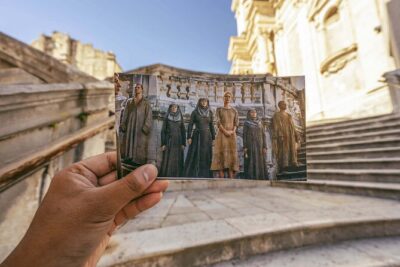
During the walk, you may face photo tasks. These are the fun curveballs that ask for creative snapshots. The reward is points, so you’re motivated to participate instead of treating it like background entertainment.
Why this matters: photo challenges make you stop and frame your surroundings. You’ll likely find yourself looking up, looking at textures, and scanning for details that match the prompt. Even if you don’t end up with “perfect vacation photos,” you’ll still come away with a stronger sense of the places you passed through.
A small consideration: if you hate stopping often to get shots, you might find the tasks slightly distracting. The good part is that the experience isn’t limited in time, so you can move at your comfort level.
Timing: give yourself 1–2 hours, but plan like it’s 2–3
The hunt lasts on average about 1–2 hours, and it’s not limited in time. In practice, your pace matters. If you stick to the route and keep tasks moving, 1–2 hours can feel realistic. If you detour, browse, or re-check something because you’re thinking through a clue, you might stretch it to around 3 hours.
My advice: don’t schedule this as the tightest part of your day. Pick a window where you’re free to linger. Rouen rewards wandering, and this tour is designed to support it instead of penalizing you for slowing down.
If you’re traveling with kids or just want an easy activity that still feels like a real adventure, the flexibility helps a lot. It’s also a solid choice when you want a structured experience without committing to a full guided tour length.
English or French: how the language part actually helps
The experience is available in English and French. That matters for comprehension because the questions and clues are the backbone of the hunt. If you’re comfortable reading in one of those languages, you’ll have a smoother time solving tasks and understanding what you’re looking at.
If you’re in doubt about your reading speed, pick the language you’re most confident with. You’ll spend less time guessing and more time noticing details in Rouen.
Value check: is $5.84 per person worth it?
At $5.84 per person, this is priced for accessibility. You’re not paying for staff guidance on every step—you’re paying for a self-guided smartphone experience that combines walking, navigation help, and puzzle-based learning.
So what do you get for the money?
- A route that covers big highlights like the cathedral and a major museum
- An app-driven format that tells you where to go next and what to look for
- A playful layer with photo tasks and points
The best value comes if you enjoy problem-solving or you want a sightseeing structure that doesn’t feel like a lecture. If you prefer straight-up narration and you don’t want to spend time reading clues, you may feel like the “tour” part is thinner. But for budget-friendly, active sightseeing, it’s easy to see why people book it.
A candid heads-up: when the code and meeting point get messy
One practical caution comes from real-world experience: if someone needs to be present at the meeting spot to hand over a code or help you start, and they aren’t there, the whole game can stall. The good news is that the tour information says you receive an access code after purchase, so you may be able to start on your own right away.
My rule: arrive ready. Have your booking details handy. Check your access code on your phone before you depend on anyone else. If you’re traveling in a group, confirm everyone has the working code too—so you’re not stuck waiting while the hunt timer in your own head gets annoying.
Who should book this Rouen scavenger hunt
This works especially well if:
- you like sightseeing that turns into an activity
- you enjoy puzzles and photo challenges
- you want to control your pace and take breaks
- you’re visiting Rouen and want a structured way to see the cathedral and major museum area
It’s also a good family idea because it’s interactive and keeps kids (and adults) focused on looking for clues rather than only walking.
If you hate reading prompts outdoors, or you want a fully guided experience with constant human context, you might feel it’s not quite your style. But if you’re game for a self-led walk that still points you toward meaningful stops, it’s a strong match.
Should you book it?
I’d book this if you want value plus a playful way to see Rouen’s best-known sights. The low price makes it easy to try, and the format helps you learn through on-site questions instead of just moving past landmarks. It’s also flexible, which is great for real travel days where plans rarely stay perfectly on schedule.
Skip it or reconsider if you’re worried about phone use, low battery life, or anything that depends on getting started at the meeting point smoothly. Otherwise, it’s a smart way to turn Rouen sightseeing into a short adventure you can finish at a pace that feels right.
FAQ
How long is the Rouen scavenger hunt and sights tour?
It takes about 2 hours on average, though the experience lasts on average about 1–2 hours. It is not limited in time, so you can go slower and take breaks.
Where does the tour start and end?
It starts at Place du Général de Gaulle (76000 Rouen, France) and ends back at the same meeting point.
What do I do after I book?
After you buy the ticket, you receive an access code that you use in the Explorial-App. Then you download the app, go to the starting point, and start the game.
Do I need to solve puzzles at each stop?
Yes. Once you arrive at a place, you’ll be asked questions. Most answers are hidden in signs, pictures, or other displayed information related to the sight.
Is the tour timed?
No. The experience is not limited in time, so you can explore and take breaks whenever you want.
What sights are included?
The hunt includes major Rouen highlights such as Cathédrale Notre-Dame de Rouen, Musée des Beaux Arts, and Street Art Jaw, plus additional places.
Is it available in English and French?
Yes. The tour is offered in English and French.
Is it a private activity?
Yes. Only your group participates.
Is there free cancellation?
Yes. Free cancellation is available, and you can cancel up to 24 hours in advance for a full refund. After that, the refund rules are based on the local start time.