REVIEW · YORK
Romans, Vikings and Medieval York: An Audio Tour
Book on Viator →Operated by VoiceMap Audio Tours · Bookable on Viator
York feels clearer when the streets talk back. This self-guided Romans, Vikings and Medieval York audio tour adds context to York’s landmarks and side streets, using turn-by-turn directions and offline audio with maps and geodata. You get guided moments that connect places like York Minster and the Shambles into one walking story.
I love that you can run it your way. The tour is built for pause and resume, so you can linger, duck into a snack stop, or power through the whole route, and you also get lifetime access to the tour after you download it once. It’s designed as a private experience for your group, which makes it feel less like a “herd” and more like your own sightseeing plan.
A fair consideration: this is phone-first touring, and that can be fussy. If your app setup takes time or your phone battery gets low, the experience can drag, so plan to bring a charger and consider using headphones so you can focus on the audio.
In This Review
- Key points worth knowing
- How VoiceMap Turns York Into Step-by-Step Walking
- Price, Time, and What You Actually Get for $11.99
- Starting at Bootham: Your Route Through Key York Stops
- York Minster Area: Big Cathedral Energy, With City Context
- The Shambles to Clifford’s Tower: Stories You Can Hear Between Streets
- Abbey Ruins, Merchant Adventurers’ Hall, and Bootham Bar: A City of Power
- The Treasurer’s House Ghost Story and Stonegate: Old Streets, Extra Atmosphere
- Barley Hall and Mansion House: Civic York You’ll Want to Re-Notice
- Holy Trinity Church and Finishing Back at Bootham
- Pace, Battery, and Phone Sanity Checks
- Who Should Book This York Audio Tour?
- Should You Book Romans, Vikings and Medieval York?
Key points worth knowing
- Offline-ready VoiceMap: audio, maps, and geodata are available without relying on mobile signal
- Turn-by-turn walking directions: follow the route on your screen or rely on the map when GPS gets weird
- A stop-focused route through York: York Minster, The Shambles, Clifford’s Tower, Abbey ruins, and more
- Story hooks at each landmark: including an “amazing ghost story” at the Treasurer’s House stop
- You control pacing: stretch it to hours or finish faster by moving steadily
- One person, one phone works best: location-triggered audio can spread a group out if everyone syncs differently
How VoiceMap Turns York Into Step-by-Step Walking
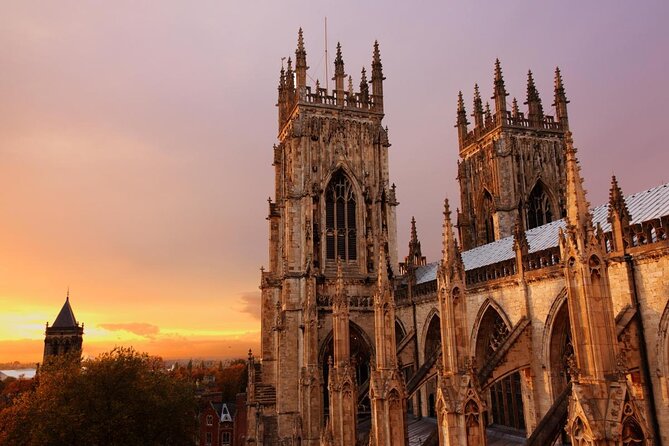
This Romans, Vikings and Medieval York audio tour is powered by the VoiceMap application, and the big win is how it guides you from one historical stop to the next. Instead of downloading a bunch of PDFs or trying to read street signs at speed, you get walking directions that you can keep using even when signal drops—because the tour includes offline access to audio, maps, and geodata.
In practical terms, this is the difference between wandering and learning. York’s old streets can feel like a maze, especially around the medieval core, so having the next move already suggested helps you stay oriented. The app also supports offline maps, so you’re not stuck at the moment you walk behind a wall, into a narrow lane, or under heavy coverage.
You also get flexibility. The tour is designed so you can start, pause, and restart whenever you want. That matters in York, where you’ll want to stop for photos, wait out rain, or just stand still for a minute to take in the street scene. One review highlighted that the experience can stretch to several hours because you’re free to stop/start without feeling guilty.
One more practical note: the audio is location-based. That usually means you’ll hear clips when you reach the right spot, but it also means you should keep your phone handy and not wander too far off the route for long stretches. If you do, the narrative can feel like it’s waiting for you.
You can also read our reviews of more tours and experiences in York.



Price, Time, and What You Actually Get for $11.99

At $11.99 per person, this is priced like a small splurge that saves you time. You’re not paying for a museum ticket or transportation—you’re paying for a guided route that helps you notice details you’d likely walk past on your own.
Expect about 1 hour 30 minutes to 3 hours, depending on how long you linger. The tour is paced as a sequence of landmarks—York Minster area, The Shambles, Clifford’s Tower, Abbey ruins, Merchant Adventurers’ Hall, Bootham Bar, the Treasurer’s House stop (with the ghost story), Stonegate, Barley Hall, Mansion House, and Holy Trinity Church. That stop density can feel like a lot, but the format makes it approachable because the audio keeps you moving while still letting you pause.
The value also comes from what happens after. You get lifetime access to the tour, so you can revisit it later on a different day, or you can use the downloaded content if you decide to return to York. For return trips, that’s genuinely useful—York rewards repeats.
The one downside on value is technical risk. A couple of experiences described app-loading friction, narrative not playing at first, or confusion when resuming. That doesn’t mean the tour fails, but it does mean you should treat this like planning a mini digital project: charge your phone, download ahead, and test playback before you hit the streets.
Starting at Bootham: Your Route Through Key York Stops
The tour starts at 2A Bootham, York YO30 7BL, UK, and it ends back at the same meeting point. That “loop back” structure is a big deal for self-guided walking. It reduces the pressure to figure out where you are or how to get home after you’ve been walking for a while.
From the start, the route focuses on York’s major medieval touchpoints and the street atmosphere between them. You’ll pass through areas known for old stone, narrow lanes, and landmark buildings that help you connect the city’s stories in order rather than randomly.
If you like your sightseeing as a chain—one stop leading into the next—you’ll probably enjoy this. If you prefer a pick-and-choose approach, you can still do that, but you’ll want to pay attention to how the app expects you to move between points.
Also, keep in mind that paths sometimes change in real life. Some people had issues with locked gates or needed to find their own way around closures caused by weather. Because this is self-guided, your best safety net is using the app map and directions in real time, and being comfortable skipping a stop if you hit a dead end.
York Minster Area: Big Cathedral Energy, With City Context

Your first big learning zone is the York Minster area. The tour doesn’t just treat the Minster as a lone “wow” building; it frames it as the center of a bigger city story, setting you up to understand why the surrounding streets matter.
What I like about starting here is that it gives your walk a reference point. As you move through later stops like The Shambles and other medieval sites, the audio context helps you see connections—how this part of York relates to the rest of the route.
Also, York Minster and its nearby surroundings tend to set the pace for the day. You’ll get oriented visually, then the tour carries that orientation forward as you walk into tighter medieval lanes and into places where story feels more personal than monumental.
A practical consideration: if crowds or lines are an issue in the area, you can still enjoy the audio because it’s designed for a walking experience. You don’t need to spend time inside a building for the tour to work.
The Shambles to Clifford’s Tower: Stories You Can Hear Between Streets
Next comes The Shambles, an area where street shape and building placement create a strong sense of place. The audio focuses on the extraordinary stories linked to this stretch and how it fits into the larger York narrative.
Then the route moves to Clifford’s Tower. This stop adds a different flavor—still medieval, but more dramatic in tone. The tour uses the tower to explain how that building belongs to the city’s ongoing story rather than sitting in isolation.
If you’re the type who likes your walking tour to feel like it’s building suspense (or at least building understanding), this pairing works well. The Shambles gives you texture and street-level atmosphere. Clifford’s Tower gives you a landmark you can anchor that street-level feeling to.
Drawback: if you get lost near the river areas or the app’s transitions, the next step can feel unclear. A few users noted getting turned around in parts of the route. My advice is simple: slow down when the directions feel like they end mid-block, and switch to the map rather than pushing forward on autopilot.
Abbey Ruins, Merchant Adventurers’ Hall, and Bootham Bar: A City of Power
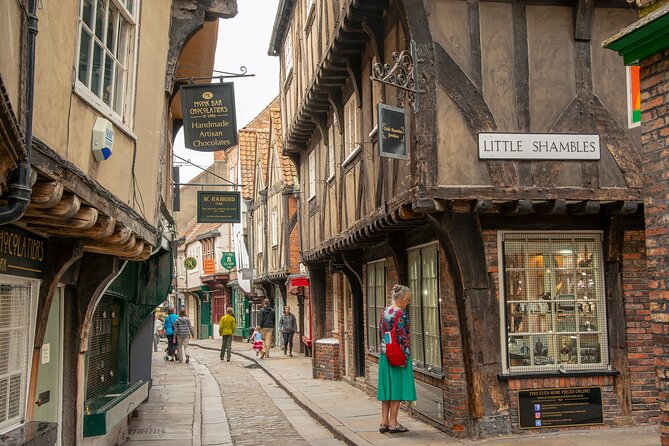
The tour continues with several stops that shift from street atmosphere to institutions. You’ll hear about the evocative ruins of the Abbey and how they connect to York’s story, then you’ll move on to Merchant Adventurers’ Hall, and Bootham Bar.
Why this section is valuable is that it fills in the “who mattered” angle. Not with a textbook, but with audio explanations that help you see how buildings represent roles in the city—trade, civic life, and defense or boundaries.
This is also one of the easiest sections to enjoy while wandering. These sites are the kind of place where you naturally slow down anyway, because you’re looking at stonework, gates, and old facades. The audio turns that instinct into understanding rather than just photo-taking.
If you hit weather or closure problems, this part can be affected. One experience described having to change plans because a path was closed due to strong winds. Another mentioned a route change because of flooding. The app’s map and offline data are there for exactly this kind of reality, but you’ll still want to keep your flexibility and be ready to skip a stop if you can’t reach it.
The Treasurer’s House Ghost Story and Stonegate: Old Streets, Extra Atmosphere

One of the most memorable moments on this tour is the stop for the Treasurer’s House. The audio explicitly leans into an amazing ghost story, which is a smart move. It breaks up the more formal historical context with something that’s easier to remember and fun to listen to while you’re walking.
Right after that, you go to Stonegate. The audio frames Stonegate as part of the broader story of York, which helps you see the street as more than just a shopping strip or a scenic route.
This combo tends to land well because it uses a classic “mood shift.” Ghost story at the Treasurer’s House gives you a cinematic tone, and then Stonegate brings you back to street-level reality. Even if you don’t care about spooky tales, the audio helps you pay attention to details in the street scene you might otherwise skim past.
Tip for enjoyment: keep your volume at a level where you can hear the audio but still notice nearby traffic and pedestrians. This route passes through busy areas, and you’ll want your attention on the sidewalk, not just the headphones.
Barley Hall and Mansion House: Civic York You’ll Want to Re-Notice
Later stops include Barley Hall and the Mansion House. The tour explains how these buildings fit into York’s story, and they add variety to the walk. These are the types of structures that benefit from context, because from the sidewalk they can look like “just another old building” unless someone helps you connect what you’re seeing to why it matters.
The benefit of including them is that the tour doesn’t only chase the biggest-name landmarks. It makes room for smaller but still important pieces of the city’s built identity—so your day feels more like exploring York’s layers than checking off famous sights.
If you like your walking to feel rewarding even when you’re tired, this is where the tour often helps the most. By this point, you’ve already learned how to follow directions, so you can focus on listening and letting the audio interpret what you see.
Possible drawback: some people found the narration shorter than expected or felt there were long stretches where silence made them wonder if playback paused. If you’re sensitive to audio pacing, keep an eye on the playback screen and don’t assume silence means nothing is happening.
Holy Trinity Church and Finishing Back at Bootham

The last major stop in the route is Holy Trinity Church. The audio uses it to tie back into the city’s story and to keep the narrative momentum as you approach the end of the walk.
Finishing back near Bootham is convenient. When you’re done with a self-guided tour, the last thing you want is a complicated exit. Ending at the same place you started means you can refuel, rest, or head to dinner without re-navigating the entire city.
This is also a good place to decide how you want to close out your day. Because the tour is stop-and-go friendly, you can treat the final segment as your “wrap-up,” then either continue exploring nearby or call it a win and head back.
Pace, Battery, and Phone Sanity Checks
This kind of audio tour is fantastic when it runs smoothly. Here’s how to keep it smooth.
- Download before you start: the tour includes offline audio, maps, and geodata, but you still need to be set up on your phone to use it.
- Use a charged battery: several people ran low because they relied on their phone for both navigation and audio. Bring a power bank.
- Consider headphones: one issue came up where audio and map guidance were hard to separate without headphones.
- Expect GPS hiccups: at times, GPS can drop out and the app will tell you to use the map instead. That’s manageable as long as you’re not rushing.
- Be flexible if a path is blocked: locked gates or closed paths can happen. The offline map helps, but you might still need to skip a stop and move to the next reachable point.
Timing-wise, plan for the full 1.5 to 3 hours, then add buffer. York involves hills, cobbles, and the habit of stopping to look at what you’re hearing about. If you’re traveling with kids, this format can work well because you can pause for breaks and adjust pacing without waiting on a group.
If your group is more than one phone, do yourself a favor and let each person use their own device. Location-triggered audio can desync, and that can scatter a group if everyone’s phones are listening at different moments.
Who Should Book This York Audio Tour?
This Romans, Vikings and Medieval York audio tour is a strong fit if you want:
- a self-guided walk with added context for York’s main sights and smaller street stops
- a tour you can control—pause, resume, linger, or speed up
- an easy way to get oriented using offline maps and turn-by-turn directions
- a budget-friendly way to avoid missing key areas like York Minster, The Shambles, Clifford’s Tower, and Holy Trinity Church
It’s also a good pick for people who don’t want to sit through a long lecture on a schedule. The experience is private for your group, and that can make the walk feel lighter and more fun.
If you know you’re the type who hates app setup, or you’re arriving with a low battery and no charger, consider that. This is not a “press play instantly with no tech” experience.
Should You Book Romans, Vikings and Medieval York?
I think this is worth booking if you’re looking for a guided-yet-free way to walk York and understand what you’re seeing without committing to a rigid group schedule. The offline support and turn-by-turn directions are the practical reasons to choose it, and the story structure makes the walk feel purposeful from Minster to Holy Trinity Church.
Book it if you can handle a phone-based plan: download ahead, bring headphones, and keep your battery charged. Skip it if you’re hoping for a no-setup, no-fuss experience, because the occasional app-loading and playback frustrations mean you should give yourself time to get ready before you start walking.