REVIEW · REIMS
Reims From Roman Ruins to World War II self-guided walking tour
Book on Viator →Operated by Tourific · Bookable on Viator
Reims tells its story one block at a time. This self-guided walk threads together cathedral coronations, Roman ruins, and World War II’s finale into an easy roughly 2-hour route. I love that you can replay the audio whenever you want, but you should plan for the real-world issue that some sights may be closed or under repair.
I also like the app tools: an interactive map plus images that help you spot each stop without turning it into a scavenger hunt. With offline access after you download, you can keep moving even if your phone signal gets patchy.
For $7.32 per person, the value is strong if you’re the type who enjoys learning at your own pace—pausing for corners, photos, and quick re-listens. The tour starts at the Cathedral of Notre-Dame of Reims and ends at the Lycée polyvalent Franklin Roosevelt, so you’ll want your return plan ready before you begin.
In This Review
- Key highlights worth your attention
- A 2-hour loop that connects Gothic, Roman, and WWII Reims
- Starting at the Cathedral of Notre-Dame of Reims: coronations and a heaven-linked legend
- Roman Underground Gallery: cool air, shadowy storage, and near-2,000-year preservation
- The Roman triumphal arch named for the god of war: read the stone like a map
- Royal square symbolism: the outstretched hand that hides layers
- Coronation backstage and sacred relics: where kings prepared
- An American steel tycoon rebuilds Reims with books and bold Art Deco
- The Franklin Roosevelt school: Allied HQ and the WWII surrender question
- Great War memorial: bronze figures that mourn and remember
- A medieval mansion with a ruined wing kept on purpose
- Price and app setup: what you get for $7.32 per person
- Should you book this self-guided Reims walk?
- FAQ
- Where does the tour start and end?
- How long is the walking tour?
- Is the tour available in English?
- Do I need internet during the tour?
- Is a human guide included?
- Is this tour private?
Key highlights worth your attention
- Audio you can replay so one stop can turn into two rounds of learning
- Interactive map plus stop images that help you find each location fast
- Reims in three eras: Gothic coronations, Roman engineering, then WWII history
- Offline mode once downloaded, which makes the walk more reliable on the street
- A WWII question built into the route that keeps you thinking as you move
A 2-hour loop that connects Gothic, Roman, and WWII Reims
This tour works because it doesn’t treat Reims like one big museum you have to power through. Instead, you get a compact walk that jumps eras on purpose: royal France, Roman engineering, and the modern turning point of WWII in Europe. Even if you only skim the narration at first, the route nudges you toward a bigger understanding of why Reims stayed important for so long.
The timing is also realistic. Roughly 2 hours means you can do it without feeling like your whole day depends on perfect conditions. You can linger when something grabs you, then keep going—no pressure to rush through every stop just to finish.
One more smart part: it ends at a different point from where it starts. That’s usually a hassle on paper, but here it can be useful. You’re walking toward a final site tied to WWII, so your last stretch has momentum instead of feeling like backtracking.
You can also read our reviews of more tours and experiences in Reims.

Starting at the Cathedral of Notre-Dame of Reims: coronations and a heaven-linked legend
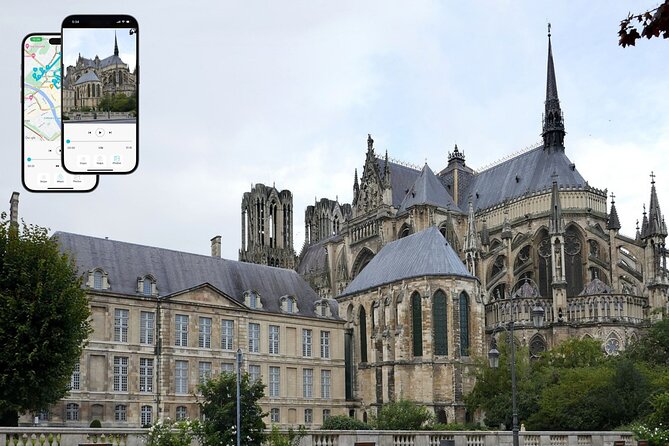
The walk begins at the Cathedral of Notre-Dame of Reims, and right away you’re placed at the heart of a very specific kind of French power: coronations. The cathedral is famous here for the fact that nearly every French king was crowned, so the opening narration is less about architecture trivia and more about political meaning.
You’ll also get an intriguing thread described as an ancient secret said to descend from heaven itself. I like that approach because it turns the cathedral from something you simply look at into something you interpret. Reims isn’t just a pretty Gothic building; it’s a stage where legitimacy was performed.
Practical tip: before you start walking, take 30–60 seconds to look up and around the façade area so you’re oriented. Gothic cathedrals reward you for quick first impressions, and your brain catches more details once you’ve taken that initial sweep.
Roman Underground Gallery: cool air, shadowy storage, and near-2,000-year preservation
Next up you head underground to a Roman gallery. This stop is described as cool, shadowy, and perfectly preserved for nearly 2,000 years, and that’s exactly why it feels like a reset from the cathedral.
What makes this kind of Roman survival special is how physical it is. You’re not just reading about the Romans—you’re standing in the kind of space that shaped how people stored and moved goods. The route also asks you to consider what was stored there and why Reims holds one of the world’s rarest examples. Even without getting lost in heavy facts, that question makes your attention sharper as you look.
Possible drawback: underground spaces can feel dim and can also be busy depending on the day. If you like photos, plan for low light and keep your phone steady. If you like comfort, dress for cool temperatures since underground areas often run cooler than street level.
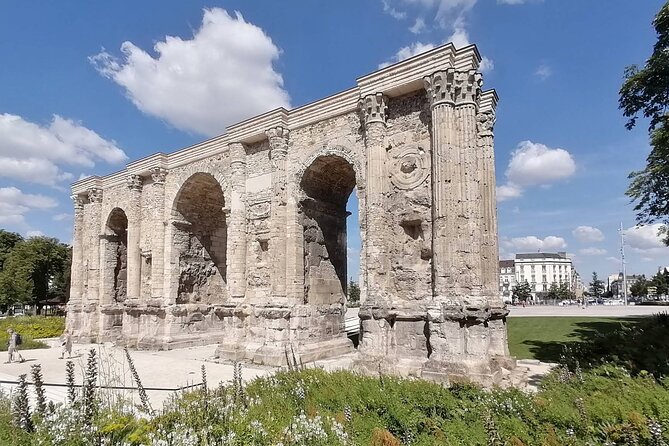
The Roman triumphal arch named for the god of war: read the stone like a map
You’ll then move to one of the oldest surviving Roman triumphal arches in the world. The tour frames it as a gateway that has seen empires rise and fall, and I like that it encourages you to treat the arch as more than a relic. It’s a kind of visual document carved into stone.
The key detail here is naming: it’s tied to the god of war. That gives you a lens for noticing what you’re seeing, especially if you already know Rome used victory imagery constantly. The route also prompts you to look for secrets carved into the stone, which means you’ll probably pay attention to details you might otherwise skip.
Here’s the practical angle: triumphal arches can be photographed from a few standard angles. If you want better results, take a minute at first to find the most readable view, then use your audio to guide your attention to what matters.
Royal square symbolism: the outstretched hand that hides layers
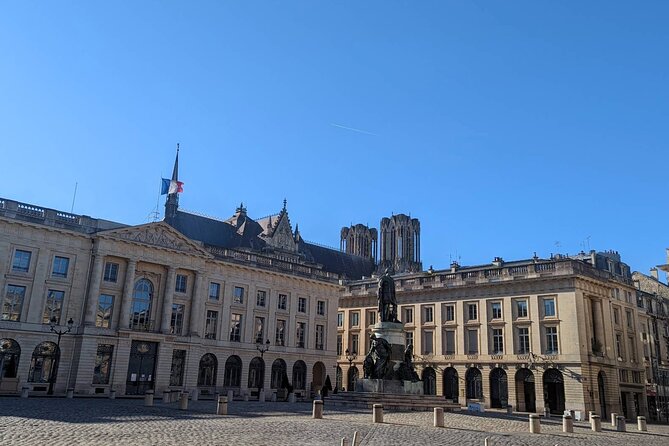
The tour then shifts from Rome to royal France again with a royal square where kings once stood tall. This stop is all about symbolism—specifically a statue whose outstretched hand hides layers of forgotten meaning.
I appreciate this kind of instruction because it prevents you from doing the common tourist thing: take a photo, move on, forget the why. When the route tells you to look at the hand, you actually look—at posture, placement, and how public art was designed to send a message to everyone watching.
If you’re in a hurry, this is the moment you’ll still want to slow down just a touch. Small details here can be easy to miss in real life, especially if you’re walking quickly between stops.
Coronation backstage and sacred relics: where kings prepared
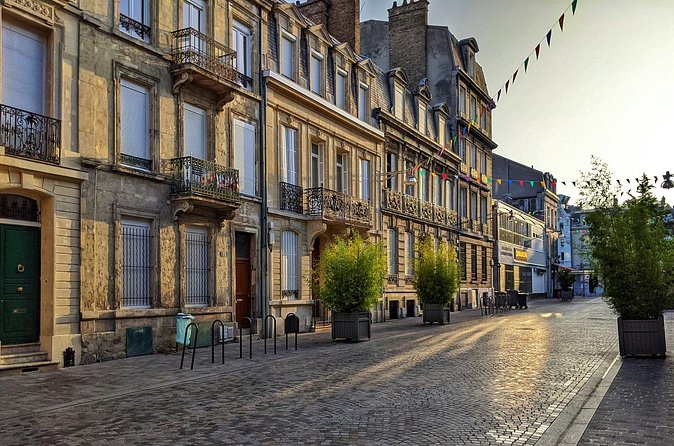
After the square, you step into the royal backstage where kings feasted, changed, and prepared for coronation. That description matters because it reframes what coronations were. They weren’t only a public ceremony; they were a full process with private steps and ritual preparation.
The tour also mentions one France’s most sacred relics being hidden here. Even if you don’t already know the background, the prompt gives you a clear reason to care: you’re not just walking past “a historic room,” you’re walking toward a function that helped legitimize rule.
One consideration: places tied to coronations and relics can be more sensitive with access or exhibit timing. Since the tour runs for multiple years and some stops can close, I’d keep a backup plan in your head: if you can’t access the exact room you’re aiming for, still look for the exterior cues and let the narration guide your understanding.
An American steel tycoon rebuilds Reims with books and bold Art Deco
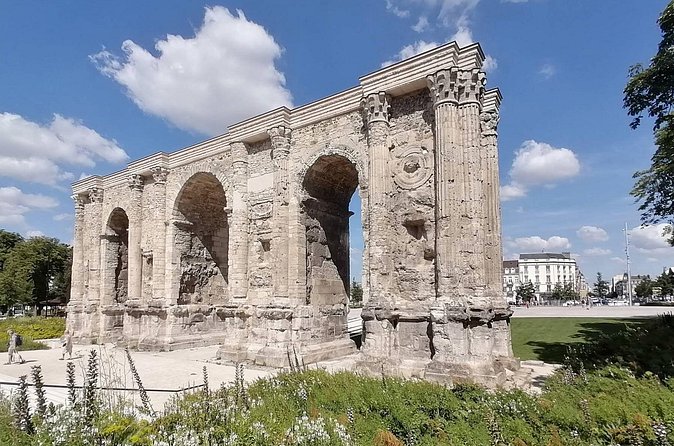
Then comes a refreshing change of pace: the route spotlights how an American steel tycoon helped rebuild war-torn Reims, not with weapons, but with books and bold Art Deco design.
Even without jumping into a debate about who did what, this stop is valuable because it shows how recovery also has culture at its center. Reims’ story isn’t only about destruction and survival; it’s also about rebuilding identity through education and architecture.
Art Deco details can be easy to overlook if you’ve only come for the medieval and Roman stuff. Here, the tour basically asks you to reset your eye. Look for the clean shapes and design confidence that contrasts with the older stone around it.
The Franklin Roosevelt school: Allied HQ and the WWII surrender question
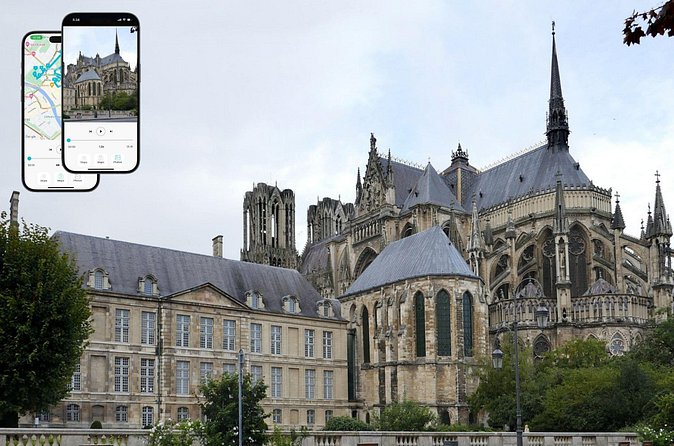
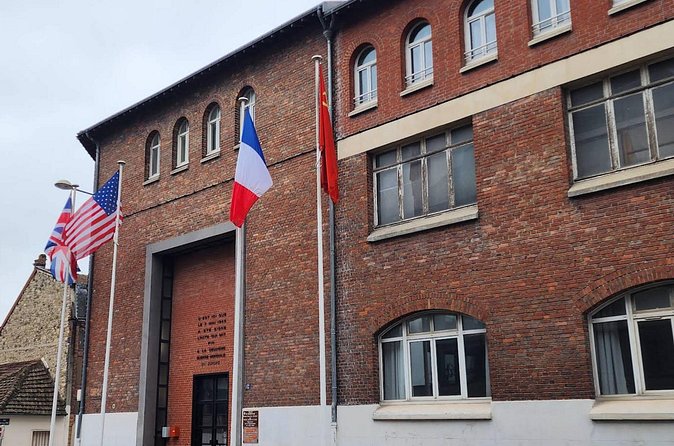
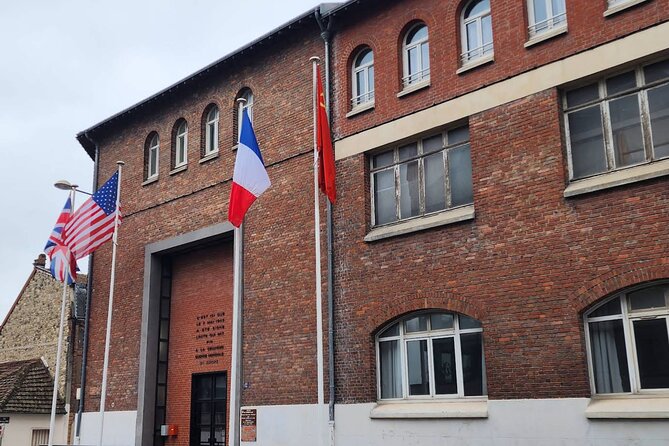
One of the most striking transitions in the route is ending up at a school that was once described as the nerve center of Allied forces—where World War II in Europe officially came to an end.
This is where the tour stays interesting even if you’ve heard WWII stories before. The narration includes a direct question: why wasn’t Eisenhower in the room when Germany surrendered? That kind of prompt keeps you alert, because it nudges you to compare expectation versus reality.
I’d treat this stop like a thinking moment, not just a photo moment. Read what you can, then listen again. The power of a self-guided tour is that you control the pace: you can replay the audio section for as long as you need until the timeline clicks in your head.
Great War memorial: bronze figures that mourn and remember
From WWII you move to memory of the Great War, with a memorial where bronze figures mourn and remember the fallen. This stop lands with emotional weight, and the tour’s framing helps you pause instead of treating it like another landmark.
If you’re sensitive to war memorials, you’ll likely appreciate the way the narration slows you down through the imagery. If you’re not, it’s still a meaningful checkpoint because it anchors the later history in human cost.
Practical tip: choose one viewpoint where you can take in the figures as a group, then walk closer once. It’s easier to absorb the meaning when you start wide and then read the details.
A medieval mansion with a ruined wing kept on purpose
The last stop described in the route focuses on a medieval mansion where one man rebuilt history but left a wing in ruins on purpose. That detail is the whole point of the stop.
I like this kind of preservation choice because it refuses to tidy the past. Leaving part of a site in ruins can be a way of saying: we remember what happened, and we won’t pretend it was all restored cleanly. It also makes the mansion feel honest. You’re not only seeing what survived—you’re seeing the cost of what didn’t.
When you reach this final location, give yourself an extra minute or two before moving on. The end of a self-guided tour can feel abrupt, but this ending is meant to linger.
Price and app setup: what you get for $7.32 per person
At $7.32 per person, this is priced like an efficient learning tool rather than a premium guided experience. And that’s exactly how you should judge the value: you’re not paying for someone to stand next to you. You’re paying for a structured walk with audio, written help, maps, and offline capability.
Here’s what you’ll likely use most:
- an email from Tourific with access instructions
- a mobile ticket on your phone
- audio plus a written guide
- images to identify stops and an interactive map
- offline access once downloaded
- access for 1 year on iOS and Android, so you can replay without rushing
One practical note: the tour doesn’t include physical devices or headphones. Bring your own earbuds if you want clear audio in street noise. Also, since it’s offline-based, download before you start your walk so you don’t spend time troubleshooting while standing outside.
Timing tip: the tour’s operating hours list 8:00 AM to 6:30 PM. If you’re doing it later in the day, check how much light you’ll have for photo-friendly views, especially for Roman stone and memorial bronze details.
Should you book this self-guided Reims walk?
You should book if you want a compact walk that stitches together Reims’ biggest themes—royal coronations, Roman remains, and WWII’s end—without scheduling conflicts. You’ll especially like it if you enjoy self-paced learning, replaying audio, and using maps and stop photos to stay on track.
I’d skip or rethink if you’re visiting right in the middle of closures. There’s at least one clear risk: parts of the route can be shut or under repair, which can reduce what you can see in person. If that’s a dealbreaker for you, consider aiming for earlier in the day or pairing this with a flexible plan for alternate nearby sights.
If you want an easy, meaningful way to understand Reims beyond the postcard view, this tour is a strong bet—one that fits well into a day already packed with exploring.
FAQ
Where does the tour start and end?
It starts at the Cathedral of Notre-Dame of Reims, Pl. du Cardinal Luçon, 51100 Reims, France. It ends at the Lycée polyvalent Franklin Roosevelt, 10 Rue du Président Franklin Roosevelt, 51100 Reims, France.
How long is the walking tour?
The tour duration is about 2 hours.
Is the tour available in English?
Yes, the tour is offered in English.
Do I need internet during the tour?
No. Once the tour is downloaded, you can use it offline without an internet connection.
Is a human guide included?
No. A human tour guide at the location is not included. The experience includes audio and a written guide.
Is this tour private?
Yes. It’s private, and only your group will participate.