REVIEW · QUELUZ
Queluz: National Palace and Gardens E-Ticket & Audio Guide
Book on GetYourGuide →Operated by Clio Muse Tours Portugal · Bookable on GetYourGuide
Rococo drama, no tour group needed. I like how this Queluz National Palace experience mixes big-name rooms with a phone audio guide, so you can linger where you care most, like the Hall of the Ambassadors and the peaceful Medallions Lake.
The main catch is tech. You’re relying on your phone, so make sure you download the app and audio ahead of time, because a shaky connection or a short battery can ruin your rhythm (even if the tour has offline content).
In This Review
- Key things to know before you go
- Planning Your One-Hour Visit to Queluz (and how to pace it)
- Price and value: what $16 actually buys you
- Getting your e-ticket and audio guide working before you arrive
- How the optional Lisbon audio route fits in
- Entering Queluz Palace: what to look for right away
- Hall of the Ambassadors and the Chapel: the “read the room” moments
- Medallions Lake: the palace-to-gardens transition that works
- Don Quixote Room, Grand Cascade, and the Botanical Garden plan
- Music Room, Picnic Room, and Monkey Lakes: where the stories land best
- What this self-guided format means for your comfort and attention span
- Logistics that can make or break the day
- FAQ
- FAQ
- Is the audio tour available in English?
- How long is the National Palace and Gardens of Queluz visit?
- Do I need to bring headphones?
- How do I get my ticket and audio access?
- Can I use the audio tour offline?
- Where does the optional Lisbon audio tour start and end?
- Is this experience wheelchair accessible?
- Does this include a live guide?
- Should you book this Queluz e-ticket and audio guide?
Key things to know before you go

- Offline-first audio and maps mean you can wander without worrying about roaming charges
- Hall of the Ambassadors is the big visual flex, with stories that make it easier to read the room
- Chapel + Music Room + Picnic Room add variety beyond the formal showpieces
- Medallions Lake and the Monkey Lakes are your calm break from palace walls
- Grand Cascade + Botanical Garden help you understand how the gardens tell a story too
Planning Your One-Hour Visit to Queluz (and how to pace it)

Queluz is one of those Lisbon-area stops where the timing matters. The ticket is designed around a 1-hour visit, which is plenty if you move smart and keep your eyes up for details, but it’s also short enough that you shouldn’t get stuck only in the prettiest corners.
My advice: treat this like a choose-your-own route. You’ll see rococo-style rooms and carefully shaped grounds, but the audio tour helps you prioritize what the palace is trying to communicate—especially the lifestyle of the Portuguese monarchy and the way the gardens were planned to impress.
If you’re doing this as part of a longer day, the experience is also built to be repeatable. You can use the same audio tour content anytime before or after you visit, which is handy if you want a quick refresher later or if your plans run behind.
Price and value: what $16 actually buys you

At about $16 per person, you’re paying for two things at once: entry to the National Palace and Gardens of Queluz plus a self-guided audio tour on your smartphone. For many visitors, that’s the best tradeoff: you skip the cost and scheduling pressure of a live guide, but you still get narration and context.
What makes the price feel fair is how much is included on the ground. The tour runs through key rooms and garden spots, and it’s delivered through an activation link so you’re set up before you arrive. You’ll also get offline narration, text, and maps, which can be a real convenience in a country where roaming charges can add up fast.
There’s also a built-in reality check: this is not a full museum-style walkthrough with a guide talking nonstop. It’s a paced, storytelling-driven visit. If you like to pause, look, and then read or listen, you’ll feel like you’re getting your money’s worth.
Getting your e-ticket and audio guide working before you arrive

This is a simple experience only if you do the setup early. You receive your ticket by email, then you download the app and the audio tour to your phone before your visit. Plan on doing this with a charged battery and a few minutes of quiet time, not while you’re stuck in a line.
You’ll want headphones (they’re not included), and your phone needs enough storage: expect 100–150 MB. The audio tour content is available on Android and iOS, but it isn’t compatible with Windows phones and older Apple devices (for example, iPhone 5/5C or older, older iPod Touch, and iPad 4th generation or older).
One practical tip: start charging and downloading like it’s a hike. If you show up mid-download, you’re more likely to hit the frustration you’re trying to avoid. The tour provider is Clio Muse Tours Portugal, and the experience is built to work even when your internet isn’t great.
How the optional Lisbon audio route fits in
This activity can also include a self-guided audio tour of Lisbon if you select that option. That Lisbon audio tour is designed to start at the National Pantheon (Campo de Santa Clara, 1100-471 Lisboa, Portugal). The easiest access is by reaching the Panteão Nacional bus stop (1100-473 Lisbon), which sits in front of the Pantheon.
The Lisbon route ends near Casa Fernando Pessoa (R. Coelho da Rocha 16 18, 1250-088 Lisboa) by the R. Saraiva Carvalho transit stop. If you’re already in central Lisbon before heading to Queluz, this can act like a warm-up walk—especially if you like using audio to build context instead of relying on signage alone.
Entering Queluz Palace: what to look for right away
When you’re inside Queluz, don’t rush into the first photo moment. Start by letting the narration orient you: rococo architecture is about refined surfaces, theatrical proportions, and decoration that’s meant to be read slowly.
You’ll also want to plan for queues at the entrance. The ticket itself doesn’t remove that reality. If you arrive around your ideal time and still find a line, don’t panic—once you’re in, the audio format makes it easy to continue without losing the plot.
A helpful mindset: the palace rooms aren’t just pretty backdrops. The stories and anecdotes tie the visual details to how the monarchy lived—what mattered, what impressed visitors, and what symbols were used to project power.
Hall of the Ambassadors and the Chapel: the “read the room” moments
Two of the highlights you should actively hunt for are the Hall of the Ambassadors and the Chapel. The Hall of the Ambassadors is the big attention magnet, and the audio guide helps you spot what makes it feel like a performance space rather than a simple meeting hall.
In my view, this is where the palace storytelling pays off. A room like this can overwhelm you if you just look at it as decoration. The narration turns it into a set of clues—why certain choices were made and what the monarchy was signaling when it hosted or displayed status.
The Chapel adds a different emotional tone. Instead of pageantry, you’ll feel the shift toward devotion and courtly ritual. The audio tour’s historical framing makes the space feel coherent, especially if you’re using your time well and not letting yourself drift.
Medallions Lake: the palace-to-gardens transition that works
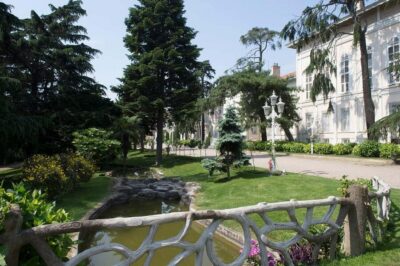
After the indoor showpieces, you’ll want a reset—and Medallions Lake is built for that. It’s one of the places that shows you how the gardens aren’t random: they’re composed to extend the palace experience outward.
This is where you should slow your pace. Take a few minutes with your headphones on and let the audio guide tie what you saw indoors to what you’re seeing outside. The garden views aren’t only scenic; they’re part of the palace’s message.
If you’re the type who likes calm photo spots between crowded rooms, this is a good checkpoint. Even if the palace areas feel busy, water areas often help you breathe again.
Don Quixote Room, Grand Cascade, and the Botanical Garden plan

You’ll also encounter standout elements that make Queluz feel playful in places—especially the Don Quixote Room. It’s a reminder that the court didn’t just do solemn grandeur. The storytelling around this room helps explain why culture and fiction were used as status signals, not just entertainment.
Then comes the Grand Cascade. Cascades in palace gardens aren’t just for aesthetics; they’re meant to show off control over nature, water engineering, and the ability to choreograph a visitor’s path. The audio guide helps you see it as part of a designed sequence, not a random attraction.
Finally, the Botanical Garden gives you the practical beauty side of the estate. It’s the part where you stop thinking about rooms and start thinking about living detail—how plants, paths, and views work together. If you want the most “walk and notice” time, build it here rather than trying to squeeze everything into the palace interiors.
Music Room, Picnic Room, and Monkey Lakes: where the stories land best
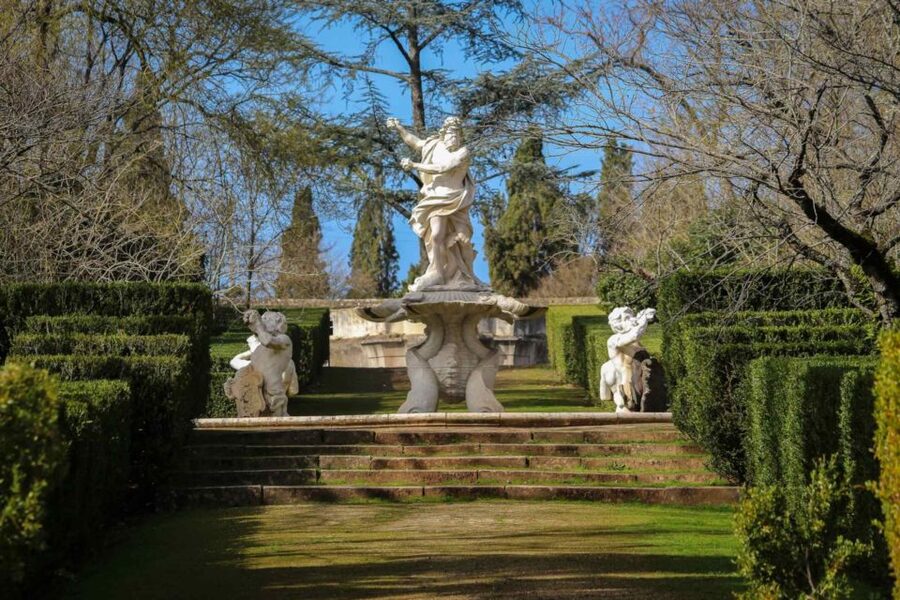
The audio tour doesn’t treat the palace like a list of rooms. It leans into specific spaces that feel like snapshots of court life: the Music Room and the Picnic Room, plus the Monkey Lakes.
The Music Room is ideal if you like the intersection of art and everyday court culture. Listening on-site helps the room stop being static. You get a sense of what music would have meant in that environment and why it belonged in the palace’s social world.
The Picnic Room is a smart contrast point. It brings the palace down from ceremonial heights and into something more human-scaled. If your usual museum habit is to scan for the “main event,” this is a place where the audio makes side rooms feel worth your time.
Then, when you hit the Monkey Lakes, you get a more whimsical garden tone. Even if you don’t see wildlife at every moment, the audio framing gives the space context and helps you understand why it was designed that way.
What this self-guided format means for your comfort and attention span
A self-guided tour can be a win or a mess, depending on how you like to travel. This one is built around short, original stories and historical info that you can replay. That format matters because it helps you move at a pace that fits you, instead of matching a group.
You’ll also have control over your focus. Want architecture? You’ll spend more time in the rococo rooms. Want outdoors? You can let the garden sections stretch while still staying within a visit window.
Just remember: this is still a palace and gardens complex, and you’ll be walking. The reviews I’ve seen tend to highlight that it’s easy to walk around and that the place feels beautiful and well worth the effort. If you’re sensitive to stairs or long outdoor walking, you’ll likely do best by planning a slower pace at the gardens.
Logistics that can make or break the day
A few on-the-ground rules are worth knowing so you don’t waste time:
- Bring headphones and a charged smartphone
- No luggage or large bags are allowed
- The audio tour isn’t compatible with Windows phones, and older iOS models are excluded
- You’ll need storage space on your phone (100–150 MB)
- The course may change if there are restrictions on-site, so follow posted guidelines
Also, book per device, not per participant. That small detail matters if you’re traveling as a group and each person wants their own audio lane.
FAQ
FAQ
Is the audio tour available in English?
Yes, the audio guide included is in English.
How long is the National Palace and Gardens of Queluz visit?
The experience is listed as 1 hour. Starting times depend on availability.
Do I need to bring headphones?
Yes. Headphones are not included, so you should bring your own.
How do I get my ticket and audio access?
You receive your ticket by email, and you’ll use an activation link to access the audio tour on your smartphone.
Can I use the audio tour offline?
Yes. The tour includes offline content (text, audio narration, and maps) designed to avoid roaming charges.
Where does the optional Lisbon audio tour start and end?
It starts at the National Pantheon (Campo de Santa Clara, 1100-471 Lisboa). It ends near Casa Fernando Pessoa (R. Coelho da Rocha 16 18, 1250-088 Lisboa) near the R. Saraiva Carvalho transit stop.
Is this experience wheelchair accessible?
Yes, it’s listed as wheelchair accessible.
Does this include a live guide?
No. It’s self-guided, and a live guide is not included.
Should you book this Queluz e-ticket and audio guide?
I’d book it if you want a palace-and-gardens visit that’s easy to steer yourself, with clear storytelling built into the stops. The mix of indoor highlights (like the Hall of the Ambassadors and the Chapel) plus garden moments (like Medallions Lake, the Grand Cascade, and the Monkey Lakes) makes it feel like more than one pretty room.
You might skip it if you know your phone setup is unreliable on the go. Since the experience depends on your smartphone for the audio tour, it’s worth doing the download before you head over and making sure your device meets the compatibility requirements.
If your travel style is: headphones on, pace set by you, and you like learning as you walk—this is a strong pick for Queluz.