REVIEW · PLYMOUTH
Plymouth Pilgrims Self-Guided Walking Audio Tour
Book on Viator →Operated by Stories with Action · Bookable on Viator
Plymouth turns into stories as you walk. This self-guided Plymouth Pilgrims audio tour strings together famous sites with hands-free audio that plays when you reach each spot, plus offline maps so you can keep moving even if your phone loses signal.
I like how you can set your pace. The recommended timing is about an hour, but you can stretch it to a leisurely 2 to 3 hours with photos, snacks, and sidetrips. The main drawback to plan around: the route is a bit of work on foot (over a mile, with some hills), and if you don’t start the tour from the intended spot, the app may be slow to trigger the next story.
In This Review
- Key Points You’ll Appreciate Before You Go
- Plymouth Pilgrims in 2–3 Hours: What This Walk Really Covers
- Starting at 136 Water St: Download, Password, and Getting Audio to Play
- Mayflower II to Plymouth Rock: The Big Hits and Why They Matter
- Mayflower II
- Mayflower Society House
- Plymouth Rock
- Statues, Gardens, and Burial Hill: Slow Down Where You Feel It
- Massasoit Statue
- Brewster Gardens and Pilgrim Maiden
- Old Burial Ground (Burial Hill)
- 1640-Era Houses and the Plimoth Grist Mill: Daily Life Beats Postcards
- Richard Sparrow House (1640)
- Plimoth Grist Mill
- Pilgrim Hall Museum and the National Monument to the Forefathers
- The Interpretive Centre, Hedge House, and the Jabez Howland House Thread
- Hedge House
- Interpretive Centre exhibits
- Jabez Howland House
- Long Beach Rock and Ending at Plimoth Patuxet Museums
- Price, Value, and Timing: Is $14.99 Worth It?
- Who This Tour Fits Best (and Who Might Want a Different Plan)
- Should You Book the Plymouth Pilgrims Self-Guided Audio Walk?
- FAQ
- How long does the Plymouth Pilgrims self-guided audio tour take?
- Where does the tour start and end?
- Is the tour available in English only?
- Do I need cellular service during the walk?
- Does someone meet you at the starting point?
- Are museum entry tickets included in the price?
- Can I access the tour again later on a different trip?
- How do I get the tour set up after booking?
- What device do I need for best results?
- Can I get a refund if I cancel?
Key Points You’ll Appreciate Before You Go

- Hands-free audio by location: you don’t have to tap through a screen each time you arrive.
- Offline maps and offline tour: download once on strong Wi‑Fi, then rely on GPS without cellular.
- Lifetime access: no expiry date, so you can replay it on another trip.
- A real walking loop of landmarks: Mayflower II, Plymouth Rock, Burial Hill, and more are strung together.
- Plenty of short stops: many are built around quick, focused storytelling moments.
- Your own schedule: start when you want and pause for breaks without losing your place.
Plymouth Pilgrims in 2–3 Hours: What This Walk Really Covers
This is a self-guided walking audio tour in Plymouth, Massachusetts, built around a route that’s a little over a mile long. The tour has more than 24 audio stories and is designed to take about 1–2 hours at a steady pace, but the total experience commonly lands closer to 2–3 hours once you add walking time between stops and breathing room for photos.
The big value here is that you’re not just ticking off a monument. You’re moving through a sequence of places tied to the Mayflower story, the colony’s early years, and the later people who shaped Plymouth’s memory. And because it’s self-paced, you can slow down where you’re curious and skip ahead when you’re not.
You start at 136 Water St and the end point is Plimoth Patuxet Museums, 137 Warren Ave. That ending matters, because it naturally sets you up to keep exploring on your own after the audio tour finishes.
Starting at 136 Water St: Download, Password, and Getting Audio to Play
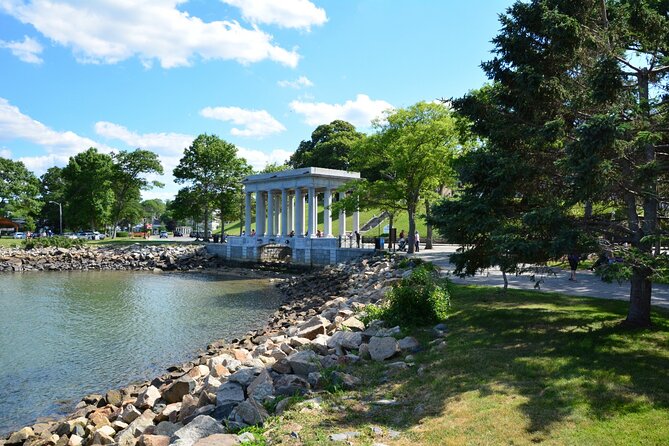
After booking, you’ll get an email and a text with setup instructions and a password. You’ll then download the separate Action audio tour app and enter the password when prompted.
Two practical tips that can save you time:
- Download with strong Wi‑Fi/cellular before you expect to rely on it. The tour works offline after download, but you do need the initial download/setup to be solid.
- Start the tour from the correct designated starting point. There’s no staff member meeting you there, so you’re responsible for beginning at the right spot for the audio cues to sync.
Once you’re onsite, you open the Action app, choose the correct tour version if there are multiple, and then follow the on-location audio prompts. The audio is designed to play automatically as you reach each story point. If your phone’s GPS is acting up, that auto-trigger behavior is exactly where frustration tends to happen—so I’d recommend you keep the phone powered, screen brightness reasonable, and headphones connected before you start.
Mayflower II to Plymouth Rock: The Big Hits and Why They Matter
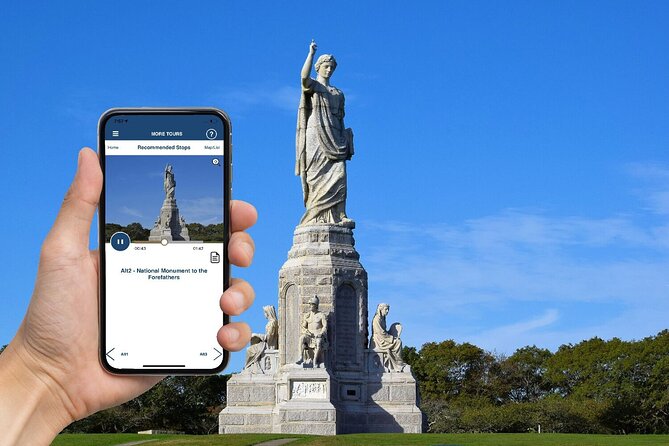
If you’re coming to Plymouth for the headline moments, this tour gives you the highest-impact sequence early on. You’ll pass the Plymouth Visitor Information Center, then work your way toward Mayflower II, and then hit Plymouth Rock.
Here’s what makes those stops work so well as audio moments:
Mayflower II
Mayflower II is a reproduction of the 17th-century ship Mayflower—the one that made the voyage in 1620. The reproduction was built in Devon, England during 1955–1956, with collaboration between Warwick Charlton in England and Plimoth Plantation in the U.S. Even if you know the story already, it’s easier to absorb when you’re standing near a vessel that’s meant to bring the past into focus.
Mayflower Society House
Right across the way and up the hill from Plymouth Rock, the Mayflower Society House is an 18th-century home with a multi-century storyline. It was built by Edward Winslow, and the story stretches through the Revolutionary era, a wedding that famously included Ralph Waldo Emerson and Lydia Jackson, a major restoration in 1898 led by architect Joseph Everett Chandler, and later use during World War II as a Red Cross headquarters.
This stop feels like a switch from legend to people. You start seeing that Plymouth’s preservation wasn’t automatic—it depended on families, restoration choices, and who had the means to keep buildings alive.
Plymouth Rock
This is the traditional disembarkation site linked with William Bradford and the Mayflower Pilgrims who founded Plymouth Colony in December 1620. The tour keeps this stop short (about 10 minutes), which is perfect. You get the essential context without turning the visit into a long waiting-room experience.
One logistics consideration: there’s a bit of walking and an actual climb involved as you move around Plymouth’s streets. The Mayflower Society House location being described as up the hill is your heads-up that the route isn’t flat.
Statues, Gardens, and Burial Hill: Slow Down Where You Feel It
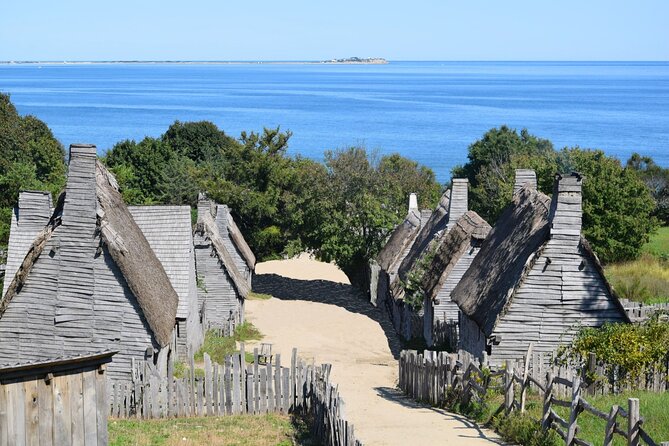
After the headline landmarks, the tour leans into the details that help Plymouth feel human—people, symbols, and places where life and death were close by.
Massasoit Statue
The Massasoit statue by Cyrus Edwin Dallin was completed in 1921 for the 300th anniversary of the Pilgrims’ landing. The sculpture is meant to represent the Pokanoket leader Massasoit welcoming the Pilgrims. This is one of those stops where listening while you look makes a difference. The audio helps you connect a name and date to an actual figure, not just a caption.
Brewster Gardens and Pilgrim Maiden
Next is Brewster Gardens, named for William Brewster, a Mayflower passenger. Nearby you’ll also see the Pilgrim Maiden sculpture by Henry Hudson Kitson (1922), plus a stainless steel piece honoring immigrant settlers from 1700 to 2000.
These are quick stops in time but big in tone. They highlight that the Plymouth story isn’t only ships and governors. It’s also about the people who carried the effort forward, including the women the Pilgrim Maiden honors—English women whose courage and devotion helped bring a new nation into being.
Old Burial Ground (Burial Hill)
At Old Burial Ground, you’re in a historic cemetery established in the 17th century, and it’s the burial site of several Pilgrims. It was listed on the National Register of Historic Places in 2013.
If you want a calmer moment, this is it. The audio format works well here because you can keep your pace walking slow—no rushing, no group clumping.
1640-Era Houses and the Plimoth Grist Mill: Daily Life Beats Postcards

Plymouth’s best moments are often less dramatic than the ship and more tangible than the monument. This section gives you exactly that: homes and working sites you can picture in motion.
Richard Sparrow House (1640)
The Richard Sparrow House is described as the oldest surviving house in Plymouth, built around 1640 by Richard Sparrow, an English surveyor who arrived in Plymouth in 1636. Standing near places that survived by luck and care makes the whole area feel less like a theme park and more like a real town with layers.
Plimoth Grist Mill
You’ll reach the Plimoth Grist Mill, a working grist mill reconstructed from the original Jenney Grist Mill on the same site. This is the kind of place where a short audio story makes daily survival click. Mills were the kind of infrastructure that kept people eating and trading, not just visiting.
Pilgrim Hall Museum and the National Monument to the Forefathers
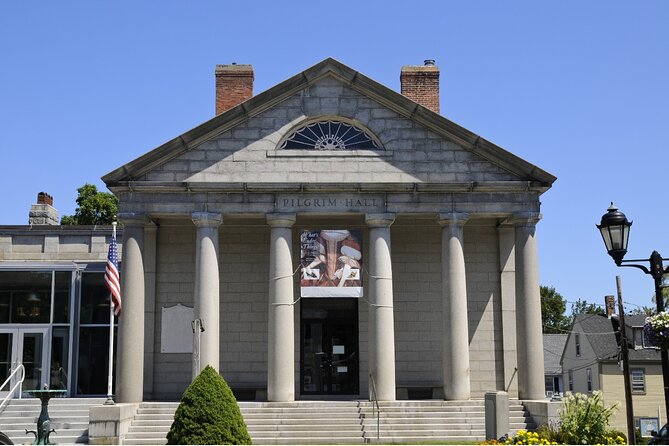
The tour also brings you by the Pilgrim Hall Museum, which opened in 1824 and is the oldest public museum in the U.S. in continuous operation. You also see the National Monument to the Forefathers (formerly the Pilgrim Monument), dedicated on August 1, 1889. It’s described as the world’s largest solid granite monument and tied to the ideals the U.S. later embraced.
These stops are ideal for audio because they help you interpret scale. A monument looks impressive; it’s the audio that tells you what kind of meaning people tried to “lock in” with stone.
The Interpretive Centre, Hedge House, and the Jabez Howland House Thread

One of the smarter choices in this tour is how it keeps threading through multiple homes and interpretive stops. Instead of pretending Plymouth was one event, it treats it like a long chain of decisions and people.
Hedge House
The Hedge House (Plymouth Antiquarian House) was built in 1809 for William Hammatt, a New England sea captain. The Hedges bought it in 1830 and lived there until 1919. It’s the kind of stop that reminds you Plymouth was still changing after the Pilgrims.
Interpretive Centre exhibits
The Interpretive Centre is where the audio broadens beyond just early Plymouth figures. The exhibits focus on the Pilgrims’ faith and values, plus the story of abolitionists and slavery, and the family as a cornerstone of society.
Even if you don’t spend long inside any museum space, this stop gives you an important context shift. You start to see why Plymouth’s story has been told in different ways over time.
Jabez Howland House
The Jabez Howland House includes the oldest portion built in 1667 by Jacob Mitchell, and it was later purchased by Jabez Howland, son of Mayflower passengers John Howland and Elizabeth Tilley Howland. This stop gives you a direct line back to Mayflower names, but anchored in wood-frame architecture rather than slogans.
Long Beach Rock and Ending at Plimoth Patuxet Museums
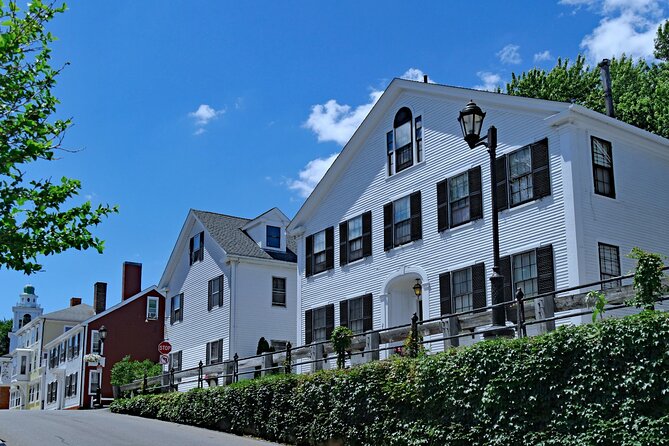
The tour finishes with a coastal beat: Long Beach Rock. Long Beach is described as a barrier beach—a peninsula that helps act as a buffer between the open ocean and the mainland coast.
After the stone-and-wood parts of the walk, this shoreline moment helps reset your eyes. It’s also a nice cue that Plymouth’s story wasn’t just inside town walls. The water shaped arrival, survival, and later how people imagined the past.
Then you end at Plimoth Patuxet Museums. The audio tour stops there, but the name tells you you’re at a place where you can keep learning. Just remember: attraction entry tickets are not included in the audio tour price, so treat any additional museum time as optional add-ons rather than part of the bundled experience.
Price, Value, and Timing: Is $14.99 Worth It?
At $14.99 per person, this tour sits in the budget-friendly end for app-based walking experiences, especially because the biggest perk isn’t just convenience. It’s lifetime access with no expiry date. You can use it on another trip, replay it at home, or revisit later if you want a second pass with fresh eyes.
The value case is strong if you:
- want a guided-feeling walk without paying for a private guide,
- enjoy learning in small story bursts while you move,
- like the flexibility to pause for snacks and photos,
- are visiting when some museums or attractions have limited hours.
There is also a small reality check you should make. Entrance tickets are not included, so if you’re hoping the tour price covers full museum admission everywhere, you’ll still need to decide case-by-case once you arrive. The audio tour, though, gives you enough context that you can enjoy the outdoor stops even without paying for everything indoors.
A smart money move: if you’re a couple, you can share the tour by splitting headphones, since you’re both listening to the same audio stream.
In terms of time, if you treat it as a strict 1-hour plan, you’ll likely feel rushed. If you give it the full 2–3 hours, you’ll probably feel like you got your money’s worth in actual understanding, not just mileage.
Who This Tour Fits Best (and Who Might Want a Different Plan)
I’d send this tour to you if you like history but prefer doing it on your schedule. It’s built for independent walkers who want a narrator-led experience without a group timetable. It also works well as an off-season plan since the story comes to you as you walk.
It’s also a good fit for people who hate wasting time. Many stops are designed around quick visits—so you don’t have to commit to long indoor ticketing windows to still feel like you saw the key Plymouth sites.
But be honest about your comfort level with walking. The route is over a mile and includes at least some hills (the Mayflower Society House area is specifically described as up the hill). If you’re traveling with seniors, anyone with mobility limits, or you just don’t enjoy climbs, you might want to shorten the route on purpose or plan a taxi/bus hop between the steepest parts.
Finally, consider your phone. This kind of GPS-based auto-play tends to work best when your device isn’t struggling for signal or battery. Download first. Start from the right point. Then let it run.
Should You Book the Plymouth Pilgrims Self-Guided Audio Walk?
If you want an easy way to understand Plymouth from Mayflower II to Plymouth Rock and beyond, I think this is a solid booking. The lifetime access and offline capability make it less of a one-time expense and more of a reusable guide to a classic New England story.
Book it if you:
- like self-paced walks with hands-free audio,
- plan to visit a mix of outdoor landmarks and nearby museums,
- want something that still feels meaningful even when you can’t do every indoor attraction.
Skip it (or adjust expectations) if:
- you dislike app-based GPS navigation,
- you’re worried about hills and longer walking,
- you mainly want guaranteed museum entry included in the price.
If you do book, the best move is simple: download on good Wi‑Fi, bring your earbuds, start at the correct Water St location, and don’t rush the story beats. Let Plymouth talk while you walk.
FAQ
How long does the Plymouth Pilgrims self-guided audio tour take?
It’s approximately 2 to 3 hours total, with the recommended pace closer to about 1 hour. The route is over a mile long and the audio portion is described as taking about 1–2 hours.
Where does the tour start and end?
It starts at 136 Water St, Plymouth, MA 02360, USA. It ends at Plimoth Patuxet Museums, 137 Warren Ave, Plymouth, MA 02360, USA.
Is the tour available in English only?
Yes. The tour is offered in English.
Do I need cellular service during the walk?
No. You should download the tour while you have strong Wi‑Fi/cellular. After the download, it works offline.
Does someone meet you at the starting point?
No. This is self-guided. You’ll start the audio in the app at the correct starting location, and the audio should begin automatically.
Are museum entry tickets included in the price?
No. Attraction passes, entry tickets, or reservations are not included. Some stops on the route are marked free, but the tour price itself doesn’t bundle admissions.
Can I access the tour again later on a different trip?
Yes. The access is described as new and lifetime access with no expiry, so you can use it anytime and as many times as you want.
How do I get the tour set up after booking?
You’ll receive an email and text with setup instructions and a password. After that, download the Action audio tour app, enter the password, and launch the correct tour version when you’re onsite.
What device do I need for best results?
The recommended devices are an iPhone with iOS 15 or later, an Android device running version 9 or later, or an iPad/tablet with GPS and cellular connectivity.
Can I get a refund if I cancel?
Free cancellation is available up to 24 hours in advance for a full refund. If you cancel less than 24 hours before the experience start time, the amount paid is not refunded.