Ottawa has stories under your feet. This self-guided audio tour turns famous scenery into a line-by-line walk-through, starting at Major’s Hill Park and working toward Notre-Dame Cathedral Basilica. I love that it layers the obvious landmarks with extra context about people and places—like Colonel John By and Élisabeth Bruyère—without turning your day into a classroom. I also love the built-in convenience: offline access to audio, maps, and geodata, plus the option to use it like an audiobook from anywhere.
The one thing to plan for: you’re doing this by app, so you need your own smartphone and headphones. One negative experience came from the app not starting smoothly, so I’d treat your phone like a tool, not a maybe—test it before you get deep into the park.
In This Review
- Key things I’d focus on before you go
- Price and time: fitting this Ottawa walk into a real day
- Starting at Major’s Hill Park (Mackenzie Ave): quick way to avoid the only real stress
- How the VoiceMap audio + GPS + offline maps actually makes the walk easier
- Major’s Hill Park and Colonel John By: start with the person who shaped the city
- Rideau Canal on the move: UNESCO engineering you can see while you walk
- Major’s Hill Park panoramas: views of the river and Parliament Hill
- York Street and the York Steps: where Bytown’s early growth shows up
- Millennium Fountain to ByWard Market: Ottawa’s evolution in one route
- Rochon House: an Ottawa lumber-era thread you can’t see at first glance
- Élisabeth Bruyère: the first hospital story behind the city’s care work
- LaSalle Academy: education as a city-building force
- Sussex Drive finish and Notre-Dame Cathedral Basilica: Gothic Revival as a closing image
- Should you book this Ottawa hidden-history audio tour?
- FAQ
- What is the price of Ottawa’s Hidden History: A Self-Guided Audio Tour?
- How long does the tour take?
- Is the tour offered in English?
- Where does the tour start and end?
- Do I need a smartphone and headphones?
- Does the tour work offline?
- What is the cancellation policy?
Key things I’d focus on before you go
- Unlimited replay: you get lifetime use before and after your booking date.
- Offline by default: audio, maps, and geodata can be available without relying on cell service.
- GPS-guided walking: it’s designed to keep you moving from stop to stop at your pace.
- Big-city sights, small details: statue, canal engineering, market life, and named local institutions.
- Worth it even solo: it’s a private experience for just your group.
Price and time: fitting this Ottawa walk into a real day
At $8.99 CAD per person, this tour is priced like a single meal out, but you get a guided walk that can stretch from about 50 minutes to 1 hour 10 minutes. That time window matters in Ottawa—especially if you’re also planning museum stops, the ByWard Market, or just wandering along the river. The good news is that this route is built around places you’ll want to see anyway.
Also, it’s getting booked ahead of time (on average about 11 days), so if you’re traveling during a busy season, I’d grab it sooner rather than later. You’ll be paying for the convenience more than for speed. Once you start, you’re free to linger at views, pause for photos, or step into the market when you feel like it.
You can also read our reviews of more tours and experiences in Ottawa.


Starting at Major’s Hill Park (Mackenzie Ave): quick way to avoid the only real stress
This tour begins at Major’s Hill Park, Mackenzie Ave. Here’s the practical truth: parks have lots of entry points, and it can be easy to stand in the right general place but not the exact one. One strong review basically boiled down to this—finding the exact starting spot in the park was the hardest part, and then it got easy once the distance readout guided them in.
So do this: arrive a bit early, open the tour app at the start location, and use what it shows you to align yourself. Once you’re on the correct spot, the GPS tour does the heavy lifting.
How the VoiceMap audio + GPS + offline maps actually makes the walk easier
This is a self-guided GPS tour with offline access. That means you’re not stuck hunting Wi‑Fi just to keep listening. You’ll also get included directions to help you start exactly where the tour expects you to begin.
A neat bonus is the virtual playback option, so you can listen like an audiobook from elsewhere. That’s useful if weather turns or if you just want the narration first, then do the walking later.
One more practical note: the phone is your interface—so bring your charger-ready device and a pair of headphones you already trust. If the app doesn’t launch, you’ll be stuck standing around. If that happens, there’s support contact (email is listed for help and possible troubleshooting), so don’t suffer silently.
Major’s Hill Park and Colonel John By: start with the person who shaped the city
Your first stop at Major’s Hill Park is a tribute to Colonel John By, described as the visionary behind the Rideau Canal, with his statue looking out over the Ottawa River. This is a smart opener because it frames what you’re about to see: water routes, planning decisions, and the idea that Ottawa grew around transportation and infrastructure.
Expect the narration to set context as you take in the river. If you’re the kind of traveler who likes to understand why a place looks the way it does—before you start taking pictures—this stop gives you that foundation fast. Also, being in an open park at the beginning keeps the start feeling simple. You’re not wrestling with ticket lines before you even hear the story.
Rideau Canal on the move: UNESCO engineering you can see while you walk
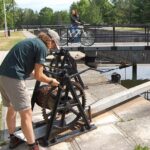
From there, you pass by the Rideau Canal, which the tour flags as a UNESCO World Heritage Site. The narration calls out 19th-century engineering and the canal’s role connecting Ottawa to Lake Ontario.
You’ll get the best value from this part if you don’t rush. Slow down for the water and the sense of direction—canal corridors tell you how people planned journeys, trade, and settlement. Even without technical details in your brain, you’ll feel it visually: the canal is a built line through the city.
The only drawback here is also simple: depending on where you’re standing, the view you get may be more “passing glance” than a full, framed postcard. Use the audio to guide when you stop and when you keep moving.


Major’s Hill Park panoramas: views of the river and Parliament Hill
You also explore Major’s Hill Park again for the scenery. The tour highlights it as a green space with panoramic views of the Ottawa River and Parliament Hill.
This is where the tour earns its “hidden history” vibe. You’re not just looking at famous buildings from afar—you’re pairing a view with the earlier context of canal building and civic growth. That link helps you notice details you might otherwise ignore. It’s the difference between seeing Parliament Hill and understanding why this whole riverside area matters.
Tip: treat this as your photo window and your reset spot. If you came from another part of town, this is where you can stand still for a minute, let your legs catch up, and then head into the streets.
York Street and the York Steps: where Bytown’s early growth shows up
Next, you walk down York Street, passing the York Steps. The tour notes that these steps played a significant role in the early development of Bytown.
This stop works well because it turns a simple walking route into something you can read. Steps aren’t just stairs here—they signal a city working out how to connect different levels and neighborhoods. If you’re walking with your headphones in, you’ll likely slow down naturally, because the narration makes you look at the street as a piece of living infrastructure.
If you don’t love stairs, you can still enjoy the story by pacing yourself and stepping aside when needed. The tour route is built for walking, but you control the rate.
Millennium Fountain to ByWard Market: Ottawa’s evolution in one route
After the York Steps, you pass the York Street Millennium Fountain, described as a modern landmark symbolizing Ottawa’s ongoing evolution and progress. Then you reach ByWard Market, called one of Canada’s oldest and largest public markets, with vendors, restaurants, and artisans.
This pairing is good tour design. You start with early connections (York Steps), then you jump to a symbol of more recent change (Millennium Fountain), and then you land in a place where local life continues day after day. You’re not forced to sit. You can browse, duck into something to drink, or just watch the rhythm of people and stalls.
One practical thought: markets take longer than you think, especially if you’re hungry or you like crafts and food. Since the tour is time-based, decide ahead how long you’ll spend here so you don’t accidentally run past your “quick walk” plan.
Rochon House: an Ottawa lumber-era thread you can’t see at first glance
The tour moves to Rochon House, a historic building tied to Ottawa’s early lumber industry and cultural heritage. This kind of stop is where self-guided audio shines, because buildings like this can be easy to miss if you’re just scanning for the obvious.
Even if you don’t know anything about lumber’s role in the region, the audio’s framing helps you connect the dots: how one industry can shape neighborhoods, wealth, and the kind of architecture that survives.
I’d suggest listening carefully as you approach, not after you’ve already passed. These are the moments where the narration adds context that you can’t get from just looking.
Élisabeth Bruyère: the first hospital story behind the city’s care work
Next up is the legacy of Élisabeth Bruyère, who the tour highlights as the founder of Ottawa’s first hospital serving the community’s healthcare needs.
This is a different kind of history—less about buildings and more about people and public support. If you like stories about how communities built services, this stop gives you that human angle. And it adds balance to the usual Ottawa focus on canals, government, and commerce.
You might find that this section changes your whole mood on the walk. It’s a reminder that city growth isn’t only cranes and trade routes. It’s also care systems, and leaders who helped create them.
LaSalle Academy: education as a city-building force
You’ll also pass by LaSalle Academy, described as a historic educational institution contributing to Ottawa’s intellectual and cultural landscape since its establishment.
This is one of those stops that feels easy to skip when you’re busy sightseeing. The audio makes it more meaningful by tying education to how a city develops its ideas and institutions over time.
Practical note: since this is a pass-by rather than a “go inside” type of stop (based on what’s provided), you’ll get the most out of it by keeping your attention up while you’re near the building. Don’t let your brain wander while the headphones are still talking.
Sussex Drive finish and Notre-Dame Cathedral Basilica: Gothic Revival as a closing image
The tour ends at Sussex Drive, where you’ll see the Notre Dame Cathedral Basilica, described as Gothic Revival architecture and part of Ottawa’s religious heritage. In the meeting details, the finish is also described around the canal locks area and Sapper’s Bridge, so expect your ending to land you in the broader central river stretch near those landmarks.
This finale works because it’s visually strong. When the audio reaches its last stop, you’re likely to appreciate how Ottawa’s story includes faith and community spaces—not just government and transport.
Take a moment here before you move on. If you’re doing this as part of a longer day, this is a good place to stop, check your map, and decide whether you want to head into the market area again or just stroll the river a bit more.
Should you book this Ottawa hidden-history audio tour?
You should book it if you want an easy self-guided walk that connects Ottawa’s big sights (Rideau Canal, Parliament Hill area views, major market) with people and institutions (Colonel John By, Élisabeth Bruyère, LaSalle Academy). The $8.99 price becomes fair fast when you factor in offline access plus unlimited replay—you’re not paying just for one listening session.
Skip it or think twice if you rely on apps to work perfectly the first time. If your phone is old, your headphones are unreliable, or you hate troubleshooting, this might turn into frustration. Plan to test the app before you step into the park.
FAQ
What is the price of Ottawa’s Hidden History: A Self-Guided Audio Tour?
It costs $8.99 per person.
How long does the tour take?
The duration is approximately 50 minutes to 1 hour 10 minutes.
Is the tour offered in English?
Yes, the tour is offered in English.
Where does the tour start and end?
It starts at Major’s Hill Park (Mackenzie Ave, Ottawa). It ends on Sussex Drive with the Notre-Dame Cathedral Basilica area, around the central Rideau Canal locks/Sapper’s Bridge zone.
Do I need a smartphone and headphones?
Yes. A smartphone and headphones are not included, so you need to bring your own.
Does the tour work offline?
Yes. It includes offline access to audio, maps, and geodata.
What is the cancellation policy?
Free cancellation is available. You can cancel up to 24 hours in advance for a full refund.