REVIEW · METEORA
Meteora: Self-Guided App-Based Driving Tour
Book on Viator →Operated by History with Action · Bookable on Viator
Monasteries in the clouds, minus the tour bus. This self-guided, app-based driving tour lets you move at your pace while the audio tells you what you’re looking at around Meteora. I like that it blends monastery sights with an early geology stop, so you’re not just doing picture-taking—you’re building context fast.
Two things I really like: offline maps that keep working when signal disappears, and hands-free audio that plays automatically based on your location. One thing to think about first: you need to handle the phone setup (especially the download) before you start, and you’ll still be walking parts of the route—so wear shoes, not sandals.
This is a great fit for independent travelers who want flexibility (start when you want, pause for photos, skip what you don’t care about). The other upside is price: you pay per group up to 4, so it can cost less than per-person guided options.
In This Review
- Key highlights before you commit
- How the Meteora audio driving tour actually works
- Saint Stephen meeting point: where to start your Meteora loop
- Stop 1: Geological Formation Museum of Meteora for real context
- The early monastery stop: late-14th-century pilgrims
- Roussanou (St. Barbara): UNESCO setting and monastery life
- Varlaam: the second largest monastery and the defense angle
- Great Meteoron: the largest monastery and why the complex exists
- Saint Stephen again: accessible ends, and a smoother finish
- Timing, distance, and why 2–3 hours is the real target
- Value math: $16.99 per car and lifetime access
- Setup tips that prevent the only real headache
- Who should book this Meteora app-based driving tour
- Should you book it? My straightforward take
- FAQ
- FAQ
- Where does the Meteora self-guided tour start and end?
- How long does the tour take?
- Do I need cellular service during the tour?
- When can I start the tour?
- Is the tour private, or will I share it with other people?
- How many people can I book for?
- Does the price include monastery entry tickets?
Key highlights before you commit
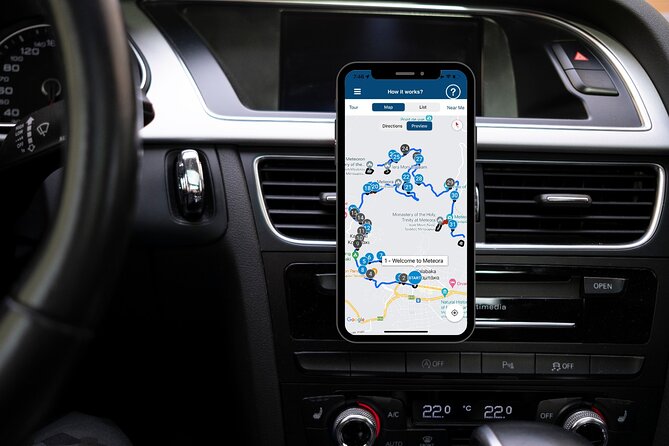
- Offline maps that work without cell service, so you can focus on the monasteries instead of signal bars
- Location-triggered audio stories that play hands-free as you follow the route
- Lifetime access with no expiry, so you can repeat the tour on future trips
- A monastery-and-geology mix, starting with the Geological Formation Museum of Meteora
- Good value per car, since it’s priced for a group up to four
How the Meteora audio driving tour actually works
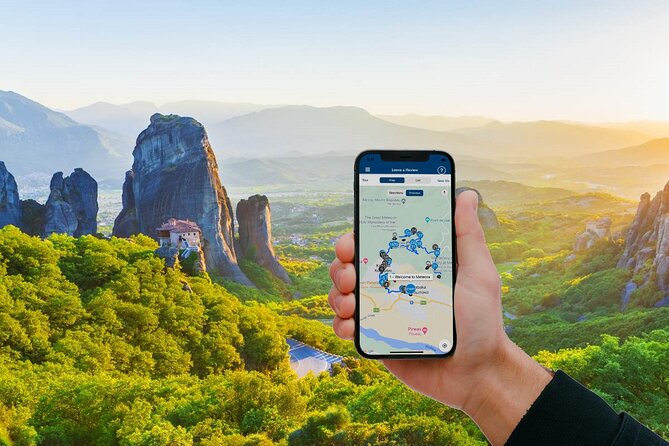
This tour runs through an app made for location-based storytelling. After booking, you’ll get an email and text with setup instructions plus a password. You then download the separate Action’s Tour Guide app (Action audio tour app) onto your phone. The key practical tip is to download the tour while you’re on strong Wi‑Fi or cellular—after that, it works offline.
On-site, no one meets you. You go to the starting point, open the audio tour app, pick the correct tour version (if there’s more than one), and start. From there, the audio begins when you reach the first story point, and it keeps moving to the next one based on where you are. This is one of the best ways to do Meteora if you like structure, but hate being herded.
Sound matters here. The setup instructions suggest connecting your phone to your car stereo using Bluetooth, USB, or AUX. For walking parts, headphones can make things easier. The app is also compatible with Apple CarPlay (and Android Auto is coming soon). The point: you’re not just reading signs—you’re listening while you look.
One more practical constraint: you’ll want to stick to the tour route and speed limit for the best experience. It’s not a “drive wherever” situation. Think of it like guided pacing, just without the guide.
Saint Stephen meeting point: where to start your Meteora loop
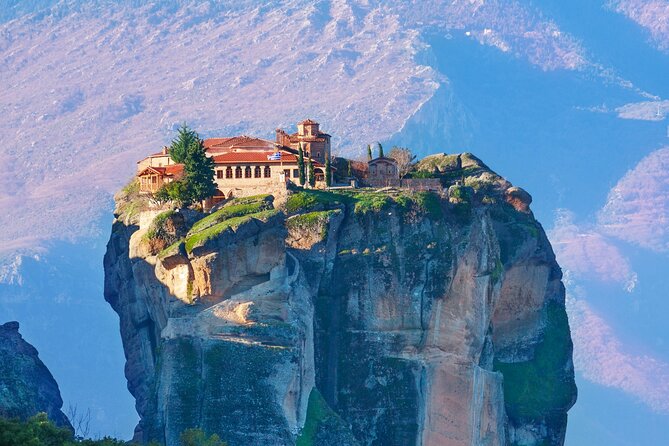
Your starting and ending point is the Holy Monastery of Saint Stephen in Kalampaka (the address given is Αγιά Μετέωρα, Kalampaka 422 00, Greece). If you’re trying to do this smoothly, starting here helps because you can build your day backwards or forwards depending on time.
Saint Stephen is described as one of the most accessible monasteries in Meteora. The access is relatively straightforward compared with others: you cross a sturdy stone bridge to get there. That matters because some Meteora monasteries involve lots of stairs and uneven paths, and one easier stop can save your energy for the bigger walks later.
The monastery hours are listed as 9:00 AM to 5:00 PM, Monday through Sunday for the full stated seasonal range. If you want extra time for photos, I’d treat 5 PM as your hard stop—Meteora gets gorgeous in the late day, but you don’t want to scramble.
Finally, this monastery also gets mentioned as simultaneously among the oldest and newest in Meteora. That combination is a perfect reminder that Meteora wasn’t built in one moment. It grew, shifted, rebuilt, and adapted.
Stop 1: Geological Formation Museum of Meteora for real context
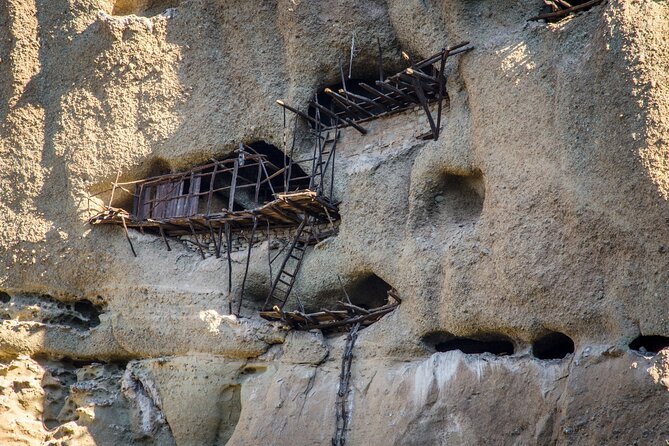
The tour’s first stop is the Geological Formation Museum of Meteora. This is the smart warm-up if you like understanding how the place formed before you look at the buildings.
The museum is open 8:00 AM to 3:00 PM, and entry is listed as free. So even if you’re not a museum person, you can afford to spend a short, focused time here and still keep the day moving.
Why this stop works well on an app-driven route: Meteora’s dramatic rock pillars can feel like pure fantasy from street level. The museum gives you the kind of background that makes the monasteries’ cliff-hugging position make sense. If you’ve ever wondered why these monasteries ended up here, this is where you start getting answers.
If you’re short on time, you can also treat it as a quick “facts first” hit. The audio tour will keep you on track, but you can choose to linger or move on.
The early monastery stop: late-14th-century pilgrims
After the geology start, you’ll hit an early monastery stop described as the first of the monasteries in Meteora. It was built in the late 14th century, and it served as a resting place for pilgrims traveling to Meteora.
That detail changes how you look at the structures. Instead of viewing the monasteries only as remote religious sites, you start thinking about Meteora as part of a travel route—people passed through, rested, prayed, and waited out the journey. It’s not just architecture perched on stone. It’s a living stop on the way to something bigger.
This early stop is also a useful pacing tool. You’ll likely be fresh, still adjusting your eyes to the cliffs and the heights, and the audio storytelling helps you “read” the site without needing a guide hovering nearby.
One practical note: because your total tour includes walking, plan to keep your footing in mind. Meteora paths can be uneven, and your phone won’t save you from tripping on a step.
Roussanou (St. Barbara): UNESCO setting and monastery life
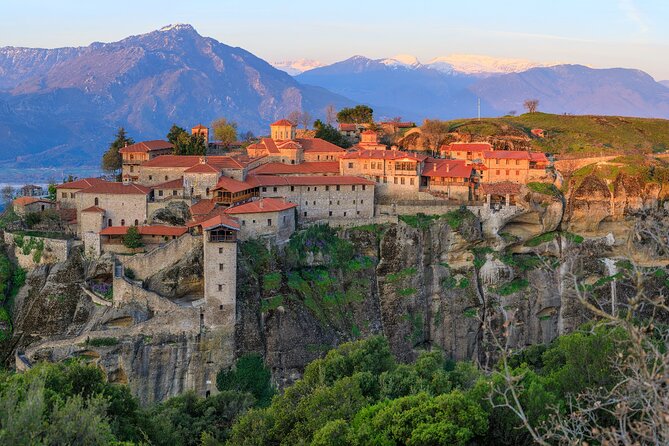
Next up is the Holy Monastery of St. Barbara Roussanou, a Greek Orthodox monastery near Kalambaka. It’s listed as a UNESCO World Heritage Site, and it’s one of six functioning monasteries in the area.
If you want a monastery that feels rooted in daily Orthodox life (not only history), Roussanou is a solid choice. UNESCO status isn’t just a stamp—it often signals that the site has specific cultural and artistic value that’s worth slowing down for.
This stop is also a good reminder that Meteora is still active. Even though the area is famous for images and viewpoints, you’re visiting places meant for ongoing religious practice. That means you’ll want to dress and behave respectfully, like you would anywhere of worship.
Your audio guide should help you pick up what to notice here—details you might miss if you just glance at the cliffside views and move on.
Varlaam: the second largest monastery and the defense angle
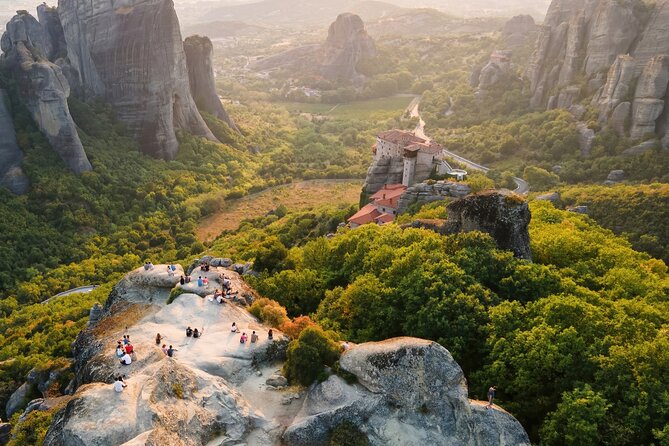
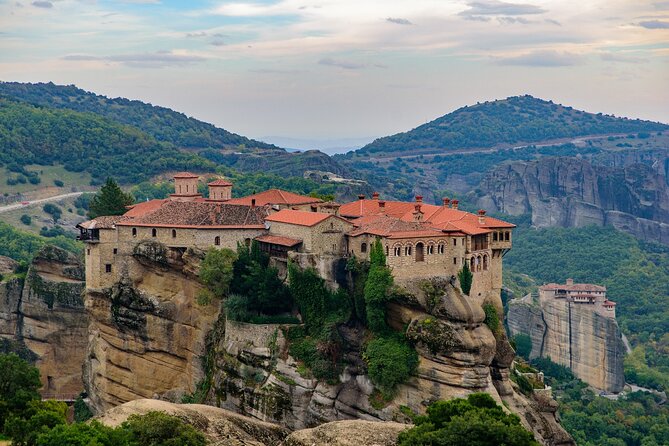
Then comes the Holy Monastery of Varlaam, described as the second largest monastery in Meteora. The storytelling here highlights something a lot of us forget when we visit: defense.
Monasteries in Meteora weren’t only about spirituality. They were also about safety, isolation, and control of access. Varlaam is the kind of stop where the architecture makes more sense once you start thinking like a builder. The audio framing—defense and the monks’ priorities—pushes you to look for strategic choices, not just ornament.
This is a great stop if you enjoy when history has a practical backbone. You get to connect the monastery’s position and structure to the reality of life in a hard-to-reach place.
Great Meteoron: the largest monastery and why the complex exists
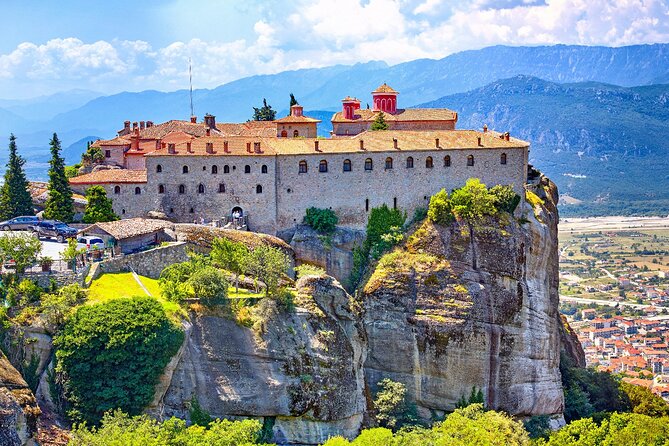
The biggest name you’ll run into is the Holy Monastery of Great Meteoron—also known as the Metamorphosis of the Saviour monastery. It’s described as the largest in Meteora, and the audio explanation points out something that helps tie the whole region together: this monastery is presented as a key reason there are so many incredible monasteries in the first place.
History here gets a little complicated. The description says the history is sketchy because it was built by different people at different times. Evidence suggests the earliest construction may have begun in the mid‑1300s, but the bulk of the monastery likely dates to around the 1470s.
If you like when the story isn’t neat and tidy, this is your stop. A lot of Meteora feels like one big scene. Great Meteoron reminds you it’s actually layered—different eras stacking on top of each other.
Saint Stephen again: accessible ends, and a smoother finish
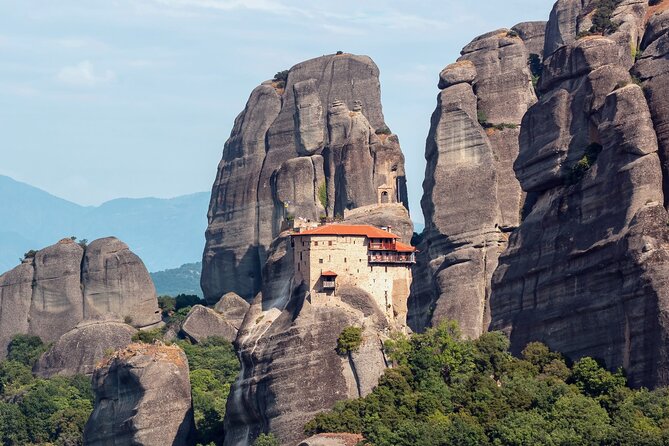
Your route loops back to Holy Monastery of Saint Stephen. Since it’s called out as one of the most accessible monasteries (with that sturdy stone bridge), it often works as a relief stop at the end of your day.
Also, since Saint Stephen is described as both old and new in a single breath, it can make a nice closing note: Meteora isn’t frozen in one time period. Even its buildings reflect ongoing change.
Timing can be the difference between a calm day and a stressful one. Meteora isn’t a drive-by. The total tour format is listed as covering over 2 miles long, with more than 25 audio stories, and taking about 2 to 3 hours to complete. That might be longer than you expect when you see the “1 to 2 hours” estimate. I’d plan closer to 2.5 hours if you want photos and a steady pace.
Timing, distance, and why 2–3 hours is the real target
Even though the duration is listed as 1 to 2 hours (approx.), the tour details mention 2–3 hours and over 2 miles with 25+ stories. In practice, this usually means: you’ll drive between sites, but you’ll also do stairs and walking while listening. If you stop frequently, it adds up.
The best way to handle it is to treat the audio as the spine of your visit. It plays automatically, but you can pause anywhere for snacks or photos. That flexibility is a big deal. Meteora is photo-heavy, and if you try to force a strict schedule you’ll miss the calm moments.
Another practical tip: keep your phone charged. Meteora days can involve lots of map usage, Bluetooth audio, and screen time. The tour is designed to work offline after download, but your phone still needs power.
Finally, keep an eye on where you are relative to the next story trigger points. The app is designed around following the route. If you wander off a bit, the audio may not line up perfectly.
Value math: $16.99 per car and lifetime access
The price is $16.99 per group (up to 4). That’s not “per person,” which can make a noticeable difference if you’re traveling as a small family or with friends. It’s also described as better value than bus or guided tours, and the math usually holds up when you split costs in one car.
Then there’s the big practical luxury: new, lifetime access with no expiry. The idea isn’t just “use it once.” You can come back, re-use it on another trip, or redo the route when you have a different mood—slow and reflective one time, faster and photo-focused another.
Because you’re paying once and keeping access, this becomes more like buying a long-term walking guide than booking a one-off activity.
Setup tips that prevent the only real headache
The tour is easy once it’s started. The common choke point is getting it downloaded and launched correctly before you begin.
Here’s how to reduce that stress:
- Download the tour while you have strong Wi‑Fi or cellular
- Look for the email/text that includes the password (search “audio tour” if needed)
- Open the audio app onsite and launch the version that matches your intended start and direction
- If audio is acting up, plan to contact support rather than power through in frustration
Also, check that your device matches the listed recommendations: iPhone on iOS 15+, Android 9+, or an iPad/tablet with GPS and cellular connectivity for navigation. If you’re driving with CarPlay, make sure your phone pairing is already working before you reach the first story point.
Who should book this Meteora app-based driving tour
I’d book this if you:
- Want flexibility (start anytime during open hours, pause for photos, skip what you don’t care about)
- Like audio storytelling tied to location, not just a generic script you read on signs
- Have a group of up to 4 and want good value per car
- Care about both geology and monastery history, not just one side
I’d think twice if you:
- Don’t want to manage any phone setup at all
- Prefer fully guided tours where someone handles navigation and timing
- Have mobility concerns, since the overall route is over 2 miles with walking and stairs
Should you book it? My straightforward take
Book it if you’re the type of traveler who enjoys structure but hates rigid schedules. The combination of offline maps, hands-free location audio, and lifetime access makes this a practical way to experience Meteora without paying for a guide every time.
Skip it (or plan carefully) if you arrive without Wi‑Fi and you’re likely to struggle with app downloads. The tour is designed to work offline, but it still needs that initial download setup to go smoothly.
If you want Meteora with fewer hassles, this is one of the more sensible ways to do it—especially for small groups.
FAQ
FAQ
Where does the Meteora self-guided tour start and end?
It starts and ends at the Holy Monastery of Saint Stephen in Kalampaka (Agia Meteora, Kalampaka 422 00, Greece). You’ll go there on your own and start the audio in the app.
How long does the tour take?
The tour is listed as about 1 to 2 hours, but the tour details also note it takes about 2 to 3 hours to complete, covering over 2 miles and 25+ audio stories.
Do I need cellular service during the tour?
No. The tour includes offline maps, and it’s designed to work without cellular or Wi‑Fi after the tour is downloaded.
When can I start the tour?
You can start anytime during the monastery’s open hours listed as 9:00 AM to 5:00 PM, Monday through Sunday.
Is the tour private, or will I share it with other people?
It’s a private activity. Only your group will participate.
How many people can I book for?
It’s priced per group for up to 4 people.
Does the price include monastery entry tickets?
No. It does not include attraction passes, entry tickets, or reservations.