REVIEW · MERIDA SPAIN
Mérida: Roman Theatre E-ticket with Audio Tour
Book on GetYourGuide →Operated by Clio Muse Tours - Spain · Bookable on GetYourGuide
A good audio tour can turn ruins into a real day out. This one bundles a Roman Theatre e-ticket with a self-guided route, so you can move at your pace and still get tight storytelling and directions. You’ll hit the big set pieces like the Temple of Diana and the Roman Circus, plus smaller stops that explain how this city layered Roman, Visigoth, and Moorish chapters.
What I like most is the way the audio guide works like a pocket road map: it gives you directions first, then tells you what you’re looking at. I also appreciate that the content is designed for repeat use, so you can replay sections after you’ve walked the stones and make sense of what you saw.
One thing to consider: you’re in control of the timing, and there’s no live guide to fix glitches. If your phone storage is tight or the download link in your email goes to spam, you’ll want to handle that before you head to the theatre.
In This Review
- Key things to know before you go
- The real value: e-ticket plus a guided-feel you control
- Download first: your phone is the tour guide
- Getting to the start: no meeting point, just show up ready
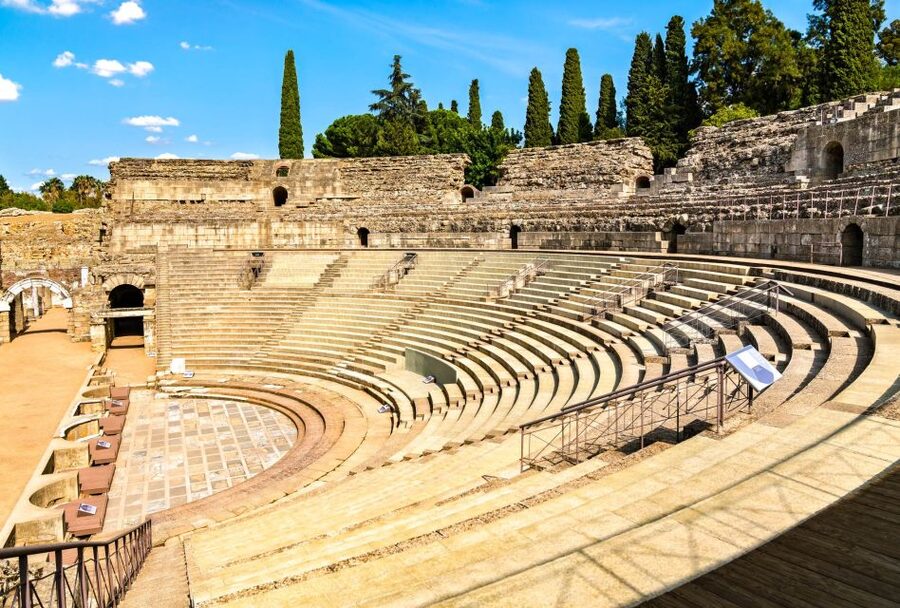
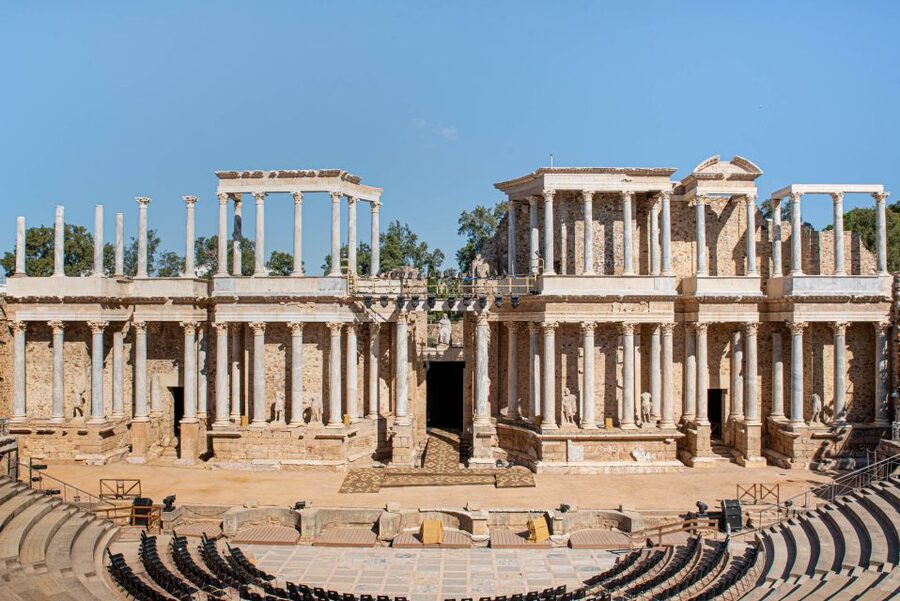
- Stop 1: Roman Theatre (your first big “wow” moment)
- Stop 2: Amphitheatre area and House of the Amphitheatre
- Stop 3: Saint Eulalia’s Crypt (where layers of time show up)
- Stop 4: Temple of Diana (and why it’s more than a postcard)
- Stop 5: Site of Morerías and the story of cultural mixing
- Stop 6: Alcazaba (fortress energy, different kind of monument)
- Stop 7: Mithraeum House and Funeral Area of the Columbarios
- Stop 8: Roman Circus (the satisfying end point)
- What about skip-the-line? When it helps most
- Real-world timing: plan for comfort, not speed
- Who this is best for (and who should look elsewhere)
- The one risk to take seriously: audio access issues
- Should you book this Mérida Roman Theatre e-ticket + audio tour?
- FAQ
- Where does the tour start and do I need a meeting point?
- How do I get the ticket and the audio tour on my phone?
- Is there a live guide during the experience?
- Can I use the audio tour offline and avoid roaming charges?
- What languages are available?
- What phones are compatible with the audio tour?
Key things to know before you go
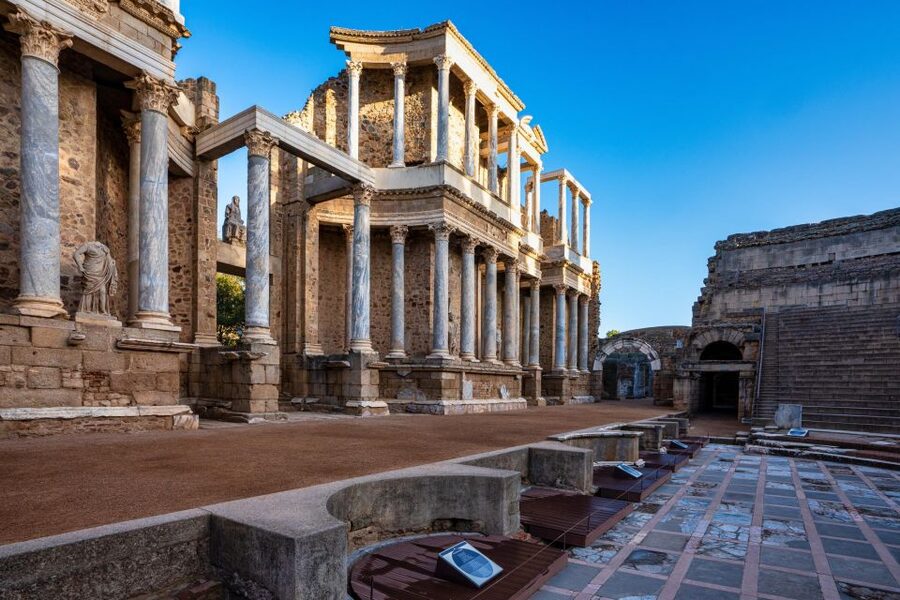
Start at the Roman Theatre entrance with no meeting point, then walk to the Roman Circus at the end.
Offline audio and maps are included, so you can avoid roaming charges.
Skip-the-line e-ticket helps you save time at the main entrance area.
You must download before visiting, using the activation link sent by email.
Works on Android (5.0+) and supported iOS, but not Windows phones or older iPhone/iPad models.
The route includes several major monumental sites, not just the theatre.
The real value: e-ticket plus a guided-feel you control
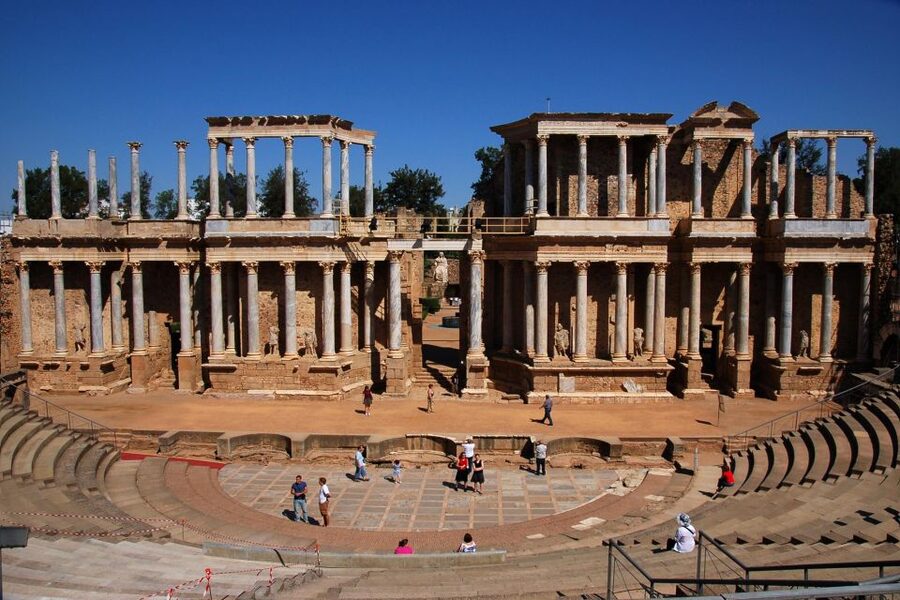
Mérida’s Roman Theatre is the kind of place where you can either breeze through in 15 minutes or slow down and actually understand it. This experience is built for that second option.
For one set price (listed at $32 per person), you’re not just buying admission. You’re getting a skip-the-line e-ticket plus a self-guided audio tour that tells you what you’re seeing as you walk. That matters because a lot of the value in a site like this is interpretation. Stones don’t explain themselves, but the audio does.
The “at your own pace” part is a big deal. You can linger at a section, step back to get a better view, or pause to read the text when the audio is talking about details you want to verify on the ground. And if you’re traveling with friends who walk at different speeds, this setup keeps you together without forcing the same pace.
Download first: your phone is the tour guide
This is a smartphone-first experience, and the smoothest day depends on how you prep. After booking, you should receive an email with an activation link. The tour provider also notes you should check your spam folder. Once you activate, you’ll download the app and the audio tour content to your phone ahead of time.
A couple practical points from the included info:
- You need space: about 100–150 MB on your phone.
- You’ll have offline content: text, audio narration, and maps.
- It’s available in English, and it’s not compatible with Windows phones.
- It also may not work on older iOS devices (the guidance lists iPhone 5/5C and older, iPod Touch 5th gen and older, iPad 4th gen and older, and iPad Mini 1st gen).
Plan to do the download the day before, or at least a few hours before you arrive. You’ll thank yourself when you’re standing at the entrance and want the audio to start right when you begin.
Also bring simple extras that make the whole route easier: comfortable shoes, sunscreen, and headphones. The site info also mentions a sun hat, which is smart in Extremadura if your weather is warm.
Getting to the start: no meeting point, just show up ready
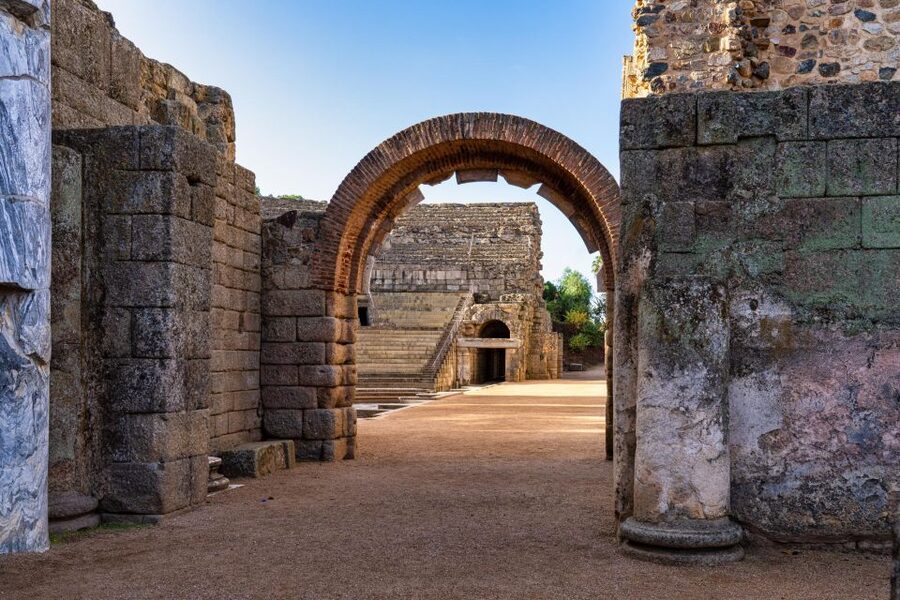
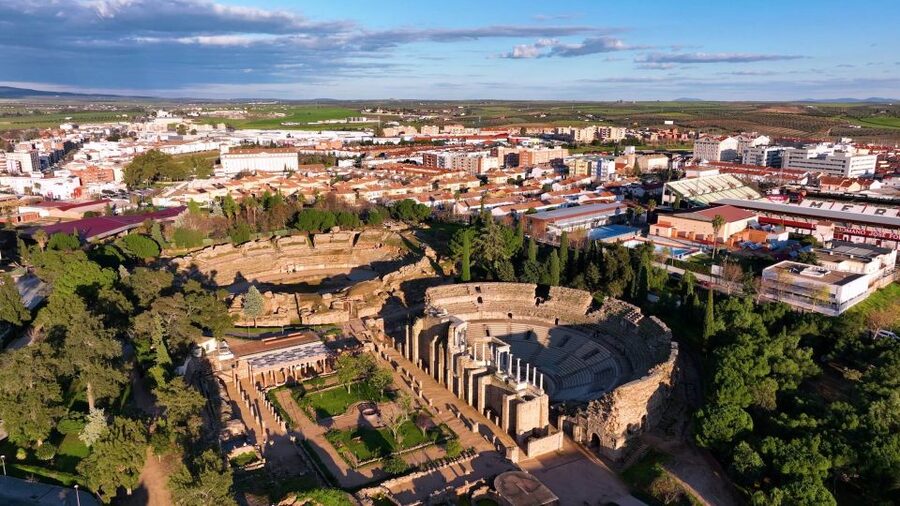
There’s no meeting point with a person in a booth. The self-guided tour is designed to start at the entrance of the Roman Theatre at Plaza Margarita Xirgu, s/n, 06800 Mérida.
If you’re coming by bus, the guide suggests heading to Merida Belloso bus station and then walking about 6 minutes (around 550 meters). That’s close enough that you can treat it like a stroll, not a long transfer.
This no-meeting-point setup is great when you like freedom. Just make sure your ticket and phone are ready before you start walking, since you won’t have a staff member waiting to help you connect.
Stop 1: Roman Theatre (your first big “wow” moment)
You’ll begin at the Roman Theatre, and the audio is structured to help you get your bearings fast. One of the standout themes from people’s feedback is that the narration doesn’t just explain history; it also gives directions first, then switches to storytelling.
At the theatre, you can expect the audio to connect the architecture to Roman entertainment. Even if you’ve seen amphitheaters before, Mérida’s theatre has a specific feel because of its scale and how it frames the surrounding space.
Practical tip: wear shoes with good grip. You’ll likely move around uneven surfaces and take short look-around walks while the audio guides you. If it’s sunny, use sunscreen early since you may spend time out in the open before you reach some shaded ruins.
Stop 2: Amphitheatre area and House of the Amphitheatre
The tour then moves through the theatre complex area, including the Amphitheatre and the House of the Amphitheatre. These parts often make the difference between “I toured a landmark” and “I understood the site.”
Why these stops matter:
- The theatre gets attention, but the surrounding structures show the day-to-day shape of the entertainment zone.
- The House of the Amphitheatre helps you visualize how people lived or operated close to public spaces, rather than treating the theatre as an isolated monument.
If you like connecting the dots, the audio storytelling here is especially helpful. You’re not just reading labels; you’re getting small, focused narratives that point you toward what to notice next.
Stop 3: Saint Eulalia’s Crypt (where layers of time show up)
Next comes Saint Eulalia’s Crypt. This is where Mérida’s story shifts from Roman grandeur into later religious and cultural meaning.
It’s a useful change of pace. After the open-air theatre spaces, the crypt setting slows you down. And because the audio tour is self-guided, you can take your time here without feeling rushed.
If you enjoy places where eras overlap, you’ll probably like how this stop acts like a hinge: the Roman part ends, and a later chapter begins. The audio is designed to highlight those intersections rather than keeping everything in one straight line.
Stop 4: Temple of Diana (and why it’s more than a postcard)
Then you’ll reach the Temple of Diana. It’s one of Mérida’s headline monuments, and the audio tour is there to make the structure legible.
A big value of using audio at a temple site is learning how to read the building in space. From the right angle, you can understand why certain parts remain and what the temple once represented. The narration also helps you connect temple architecture to civic life, not just religious symbolism.
In warm weather, consider using the headphones steadily here, then stepping out of the path when you need a water break. You’ll likely be outside for multiple stops in a row.
Stop 5: Site of Morerías and the story of cultural mixing
After the temple, the tour includes the Archaeological Site of Morerías. This stop is important if you want to understand Mérida beyond the Roman “main act.”
From the information provided, the tour is specifically built to highlight the confluence of civilizations: Roman, Visigoth, and Moorish artistry and resilience. Morerías is exactly the kind of place where those layers feel more real, because you’re looking at the result of centuries, not a single snapshot.
This is also where a self-guided format shines. You can pause, rewind in the app, and compare what the audio says to what your eyes catch at street level or within the ruins.
Stop 6: Alcazaba (fortress energy, different kind of monument)
The Alcazaba is next. A fortress site changes the mood. Instead of entertainment and worship, you’re moving into defense and power.
Audio helps here because it can explain what you’re seeing without needing a live guide. You can stand, rotate your position, and absorb what the structure is telling you, piece by piece.
If you’re the type who wants context, this stop is a good time to slow down. Even a short pause can turn what looks like walls into something that feels strategic and intentional.
Stop 7: Mithraeum House and Funeral Area of the Columbarios
Two more stops follow:
- Mithraeum House
- Funeral Area of the Columbarios
These are the kinds of sites that can feel “inside baseball” if you don’t have interpretation. The audio tour is meant to do that work for you, offering historical information and uncommon anecdotes in short, original stories.
Why I think this pair works well in the route:
- The Mithraeum House points to religious life and specific cult practice in Roman times.
- The Columbarios connect you to how communities handled death and remembrance.
You’ll probably get the most out of these if you let the audio pace you. Don’t race to the next stop. These places are about meaning, and meaning requires a little time.
Stop 8: Roman Circus (the satisfying end point)
The tour ends at the Roman Circus of Mérida. Ending at a big, open-air show space is satisfying because it helps you close the loop on entertainment and public spectacle—the theme that starts at the theatre.
If you’re planning your day, treat the last stretch as your “linger” segment. The audio route is designed for an end at the circus address: Av. de Juan Carlos I, s/n, 06800 Mérida.
When the audio finishes, you can decide whether you want to keep walking around the area or head back. Either way, you’ll have completed a loop across multiple time periods.
What about skip-the-line? When it helps most
Skip-the-line service is included with your e-ticket. That’s not just a convenience—it can change how your day feels.
If you arrive at peak hours, lines and waiting can steal time you’d rather spend listening and exploring. With an e-ticket, you’re less stuck in admin moments and more in monument moments.
One caution from the included info: free and reduced tickets don’t come with skip-the-line privileges, and those can be acquired on-site. If you’re in any reduced-rate category, plan extra buffer time for entrances.
Real-world timing: plan for comfort, not speed
The duration is listed as 1 day, but self-guided does not mean “quick.” Between multiple monumental stops and audio narration, your day will be as long as you make it.
To keep it comfortable:
- Start with your phone downloaded before you arrive.
- Wear comfortable shoes because you’ll move between several sites.
- Keep your headphones charged and your phone battery healthy (the tour assumes a charged smartphone).
If you want a good rhythm, I suggest you listen through a section, then briefly look around without audio. Often you’ll notice something new once the narration stops and you can just observe.
Who this is best for (and who should look elsewhere)
This is a great fit if you:
- Want a self-guided route through major Mérida sights.
- Like audio that gives both directions and story context.
- Prefer exploring at your own speed rather than following a timed group.
It’s also a strong choice for travelers who hate being rushed through ruins. The content is meant to be used repeatedly anytime before or after your visit, which is useful if you’re tired on day one or want to remember details later.
You may want a different option if:
- You need a live guide to handle questions on the spot (there isn’t one).
- You depend on an older or unsupported phone model, or you’re not able to download content ahead of time.
The one risk to take seriously: audio access issues
Most of the experience feedback leans positive, especially around how the audio makes the Roman entertainment story click. But there is at least one clear consideration you should plan around: sometimes access to the audio guide can fail if the activation or download steps don’t go smoothly.
Here’s how to reduce that risk:
- Don’t wait until you’re at the theatre to start downloads.
- After you book, locate the email with the activation link and check spam.
- Before you set out, confirm that the audio content is already downloaded offline.
Also note what’s included and what isn’t: you’ll need your own smartphone and headphones.
Should you book this Mérida Roman Theatre e-ticket + audio tour?
If you want a practical, value-focused day in Mérida, I’d book it. You’re paying for more than entry: you’re paying for an audio guide that’s designed to help you understand what you’re seeing at multiple sites, with offline support and a skip-the-line component.
Choose it if you like independent travel, enjoy storytelling, and can spare a little time to prep your phone. Skip it if you’re looking for a live human guide, or if you’re worried you won’t be able to download the content ahead of time.
If you do book, your best move is simple: download the audio before you go, bring headphones, and give yourself time to listen. Mérida rewards that kind of slow attention.
FAQ
Where does the tour start and do I need a meeting point?
There is no meeting point. The self-guided audio tour is designed to start at the entrance of the Roman Theatre at Plaza Margarita Xirgu, s/n, 06800 Mérida.
How do I get the ticket and the audio tour on my phone?
After booking, you receive an email with instructions and an activation link. You download the app and the audio tour content to your smartphone before your visit.
Is there a live guide during the experience?
No. This is a self-guided audio tour. There is no live guide included.
Can I use the audio tour offline and avoid roaming charges?
Yes. The tour includes offline content, including text, audio narration, and maps.
What languages are available?
The audio tour is available in English.
What phones are compatible with the audio tour?
The tour requires an Android (version 5.0 and later) or iOS smartphone. It is not compatible with Windows phones, and older iPhone/iPod/iPad models listed in the compatibility notes may not work.