REVIEW · MASSACHUSETTS
Lexington & Concord Self-Guided Driving & Walking Audio Tour
Book on Viator →Operated by Stories with Action · Bookable on Viator
History plays on your phone, without dead ends. This self-guided drive-and-walk audio route through Lexington and Concord uses offline audio maps so you can keep listening even with spotty service, and the stories trigger hands-free as you move along the Battle Road. You can start whenever you like and pause when life (or the snack stop) calls.
I also love the simple money math: one purchase covers a single group per car (up to 4 people), so you can split the cost and build in breaks at your pace. The narrator experience comes through clearly in the audio, but one drawback is that the GPS sync depends on staying on the planned route and respecting speed limits, so traffic or detours can make timing feel off.
In This Review
- Key Takeaways Before You Go
- North Bridge Start: How the Tour Gets You Oriented Fast
- Offline Audio That Actually Works: Your Phone Setup Reality Check
- Value and Timing: A 2–3 Hour Audio Course for $14.99 per Car
- Driving the Battle Road: Why Going at Your Own Pace Helps
- Meriam’s Corner: The Small Place Where Things Turn Brutal
- Concord Authors Stops: The Wayside, Orchard House, and Little Women
- Authors Ridge: Seeing How Big Names Share One Place
- Lexington Battle Green: First Shots, Then the Numbers Behind the Cost
- Parking, Timing, and Finding the Stops: Where People Get Frustrated
- Paul Revere and the Minute Men Threads: The Story Level Jumps
- Battle Road Trail and Josiah Nelson House Site: Following the Route the British Used
- Optional Literary Detour: Walden Pond for Thoreau Fans
- Tech Notes You’ll Be Glad You Knew: Apps, Reboots, and Bluetooth
- Should You Book This Lexington & Concord Audio Tour?
- FAQ
- How long is the Lexington & Concord self-guided driving and walking audio tour?
- Does the audio tour work without WiFi or cellular data?
- Where do we start and where does the tour end?
- Is the price per person?
- Can we start the tour whenever we want?
- Do I need to download the app and tour content first?
- What is the cancellation and refund policy?
Key Takeaways Before You Go

- Offline-first listening: Download with solid signal once, then tour without WiFi or cellular while moving.
- Drive and walk mix: You’ll get long stretches in the car plus short stops where you can get out.
- Story triggers by location: Audio plays automatically based on where your phone thinks you are.
- Good value per car: Pay for the group, not per person, and share within your car.
- Nature of the route matters: It’s about moving steadily; slowing too much can scramble the audio pacing.
North Bridge Start: How the Tour Gets You Oriented Fast
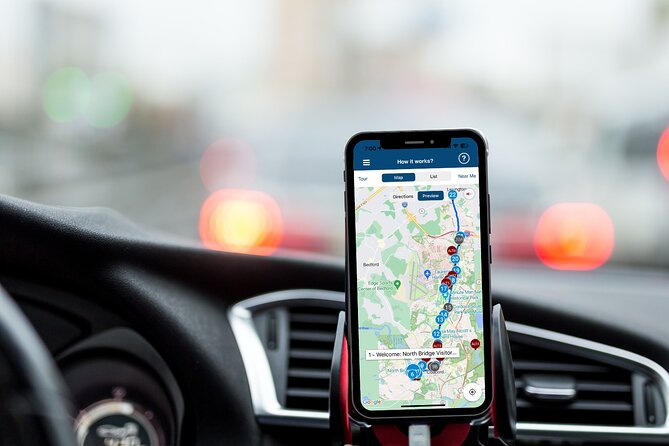
Your tour starts at North Bridge Visitor Center, 174 Liberty St, Concord. The payoff here is that you’re not just listening to general narration. You’re following a path that tracks the events tied to the battle line, with audio stories popping up as you reach the right spots.
The experience is designed to be low-stress. Nobody meets you. You park, open the app on-site, and begin at the first story point. From there, the audio cues do the heavy lifting. You don’t need to constantly tap around or wonder what’s next—just follow the route and pay attention to the cues.
A practical tip: bring headphones if you’re walking, and for the car, connect your phone to the audio system using Bluetooth, USB, or AUX. If your car supports it, audio playback is compatible with Apple CarPlay, with navigation integration coming later. Android support is also on the way via Android Auto.
Offline Audio That Actually Works: Your Phone Setup Reality Check

This tour shines if you’ve ever tried to rely on cellular data while driving in historic areas. After booking, you’ll receive instructions and a password by email and text. Then you must download the tour content while you’re in strong WiFi or cellular. Once downloaded, it works offline.
That’s the key. Offline use is the dream. But the download step is not the place to wing it. If you only have weak signal at the wrong time, you’ll lose time at the starting point.
The most important mindset: treat the audio like a GPS-guided experience. If you’re doing the driving portion with stop-and-go traffic, the timing can feel “off” compared to what you hear. That doesn’t make the tour bad—it just means you’ll want to slow down in a controlled way and follow the indicated route at a reasonable pace.
Value and Timing: A 2–3 Hour Audio Course for $14.99 per Car
The price is $14.99 per group (up to 4 people). For the Lexington–Concord area, that’s one of the main reasons this format works. You’re not buying a per-person ticket. You’re buying a self-guided tour you can pause and replay.
Duration runs about 2 to 3 hours, and the route covers over 8 miles with more than 29 audio stories. In plain terms, it’s long enough to feel like you covered something meaningful, but short enough to fit between a morning in Concord and an afternoon somewhere else.
One more detail that affects value: you get new, lifetime access with no expiry, meaning you can use it on later trips too. If you’re the type who wants a “first pass” now and a second pass after you’ve seen the key museums and viewpoints, this is a smart buy.
Driving the Battle Road: Why Going at Your Own Pace Helps

This tour is built around flexibility. You can pause for photos, take a bathroom break, or spend extra time at a stop that grabs you. You also have the option to keep going after the main endpoint, depending on where you want to roam next.
The practical benefit is that you’re not locked into a guide pace or a fixed group timeline. And for places like Lexington and Concord, that matters. You’ll want time for perspective: road lines, sightlines, and the little geographic facts that make the stories click.
The catch is navigation. Even when the audio is location-based, you still need to stay close to the route and observe speed limits so the GPS sync stays accurate. Several common hiccups come from the same source: if you go slower than expected (or wander off the intended path), the next story cue can show up late—or at the wrong spot.
Meriam’s Corner: The Small Place Where Things Turn Brutal

One of the best emotional “snapshots” is Meriam’s Corner, where the British faced a disastrous turn. The audio frames this as an inflection point: multiple American militias had their sights set on this patch of land, and when the British passed through, heavy casualties followed.
What I like about this stop is that it doesn’t treat the battle like a textbook timeline. It explains why specific locations matter—how a small stretch of ground can carry disproportionate consequences. Even if you only spend a few minutes here, the story gives the place weight.
If you’re visiting with kids or teens, this is also where the pacing can work in your favor. It’s intense, concrete, and easy to connect to real-world “what happened here” thinking without needing a long lecture.
Concord Authors Stops: The Wayside, Orchard House, and Little Women
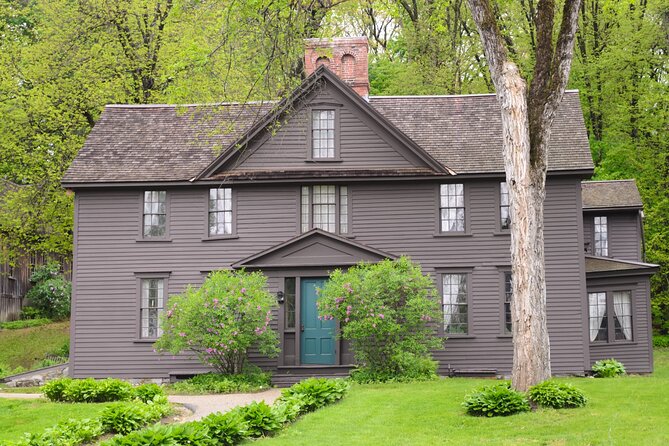
If you’re coming for battle history only, Concord can still surprise you with its literary layer. The tour includes stops tied to the Alcott family and the broader world that shaped Little Women.
You’ll first encounter the story linked to The Wayside, a house built in 1700. The tour notes that the Alcotts bought it in 1845, and the home was named Hillside. The experiences of the Alcott sisters in that home later fed into Little Women.
Then you’ll reach Orchard House, where Louisa May Alcott wrote Little Women in 1868. This part matters because the tour ties the writing to real commitments associated with the Alcott family—abolition, women’s suffrage, and social reform.
My advice: don’t rush these stops. Even if the audio segments are short, Concord’s literary sites reward slow walking. Look at the physical context and then let the story give you the meaning.
Authors Ridge: Seeing How Big Names Share One Place
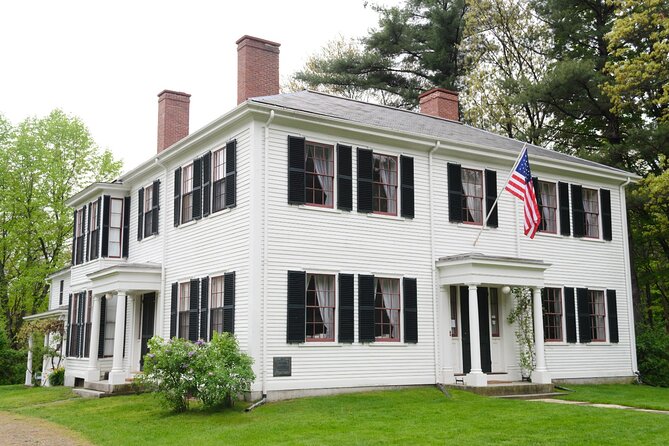
One of the most satisfying moments on the route is Authors Ridge, a resting place for multiple major names connected to Concord. The tour connects you to a lineup of authors buried here, including Thoreau, members of the Alcott family, Emerson, and Nathaniel and Sophie Hawthorne, among others.
This stop works because it’s a different kind of history. You’re not tracking movement of soldiers or counting shots. You’re tracing ideas and legacies. It’s also a reminder that the Revolutionary era and the American literary world weren’t separate stories. In Concord, they overlap.
If you like your travel with a little reflection built in, this is where you’ll likely slow down naturally.
Lexington Battle Green: First Shots, Then the Numbers Behind the Cost
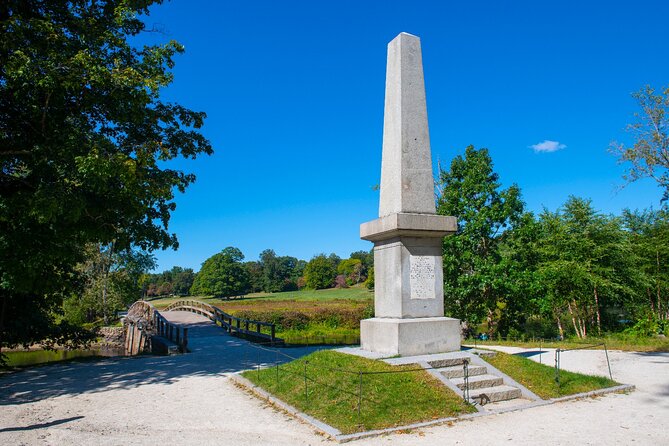
The tour concludes at Lexington Battle Green. This is the spot where the British fired the first shots of the battle. The audio frames that moment as the start of a chain reaction leading to an embarrassing defeat and a long war Britain would eventually lose.
Then the narration shifts into the human cost. The tour includes casualty figures: 73 British dead and 174 wounded, and 49 Americans dead and 39 wounded. The important part isn’t just the math—it’s what the audio highlights afterward: the American victory wasn’t only symbolic. It proved that colonists could win against Britain.
There’s also an extra practical reason to end here. The Lexington Battle Green area links to a museum collection focused on revolutionary and literary history. If you have energy left, it’s an easy way to deepen what you just heard in the audio.
Parking, Timing, and Finding the Stops: Where People Get Frustrated
Historic sites are charming, but they aren’t always laid out for car-to-GPS perfection. A recurring challenge is locating a stop efficiently once you pull over. Some stops can feel like you’re searching for the exact place where the audio cue expects you to be, which can lead to backtracking.
Traffic is another real-world issue. Speed limits and slow drives matter because the audio depends on GPS location. If your day is jammed with crowding or a line at one of the key areas, plan to build in buffer time. You’re better off starting earlier rather than wrestling your way through the route.
One more logistical consideration that can affect the first moments: in some recent visits, people ran into visitor center closures or limited access tied to federal management and renovations. That doesn’t break the tour, but it can change parking options and how you begin. If you show up expecting to go inside, be ready to adapt.
Paul Revere and the Minute Men Threads: The Story Level Jumps
The tour doesn’t just cover big battle moments. It also puts you at sites tied to individuals that Americans learned about for generations.
You’ll visit the Paul Revere Capture Site, where he was captured during his Midnight Ride. The audio revisits his heroism and connects his actions to how the Americans emerged victorious in Lexington and Concord.
You’ll also encounter a site linked to the Samuel Hartwell House, the remains of the home of Ephriam and Elizabeth’s son Samuel. The audio notes that Samuel was a sergeant in the Lincoln Minute Men on April 19, with action up and down the road. It also includes a story element about his wife Mary, who is said to have helped bury dead British soldiers.
Even if you think you already know these stories, the value here is the location-based framing. You’re not hearing about a ride or a militia in the abstract. You’re standing near the place where the narrative anchors.
Battle Road Trail and Josiah Nelson House Site: Following the Route the British Used
At the Josiah Nelson House Site, the tour sends you onto a path leading to the Battle Road Trail. The audio explains that this trail follows what remains of the original Bay Road, the route the British took to Concord and back, and that it passes many historic sites.
This is where the self-guided format feels especially smart. You can do a short walk, then return to the car when you want. Or you can lengthen the stroll if the air and the scenery are doing their job.
Just remember the timing logic: if you stop too long, the audio pacing may shift. Still, the tradeoff is worth it. This is the section where you can feel the geography and the movement more than you can from the car alone.
Optional Literary Detour: Walden Pond for Thoreau Fans
If you still have energy after the main route, the tour points you toward a nearby literary stop: Walden Pond, about a mile outside town off Walden Street.
Here’s what the audio connects for you: Thoreau lived in a cabin he built for two years beginning in 1845, and during that time he collected thoughts for his 1854 classic, Walden, or Life in the Woods.
This is a good add-on if you like travel that mixes outdoors with ideas. It’s not required to understand the battle story, but it pairs nicely with Concord’s larger theme: how people processed the world and then wrote about it.
Tech Notes You’ll Be Glad You Knew: Apps, Reboots, and Bluetooth
Most of the experience is smooth, but tech has a way of humbling travel plans. A small number of users experienced issues like frozen playback or lost sound, and sometimes the fix was restarting the phone. If your audio goes quiet, don’t panic. Rebooting and resuming the app is often the practical first step.
Also, some people found it easier to keep things flowing by using the app in a way that supports audio playback through the car system, and then relying on the driving pace to match the audio cues.
If you’re tempted to skip headphones because you’re in the car with the radio on: don’t. The tour is story-driven, and it’s easier to miss details if you’re splitting attention.
One more small tip from the format itself: if you’re walking with a partner, couples can share one tour by splitting headphones.
Should You Book This Lexington & Concord Audio Tour?
Book it if you want flexibility and value per car. At $14.99 for up to four people, it’s a bargain for families, couples, and friends who want history without paying for a guided group schedule.
Also book it if you like the idea of having a named stop-by-stop narrative that covers both battle sites and literary Concord. You’ll walk away with more than just general facts, because the audio anchors the story to specific places like Meriam’s Corner, Orchard House, and Lexington Battle Green.
Skip it or go in with eyes open if you’re traveling during busy times and expect constant congestion. Because audio sync depends on GPS timing and route adherence, heavy traffic and detours can make the experience feel confusing. If you want a very structured, “no thinking required” setup, you might prefer a guided tour instead.
FAQ
How long is the Lexington & Concord self-guided driving and walking audio tour?
It takes about 2 to 3 hours on average, and it covers over 8 miles with more than 29 audio stories.
Does the audio tour work without WiFi or cellular data?
Yes. After you download the tour content while you have strong WiFi or cellular signal, it works offline during your visit.
Where do we start and where does the tour end?
You start at North Bridge Visitor Center, 174 Liberty St, Concord, MA 01742 and end at Lexington Battle Green, 1625 Massachusetts Ave, Lexington, MA 02421.
Is the price per person?
No. It’s $14.99 per group (up to 4), and you purchase one tour per car.
Can we start the tour whenever we want?
Yes. It’s self-guided, and you can start your tour whenever you choose. You can also pause and resume as needed.
Do I need to download the app and tour content first?
You’ll download Action’s Tour Guide App, then use the password you receive by email and text. The tour content must be downloaded while you have strong WiFi or cellular, then it works offline.
What is the cancellation and refund policy?
You can cancel for a full refund if you cancel at least 24 hours before the experience’s start time. If you cancel within 24 hours, the amount paid is not refunded.