REVIEW · KIEL
Kiel Self-Guided Audio Tour: Explore this Historic Port
Book on Viator →Operated by VoiceMap Audio Tours · Bookable on Viator
Kiel has plenty of stories if you know where to listen. This self-guided audio walk turns the Kiel port area into a readable route with history you can tap on when it fits your time. I especially liked the offline GPS and maps, plus the step-by-step guidance that helps you stay on track.
The best part is control. You can pause, resume, and keep moving at your pace, and the narration brings places like the aquarium and memorials to life without needing museum tickets. One drawback: you do need a smartphone and headphones, and the experience relies on the app working smoothly.
In This Review
- Key highlights at a glance
- How the VoiceMap audio tour works in Kiel
- Starting outside Cruise Terminal Ostseekai (and learning the app fast)
- Kiel Harbour: the port that shaped the city
- The aquarium stop: seals and stories you can picture
- Kiel Castle garden (after the destruction): history in a quiet space
- Kaiser Wilhelm I statue: what the last Kaiser meant to Kiel
- Ratsdienergarten and the Sailors’ Mutiny Memorial
- Lake Kleiner Kiel and Einstein’s compass: a science story on a walking route
- Rathasturm Kiel and the wooden lift inside the old Town Hall
- Finishing at St. Nikolai Church: a strong ending point
- Price, value, and what you’re really paying for
- Who this Kiel self-guided audio tour suits best
- Should you book this Kiel audio tour?
- FAQ
- How long is the Kiel Self-Guided Audio Tour?
- What does the tour cost?
- Is the tour available in English?
- What do I need to bring?
- Can I use it offline?
- Where does the tour start and end?
Key highlights at a glance
- Offline audio, maps, and geodata so you can walk without data worries
- Step-by-step directions that help if you wander off route
- English narration focused on Kiel’s port history and key monuments
- A route built around major stops from Ostseekai to St. Nikolai Church
- Quirky stories you can’t easily “see” (like the old town hall wooden lift)
How the VoiceMap audio tour works in Kiel
This is a self-guided smartphone tour. After you book, you get lifetime access to the English audio, and you can start whenever you like within the tour’s operating timeframe. Instead of following a group, you follow a route on your phone and let the audio play as you get near each stop.
For me, the practical win is the offline support. The tour includes offline access to audio, maps, and geodata, which matters in a city-walk setup where signal can be spotty. The result is a calmer experience: you’re not constantly checking bars or swiping back to confirm where you are.
You’ll also get route guidance that doesn’t just assume you know Kiel. One reviewer noted the tour can tell you if you go astray, and that sort of “nudge” is exactly what you want when you’re walking with no human guide. It’s the difference between feeling lost and feeling confident.
You can also read our reviews of more tours and experiences in Kiel.

Starting outside Cruise Terminal Ostseekai (and learning the app fast)
Your walk begins outside the main cruise ship terminal at Ostseekai (Wall 65, 24103 Kiel). That’s a smart choice for two reasons. First, it funnels you into the core port area right away. Second, it gives you a clear starting point that’s easy to recognize, even if you arrive by foot.
Before the history starts, the tour introduces the main themes and explains how VoiceMap works. If you’ve never used this kind of GPS audio system, spend a couple of minutes here to get comfortable with controls like play/pause and navigation prompts. One comment also hinted that you should read the instructions carefully, because you may need to set up more than one app or component on your phone.
My advice: do a quick setup check before you step into the street. Test your headphones, confirm audio is downloading for offline use, and make sure the phone’s GPS permission is on. It takes a few minutes and saves you from frustration later.
Kiel Harbour: the port that shaped the city

After you’re set, the tour moves you along the Kiel Harbour. This section is where the narration helps you read the bigger picture. You’ll hear about the harbour’s history and the wider marine story tied to Kiel’s role on the water.
Why this matters on a self-guided walk: when you’re looking at docks and cranes, it can feel like you’re just watching ships come and go. The audio turns those sights into chapters. You stop thinking of the port as background and start seeing it as the engine behind Kiel’s development.
A possible drawback here is that the harbour is a working area. Depending on the day, you may encounter crowds, wind, or street traffic near the route. If you’re sensitive to noise or cold, bring a layer. Kiel can feel like a sea breeze comes standard.
The aquarium stop: seals and stories you can picture
Next up, you pass by the Aquarium, with audio focused on the city’s well-loved residents—specifically the seals. This is a nice pacing break in the middle of a history-forward route. Instead of only heavy topics, you get something easy to visualize while you walk.
From a value perspective, this stop also helps justify the “walking loop” idea. Even if you’ve never been to Kiel before, you’ll remember the aquarium for reasons beyond its location. And because the narration is tied to what you see nearby, it feels less like listening to a random audio file and more like a guided stroll.
If you’re planning to spend extra time at the aquarium, keep in mind the tour doesn’t include tickets or museum entrances. You’ll still get the audio experience on the route, but you’d need a separate plan if you want to go inside.
Kiel Castle garden (after the destruction): history in a quiet space
The route then passes through the garden of the destroyed Kiel Castle. This stop is one of those places where you might expect ruins or a full museum scene, but instead you get something more reflective: space shaped by what’s been lost.
The audio covers the castle and the current garden as you walk. Even without entering a site building, you can understand the shift from former power to present-day memory. This is a good moment to slow down, listen carefully, and let the narration do the work of connecting past and present.
This section can also be a good “reset” if the earlier harbour walking felt brisk. Gardens tend to be calmer, and the audio format makes it easy to step into a quieter mindset for a few minutes.
Kaiser Wilhelm I statue: what the last Kaiser meant to Kiel
Then you’ll see the statue of Kaiser Wilhelm I. The audio explains the last Kaiser and how he impacted the city. This is where the tour gets very specific, and that specificity is one reason people rate this one so highly.
If you’re the type who likes details you can tell someone later—names, roles, and consequences—this segment is for you. Instead of just hearing broad “this was important” statements, you get the link between leadership and the city’s development.
It’s also a manageable stop. You don’t need a ticket. You can stand, listen, and move on, which keeps the tour’s timing realistic.
Ratsdienergarten and the Sailors’ Mutiny Memorial

As you continue, the route passes through Ratsdienergarten, where the audio covers the Sailors’ Mutiny Memorial. This is another moment where the city’s maritime identity becomes personal and human.
Memorials can be flat if you don’t know what you’re looking at. Here, the audio helps you see why it’s placed where it is and what it represents in Kiel’s story. It’s a smart match for a self-guided walk because you can linger exactly as long as the narration takes—no rushing, no waiting for someone else.
If you prefer lighter content, this is the one spot where the mood may turn more serious. But that’s also what makes the tour feel balanced rather than “only monuments” or “only fun facts.”
Lake Kleiner Kiel and Einstein’s compass: a science story on a walking route
One of the standout segments comes as the tour winds through the city alongside the harbour and parts of lake Kleiner Kiel. The audio connects this setting to a famous idea: the compass Einstein invented while staying in Kiel, and how it’s still used today.
That’s a great example of how this tour keeps Kiel from feeling like just a port city. You get a science connection that works even if you’re not a history nerd. It turns your walk into a multi-angle story: maritime life, politics, memorial meaning, and a practical invention.
What I like about this kind of stop is that it teaches you to notice your surroundings differently. Walking next to water becomes more than scenery. It becomes part of how and where people developed tools and knowledge.
A practical note: water-adjacent walking can mean open views and wind. If you’re visiting on a breezy day, wear layers and keep your phone secure.
Rathasturm Kiel and the wooden lift inside the old Town Hall
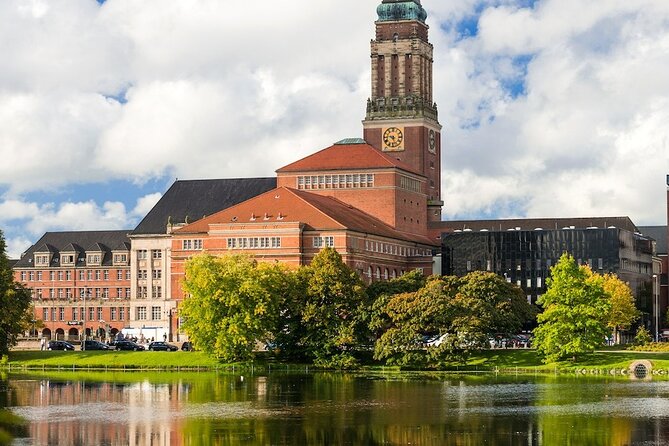
As the route continues, you pass by Rathasturm Kiel. The audio shares why Kiel’s bureaucrats need a special qualification to use the wooden lift inside the old Town Hall.
This is the kind of quirky detail that makes an audio tour memorable. It also shows the tour isn’t trying to be only “serious.” It gives you a human-scale oddity—something that sparks conversation and makes the city feel lived-in.
The main caution here is simple: read the street context. You’re not touring inside the Town Hall on this route, since the experience doesn’t include entrances or tickets. You’ll get the story from the outside as you walk past, and that’s enough to understand the point—just don’t expect a full interior visit.
Finishing at St. Nikolai Church: a strong ending point
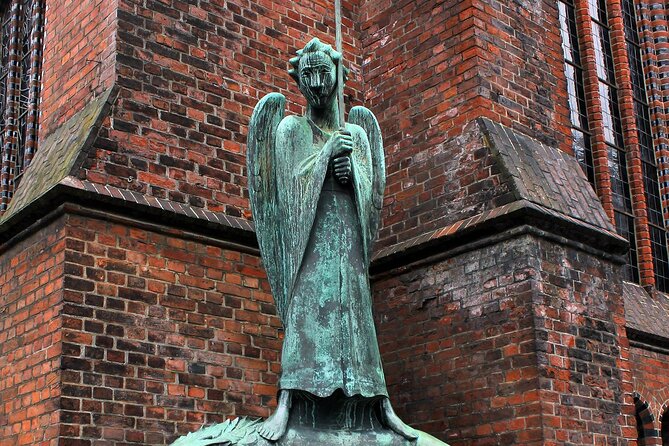
The tour ends in front of St. Nikolai Church at Alter Markt, 24103 Kiel. This ending location is practical and satisfying: it’s a recognizable landmark and a fitting close for a route that has moved from port history into city identity.
By the time you reach the church, you’ll have a better grasp of how Kiel connected naval power, maritime life, political change, and even a science story to the physical places you just walked past. Even if you only have a short time in town, this wrap-up helps you feel oriented, not scattered.
Price, value, and what you’re really paying for
At $11.99 per person, this is priced like a “one-and-done” city experience rather than a guided day. That’s a fair deal if you think about what you receive: lifetime access, an offline-capable smartphone tour, and an organized walking route that covers several key stops in roughly 1 hour to 1 hour 30 minutes.
You’re also not paying for museum entry fees, because the tour doesn’t include tickets or entrance costs. That’s important for value. If you’re hoping for multiple indoor attractions, you’ll likely spend extra elsewhere. But if what you want is an efficient overview plus story-driven walking, the price makes sense.
This tour is also a good fit if you don’t want schedules. You can start the app when you choose and move at your pace—pause for photos, stop to read, or just sit a moment near the lake.
Who this Kiel self-guided audio tour suits best
This is ideal for you if:
- you want a port-focused Kiel introduction without committing to a full day
- you like step-by-step navigation instead of wandering
- you enjoy audio narration that mixes history with lighter moments (seals, quirky bureaucracy stories)
- you’re comfortable relying on a phone for directions
It may not be the best match if:
- you want a lot of indoor sites and paid attractions included
- you prefer a guided person to answer questions in real time
- you don’t want to deal with phone setup, charging, or headphones
One more practical fit: this tour works well for cruise-day timing because it starts at the cruise terminal area and keeps the walk compact.
Should you book this Kiel audio tour?
I’d book it if you want a fast, story-rich way to understand Kiel’s port identity, and if you appreciate an audio guide that helps you stay on route. The combination of offline GPS, step-by-step directions, and the mix of serious and funny local details makes it worth considering—especially at $11.99.
Skip it if you’re arriving with no phone plan, no headphones, or a strong desire for multiple entrances. This experience is built around walking and listening, not ticketed attractions.
If you do book, give yourself a little prep time to get the app running offline. Then go slow near the memorials and the lake. Kiel’s best moments here are the ones you notice when you’re not rushing.
FAQ
How long is the Kiel Self-Guided Audio Tour?
It typically takes about 1 hour to 1 hour 30 minutes.
What does the tour cost?
The price is $11.99 per person.
Is the tour available in English?
Yes, the tour is offered in English.
What do I need to bring?
You’ll need your smartphone and headphones. The tour provides the VoiceMap app and offline access, but it doesn’t include a phone or headphones.
Can I use it offline?
Yes. It includes offline access to audio, maps, and geodata.
Where does the tour start and end?
It starts outside Cruise Terminal Ostseekai, Wall 65, 24103 Kiel, and ends in front of St. Nikolai Church, Alter Markt, 24103 Kiel.