REVIEW · HAMBURG
Hamburg City: Scavenger Hunt Self-Guided Tour
Book on GetYourGuide →Operated by Stadtspiel Schnitzeljagd GmbH · Bookable on GetYourGuide
Hamburg turns into a game with a self-guided scavenger hunt built around 16 sealed riddles. You walk through the city center solving clue tasks, then use each solution to figure out which envelope opens next.
I like how the route is tied to major Hamburg landmarks, from Mönckebergstraße and the Rathaus/Stock Exchange area to the Alster waterfront near Jungfernstieg, and the big green finish at Planten un Blomen. I also like that you can pause whenever you want for photos, breaks, or just to read the info slowly; the downside is the scavenger hunt box arrives by mail and there’s no pickup in Hamburg, so delivery timing matters.
In This Review
- Key things to know before you start
- Entering the hunt: how the Hamburg City scavenger game really works
- The route that stitches Hamburg together: Mönckebergstraße to Planten un Blomen
- Rathaus and the Stock Exchange area: where civic power meets puzzle-solving
- Mönckebergstraße and the early clue flow: staying oriented in the city center
- Jungfernstieg, Alsterhaus, and the colonnades: turning waterfront sights into answers
- Planten un Blomen finish: why the end point feels right
- Timing on the ground: 270 minutes, plus real-life flexibility
- What you actually get at each stop: tasks, directions, and background facts
- Price and value: $52 per group up to 10 people
- Logistics reality check: the mail box, the lack of a guide, and clue signage
- Who this suits best (and who might want a different format)
- So, should you book it?
- FAQ
- How long does the Hamburg City scavenger hunt take?
- Is there a tour guide with the scavenger hunt?
- What’s included in the Hamburg City game box?
- Can I start whenever I want?
- Do I have to visit a specific meeting point with a guide?
- What should I bring, and is food or transportation included?
Key things to know before you start
- 16 sealed envelopes guide you via riddles, with the next stop determined by each solution
- No guide on site means you’re free to move at your own pace and create your own rhythm
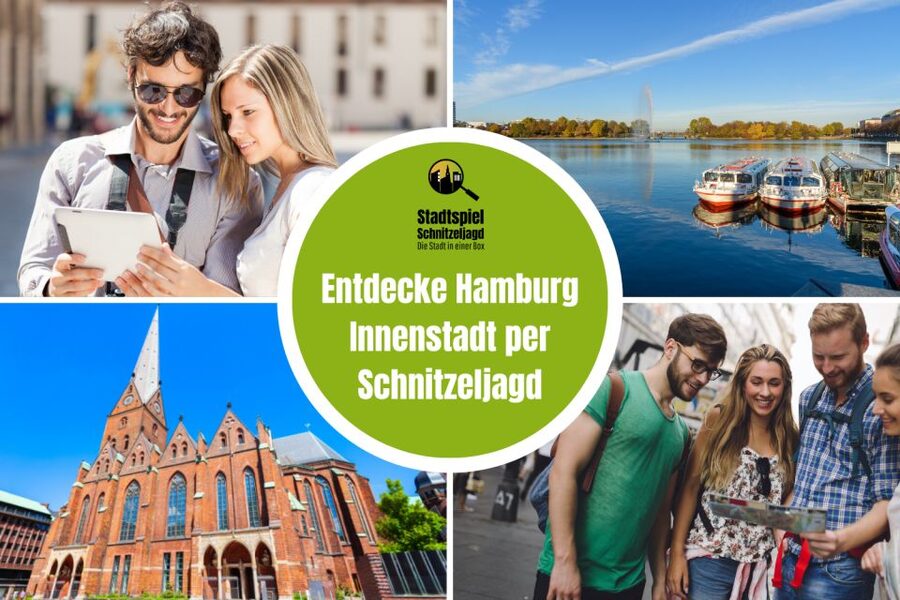
- City-centre sights in one loop connect Mönckebergstraße, Rathaus/Stock Exchange area, Jungfernstieg/Alsterhaus, colonnades, and Planten un Blomen
- Built-in background info adds context on each place, including history and present-day use
- Emergency envelope included so you’re not stuck if a clue doesn’t click
- Value for groups up to 10 lets you split the cost without paying per person
Entering the hunt: how the Hamburg City scavenger game really works
This is not a traditional guided tour where one person talks while you follow. Instead, you get a mail-delivered scavenger hunt box, then you play at street level with numbered envelopes and short tasks. The core idea is simple: open one envelope, solve the riddles, and the answer tells you the number of the next envelope.
The instructions are designed to be clear, so you can move on foot or by bike from place to place. You do not have to guess the order in advance. Since every task points to the next envelope number, the hunt stays focused even if you start at a different time than someone else.
What I like about this setup for real travel days: it respects your energy. If you want to read slowly at one stop, you can. If you only have 30 minutes of attention, you can still keep moving and let the pace rise and fall naturally.
You can also read our reviews of more tours and experiences in Hamburg.


The route that stitches Hamburg together: Mönckebergstraße to Planten un Blomen
The walk is built as a city-centre circuit that ties together old trade power, waterfront life, and a calmer park finish. Your path includes Mönckebergstraße, then heads to the town hall area where the stock exchange sits, along with the old post office. From there, you pass Jungfernstieg with the Alsterhaus and the colonnades, before the hunt ends at Planten un Blomen.
That order matters. The earlier part of the route leans architectural and civic: you’re looking at buildings that helped shape Hamburg’s Hanseatic identity. The middle shifts toward the Alster waterfront, where streets feel more like a promenade. The final stretch lands in Planten un Blomen, one of the city’s more relaxing green spaces, so you finish the hunt with an easier mood than you started with.
If you like tours that feel like a walk with purpose (not just random sightseeing), this format keeps you from wandering in circles. You still have freedom, but the clues give you a reason to be at each stop.
Rathaus and the Stock Exchange area: where civic power meets puzzle-solving
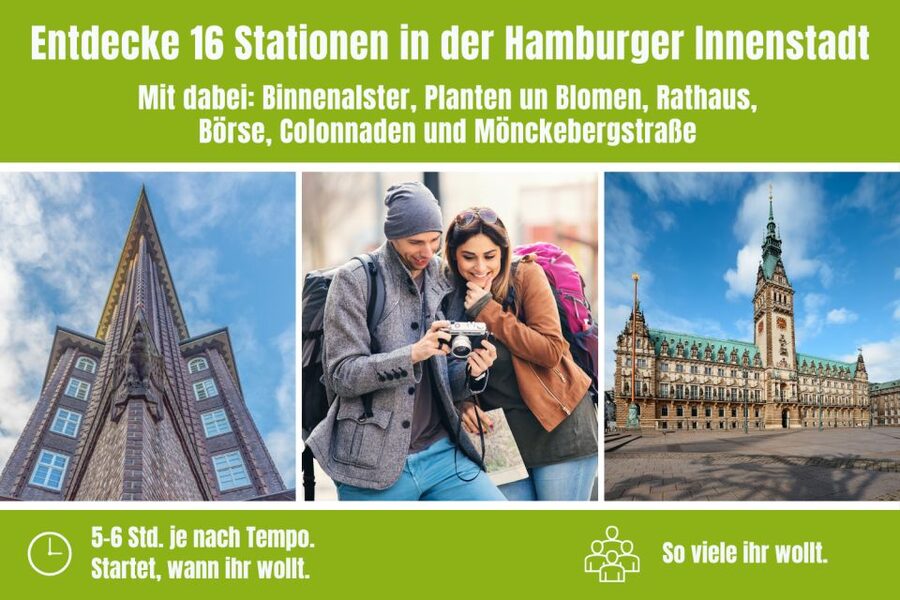
One of the big draws is the town hall area, paired in the route with the stock exchange and the old post office. Even if you’re not going inside, these are the kinds of buildings that reward slow looking.
In the hunt, you’re not just getting a view. You’re answering short tasks that force you to look closer, then you’re given background info that explains what you’re seeing and why it matters. That combination is especially good in Hamburg, where much of the city’s identity is tied to trade, shipping, and the institutions that grew around them.
One practical note: since entrances are not included, plan on using the exterior views and the surrounding streets for your main experience here. If you decide you want to go inside something later, that’s your choice, but the scavenger hunt itself works without paid entries.
Mönckebergstraße and the early clue flow: staying oriented in the city center

Mönckebergstraße is one of those central Hamburg streets where you can get oriented fast. It’s also the kind of area where it’s easy to drift into shopping mode, unless you have a plan.
That’s exactly what the first envelopes do for you. They pull your attention back to the city itself, and they start building the rhythm: read the directions, solve the task, then open the next envelope number. This is the part where the experience feels most like a real scavenger hunt, because you’re learning the game mechanics while you’re still fresh.
A small consideration based on real experience: if one or two hint boards aren’t where you expect, you may need to use your phone to keep moving. That does not mean the game breaks. It just helps to have data or offline maps so you can keep your momentum.
Jungfernstieg, Alsterhaus, and the colonnades: turning waterfront sights into answers
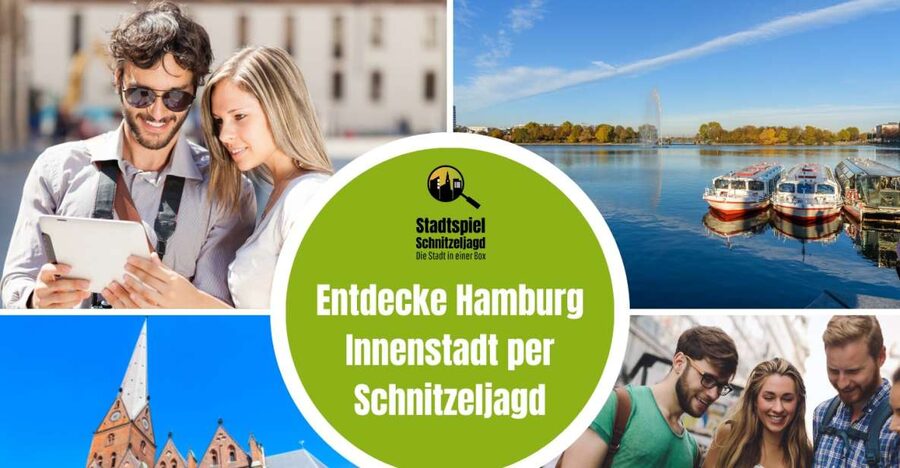
The hunt gets more scenic as it moves toward Jungfernstieg and the Alster waterfront. You’ll go past Jungfernstieg with the Alsterhaus and the colonnades, which is a nice change from dense street-corner architecture.
Here the game style works well because you can connect what you’re looking at with what the tasks are asking. Waterfront areas are full of visual cues: lines, building details, and the way people use the space. The riddles help you notice those things instead of treating the Alster as just a backdrop.
This section is also where flexible pacing really shines. If you want to pause for photos, you can do it without feeling like you’re falling behind a group. If you want to just stand for a few minutes and watch the promenade, you can.
Planten un Blomen finish: why the end point feels right
The final stop is Planten un Blomen. Ending at a park makes the whole hunt feel less like a sprint and more like a complete outing. You shift from streets and façades into open paths and calmer surroundings, which is a good psychological landing after 4-plus hours of focused walking.
Also, Planten un Blomen works as a reward. You’re not just arriving at a random landmark to close the game; you’re ending where it’s easy to keep enjoying the area even after the last envelope is solved.
Timing on the ground: 270 minutes, plus real-life flexibility
The scheduled duration is 270 minutes (about 4.5 hours). But the design lets you stretch or compress it. You decide when you start, and you decide how long to linger at stations. That matters because Hamburg sightseeing can be slow by nature—benches, views, and waterfront light are hard to rush through.
One real-world pattern from people who played it: a relaxed pace can land closer to 5 hours, especially if you take breaks or follow side interests that pop up during the clue stops. That’s not a problem. The game encourages pauses rather than punishing them.
If you’re traveling with kids or you’re mixing in shopping time, this kind of flexible structure is often easier than a timed, guided walking tour. You can step away for a snack or a bathroom break and then rejoin the hunt when you’re ready.
What you actually get at each stop: tasks, directions, and background facts
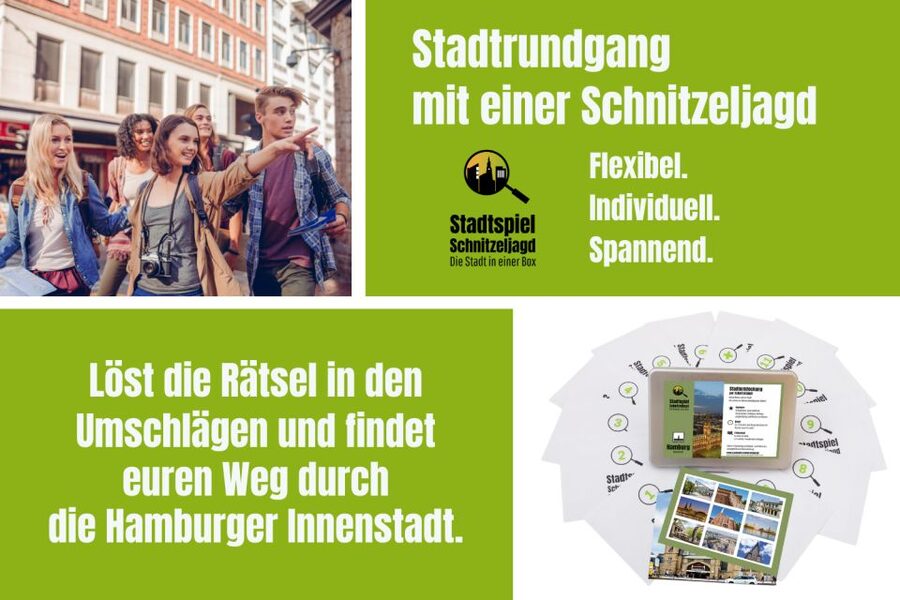
The biggest quality lever here is the envelope content. Each envelope includes riddles, directions, and interesting facts. The directions are meant to be unambiguous, so you’re not constantly guessing how to interpret the clue.
The facts/background info is also part of the value. Instead of a generic description, you get short, useful context tied to the sight you’re standing at. That’s the difference between reading a plaque at 1 mile an hour and learning something that connects buildings to Hamburg’s story.
One bonus that comes up while playing: the hunt can point you toward nearby viewpoints you might want to add later. For example, people discovered information about the Michel tower with 544 steps and noted there’s a paid climb option around 4 euros for the top view. That’s not guaranteed to become part of your day unless you choose to follow it, but the game can spark the right next step.
Price and value: $52 per group up to 10 people
At $52 per group (up to 10 people), this is a strong option if you’re traveling with friends, a family group, or even two couples who want to share one game box experience. Most paid tours in big cities price per person; this one prices by group.
To judge value fairly, think about what you’re buying:
- access to a self-guided route through major sights
- 16 envelope puzzles plus background info
- an emergency envelope with solutions
- the freedom to take breaks and move independently
You’re not paying for a live guide’s time, which keeps costs down. You are paying for the structure that turns “walk and look” into “solve and learn.”
Just remember what’s not included: food, beverages, entrance fees, and transportation tickets. If you’re planning to add museum stops or pay for tower views, budget that separately.
Logistics reality check: the mail box, the lack of a guide, and clue signage
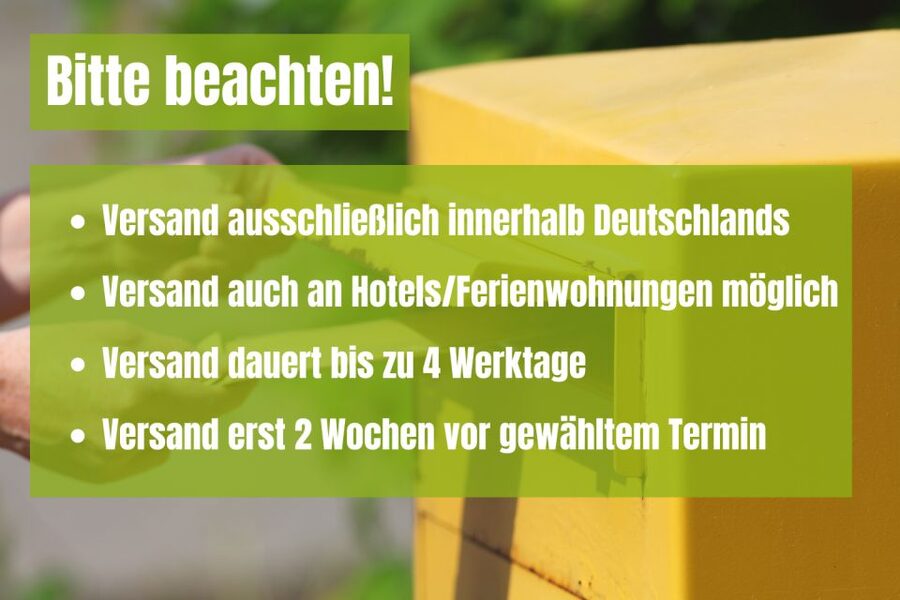
This tour is light on day-of logistics because there’s no meeting with a guide. But it is heavy on one thing: the scavenger hunt box arrives by shipping, and you need it to play. Shipping is estimated around 4 working days within Germany, and it’s shipped at the earliest about 2 weeks before your selected date. There’s also no option to pick up the box in Hamburg.
So if you’re a last-minute planner, this can feel a bit different from an instant-phone-booking tour. The practical move is to order far enough ahead that the box arrives before you want to start.
Also, because it’s a self-guided city hunt, you rely on what you can see around you. In one instance, clue hint signage was not present in the way expected, and the solution was simply to use a phone to keep going. Pack a charged phone and keep maps/data handy.
Who this suits best (and who might want a different format)
This is great for you if you:
- want major sights without babysitting a schedule
- prefer learning through short prompts rather than long lectures
- like flexible walking (pause for photos, linger, then continue)
- enjoy puzzle-style activity, even if you’re not a hardcore gamer
It can also work well across ages, including kids and adults together, because you can take the game at your own tempo and read the background info at each station.
If you strongly want specific sights that are not part of this route, you might feel like something is missing. One example that came up is that the Michel and the Landungsbrücken were not included in the hunt route as people experienced it. If those are absolute must-dos for you, treat this as a great Hamburg city-centre overview and plan your additional hits separately.
So, should you book it?
Yes, I’d book it if your ideal Hamburg day looks like this: walk the city centre, stop often, learn a bit at every corner, and keep control of your timing. The group-up-to-10 pricing makes it especially easy to justify, and the envelope format keeps the day active without forcing constant movement.
Skip it (or at least reconsider) if you’re traveling so tightly scheduled that you cannot wait for a mailed box, or if you need a guide to handle navigation and explanations in real time. Since there’s no tour guide, the experience depends on you being comfortable reading clues and using a phone if something doesn’t match the directions perfectly.
FAQ
How long does the Hamburg City scavenger hunt take?
The duration is listed as 270 minutes.
Is there a tour guide with the scavenger hunt?
No. This is self-guided, so there is no tour-guide at the meeting point.
What’s included in the Hamburg City game box?
You get the scavenger hunt box with shipping, 16 sealed envelopes with riddles, directions, information, and interesting facts, plus an emergency envelope with all solutions.
Can I start whenever I want?
You can start on any date and at any time you wish. The duration is 270 minutes, and you can check availability to see starting times.
Do I have to visit a specific meeting point with a guide?
You’ll start at the meeting point where your scavenger hunt begins, but there won’t be a guide there. You just bring the game box and follow the instructions.
What should I bring, and is food or transportation included?
Bring comfortable shoes and the game box. Food and beverages, entrance fees, and transportation tickets are not included.