REVIEW · NAGASAKI
Discover Stunning Nagasaki: Self-Guided Audio Tour
Book on Viator →Operated by Citywalksz Ltd · Bookable on Viator
Nagasaki hits hard, then helps you walk it out. This self-guided audio route turns major historic sites into a paced conversation—headphones on, GPS map out, and you decide how long to stay at each stop. I like that it’s built for wandering rather than rushing, with audio files and a GPS map to keep you moving.
What I really like is the stop order: it quietly takes you from Glover Garden into the city’s older layers of trade and faith, then ends at the Peace Park where the meaning becomes clear. One practical drawback to consider: the experience depends on downloading, and if links don’t behave nicely on your phone, you may need a bit of patience to find the files and get the audio running smoothly.
Key highlights worth knowing
- Glover Garden in Thomas Glover’s shadow: a Scottish entrepreneur linked to early industry and the story behind Gunkanjima (Battleship Island)
- Oura Church at the foot of the garden: a French Jesuit-built Catholic church that’s thought to be Japan’s oldest
- Dejima and Sakoku context: an artificial trading island built in 1634 to allow foreign trade while keeping Japan isolated
- Museum time when you want it: an on-demand context boost with a collection of nearly 50,000 items
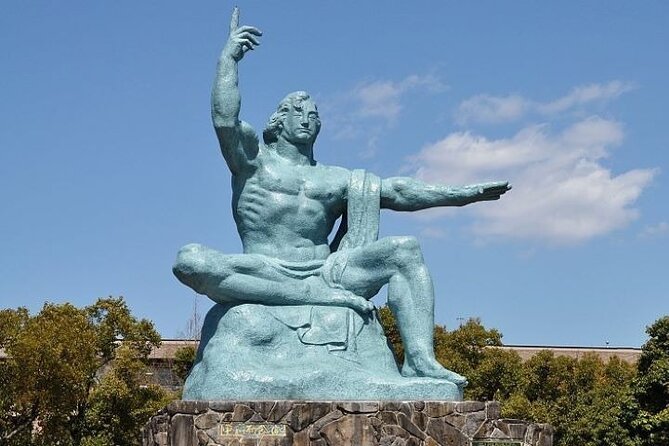
- Peace Park near the hypocenter: designed as a plea for world peace and hope for never-again warfare
In This Review
- Why This Nagasaki Audio Walk Works
- Start at Glover Garden: Thomas Glover and an Easy First Step
- Catholic Oura Church: Old Faith, Clear Location
- Dejima: Trading Under National Isolation
- Nagasaki Museum of History and Culture: Your Context Button
- Sofukuji Temple: Ming-Dynasty Architecture Without the Guesswork
- Nagasaki Peace Park: Turning Tragedy into Hope
- Price and Value: $15.29 for a Self-Paced Meaning Machine
- How to Make the Download Behave on Your Phone
- Timing, Fitness, and Group Size in Real Life
- Who Should Book This Self-Guided Nagasaki Audio Tour
- Should You Book This Audio Tour?
- FAQ
- What is the duration of the Nagasaki self-guided audio tour?
- How much does the tour cost?
- Where does the tour start and where does it end?
- Is the tour self-paced, and do I need to follow a schedule?
- What language is available?
- Are admission fees included for the stops?
- Do I need to bring my own audio device?
- What is the cancellation policy?
Why This Nagasaki Audio Walk Works
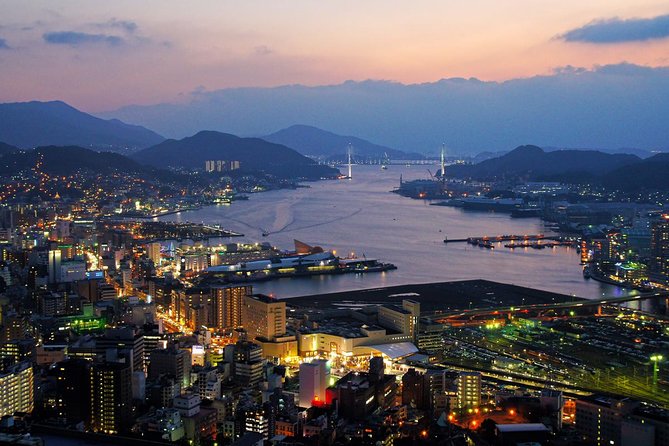
This is the kind of tour that fits a city like Nagasaki. You’ll be moving on foot through very different places—gardens and churches, an island of trading history, temples, a museum, then the Peace Park—so having audio that follows your pace is a big deal.
I also like the way the route is structured like a guided storyline, not just a list of landmarks. Even without a live guide, the audio approach helps you connect the dots between foreign presence, isolation, and what came after the atomic bomb.
One more point: this is not a quick-hit sightseeing loop. It’s listed at about 2–3 hours, and that’s realistic if you pause at each stop rather than treating everything as a photo-op.
Start at Glover Garden: Thomas Glover and an Easy First Step
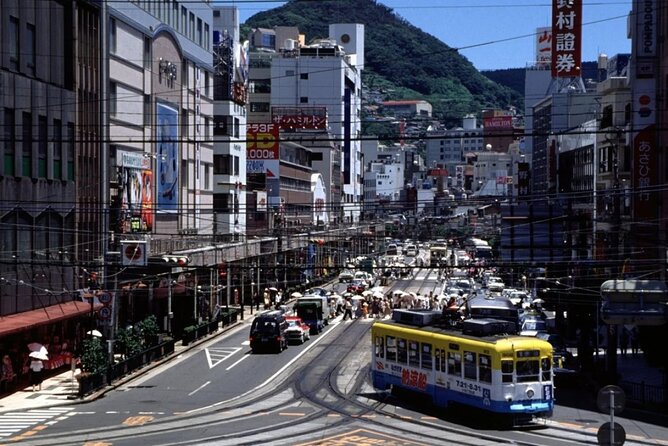
Your walk begins at Glover Garden (8-1 Minamiyamatemachi, Nagasaki). It’s a gentle entry point—serene garden space that doesn’t feel like a museum hallway—while still tying directly into Nagasaki’s global connections.
The audio focuses on Thomas Glover, a Scottish entrepreneur who came to Japan at 21 and never left. It also links him to wider industrial history, including opening up a mining island called Gunkanjima, also known as Battleship Island. If you’re the type who likes your historic sites with a person behind them, this stop is your hook.
Practical note: admission is listed as free for Glover Garden here, and the stop time is about 15 minutes. In real life, you can comfortably spend more if you want extra views, but I’d treat the first audio segment as your anchor so you don’t lose the thread.
A small consideration: gardens tempt you to slow down. That’s not bad, but if you only have a short window in Nagasaki, keep an eye on time so you still reach Dejima and the Peace Park.
Catholic Oura Church: Old Faith, Clear Location
Next you head down to Catholic Oura Church at the bottom of Glover Garden. This is one of those places where the context matters more than the architecture trivia, and the audio gives you that grounding.
You’ll learn it was built by French Jesuits and is thought to be the oldest Catholic church in Japan. For many people, this is where Nagasaki starts to feel like a crossroads city—religious ties arriving alongside trade.
Admission isn’t included for this stop, and the suggested stop time is about 15 minutes. If you’d rather not pay, you can still get meaning from the exterior and then carry on, but the audio is built to match the experience of actually being there.
Dejima: Trading Under National Isolation
Then comes Dejima, and this stop is where the story shifts into one of Japan’s most famous policy eras: Sakoku, the period of national isolation.
Dejima here is explained as a major place during Sakoku. The key detail: the artificial island was built in 1634 by local merchants so foreign traders could conduct business while Japan stayed closed in other ways. It’s a sharp contrast to the open, international vibe people often associate with Nagasaki.
Admission is listed as free for this stop, with another 15 minutes suggested. That’s enough time to orient yourself, listen to the audio segment, and understand why Dejima mattered.
My advice: take Dejima seriously even if you’re tired. It’s an efficient history lesson. When you get to later sites, you’ll feel less like you’re hopping between unrelated attractions.
Nagasaki Museum of History and Culture: Your Context Button
If you want more background, you’ll appreciate the Nagasaki Museum of History and Culture stop. It’s built for when your curiosity goes beyond what you can learn from plaques.
The tour notes the museum shows items connected to Nagasaki’s culture and heritage—nearly 50,000 items—and calls it one of the most extensive and informative in Japan. That’s your clue: this isn’t just for quick looks. If you’re the kind of person who loves details, you can make this the place where your trip becomes more than a walk.
Admission isn’t included here, and the suggested stop time is about 15 minutes. That time can work if you follow the audio closely, but if you want to actually browse, you may need more time than the tour’s plan allows.
If you’re short on time, focus on whatever part the audio tells you to seek out. You’ll get the context you need without turning your afternoon into a museum marathon.
Sofukuji Temple: Ming-Dynasty Architecture Without the Guesswork
Next up is Sofukuji Temple. Even though it’s described as a Chinese temple, it’s presented as one of the best maintained examples of Ming Dynasty architecture.
The audio gives you a neat angle: it’s not just a temple, but a kind of preserved architectural example of Chinese temple design—so you’re not only learning about Japan’s religious landscape, you’re seeing how Chinese influence shows up in physical form.
Admission isn’t included for this stop, and again the suggested time is about 15 minutes. This stop can feel quiet and reflective, but it’s also practical: it breaks the pace between larger, more public sites like Dejima and the Peace Park.
My one caution: temples require a little attention. If you’re rushing or multitasking, you’ll miss what makes this stop special. Even a short listen to the audio here helps you see what you might otherwise treat as background scenery.
Nagasaki Peace Park: Turning Tragedy into Hope
Finally, you’ll reach Nagasaki Peace Park, ending around Matsuyamamachi (9 Matsuyamamachi, Nagasaki, 852-8118, Japan). This is the part of the route that carries the emotional weight.
The tour explains that the Peace Park is built north of the hypocenter of the atomic bomb blast. That location detail matters, because it keeps the park from feeling like generic symbolism—it’s tied directly to where the event’s impact centers.
The audio also stresses the design purpose: the park is meant as a plea for world peace and hope that there will never be another war. If you’re unsure how to connect emotionally to a place like this, the audio’s framing helps you focus on the why, not just the what.
Admission is listed as free here, and the suggested stop time is about 15 minutes. I’d treat that as a minimum, not a maximum. Even if you can’t stay long, give yourself at least enough time to absorb the message the space is built to deliver.
Price and Value: $15.29 for a Self-Paced Meaning Machine
At $15.29 per person, this tour isn’t expensive in tourist terms, especially because you’re paying for the audio experience plus the GPS map and not for a live guide. The tour also covers a route with multiple stops that don’t require admissions according to the details provided (like Glover Garden and Dejima, plus Peace Park).
Do keep expectations grounded: admission fees are not included for several stops (Oura Church, the museum, and Sofukuji Temple). The total cost of your day will depend on how many of those you choose to enter, which is pretty normal for Nagasaki.
I like that it’s built for 2–3 hours. You’re buying time flexibility. If you’re tired, you can slow down. If you’re on a roll, you can move through quickly. That control is part of what you’re paying for.
Also worth noting: there’s no audio device included, so you’ll want your own phone and headphones. If your battery runs low, you’ll feel it fast, because you can’t just stop and restart like a museum audio booth.
How to Make the Download Behave on Your Phone
This is where you’ll either have a smooth day or a frustrating one.
The tour provides mobile instructions in the ticket’s Before You Go section, and confirmation comes at booking. The format is a mobile ticket with audio files and a GPS map, but it relies on you having the setup ready before you start.
Here’s my practical advice if you don’t want tech drama:
- Download before you leave and do it on Wi-Fi if possible
- Test the audio right after downloading, not while you’re walking
- If links open poorly on your device, be ready to locate audio files manually in your phone’s storage
- Bring a fully charged phone and consider a small power bank, since headphones + GPS can drain battery
One of the clearest issues reported with this kind of tour is clunkiness around opening links or apps after downloading. You can reduce the odds by taking 10 minutes at home to confirm the audio works end-to-end.
Timing, Fitness, and Group Size in Real Life
The tour is designed for a moderate walking day, and the listing indicates a moderate physical fitness level is a good fit. You’re moving between stops that are described as connected (for example, Oura Church is at the bottom of Glover Garden), so the path is part of the experience.
The tour can be booked with a start time listed as 9:00 am, but it’s also described as having no specific starting times because you’re self-guided. Translation: you can still plan your day, as long as your audio is downloaded and your phone is ready.
Group size is capped at 15 travelers, but since this is self-guided, that limit mainly matters for overall capacity and support rather than forcing you into a big crowd. In practice, you’ll experience it as solo walking with a shared destination.
You’ll also be happy to know it’s near public transportation, which helps if you decide to hop in and out of the route rather than commit to every single segment.
Who Should Book This Self-Guided Nagasaki Audio Tour
This tour is a strong match if you want:
- A structured walk through key Nagasaki sites without waiting on a group
- A way to learn meaning behind the places through narration and GPS guidance
- Control over pacing, especially at Peace Park where you might need extra quiet time
I’d also say it works especially well for solo travelers, couples, and anyone who prefers reading listen-and-go instead of standing in one spot for explanations.
On the other hand, if your phone is picky about downloads or you hate tech setup while traveling, you’ll want to be extra careful. This experience rewards preparation.
Finally, it’s English only, so if you need another language, you’ll need to plan differently.
Should You Book This Audio Tour?
Book it if you want a meaningful walking route from Glover Garden through trade history and cultural sites, ending at Peace Park, with the freedom to pause when you need a moment. At $15.29, the value makes sense because admissions are mostly separate and you’re paying mainly for the audio + GPS structure.
Skip—or at least think twice—if you’re likely to rush your tech setup. The experience depends on downloading, and if links don’t open as expected, you may spend time troubleshooting. Do the download test at home and you’ll turn this into an easy, powerful day.
If you’re ready to walk with headphones and let Nagasaki tell its story in your own rhythm, this is a solid way to do it.
FAQ
What is the duration of the Nagasaki self-guided audio tour?
The tour is listed as approximately 2 to 3 hours.
How much does the tour cost?
It costs $15.29 per person.
Where does the tour start and where does it end?
The tour starts at Glover Garden (8-1 Minamiyamatemachi, Nagasaki) and ends at Peace Park Nagasaki (9 Matsuyamamachi, Nagasaki).
Is the tour self-paced, and do I need to follow a schedule?
Yes, it’s self-paced. You choose your own starting and ending points according to your schedule, and there are no specific starting times required once you begin.
What language is available?
The tour is available only in English.
Are admission fees included for the stops?
Admission fees are not included. Some stops are listed as free, but places like Oura Church, the Nagasaki Museum of History and Culture, and Sofukuji Temple are not included.
Do I need to bring my own audio device?
Yes. The tour notes that an audio device is not included, so you’ll use your own phone and headphones.
What is the cancellation policy?
You can cancel for a full refund if you cancel up to 24 hours in advance of the experience’s start time.