REVIEW · CORDOBA
City of Caliphs: A Self-Guided Walking Tour of Córdoba’s History
Book on Viator →Operated by VoiceMap Audio Tours · Bookable on Viator
Cordoba can feel endless unless you have a plan. This self-guided English audio tour turns the big sights into an easy walk, and I like how the offline maps and audio help you keep going without hunting for Wi‑Fi. Another plus: the stop/start pacing is built for real streets and photo breaks. One thing to watch: you’ll need your own smartphone and headphones to use it, and starting at a later spot can take a moment to get right if you want to jump in.
This is a 3 to 3.5 hour loop from the Torre de la Calahorra area and back again, so it’s long enough to feel like you covered something meaningful, but not so long you’ll lose your legs. The route is designed around Córdoba’s contrasts: monumental sites, quiet courtyards, and small street scenes that you could easily miss on your own.
You’ll also get lifetime access, which matters if you’re the type who likes to re-walk places after the first wow-factor settles. You’ll see everything from the Mosque-Cathedral viewpoint to Roman leftovers, Sephardic/Jewish heritage spots, medieval houses, old baths, and a run of famous plazas.
In This Review
- Key things to know before you start
- Why this Córdoba audio loop works (and doesn’t feel like a chore)
- From Torre de la Calahorra to the Mosque-Cathedral viewpoint
- The Roman Bridge, the river views, and Calahorra Tower energy
- Roman traces at the Roman Temple
- Patios, Calleja de las Flores, and the Orange Tree Courtyard
- San Basilio streets and the Episcopal Palace’s message
- Synagogue of Córdoba and the House of Sefarad: Jewish and Sephardic legacy
- Casa Andalusí and Caliphal Baths, plus Mudéjar at Saint Bartholomew Chapel
- Castle of the Christian Monarchs and the Royal Stables for a time-jump
- Bell Tower chimes, a tower-and-bridge connection, and an optional museum
- Plaza del Potro, Plaza de la Corredera, and Plaza de las Tendillas
- Price and pacing: what $11.99 gets you in real value
- Who this walking audio tour suits best
- Should you book this City of Caliphs walking audio tour?
- FAQ
- Is this tour available in English?
- How long does the self-guided walk take?
- Where do I start and where does it end?
- Do I need my own smartphone and headphones?
- Does the tour work offline?
- Is transportation or food included?
- Is this a private experience?
- What if I want to visit the Archaeological Museum?
- What’s the cancellation policy?
Key things to know before you start
- Offline audio, maps, and geodata mean fewer detours and less stress mid-walk
- GPS-linked stop/start keeps the narration aligned with where you are
- Lifetime access in English is great if Córdoba pulls you back for a second pass
- A high-density route hits major landmarks plus courtyards and alleys without needing a guide in person
- The walk includes an optional Archaeological Museum stop if you want to trade streets for artifacts
Why this Córdoba audio loop works (and doesn’t feel like a chore)
The best walking tours are the ones that act like a good friend: they point you toward what matters, then let you set the pace. This one is built for self-guided walking, so you can slow down for stairs, linger at a patio gate, or spend extra time at a viewpoint without feeling behind.
The route is also smart because it mixes scales. You start with a major landmark, then move quickly into the older fabric of the city: Roman traces, slim lanes, courtyards, and the kinds of small architectural details you’d miss if you were only chasing the headline attractions.
And because it’s English and available as an app for Android and iOS, you’re not stuck with timing windows for a spoken tour. This is especially useful in Córdoba, where light and shadows can change how a place feels in minutes.
You can also read our reviews of more tours and experiences in Cordoba.
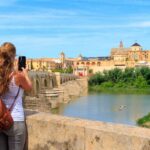

From Torre de la Calahorra to the Mosque-Cathedral viewpoint
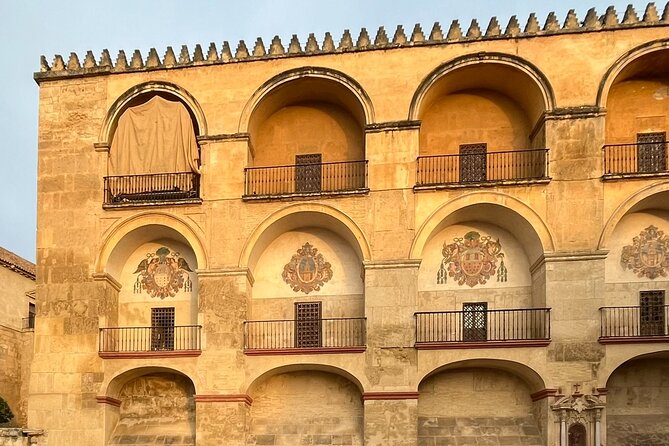
You begin near the Torre de la Calahorra and Puente Romano area, which is a handy starting point because the river-and-bridge zone is one of Córdoba’s most photogenic approaches. From there, the tour guides you toward the Mosque-Cathedral viewpoint, where Islamic and Christian layers show up in the same view.
If you’ve never stood in front of this kind of architectural mashup, don’t overthink it. Your job here is to look for rhythm: repeated arches, transitions in space, and how the building’s different eras talk to each other. The audio helps you read what you’re seeing instead of just taking pictures of the obvious.
Why it’s valuable on a self-guided format: you can pause as long as you want. That matters because the Mosque-Cathedral complex isn’t something you can casually “speed through” and still feel like you understand it.
The Roman Bridge, the river views, and Calahorra Tower energy
Next you cross the Roman Bridge of Córdoba, one of those “how is this still here?” structures that makes the whole walk feel older than your day. As you head into the old town, keep an eye on how the river frames the city. The bridge isn’t just a crossing; it’s a moving viewpoint.
The tour then brings you past the Calahorra Tower, a defensive landmark tied to the Roman bridge. Even if you’re not reading every architectural detail, the audio keeps you grounded in the idea that Córdoba’s story runs along these choke points: entrances, crossings, and control of movement.
A practical tip: the bridge area is often windy and bright. Bring sun protection if you’re out midday, and use the audio to slow down enough to actually notice the stonework instead of just looking for the next stop.
Roman traces at the Roman Temple
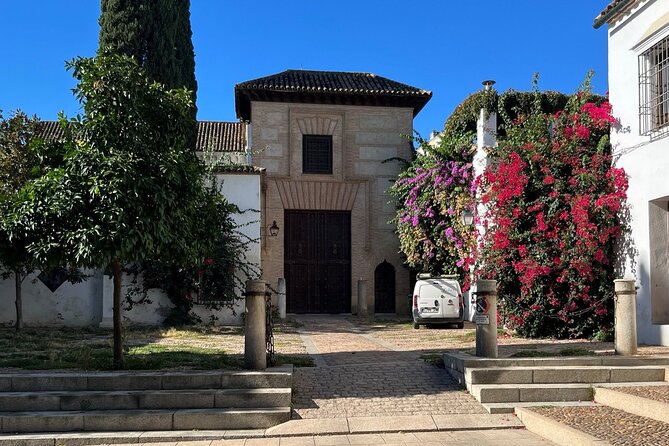
After the bridge, you shift into a smaller, archaeological kind of moment at the Roman Temple site. This is the kind of stop where a map alone can make you wonder what you’re supposed to be seeing.
The audio approach helps because it asks you to picture Roman Córdoba rather than just stare at remnants. You’ll be guided to imagine how the area would have looked in its original context, which is exactly what makes Roman leftovers feel more alive.
On a walking day, I like this kind of stop because it breaks the heavy “monument all the time” rhythm. It gives you a mental rest while still keeping the historical thread going.
Patios, Calleja de las Flores, and the Orange Tree Courtyard
Now the walk turns from stones to scent and color. The tour guides you through Cordoban patios—traditional courtyard spaces known for plants, arrangement, and that “someone actually lives here” feeling. You don’t have to be an architecture nerd to enjoy patios. Just be ready to look down, not only forward: the details are in the layout.
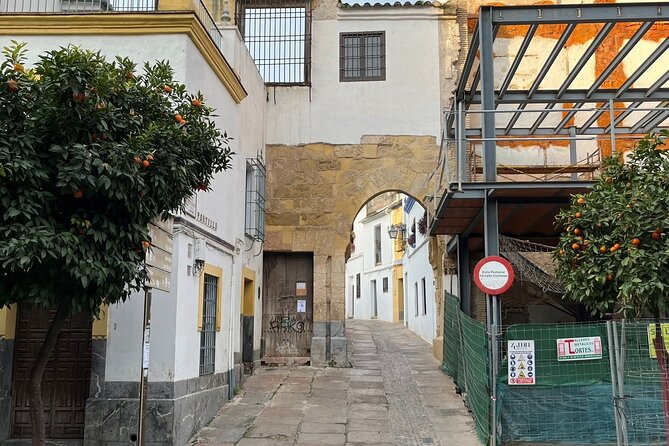
Then you head to Calleja de las Flores, a flower-lined alley that’s built for postcard moments. It’s narrow, so the audio timing matters. If you rush, you’ll miss the small turns and the way the street bends light onto walls.
After that, the Orange Tree Courtyard gives you a calmer pause inside the Mosque-Cathedral complex. The focus here is symmetry and the simple power of a contained space. The fragrant citrus trees aren’t just decorative; they change the whole atmosphere of the stop.
If you want an easy win: take ten slow steps, not fifty fast ones. Patios and courtyards reward that mindset, and the audio lets you do it without guessing where you are in the story.
San Basilio streets and the Episcopal Palace’s message
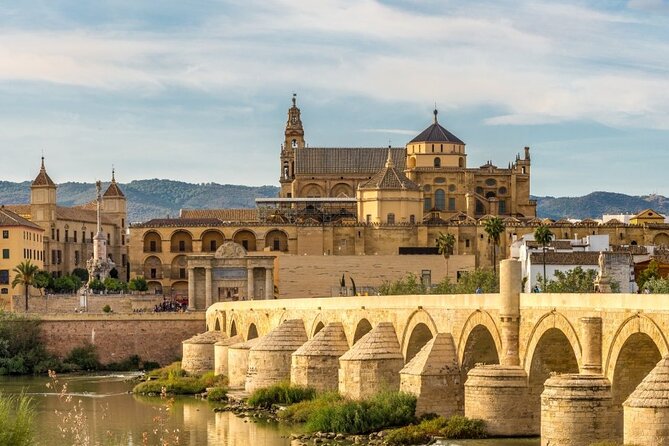
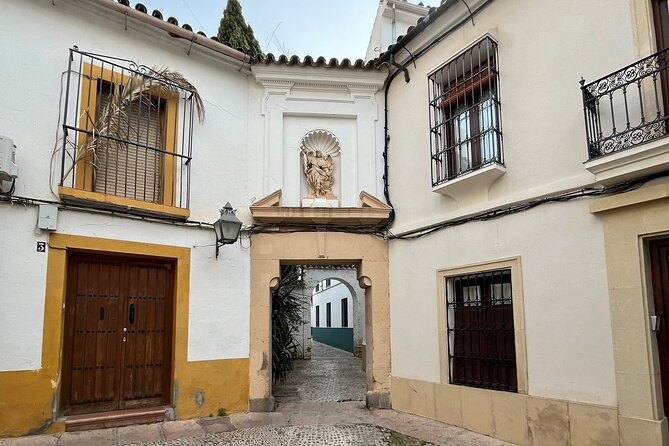
Next you wander through San Basilio, with its winding streets and whitewashed buildings. This neighborhood stop is valuable because it reminds you Córdoba isn’t only museums and monuments. It’s still a lived-in city.
San Basilio also helps you understand the city’s “in-between” spaces—alleyways, turns, and small squares where you can feel the human scale. This is where the walk becomes more than a list of stops.
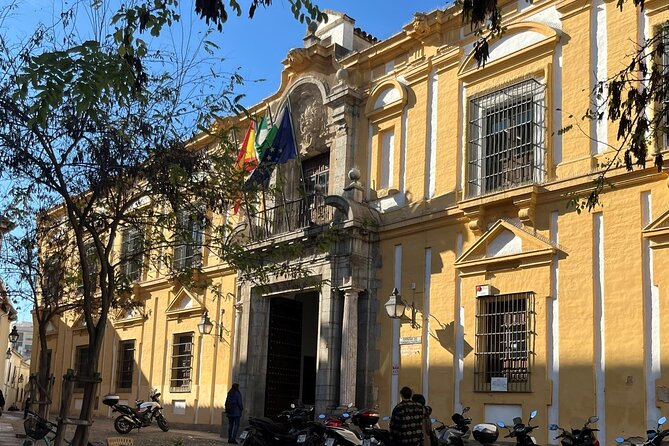
From there, you reach the Episcopal Palace area. This is the moment for grandeur and authority in architecture. The audio helps you notice the intricate details and understand why the palace mattered as a symbol of ecclesiastical power—so it’s not just pretty walls.
Synagogue of Córdoba and the House of Sefarad: Jewish and Sephardic legacy
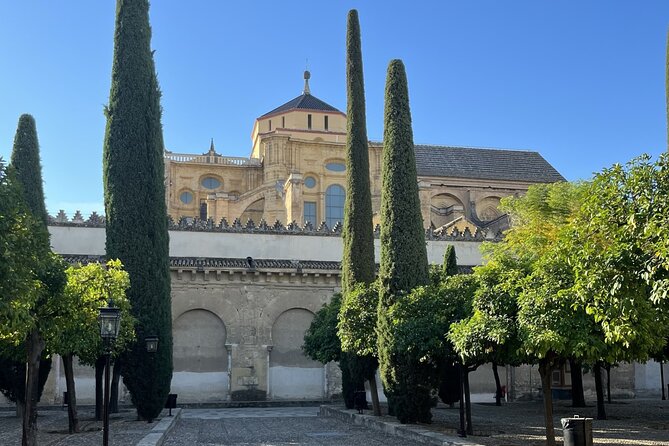
Córdoba’s multicultural past is one of the reasons people fall for the city, and this tour keeps that thread clear. You visit the historic Córdoba Synagogue, then move to the House of Sefarad, a museum dedicated to preserving Sephardic Jewish heritage.
What makes these stops work in a self-guided audio format is that the narration can guide your attention to what you’re looking at—architecture, purpose, and preservation—without needing a live docent. You’ll have the chance to absorb the feeling of the places rather than rushing through facts.
If you care about seeing how cultures survive time, this is a strong portion of the route. It connects the physical site to lived identity, traditions, and contributions tied to Córdoba.
Casa Andalusí and Caliphal Baths, plus Mudéjar at Saint Bartholomew Chapel
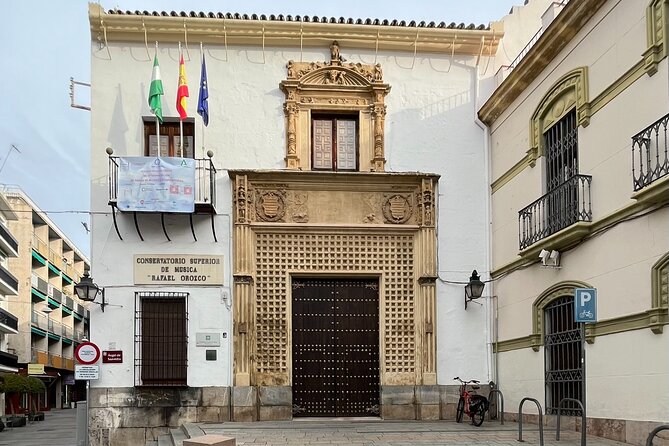
The walk then shifts into everyday domestic and public-life architecture.
Casa Andalusí is a restored medieval house that offers a look at Andalusian design and lifestyle. Expect a layout you can “read” step by step: corridors, rooms, and the way light and movement shape the experience. In a walking tour, this kind of stop is a nice change from outdoor-only landmarks.
Then comes the Caliphal Baths, an Arab bath complex known for arches and intricate tilework. This is where you’ll likely slow down, because tile and arch patterns are made to be noticed slowly. The audio framing helps you understand the baths as a place for relaxation and rejuvenation, not just decoration.
Finally, you pass the Saint Bartholomew Chapel, a Mudéjar example where Islamic and Christian influences blend. This is a good closing note to the mid-walk theme: Córdoba’s story isn’t a straight line. It’s layered.
Castle of the Christian Monarchs and the Royal Stables for a time-jump
At the Castle of the Christian Monarchs, the tour takes you into a fortress-shaped chapter of Córdoba. The key idea is the shift from earlier Caliphal palace origins to later Christian rulers, with darker historical associations tied to the Spanish Inquisition.
Even if you’re not planning to memorize every date, focus on how the building functions: a stronghold, a residence, a power symbol. The audio helps connect those roles so the castle doesn’t feel like an isolated structure.
Next you reach the Royal Stables, where Andalusian horses have been bred and trained for centuries. This stop adds a living, practical side to the city’s identity. Horses and horsemanship aren’t just folklore here; they’re part of how the region projects heritage.
If you’re visiting with limited time and you’re debating whether to include stables-type sights, this is one of the better ones to take by audio, because the narration can give meaning to what you’re seeing without asking you to run between rooms.
Bell Tower chimes, a tower-and-bridge connection, and an optional museum
As you continue, the tour loops you past the Calahorra Tower again, reinforcing its connection to the Roman Bridge. You also encounter the Bell Tower of Córdoba, described as an architectural masterpiece with chimes you can hear across the historic centre.
That combination—sound plus stone—matters more than you might think. A bell tower changes how you time your walking. It also anchors the route in the city’s daily rhythm.
There’s also an optional Archaeological Museum stop. If you want to turn up the volume on artifacts and supporting context, it’s a logical add-on. If you’d rather keep moving through street-level scenes, you can skip it and still finish the loop feeling like you covered the essentials.
Plaza del Potro, Plaza de la Corredera, and Plaza de las Tendillas
The tour rounds out with classic squares, and that’s a smart move. Big plazas help you reset your senses: wide space, benches, cafes, and the feeling that you’ve arrived back in the social core of the city.
Plaza del Potro is a charming square that has inspired artists and writers for centuries. It’s the kind of stop where slowing down pays off. Look around instead of only at the center, because the edges hold details too.
Plaza de la Corredera is one of the city’s iconic squares, known for its strong architecture and energetic market-and-cafe atmosphere. Again, use the audio when you need context, then let the square do its job.
Finally, Plaza de las Tendillas gives you a commercial district feel with elegant buildings and street activity. Even if you don’t plan to shop, it’s a useful “end cap” because it brings you from monuments back into everyday movement.
Price and pacing: what $11.99 gets you in real value
At $11.99 per person and with lifetime access, this tour is priced like a low-risk way to guide your day. You’re not paying for a full-day ticket to a single attraction; you’re paying for a route that connects many stops into one coherent walk.
The best value here is the practical side: offline audio, maps, and geodata. That saves time and stress in a city where it’s easy to waste an hour wandering the wrong way. When you can’t find the right entrance or you step off-route, the GPS-linked audio helps you rejoin the path.
The trade-off is simple: you provide the phone and headphones. If you arrive with a dead battery or no headphones, you’ll lose the whole point. This is also why I suggest charging before you go and bringing a small external battery if you can.
The tour’s duration—about 3 to 3.5 hours—fits well as either your first big sightseeing block or a late-morning starter before you branch off on your own.
Who this walking audio tour suits best
This is ideal if you want history that you can control. You’ll like it if you enjoy self-paced wandering and you don’t want to be stuck listening to a group schedule.
It’s also a good pick if you want an easy first introduction to Córdoba’s main layers: Roman, Islamic, Jewish, and Christian. The route moves through all those themes without requiring you to book multiple guided tours.
If you hate apps in new places, or you prefer a live guide to answer questions on the spot, you might find the self-guided format less satisfying. Still, the audio structure can be a comfort rather than a burden if you use it like a companion, not a boss.
Should you book this City of Caliphs walking audio tour?
I’d book it if you want a clear, high-value route that keeps you oriented and teaches you what you’re looking at across Córdoba’s biggest eras. The price is low enough that you can treat it as the skeleton of your day, then fill in with your own discoveries.
I’d skip it only if you’re coming with limited battery life, no headphones, or you prefer a live person to manage your stops. Otherwise, this is one of the smarter ways to spend a half-day in Córdoba—especially because it balances monuments with courtyards, alleys, and squares.
FAQ
Is this tour available in English?
Yes. The audio tour is offered in English.
How long does the self-guided walk take?
It typically takes about 3 hours to 3 hours 30 minutes.
Where do I start and where does it end?
You start at Torre de la Calahorra Puente Romano, s/n, Sur, 14009 Córdoba, Spain, and the activity ends back at the meeting point.
Do I need my own smartphone and headphones?
Yes. A smartphone and headphones are not included, but the tour includes an app for Android and iOS.
Does the tour work offline?
Yes. It includes offline access to audio, maps, and geodata.
Is transportation or food included?
No. Transportation and food and drink are not included.
Is this a private experience?
Yes. It’s private, so only your group will participate.
What if I want to visit the Archaeological Museum?
The Archaeological Museum stop is optional, so you can choose whether to add it during your walk.
What’s the cancellation policy?
You can cancel for a full refund if you cancel at least 24 hours before the experience starts. If you cancel within 24 hours, the amount paid is not refunded.