REVIEW · CASTEL SANT ANGELO
Castel Sant’Angelo Skip-the-Line Entry & Optional Audioguide
Book on GetYourGuide →Operated by Loving Rome · Bookable on GetYourGuide
Castel Sant’Angelo is Rome’s stairs with payoff. You get skip-the-line entry that saves serious time at the ticket desks, and you end with panoramic views that stretch from the Vatican area to the Tiber and the Bridge of Angels. It’s a museum that keeps changing skins as the centuries roll by.
I like how the visit is set up for a quick but satisfying self-paced loop: you walk through the mausoleum, then the fortress era, then the papal residence rooms and themed spaces. The main drawback is physical: you’ll climb a series of stairs to reach the terrace, and it’s not suitable for wheelchair users.
In This Review
- Key things to know before you go
- Skip-the-line at Castel Sant’Angelo: what you’re really buying
- Finding the entrance and getting your ticket scanned fast
- Five floors and a spiral ramp: the self-guided route
- From mausoleum to fortress: what you see as you enter
- Cells and rooms tied to papal life
- The chamber of ashes and preserved frescoes
- The roof terrace: where the visit actually lands
- The art (Renaissance and Baroque) and why it fits here
- Roof-terrace views: Vatican City, the Tiber, and Bridge of Angels
- How the audio guide works (and when to spend the extra)
- What’s included vs not included (so you don’t get surprised)
- Price and value for $15: worth it, if you play it right
- Quick practical tips so you don’t waste time
- Who this ticket suits best
- Should you book Castel Sant’Angelo skip-the-line entry?
- FAQ
- Is a guided tour included with this ticket?
- Do I get the audio guide automatically?
- What languages are available for the audio guide?
- What do I need to bring for the visit?
- Are headsets included?
- Is this visit suitable for wheelchair users?
Key things to know before you go
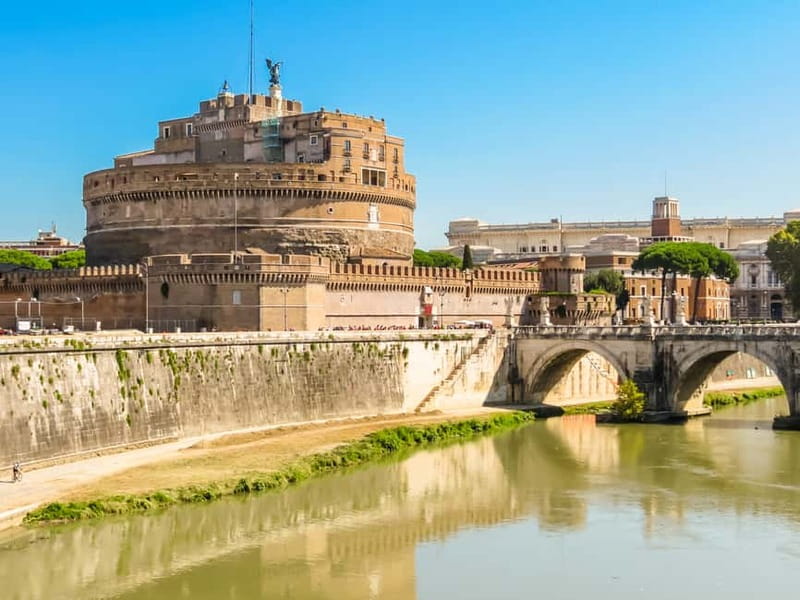
- Real time-saver: a skip-the-line entry ticket helps you avoid the long ticket queues at the main entrance.
- Big views reward the climb: the roof terrace is the finish line, with sweeping Rome sights like the Vatican City area and Bridge of Angels.
- You’ll move through the building’s eras: from monumental tomb origins to medieval fortress roles and papal-era spaces.
- Audio guide if you want it: the optional digital audio guide is available in English, French, Italian, Chinese, German, and Spanish.
- No headsets included: you’ll want your own headphones, plus a charged smartphone and internet for the audio/app experience.
Skip-the-line at Castel Sant’Angelo: what you’re really buying
For $15 per person, you’re not paying for a full guided tour with a live lecturer. You’re paying for a very specific advantage in Rome: time saved. Castel Sant’Angelo can feel like three sites in one—mausoleum, fortress, and museum—and when a day is packed, skipping the extra waiting is a real win.
What makes this ticket feel like good value is how compact the experience is once you’re inside. Many visitors treat it like a focused visit: walk the floors, follow the route, pause for photos, and end at the terrace. If you’re the type who likes to wander at your own pace but still wants context, this format fits well.
That self-guided style is also the trade-off. If you crave a guided tour where someone answers questions on the spot, this won’t replace that. But if you want to show up, get in, and explore efficiently, you’ll likely appreciate how direct it is.
Finding the entrance and getting your ticket scanned fast
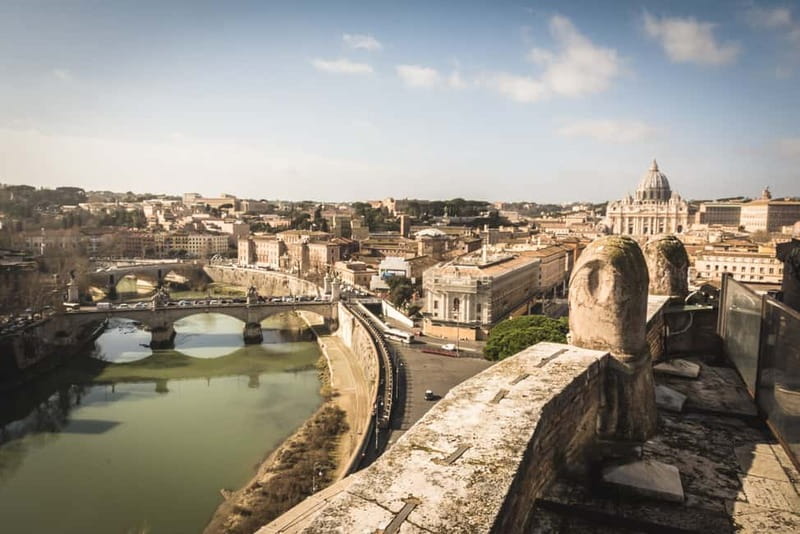
The meeting point is simply the address of the attraction, and the instruction is to go straight to the main entrance. When you arrive, you’ll show your emailed ticket plus a valid ID. Your tickets are delivered by email within 24 hours prior to the activity, so don’t wait until the last minute to check your inbox.
One detail that matters: you need your smartphone ready. You must download the application before the tour begins, and you’ll receive the app download details by mail. Also have the basics covered—charged phone, headphones, and internet access.
A couple of practical notes:
- Bring comfortable shoes. Expect walking, plus stairs.
- There’s no staff assistance at the entrance included, so plan to handle your own scan and setup.
- Headsets are not included. The attraction requests that you bring headphones, so bring your own.
If you get the chance to connect with staff at the gate for help setting up the audio guide app, that can make the first few minutes easier. One name that came up in the feedback was Adrian, who helped visitors with getting the audio guide up and running on their phones. You may or may not meet someone by name, but it’s a good reminder that a little tech setup time can help your visit go smoother.
Five floors and a spiral ramp: the self-guided route
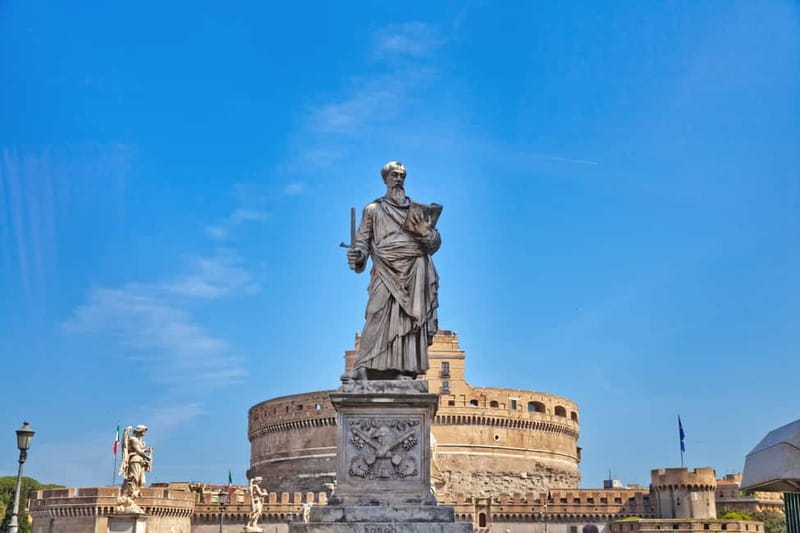
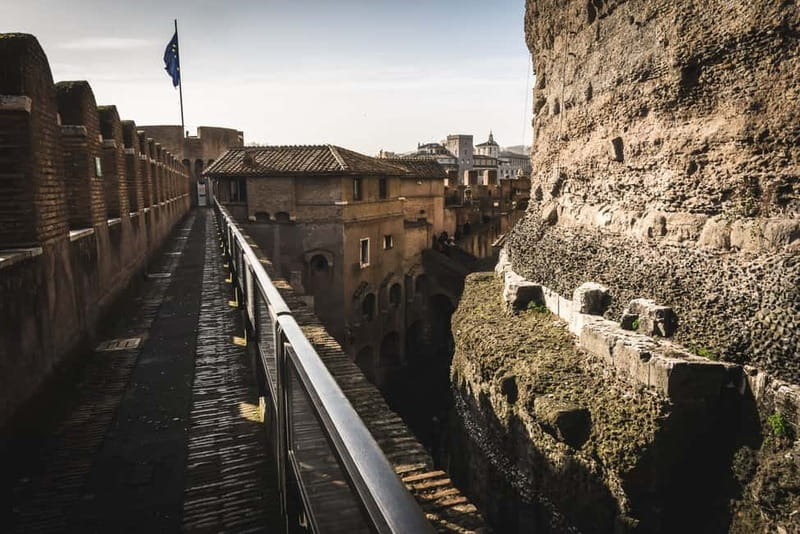
Inside, the route is built to help you understand how the building changed over time. You’ll move across five floors, and the flow guides you toward a spiral ramp. That spiral ramp isn’t just architecture—it’s a practical way to pace your visit. You get upward movement without feeling like you’re zig-zagging across the museum.
Even if you don’t buy the audio guide, the spaces themselves do the storytelling. If you do add the audio, you’ll get extra context as you move from one era to another. Either way, the building is designed for a route, so you’re less likely to feel lost.
From mausoleum to fortress: what you see as you enter
Castel Sant’Angelo was originally erected as a monumental tomb. Later, it became a fortress in medieval times and even served roles connected to defense during periods of invasion and conflict. Walking through, you can sense that shift in the feel of the rooms and spaces—this isn’t just a display case museum. It’s a building that had to work hard.
This is one of the reasons I think people love the place even when they go “for views.” The views are great, but the bigger payoff is how quickly your eye understands the structure’s past functions.
Cells and rooms tied to papal life
As you continue along the itinerary, you’ll reach areas that served as cells and rooms used as a papal residence, plus other themed chambers. This part is where Castel Sant’Angelo becomes more than Roman archaeology. It turns into a lived-in setting—space that mattered to powerful people and institutions.
If you’re into atmosphere, don’t rush this section. The building’s layers are easier to notice when you slow down and look at how each room feels and connects.
One thing to keep in mind: since it’s a self-guided route, your pace is on you. Some rooms may look similar at first glance, especially if you’re moving quickly. A good trick is to pause briefly in the spaces that have strong visual markers and then keep going.
The chamber of ashes and preserved frescoes
The visit also includes a chamber described as a chamber of ashes, where you can marvel at preserved remains of iconic Roman characters, along with frescoes that have been preserved. This is the part that tends to feel most unusual compared with other Roman sites—less straightforward than a temple ruin, more theatrical in how it’s presented.
The frescoes and artwork are an important piece of the experience. Even if you’re not a museum person, the preservation detail helps you understand why the building still has appeal centuries later.
The roof terrace: where the visit actually lands
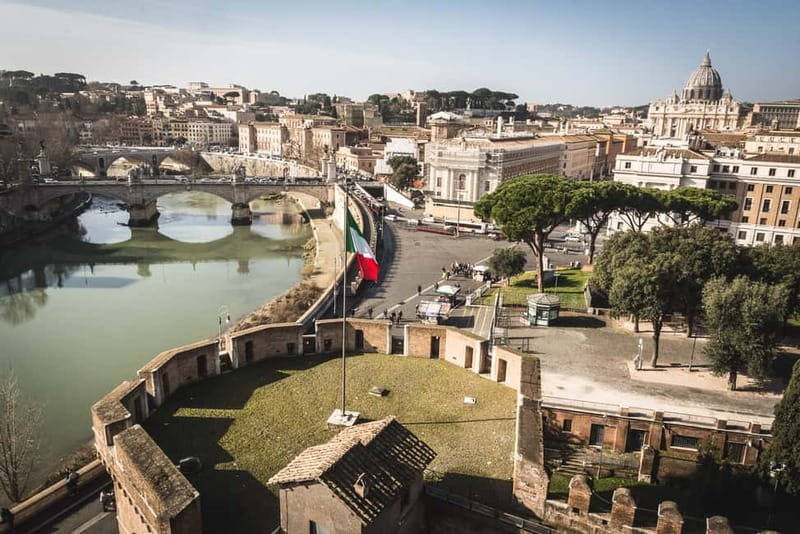
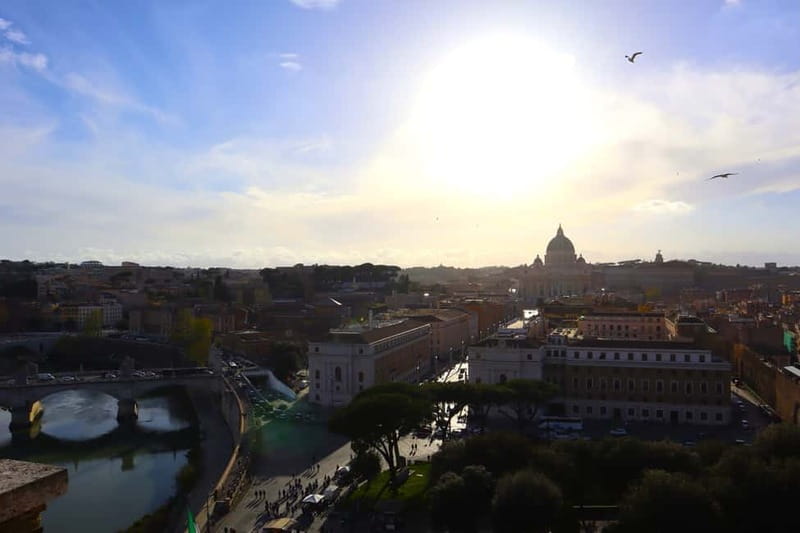
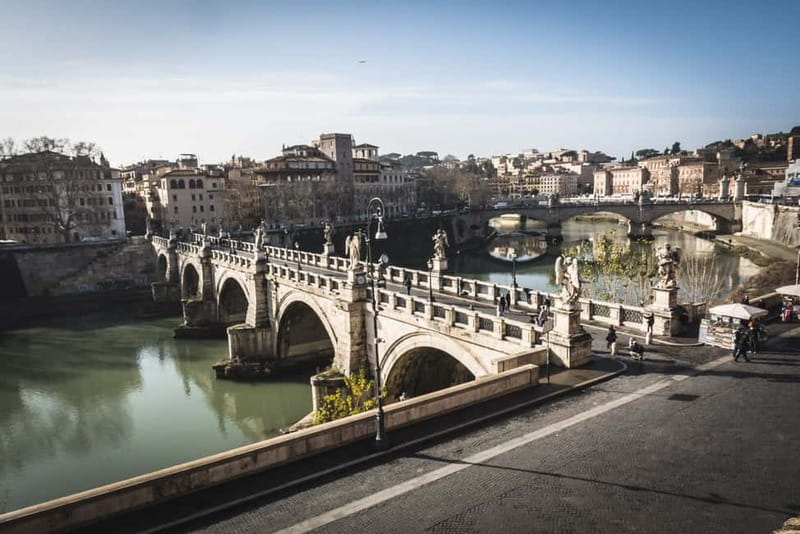
After your museum loop, the final goal is the roof terrace. This is where you earn the effort. You’ll spot standout landmarks including Vatican City, the Tiber River, and the Bridge of Angels.
Plan your timing so you’re not sprinting here. The terrace experience is about looking outward, taking photos, and enjoying the wide-angle feeling of Rome. If you’re photo-focused, arrive ready with water and a phone battery saver plan (the terrace is outdoors and can be very sunny).
Also: there’s a bar/café on the top that’s often mentioned as a nice break point. It’s a useful option if you want a calmer 20–30 minutes after the indoor walking and stairs.
The art (Renaissance and Baroque) and why it fits here
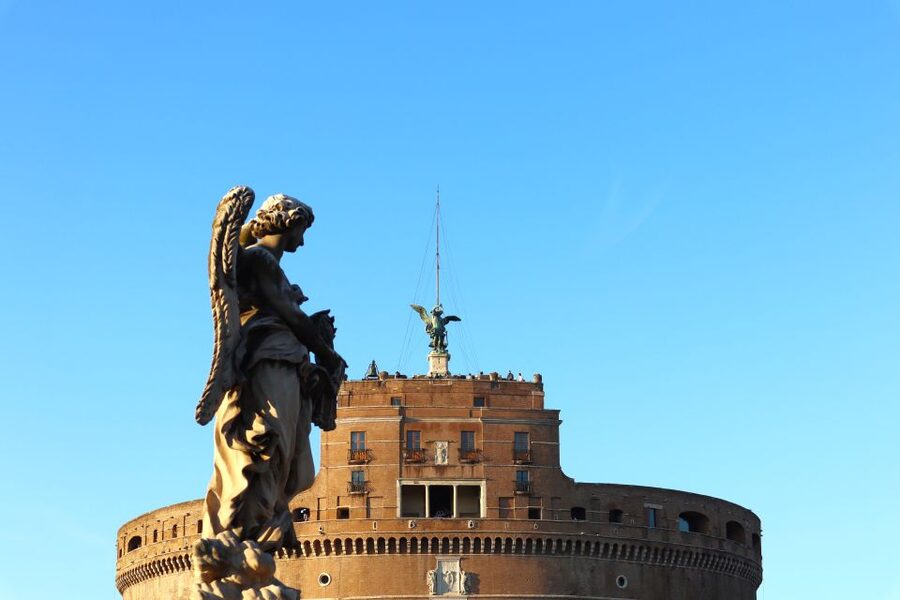
Castel Sant’Angelo isn’t only about medieval walls. You’ll also see a wide variety of Renaissance and Baroque art works and frescoes. In many Roman monuments, the art is the main event, or the ruins are. Here, the art sits inside a layered structure that has already survived a lot.
That combination matters. The art changes your sense of what this place is. Instead of only a defensive shell or ancient tomb, you start to see it as a canvas where later eras made their own mark.
If you like to connect art to setting, this is a strong stop. Walking through frescoed and painted rooms inside a building that once served as a papal residence gives the art extra weight. It also gives you something to do beyond reading labels quickly and moving on.
Roof-terrace views: Vatican City, the Tiber, and Bridge of Angels
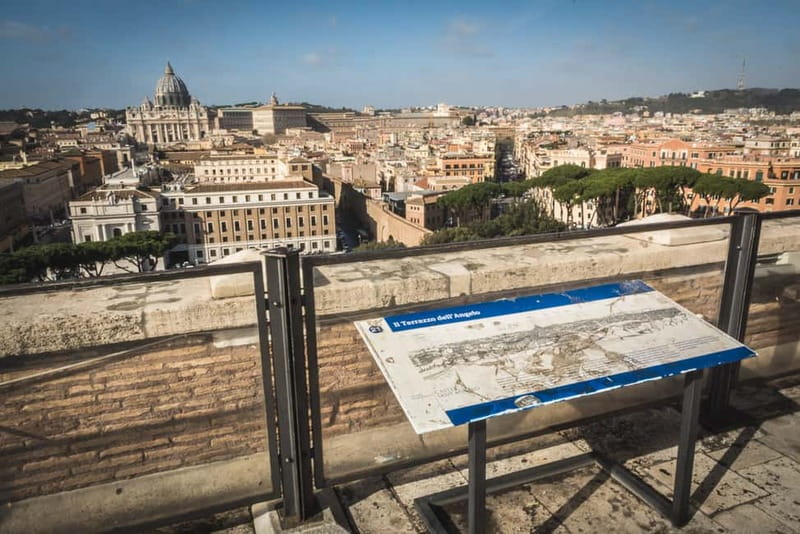
The terrace view is the headline for many people, and it’s easy to see why. From up here, Rome shifts from “streets you walk” to “a city you can study.” You’re able to spot:
- Vatican City area
- Tiber River
- Bridge of Angels
This is also where the skip-the-line ticket starts paying you back in a practical way. Waiting in line with a half-day schedule can kill the feeling of discovery. Getting in faster means you can actually enjoy the view rather than chasing it.
A small tip: the terrace is a stair-and-stand experience. If you want photos without stress, use your first minutes for quick framing of landmarks, then settle in for a slower scan. The view is wide, so it’s better to identify a few anchors than to try to photograph everything at once.
How the audio guide works (and when to spend the extra)

This option includes a digital audio guide if selected, delivered in multiple languages: English, French, Italian, Chinese, German, and Spanish. The audio experience is designed for self-paced listening, so you can stop where you care and keep moving when you’re ready.
You’ll want to bring headphones because the audio uses your own. The experience also depends on your smartphone setup, since you must download the application before it starts and have internet access.
In the feedback, people often described the audio guide setup as an easy win once it’s on your phone. Some staff helped visitors get the app ready, so if tech is not your favorite activity, arrive early so you have a few minutes to sort it out.
When I think the audio guide is worth it:
- You want to understand the building’s transformations quickly.
- You like a narrative while you wander.
- You’re traveling with kids or non-experts and want a calmer explanation style.
When you might skip it:
- You’re a pure wanderer and only want the highlights.
- You’re short on phone battery or don’t want app setup.
Either way, the building’s route still makes sense without audio.
What’s included vs not included (so you don’t get surprised)
Included:
- Skip-the-line entry ticket
- Digital audio guide if you select that option
Not included:
- Guided tour
- Staff assistance at the entrance
- Headsets
That list is important because it shapes expectations. You’ll be doing the tour on your own through the building, using the audio guide if chosen. You won’t have a guide walking you from room to room with live commentary.
If you’re the type who loves Q&A and context, a guided tour elsewhere may feel more satisfying. But if you’re comfortable reading signs, following a route, and listening to audio on your timeline, this ticket is a solid, no-fuss way to do Castel Sant’Angelo.
Price and value for $15: worth it, if you play it right
$15 is a fair price for what you’re getting here: time saved on entry plus access to a multi-era museum and terrace view. The key is that the value comes from avoiding the wasted hours that can happen when you show up and get stuck in queues.
If you’re comparing alternatives, ask yourself what matters most:
- If speed matters, this is a good fit because skip-the-line is built into the purchase.
- If education matters, the optional audio guide turns the visit into more than a “photo stop.”
- If comfort matters, budget time for stairs and bring water for the walking.
Also, check the timing. Tickets are valid only for the selected date and time slot. Late arrival or no-show is not accommodated, so don’t plan to roll in at the last second.
As a realistic “how long” note, one visitor mentioned it can take about an hour to look around, which tells you the site can work even inside a busy Rome itinerary. You can also stretch it longer if you stop for breaks and photos—especially if you use the terrace café/bar area.
Quick practical tips so you don’t waste time
A visit like this goes smoother when you’re prepared. Here’s what I’d do:
- Wear shoes you can hike in. You’ll be climbing stairs for the terrace.
- Pack a small layer for the terrace (Rome light can change fast).
- Bring headphones and keep your smartphone charged.
- Download whatever the app requires ahead of time, not at the gate.
- Arrive with your ID ready. You’ll need it for verification.
- Think about your pace: museum floors first, then terrace for the big reveal.
And one more “Rome reality” tip: if something is going on that increases security checks, entry can slow down at any monument. The skip-the-line ticket helps, but it doesn’t erase the fact that Rome sometimes adds extra layers of security. Build in buffer time when you can.
Who this ticket suits best
This is a great option if you:
- Want skip-the-line entry and don’t want to gamble on queues.
- Like history but prefer a self-guided pace.
- Enjoy panoramic views and want a quick win near the center of Rome.
- Can handle stairs and lots of walking.
It’s not suitable for people with mobility impairments and it’s not suitable for wheelchair users, since the route includes multiple stairs to reach the terrace.
Should you book Castel Sant’Angelo skip-the-line entry?
Yes, I think you should book if you want a smart, time-saving way to see one of Rome’s most story-rich sites. The ticket is especially worth it when your schedule is tight and you know you’ll want the terrace view—Vatican City, Tiber River, and Bridge of Angels are not the kind of sights you want to rush.
Skip it only if you need a fully guided, live narration experience or if stairs and self-navigation will be difficult for you. If that’s not your situation, this is a clean, efficient way to enjoy Castel Sant’Angelo at your own pace without getting trapped in Rome’s line culture.
FAQ
Is a guided tour included with this ticket?
No. This experience includes skip-the-line entry, and it may include an optional digital audio guide. A guided tour is not included.
Do I get the audio guide automatically?
You get a digital audio guide only if you select the audio guide option. The ticket includes skip-the-line entry either way.
What languages are available for the audio guide?
The optional audio guide is available in English, French, Italian, Chinese, German, and Spanish.
What do I need to bring for the visit?
Bring comfortable shoes, headphones, a charged smartphone, and internet access. You’ll also need your ID for verification.
Are headsets included?
No. Headsets are not included, so you should bring your own headphones.
Is this visit suitable for wheelchair users?
No. It is not suitable for wheelchair users and is also not suitable for people with mobility impairments.