REVIEW · CARTAGENA
Cartagena Luxury Classic Car Tour + Bilingual Historian Guide
Book on Viator →Bookable on Viator
A classic car ride turns Cartagena’s streets into a moving photo set. You get tight, high-impact sightseeing through the walled city, plus a historian who helps you read what you’re seeing. My favorite parts are the easy rhythm of the route and the wow factor of classic cars in narrow streets—just note that you may want to confirm language expectations if you need clear English commentary.
This is a private experience for up to four people, and the whole loop is timed to about 1 hour 15 minutes with short stop-and-look moments. It’s a strong pick if you want history without a long walking day, but it’s not built for slow exploration or lingering at every site.
In This Review
- Quick hits before you go
- A 90-Minute Classic-Car Shortcut Through Cartagena’s World-Heritage Core
- Price and Group Value: What $169 Gets You (Up to 4 People)
- The Luxury Classic Car Experience: Comfort, Weather, and That Old-Car Feel
- Centro Histórico and Cartagena’s Defensive Walls: The Story Behind the Stones
- Torre del Reloj and Plaza de los Coches: Clock Tower Views and Sweet-Snack Energy
- Las Bóvedas and Getsemaní: From Barracks to Prison to Party Streets
- Plaza Santo Domingo and Teatro Adolfo Mejía: Balconies, Churches, and an Opera-House Shape
- Catedral Santa Catalina de Alejandría and Castillo de San Felipe: The Power of Philip II and the Fort on San Lázaro
- Monumento a los Zapatos Viejos and Plaza de La Trinidad: Modern Culture in the Middle of the Old City
- Bilingual Historian Guide: How to Get English Commentary Without Surprises
- Photo Stops, Timing, and Why the Route Feels Like a Highlight Reel
- Practical Tips for Meeting Up and Staying Comfortable
- Should You Book This Classic Car Tour in Cartagena?
- FAQ
- How long is the Cartagena Luxury Classic Car Tour?
- What does it cost, and how many people can it include?
- Is this a private tour?
- What’s included in the price?
- What is not included?
- Where does the tour go in Cartagena?
- Are admission tickets required?
- Is the guide bilingual?
- Is free cancellation available?
- Is it suitable for most travelers?
Quick hits before you go

- 12 fast stops across the Historic Center, Getsemaní, plazas, and major monuments
- Classic car style on cobblestones, with a smooth way to cover ground quickly
- UNESCO-level landmarks like the city walls and major plazas at street level
- Photo-friendly viewpoints where the car and architecture do most of the work
- Historian-led context that helps you understand why each stop matters
A 90-Minute Classic-Car Shortcut Through Cartagena’s World-Heritage Core
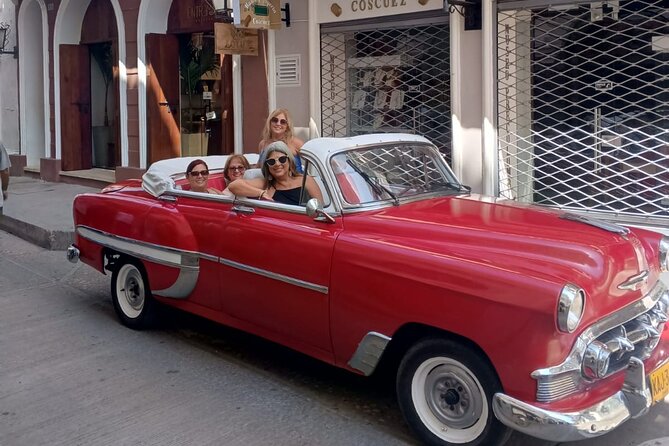
Cartagena is the kind of place that rewards stopping often, because details pile up everywhere. This tour gives you a practical workaround: cover the big sights in about 1 hour 15 minutes, then you can choose later where to go back on foot.
You’ll move through the Historic Center and fortified perimeter with quick, focused stops—each one long enough to look up, snap a photo, and get the key story. That short timing is also the tradeoff: the ride is efficient, not slow.
Price and Group Value: What $169 Gets You (Up to 4 People)
At $169 per group (up to 4), the math works best when you’re splitting the cost with friends or family. Since it’s private transportation with a driver and pick-up included, you’re paying for convenience and time, not just sightseeing.
Here’s how I think about value on tours like this: the cost stays reasonable because you’re not paying per person for a long guided day. Instead, you’re buying a compact way to see a lot of Cartagena’s icons while seated comfortably in a classic car.
If you’re traveling solo, it can still be worth it for the style and the fact that you’re hitting multiple major stops without negotiating taxis or packing in separate guides.
The Luxury Classic Car Experience: Comfort, Weather, and That Old-Car Feel
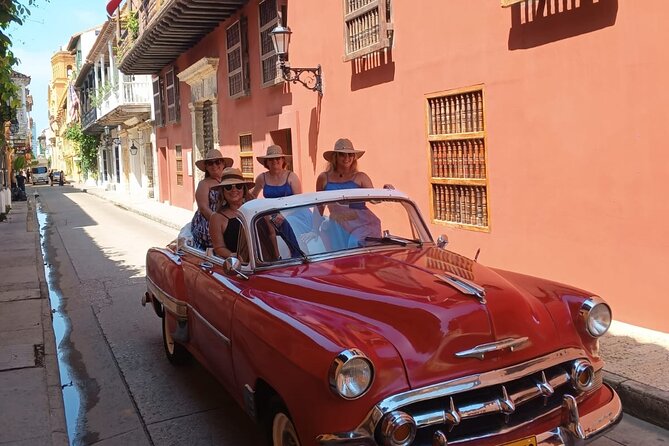
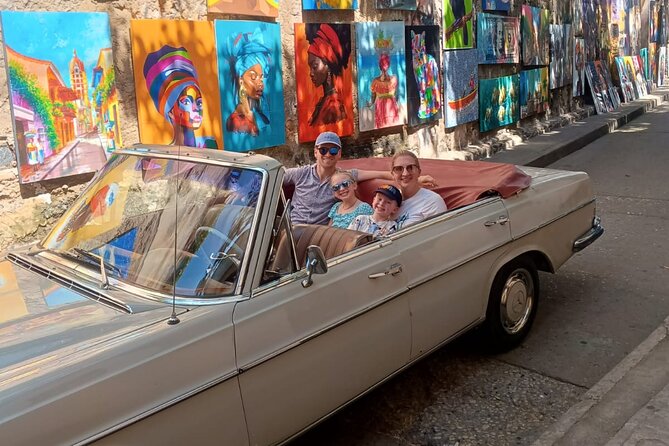
Classic cars are part of the attraction here, not just a transportation method. You’ll see why people take photos of the car almost as much as they photograph the city—especially when the vehicle is one of the star attractions on the street.
A couple practical notes from real-world experience:
- Some classic cars you might ride in feel less modern than you expect (for example, heavier steering), especially on slow turns.
- Cartagena heat is real. Even when you’re not walking, you’ll feel warm while the car is parked for short photo stops.
If you want the most comfortable ride, aim for a time when the sun is less intense. One review recommendation that matches what you’d expect: choose an early morning start or a later afternoon slot closer to sunset.
Centro Histórico and Cartagena’s Defensive Walls: The Story Behind the Stones

You’ll start in the Centro Histórico, a core part of Cartagena that’s recognized for its cultural heritage status. The key idea: this wasn’t built as decoration. These spaces were shaped by danger—how to keep enemies out and control access.
From there, you move into the Walled City of Cartagena. The walls weren’t quick or simple; the project took almost two centuries and was finished in 1796, specifically tied to defending the city from continuous pirate attacks. Even if you know the word pirates, it helps to stand near the walls to understand how serious the fortification was.
Practical takeaway: because your stops are short, you’ll want to look for visual cues fast—gate areas, wall lines, and where you can see the wall stretch.
Torre del Reloj and Plaza de los Coches: Clock Tower Views and Sweet-Snack Energy

Next up is the Torre del Reloj, a clock tower about 30 meters high. It sits between Plaza de los Coches and La Paz, and it’s considered one of the most beautiful public clocks in the world.
From a visitor perspective, this tower is a cheat code for orientation. You can use it as a landmark—then use the surrounding plazas to plan what to do next after the tour.
In Plaza de los Coches, you get another reason this area is so popular: it’s surrounded by major sights that visitors love, including the clock tower and Portal de los Dulces. If you’re the type who wants a snack break later, this is a good place to spot where you’ll likely want to return.
Tradeoff to keep in mind: with short stops, this is more about seeing and snapping than about shopping. If you’re hungry, you’ll likely need a follow-up stroll after.
Las Bóvedas and Getsemaní: From Barracks to Prison to Party Streets
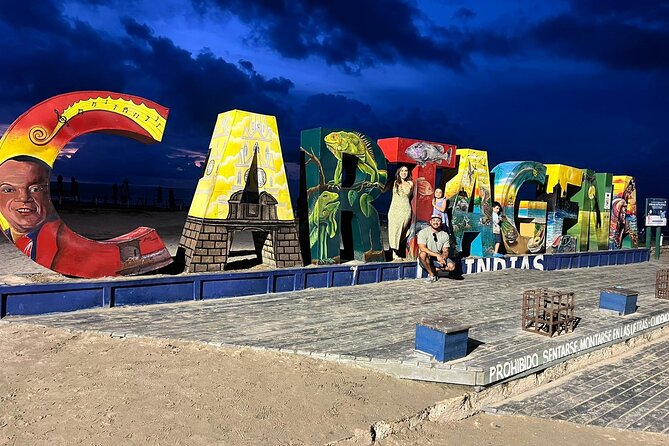
The tour’s Las Bóvedas stop places you in an area north of the walled city, between the forts of Santa Clara and Santa Catalina. This plaza mattered during colonial times: it served as barracks for the Spanish, then later as a prison for patriots during independence and the early republic years.
That shift in use is the fascinating part. Same buildings, different power—history living in the architecture. Even with limited time, the location alone helps connect the dots between defense and rebellion.
Then you head to Barrio Getsemaní, another major piece of Cartagena’s identity. This neighborhood is where festivities, culture, gastronomy, and history overlap. The tour timing keeps it light, but the payoff is that you see Cartagena isn’t only about monuments behind walls—it’s also about street life outside them.
If you’re deciding where to spend extra time on your own, Getsemaní is often a smart choice because it gives you both atmosphere and easy access to food and local energy.
Plaza Santo Domingo and Teatro Adolfo Mejía: Balconies, Churches, and an Opera-House Shape
In Plaza Santo Domingo, you’ll feel the busy center of the Historic Center. It’s surrounded by restaurants, and the spot is known for classic Cartagena features like traditional balconies. The church here—Iglesia de Santo Domingo—adds weight to the area, along with other important monuments.
Then comes Teatro Adolfo Mejía, also known as Teatro Heredia. This is one of those stops where the exterior gets you curious and the architectural story locks it in. The theater was built in the shape of a horseshoe, with boxes and balconies divided by lace-like cedar lattices. It was constructed on the old church of La Merced and inaugurated in 1911 with a performance tied to floral games.
What makes this stop worth it on a short tour: you’re not just seeing a building—you’re seeing how old religious space and European-style performance culture overlapped in Cartagena.
Catedral Santa Catalina de Alejandría and Castillo de San Felipe: The Power of Philip II and the Fort on San Lázaro
Cartagena’s cathedral stop is Catedral Santa Catalina de Alejandría. It’s described in the Herrerian style, associated with the reign of Philip II and the third stage of Spanish Renaissance architecture. Even without deep architectural study, the style gives you a sense of order and authority.
Then you’ll go to the big defensive statement: Castillo de San Felipe de Barajas. It’s a fortification on the hill called San Lázaro, built in 1536. This is the kind of place where the city’s defensive logic becomes tangible: high ground, controlled lines of sight, and the sense that the landscape itself was part of the defense plan.
One practical consideration: if you’re sensitive to heat, plan how you’ll handle short waits for photos. Forts and viewpoints are often the hottest stops.
Monumento a los Zapatos Viejos and Plaza de La Trinidad: Modern Culture in the Middle of the Old City
Not every Cartagena moment is stone and fortification. Monumento a los Zapatos Viejos is a sculpture of old boots created by Héctor Lombaña Piñeres. It’s one of those public artworks that instantly feels local rather than purely historic—something you can remember even if you forget every date.
Then the tour ends with Plaza de La Trinidad, described as a key center for Cartagena nightlife. It’s where locals and tourists gather to chat, enjoy fast food, watch art performances, and even join workouts like Zumba. If you want a final burst of energy to carry into your evening plans, this is a smart way to end.
Even if you’re not planning to stay out late, this stop gives you a useful message: Cartagena is alive in the streets, not only on postcard walls.
Bilingual Historian Guide: How to Get English Commentary Without Surprises
The experience is titled as having a bilingual historian guide, but the real-world lesson is simple: language depends on what’s assigned to your booking. I’ve seen cases where families expected strong English but ended up working through limited English support, with the guide speaking little or none at first.
So here’s what I recommend before you go:
- If English matters to you, confirm it in advance with the exact expectations you have.
- If you’re okay with Spanish, you’ll likely find the trip smoother.
- If your group includes mixed language needs, decide early who will translate so you’re not scrambling during the ride.
On the upside, when communication works well, the historian detail is the difference between seeing monuments and understanding why they mattered. And the trip’s design—short stops—makes a good guide even more important, because you only get a moment at each site.
Photo Stops, Timing, and Why the Route Feels Like a Highlight Reel
A big part of why this tour gets praised is the photo-friendly flow. You’ll be positioned at major landmarks where the classic car visually blends with the architecture—so you’re not just taking pictures of places, you’re also building a “Cartagena in style” set.
Some guides and drivers also take photos for you during stops, and you might want to ask how you receive digital copies and when you can expect them. Delivery can depend on the time of year, so don’t assume it’ll be instant.
Also remember: this is a tour with movement. Traffic and street width can affect how clearly you hear commentary at certain points. If you really want the historical details, give yourself the best chance by choosing a cooler time of day.
Practical Tips for Meeting Up and Staying Comfortable
A few things make a difference, especially if you’re arriving by cruise:
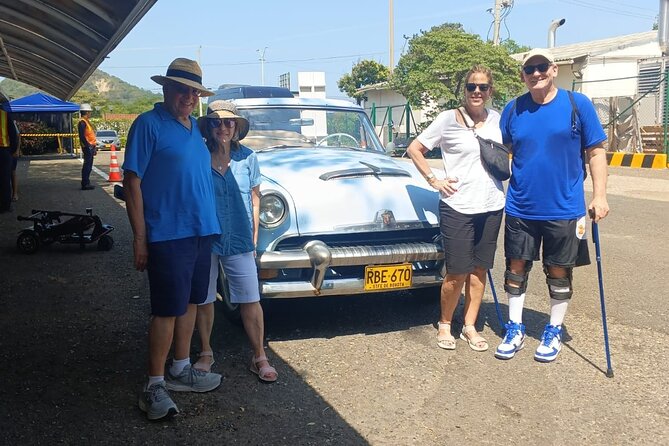
- Use a communication method you can access quickly on your phone. One traveler recommendation: WhatsApp makes it easier to find the driver at busy port areas.
- Bring water. Even with minimal walking, you’re outside through multiple stops.
- If you want more comfort, choose a start time that helps you dodge the hottest hours.
One more tip that comes from the classic-car vibe itself: depending on the car design, seating can change your view and photo angles. People often love getting the best angle for city shots, so ask where you’ll sit if that matters to your group.
Should You Book This Classic Car Tour in Cartagena?
Book it if you want high-impact sightseeing in a short window and you like the idea of seeing Cartagena’s key monuments from a classic car. It’s especially good for groups of up to four who want private comfort without building a complicated plan.
Skip or reconsider if you need guaranteed, fluent English narration without any chance of mismatch, or if you prefer long stays at each stop. This tour is built for momentum, not slow lingering.
If you’re unsure, ask yourself one question: do you want Cartagena’s story with minimal walking, or do you want to spend half your day soaking in details? For most first-time visits, this classic-car format is a smart way to get your bearings fast—then you can go back later for the parts that grab you most.
FAQ
How long is the Cartagena Luxury Classic Car Tour?
The tour lasts about 1 hour 15 minutes.
What does it cost, and how many people can it include?
It costs $169 per group and accommodates up to 4 people.
Is this a private tour?
Yes. It’s a private tour/activity, so only your group participates.
What’s included in the price?
The tour includes private transportation, a driver, and pick-up is included.
What is not included?
Return transfer to your hotel or to the port is not included.
Where does the tour go in Cartagena?
You’ll stop at the Centro Histórico, the Walled City of Cartagena, Torre del Reloj, Las Bóvedas, Barrio Getsemaní, Plaza de Los Coches, Plaza Santo Domingo, Teatro Adolfo Mejía (Teatro Heredia), Catedral Santa Catalina de Alejandría, Castillo de San Felipe de Barajas, Monumento a los Zapatos Viejos, and Plaza de La Trinidad.
Are admission tickets required?
The listed stops are marked as admission ticket free in the tour details.
Is the guide bilingual?
The tour name includes a bilingual historian guide, and you should receive confirmation at booking time.
Is free cancellation available?
Yes, you can cancel for free up to 24 hours in advance for a full refund.
Is it suitable for most travelers?
The tour indicates that most travelers can participate, and it is near public transportation.