REVIEW · ROTORUA
Whakarewarewa: Self-Guided Geothermal Trails
Book on GetYourGuide →Operated by Whakarewarewa - The Living Māori Village · Bookable on GetYourGuide
Geothermal steam near a living Māori village is a treat. You’ll love the self-guided geothermal trails plus the lots of information boards, which make the walking feel smart, not random. One thing to keep in mind: this is a ticket for independent exploring, so there’s no live guide included.
Plan a leisurely day walk and you’ll get multiple ways to look at the same thermal area. Starting at the admissions office (at Geyser Café), you move from village context into active hot-spring zones, with plenty of time to stop for photos and soak in the pace. The only real drawback is the time window: the trails run from 9:00 AM to 3:00 PM, with last entry at 3:00 PM.
In This Review
- Key highlights worth your time
- Starting at Geyser Café: quick orientation before you walk
- Rahui and village views: start with context, then hit the steam
- The core thermal walk: steaming lakes, mud pools, and photo stops
- Hot-spring lakes and bubbling mud: what to watch for on the trail
- Manuka, ferns, and edible plants: the nature layer people miss
- Price and value: is $23 worth a self-guided geothermal day?
- Pacing and timing: how to fit it into your North Island plans
- Who should book the self-guided Whakarewarewa trails (and who should rethink)
- Quick checklist: what to bring for a comfortable walk
- Should you book? My practical call
- FAQ
- Where do I exchange my voucher?
- How long is the experience?
- How much does it cost?
- What’s included with the ticket?
- Is food or drink included?
- Is there a live guide?
- What time are the geothermal trails available?
- What should I bring?
- Is it wheelchair accessible?
- What’s the cancellation policy?
Key highlights worth your time
- Lots of interpretive boards that help you understand what you’re seeing as you walk
- Self-paced walking through steaming lakes, mud pools, and thermal features
- Viewpoints over the village and geysers, so you get more than just close-ups
- Hot-spring lakes and bubbling mud pools for that classic geothermal feel
- Manuka bush and native ferns, mixing thermal sights with local plant life
Starting at Geyser Café: quick orientation before you walk
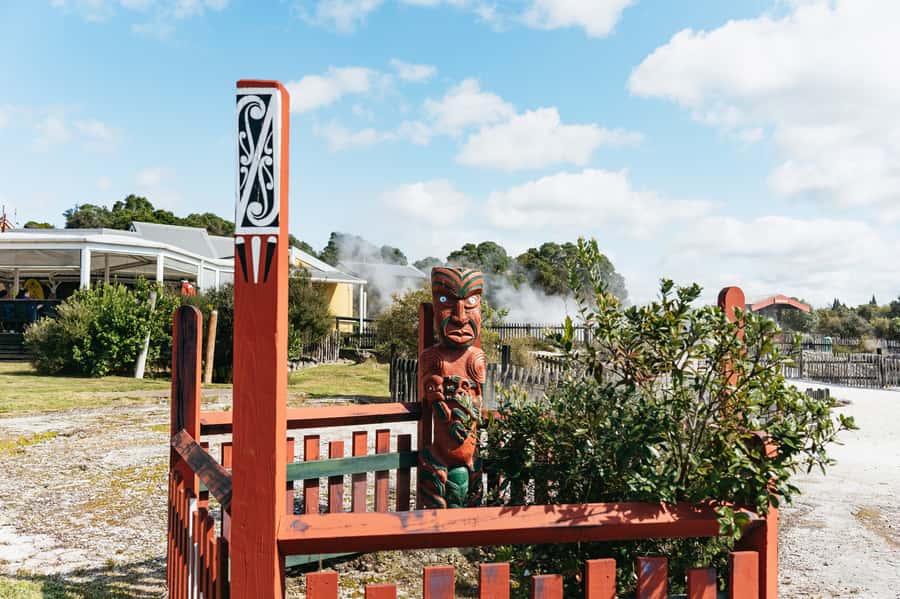
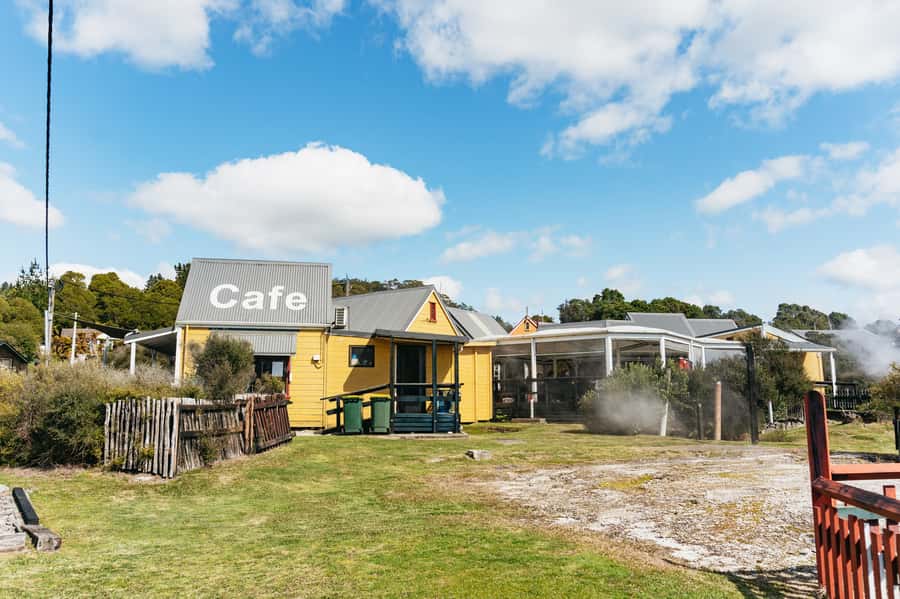
Your day begins at Geyser Café, where you exchange your voucher at the admissions office before heading out. This matters more than it sounds. You’ll find context there first, so the trails feel like a story instead of a parking-lot-to-pool shuffle.
Take a moment to read about the guiding legacy and the world-famous guides who have passed. It gives you a sense of why Whakarewarewa matters—not just as a place with steam, but as a place with long-standing knowledge of the thermal world.
Then you step under the memorial archway and head into the village area (including the Rahui, or main area). This sequence sets the tone: you’re visiting a living community, not only a natural attraction. Keep your eyes up as you walk. Views show up often, especially around the village outlooks.
Tip that saves time: arrive with a comfortable pace in mind. You don’t want to reach the busiest thermal stops after the daylight of your enthusiasm has already burned off.
You can also read our reviews of more tours and experiences in Rotorua.

Rahui and village views: start with context, then hit the steam
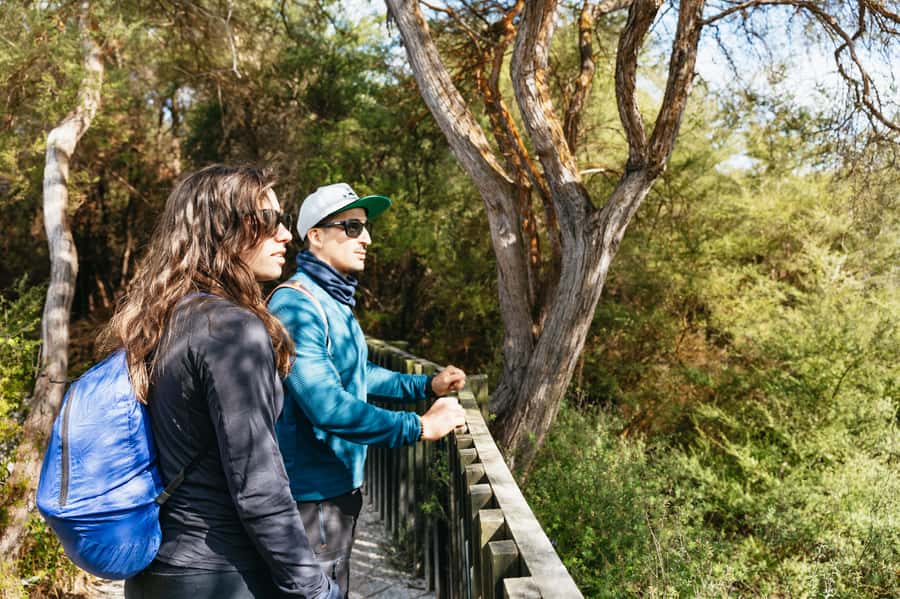
Before you reach the thicker geothermal action, you’ll pass through the Rahui/main village area. That transition is one of the best parts of the experience because it keeps you grounded in place. You see that the thermal activity isn’t just scenery; it’s part of how the village lives alongside the geothermal features.
As you move along, there are panoramic views of the village and geysers from viewpoints. If you like “where am I standing?” moments, these spots are your reward. They’re also the easiest places to frame good photos, since you can capture both the steam and the wider area instead of only close-up textures.
One practical note: since this is self-guided, you’re responsible for your own rhythm. If you want to avoid bottlenecks, pick a direction and stick to it for the first stretch, then return later only if you missed a view.
This is also where the trails start feeling like you’re in a movie set. The geothermal scenes have that Jurassic Park vibe: bubbling waters, steam, and the sense that the ground is actively working.
The core thermal walk: steaming lakes, mud pools, and photo stops
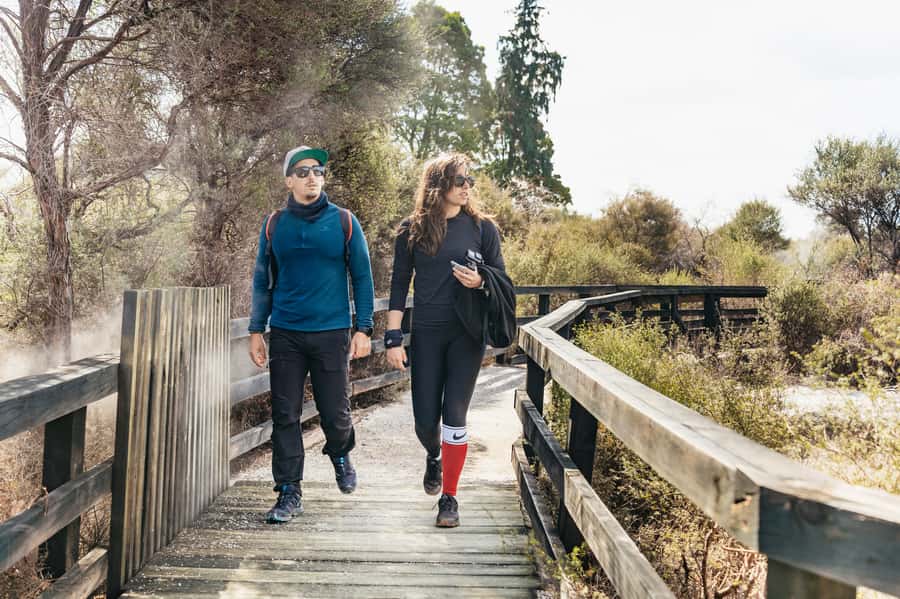
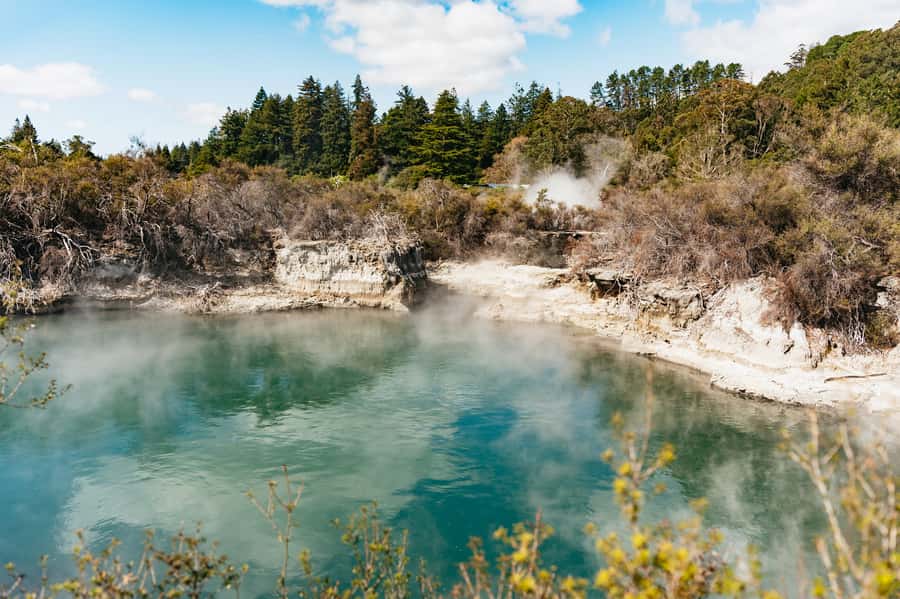
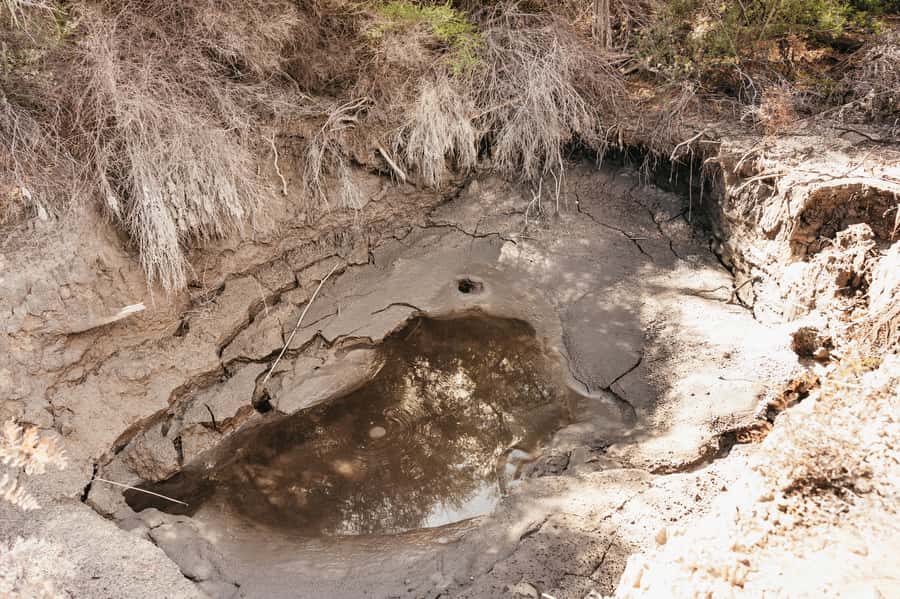
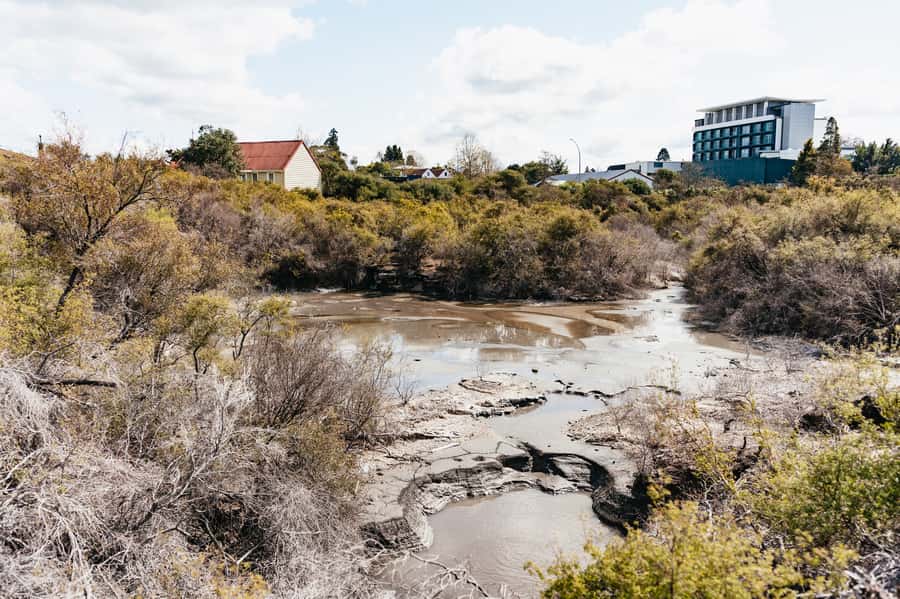
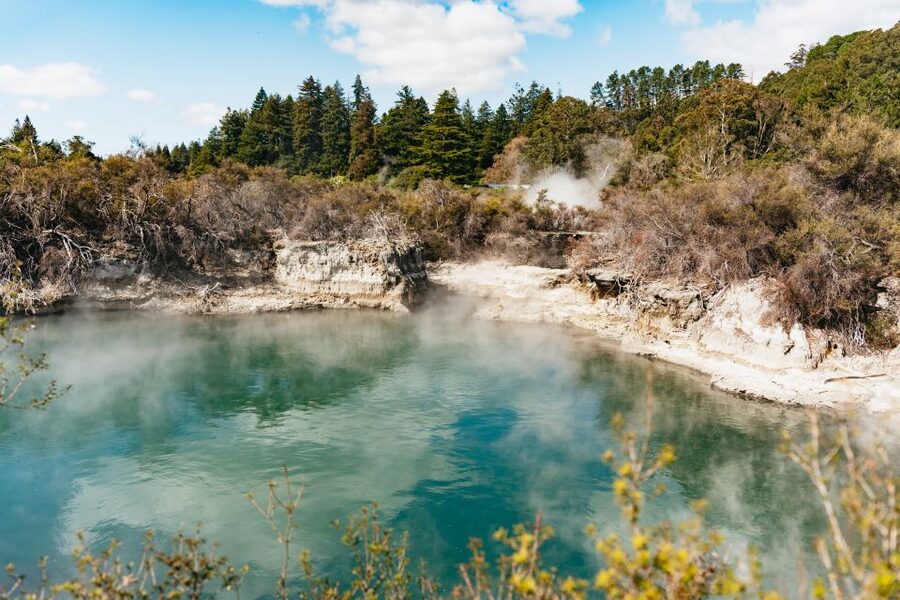
Once you get into the thermal zones, you’ll be surrounded by hot-spring lakes, bubbling mud pools, and colorful steaming areas. This is the part most people come for, and it delivers in a very straightforward way: you can look, stop, read, and look again.
The experience includes native Manuka bushlands and a mix of fern and other local plants. The effect is that the thermal activity doesn’t feel like an industrial site. It feels like nature with attitude.
You’ll also find lots of opportunities to snap unique photos. The thermal colors, the steam, and the contrast between hot features and cooler vegetation all help your pictures look less like “standing in front of a sign” and more like “I was really there.”
You’ll see spots where visitors often linger because the action is constant. Mud pools bubble. Hot areas steam. Even if you’re not a geology nerd, your eyes keep wanting to check the ground again.
A small consideration: self-guided means you won’t have someone walking beside you to point out the exact best angle for each feature. You’re going to rely on the information boards and your own wandering. If you hate reading signs or you rush, you may miss some of the value.
Hot-spring lakes and bubbling mud: what to watch for on the trail
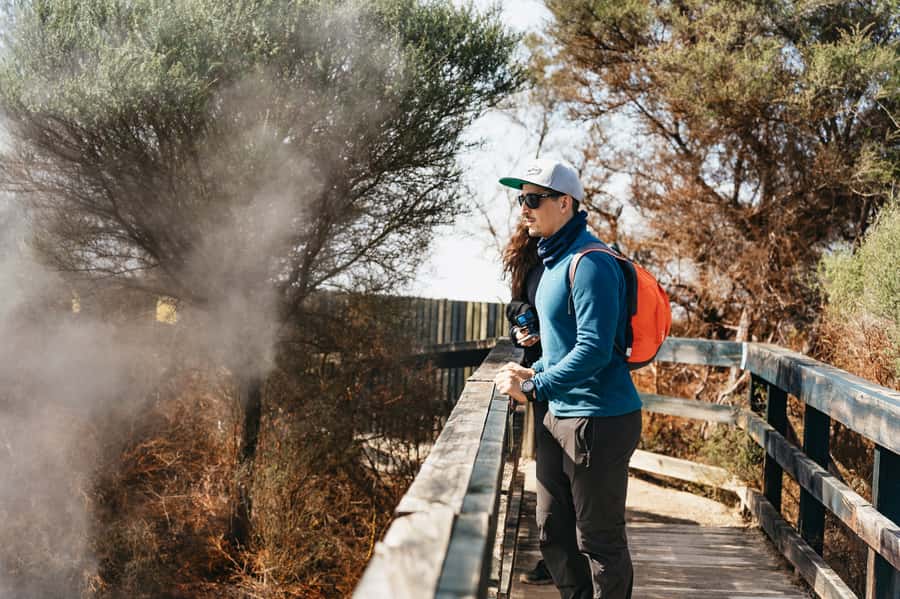
Here’s what you should pay attention to as you walk through the geothermal features:
- Steam and color changes around hot-spring lakes
- Bubbling activity in mud pools
- Contrasts between bare thermal surfaces and surrounding Manuka and ferns
- Viewpoints that let you pull back from the ground-level effects
Some areas are associated with beliefs about healing properties. The key is to treat that as part of the cultural meaning of the place, not as a guarantee. You’ll get more from the visit if you approach it as: people have long watched these waters and connected them to wellbeing.
Also, don’t forget you’re moving outdoors on active thermal terrain. Comfortable shoes matter because you’ll want stable footing while you stop often for pictures and reading.
Manuka, ferns, and edible plants: the nature layer people miss
A lot of geothermal visits become “steam only.” Whakarewarewa keeps a second layer going: plant life. You’ll see native ferns and Manuka bushlands, and the trail also highlights edible plants along the way.
That matters because it changes how you experience the steam. Instead of only noticing heat and mineral action, you start seeing how the local ecosystem works around thermal activity. You’ll notice how the plants sit near the geothermal features and how they soften the scene visually.
If you’re someone who likes practical observation—what grows here, how it looks, why this area feels alive—this section will reward your attention. Even if you’re traveling fast, don’t sprint through it. Take 10 minutes to slow down and look at the plants between thermal stops.
This is also a good time to use your camera differently. Shoot plant close-ups, then shoot the same direction with steam in the background. Your photos will look more varied, even with the same route.
Price and value: is $23 worth a self-guided geothermal day?
At $23 per person for a 1-day ticket, you’re paying for access to the geothermal trails—not transportation, not a live guide, and not food. The value depends on your travel style.
If you enjoy self-guided travel, this is a solid deal. The trails are rich enough that you’ll want to stop repeatedly, and the information boards help you keep meaning in your walk. You’re not just paying to see steam; you’re paying to spend time in a place with active thermal features, village context, and multiple kinds of sights in one circuit.
If you’re the type who wants a knowledgeable person to explain everything on the spot, you may feel under-served. Since there’s no live guide included, your understanding will come from the onsite materials and your own questions. That said, the written context at the admissions office helps a lot before you even start walking.
Also, timing affects value. The trails operate anytime from 9:00 AM to 3:00 PM, with last call at 3:00 PM. If you show up late and rush, you’ll feel like you paid for a shortened experience.
I’d treat this as a half-to-full-day “worth it” walk. Not because it’s long, but because the sights are concentrated and you’ll want time to read and photograph.
Pacing and timing: how to fit it into your North Island plans
You’ll want to plan around the trail’s open hours: 9:00 AM to 3:00 PM. There’s last call at 3:00 PM, so build in buffer time. Steam and mud pools are the kind of sights that tempt you to stop often.
The walking flow is designed for an easy, leisurely exploration. There’s a section of scenic views on the way that takes about 1 hour, which gives you a natural checkpoint. You can use that hour as your “settle in” moment before you get fully into the thermal zones.
Because it’s self-guided, you can adapt your pace:
- Slow down for photo stops and reading.
- Speed up if you only want the main thermal features.
- Double back if you missed viewpoints.
This flexibility is part of the appeal. It’s not a tight group schedule. You decide how much time you spend at each steaming lake or bubbling mud pool.
Who should book the self-guided Whakarewarewa trails (and who should rethink)
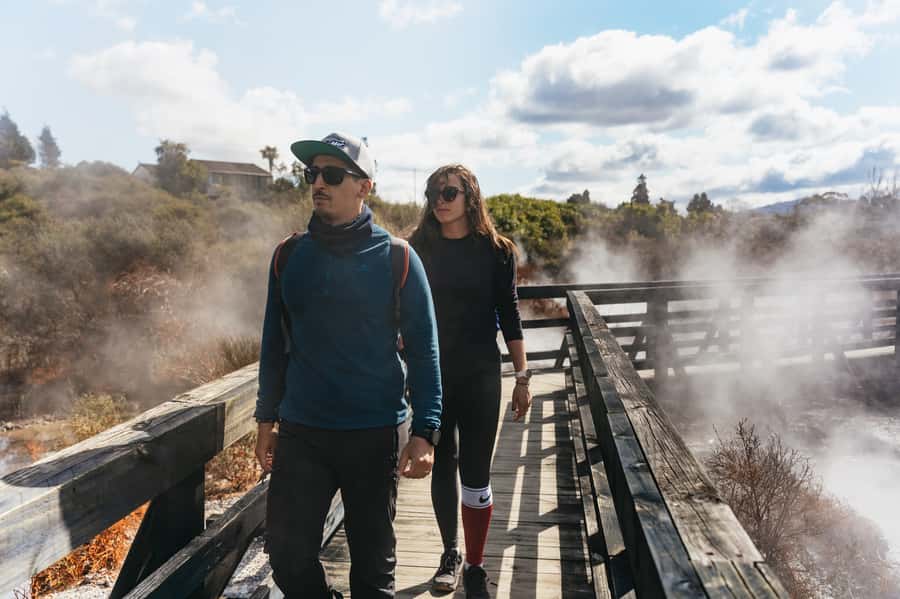
This ticket fits best if you like independent travel and enjoy reading as you go. The experience is especially good for couples, solo travelers, and anyone who prefers to wander at their own speed.
It’s also a good pick if you want a mix: village context first, then geothermal features up close. Not every geothermal stop gives you both the cultural setting and the thermal action in one outing.
Consider a different format if you:
- Want a live guide to explain geothermal mechanics on the fly
- Prefer highly structured itineraries with no decision-making
- Don’t like outdoor walking where you stop repeatedly on your own
If you’re traveling with kids, the trails can be fun because the bubbling and steaming visuals are engaging. Just be ready for plenty of stops and choose comfortable shoes.
Quick checklist: what to bring for a comfortable walk
You’ll get the most out of the day with a few basics:
- Comfortable shoes (stable footing is key)
- A camera (steam, mud texture, and viewpoints love a lens)
If you plan to stay longer at photo points, wear breathable layers. Thermal air can shift as you move between areas, and the day can feel warmer near active features.
Also, keep your attention on safety in the thermal areas. You’ll be around hot-spring and mud-pool zones, so watch your footing and follow the trail guidance as you go.
Should you book? My practical call
Book this if you want an unhurried geothermal walk where you control the pace and you enjoy learning from information boards. At $23 for a self-guided ticket, it’s strong value if you’ll actually use the time between 9:00 AM and 3:00 PM, slow down for viewpoints, and spend time with the hot-spring lakes and bubbling mud pools.
Skip it or pair it with a guided option if you need a live expert to explain everything. Without a live guide, the experience leans on onsite materials and your own curiosity.
If your ideal day includes steam, plants, and a village setting, Whakarewarewa’s self-guided geothermal trails are a smart choice.
FAQ
Where do I exchange my voucher?
You exchange the voucher at the admissions office before entering.
How long is the experience?
It’s listed as a 1-day experience.
How much does it cost?
The price is $23 per person.
What’s included with the ticket?
The ticket includes entrance to the geothermal trails.
Is food or drink included?
No. Food or drink is not included.
Is there a live guide?
No live guide is included.
What time are the geothermal trails available?
They’re available anytime from 9:00 AM to 3:00 PM, with last call at 3:00 PM.
What should I bring?
Bring comfortable shoes and a camera.
Is it wheelchair accessible?
Yes, it is wheelchair accessible.
What’s the cancellation policy?
Free cancellation is available up to 24 hours in advance for a full refund.