REVIEW · STRATFORD UPON AVON
Shakespeare’s Stratford-Upon-Avon: A Self-Guided Audio Tour
Book on Viator →Operated by VoiceMap Audio Tours · Bookable on Viator
One statue sets the tone for your whole walk. This self-guided VoiceMap audio tour uses GPS prompts so you can explore Stratford-upon-Avon at your pace, starting next to The Jester statue. I like that you get lifetime access with offline audio/maps, and the route hits the Stratford essentials tied to Shakespeare’s life and stages. The one drawback to plan around: some highlights are viewed from the street, and if you’re hoping to go inside places near the route, services or opening hours can get in the way.
You’ll walk through the Shakespeare core—Birthplace area, the big theatres on the river, and Holy Trinity Church—while the audio adds context you can actually use. I also love that you can pause, replay, and continue when you want, which is a lifesaver when you stop for photos or duck into a shop. Just know the experience is built for phone-and-headphones walking, so you’ll want to bring your own device.
If you want a low-stress way to connect Shakespeare’s Stratford to the lines on the page, this is a smart value pick.
In This Review
- Key things to know before you go
- Value and vibe: why this Shakespeare walk feels like a win
- How VoiceMap works on your phone (and how to keep it smooth)
- Start at The Jester statue: setting the scene right away
- Shakespeare’s Birthplace area: family, work, and what 16th-century Stratford may have felt like
- William Shakespeare’s Statue and a quick stop for museum curiosity
- Clopton Bridge: history, plus the “what if” behind great art
- Bancroft Gardens and the River Avon: where you slow down naturally
- Royal Shakespeare Theatre: modern architecture with Shakespeare in the background
- The Swan Theatre: the Stratford theatre connection you’ll want to remember
- Along the River again: small reminders that the Bard was a local
- Holy Trinity Church: baptism and burial, plus the story behind the tomb
- Hall’s Croft: a quieter Stratford clue that fills in the blanks
- Shakespeare’s Schoolroom & Guildhall: early education as a story engine
- Finish at Shakespeare’s New Place: closing the loop near your start
- Timing: how to make 30–45 minutes feel like more
- What’s included—and what isn’t—so you don’t get surprised
- Price, booking timing, and who this tour fits best
- Should you book this self-guided audio tour?
- FAQ
- Is this tour fully self-guided?
- Where does the tour start and end?
- How long does the walk take?
- Do I need internet during the tour?
- What language is the audio?
- Are museum tickets or entrances included?
Key things to know before you go
- GPS-based play: the app cues the next audio when you reach the right spot
- Offline everything: audio, maps, and geodata can work without cell service
- Flexible timing: start and finish whenever you want within the listed day range
- Route is mostly outside: you’ll hear about sites even when you’re just passing by
- Fast walk: expect about 30 to 45 minutes, depending on how often you stop
- Great price for a “route + story” combo: $11.99 per person with lifetime access
Value and vibe: why this Shakespeare walk feels like a win
For $11.99 per person, you’re not paying for a museum ticket or a reserved show seat. You’re paying for a guided-feeling experience that covers a compact stretch of Stratford-upon-Avon in roughly half an hour to three quarters of an hour. That makes it a great add-on even if you already plan to see one major attraction ticketed separately.
The vibe is also refreshingly practical. You don’t have to match a group schedule, and you’re not forced into a fixed pace. You can treat it like a “Shakespeare warm-up” before a bigger ticketed stop, or like a flexible way to see the town when the weather or your energy level changes.
And because it’s private for your group, it doesn’t turn into a herd situation. In a self-guided format, that matters less than it would for a live guide, but it still keeps your experience controlled.
You can also read our reviews of more tours and experiences in Stratford upon Avon.

How VoiceMap works on your phone (and how to keep it smooth)
This tour runs through the VoiceMap app on your Android or iPhone. You follow the route on your smartphone, and the audio segments are triggered by your location, so you’re not constantly tapping “next” at the wrong spot. The audio also comes with offline access to the tracks and the map data, which is a big deal in older towns where cell coverage can be patchy.
Before you start, do yourself a favor: download the audio and map data at home or somewhere with reliable Wi‑Fi. That way, you’re not standing under a streetlamp trying to force an upload while the battery drains.
If you’re new to walking tours on apps, the good news is that the experience is designed to be readable on the move. The guidance includes map support and direction cues, so you can correct yourself quickly instead of wandering for ten minutes and hoping the story catches up.
Start at The Jester statue: setting the scene right away
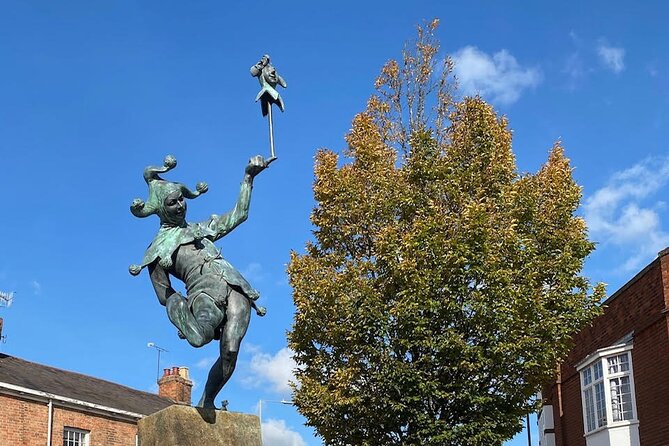
Your tour begins next to The Jester statue on Windsor St. The opening portion is more than a location label—it’s where the tour explains why the jester matters in Shakespeare’s plays, and it also gives you a quick orientation on how the audio navigation works.
This is a smart warm-up point because it helps you connect two things fast: the idea of Shakespeare’s characters and the idea of how the tour will guide you. If you’ve ever tried to follow a “point-to-point” map while also trying to read plaques, you’ll appreciate this system. It keeps your attention on the story, not on the phone.
Shakespeare’s Birthplace area: family, work, and what 16th-century Stratford may have felt like
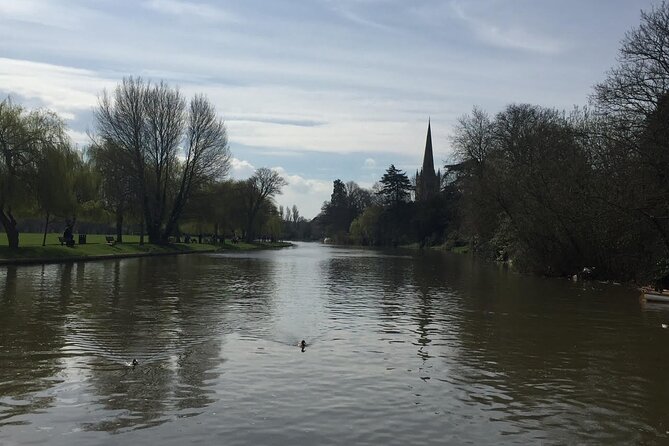
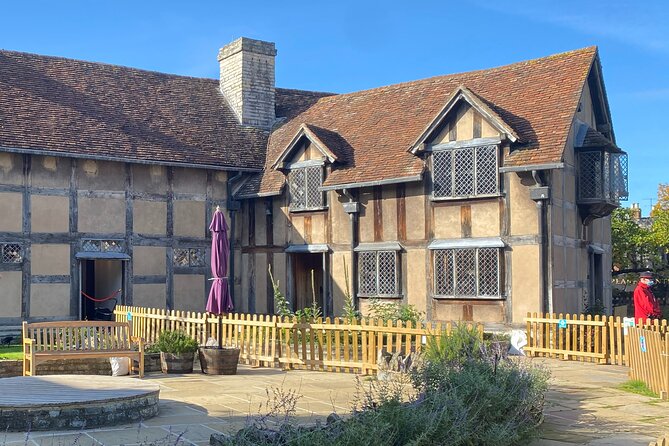
As you walk, the tour takes you past Shakespeare’s Birthplace, with audio tied to what’s there and what surrounded it. You’ll hear about Shakespeare’s first home and learn about what his father did for a living, plus what 16th-century Stratford might have looked like.
This is one of the most useful segments because it shifts your brain from “tourist facts” to a more human scale. When you understand the everyday world—jobs, buildings, street life—you stop treating Shakespeare as a statue and start seeing him as a person with neighbors and routines. That makes later stops (like theatres and churches) feel less like random landmarks.
William Shakespeare’s Statue and a quick stop for museum curiosity
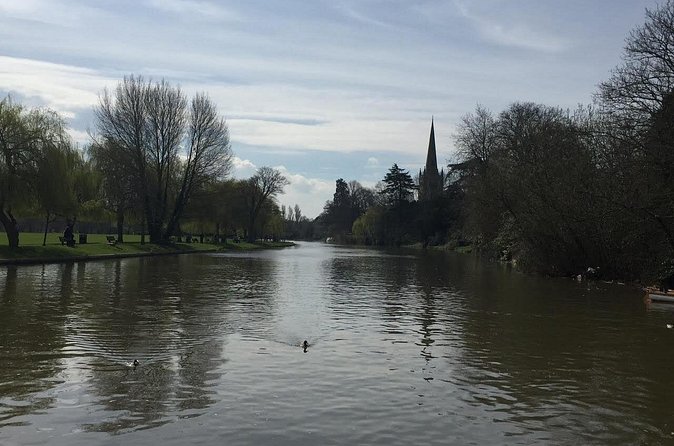
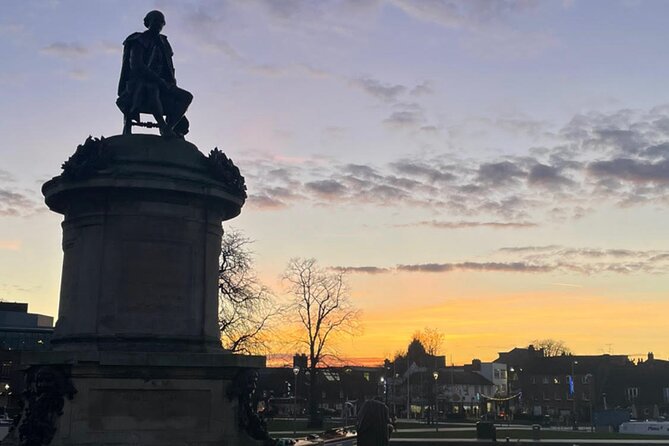
Next you pass William Shakespeare’s Statue, with audio commentary while you walk. Even if you’ve seen famous statues before, the narration helps you look at it as a piece of town storytelling rather than just a photo backdrop.
Then you go by The MAD Museum, where you’ll hear a bit about what’s inside. This one is useful even if you don’t plan to enter, because the audio gives you context so the museum isn’t just a name you walk past. If you’re the type who likes to keep optional doors open, this segment helps you decide whether it’s worth a separate stop.
Clopton Bridge: history, plus the “what if” behind great art
The tour passes by Clopton Bridge, and you don’t cross it as part of the route. Still, the audio shares its history and includes the kind of connection that makes literary places fun—how the bridge might have inspired Shakespeare.
That “might have” matters. It keeps the story honest while still giving you a creative thread to follow. On a self-guided tour, that’s a good balance: you get imagination without pretending there’s a single proven fact for everything.
Bancroft Gardens and the River Avon: where you slow down naturally
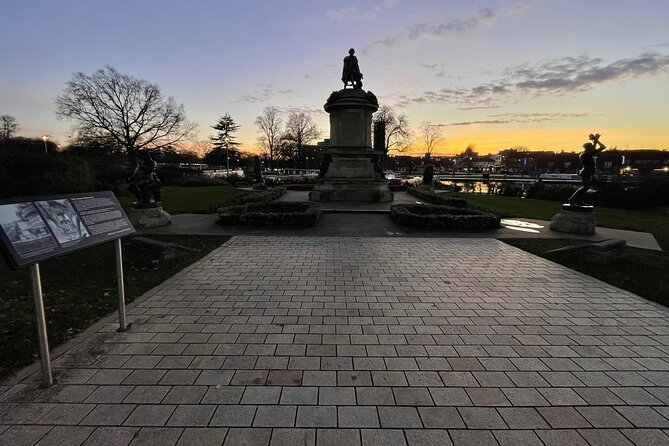
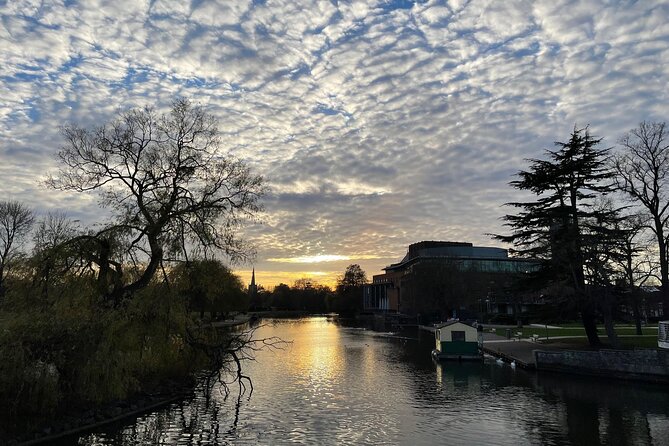
One of the best parts of this walk is the change in scenery. The route takes you through part of Bancroft Gardens and along the River Avon. As you move, the audio continues building the Shakespeare context, so it doesn’t feel like you’re getting scenic filler with no payoff.
If you like walking while thinking, this is where the tour does its job. The audio doesn’t demand attention at every second; it gives you space to look around, glance at the water, and absorb Stratford as a real place rather than a list of sites.
Practical tip: riverside paths can be a little slippery or crowded depending on the day, so give yourself room, especially if you’re stopping frequently for photos.
Royal Shakespeare Theatre: modern architecture with Shakespeare in the background
As you pass the Royal Shakespeare Theatre, you’ll hear about its history and the architect. This segment is helpful because it helps you see theatre buildings as more than “where plays happen.”
You’ll also connect the town’s past to the current stage. Even if you never catch a performance, the architecture talk adds meaning to the sight of the building, and it sets you up for the next theatre stop where the link to Shakespeare feels more direct.
The Swan Theatre: the Stratford theatre connection you’ll want to remember
The route continues past The Swan Theatre, where the audio focuses on the theatre and its connection to Shakespeare. Stratford isn’t just a birthplace town—it’s a town where performance tradition matters. This segment reinforces that idea.
One thing I like about this approach: you’re not forced into a “one theatre only” day. Even from outside, you’re getting a sense of how the stage world ties back to Shakespeare’s era and the kind of plays the town made possible.
Along the River again: small reminders that the Bard was a local
The tour gives you another stretch along the River Avon, with more audio about Shakespeare and what might have inspired his plays. Repeating a river segment may sound like it’s wasting time, but it actually helps you feel the geography. Stratford’s layout makes sense faster when you hear how the water and the town connect.
This is also where you can use the pause button to your advantage. If you want to linger for a better photo angle, you can stop the audio and restart without losing the thread.
Holy Trinity Church: baptism and burial, plus the story behind the tomb
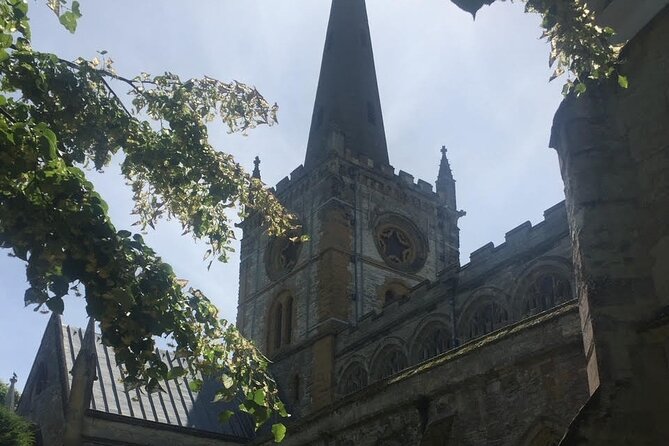
Passing Holy Trinity Church, the audio covers Shakespeare being baptized there and where he’s buried. The narration also brings up the famous curse placed on his own tomb.
This stop is a big emotional anchor in the walk. Whether you’re a Shakespeare superfan or just enjoy good storytelling, knowing the church tied to his life—and hearing the tomb story—changes how you hear the rest of the route.
One consideration: if you’re the type who hopes to see tombs or go inside, plan for real-life friction like services or access limits. Even when the audio runs fine, the physical experience can depend on what the church is doing that day.
Hall’s Croft: a quieter Stratford clue that fills in the blanks
The tour passes by Hall’s Croft, with audio commentary while you walk. This is a more “supporting character” kind of stop, but those are often the parts that make Shakespeare’s world feel complete.
Without needing to enter anything, you get another piece of context for how life in Stratford fit together. It’s the difference between seeing a famous name and understanding the web of place, family, and daily living.
Shakespeare’s Schoolroom & Guildhall: early education as a story engine
Next you pass Shakespeare’s Schoolroom & Guildhall. The audio focuses on Shakespeare’s early days and includes how school might have inspired parts of his plays.
This is one of the more interesting “connection” segments because it asks you to think about craft. You’re not just told where Shakespeare lived; you’re encouraged to connect training, observation, and language. Even if the details you hear are necessarily interpretive, the direction is useful: it helps you notice what’s on the page when you read or watch.
Finish at Shakespeare’s New Place: closing the loop near your start
The tour ends outside Shakespeare’s New Place, just a short distance from where you started at The Jester statue. Ending near the start makes the whole route feel like a loop, not a one-way hike.
This last segment gives you a natural place to stop without hunting for “one more” thing. If you still have energy, you can branch out into nearby streets. If you’re done, you can wrap up without feeling like the tour trapped you into a fixed timeline.
Timing: how to make 30–45 minutes feel like more
This is designed as a quick walk: about 30 to 45 minutes. That range gives you flexibility, but it also means you’ll want to avoid treating it as a “wander until sunset” plan.
Here’s how I’d pace it:
- Save extra photo stops for places where you truly want them.
- Pause the audio only when you need a break, not every time you look at a plaque.
- If you’re taking it on a day when you’re also visiting something ticketed, treat it like a warm-up or a follow-up so the story stays fresh.
If you’re walking mid-morning, you may find it easier to move around. Stratford can have its moments with foot traffic, so go with a realistic pace and watch where road crossings and busy intersections are.
What’s included—and what isn’t—so you don’t get surprised
Included:
- Lifetime access to the self-guided tour in English
- VoiceMap app for Android and iOS
- Offline access to audio, maps, and geodata
Not included:
- Tickets or entrance fees to museums or other attractions en route
- Smartphone or headphones
- Food and drinks
- Transportation
That means you’re not paying for entries into the places you pass. You’re paying for the walking story around them. If you want interior access—especially at the church or any museum—that’s something to plan separately.
If you like to decide on the fly, this format actually works well. You can always add an entrance stop later if the day is going your way.
Price, booking timing, and who this tour fits best
At $11.99 per person with lifetime access, this is a strong value when you compare it to paid guided options that take the same time. You’re also getting offline capability, which is rare for low-cost tours and makes it easier to rely on without surprise data charges.
It’s also booked fairly often in advance—on average, about 13 days. If you’re visiting during peak season or on a busy weekend, it’s smart to reserve early so your plan is locked in.
Who it’s ideal for:
- People who like a self-paced walk with clear audio guidance
- Anyone who wants a fast way to connect Stratford landmarks to Shakespeare
- First-time app-tour users who want navigation help and location prompts
Who might want a different style:
- If you want a deep museum-focused day with multiple indoor visits, this won’t replace that plan
- If you only have one strict “must-see inside” attraction, you may need an additional ticketed activity alongside this walk
One extra note: this route focuses tightly on Stratford’s Shakespeare sites, so if you also want related places like Anne Hathaway’s thatched cottage, you’d need to add that separately.
Should you book this self-guided audio tour?
Book it if you want an efficient, low-stress way to understand why Stratford-upon-Avon matters to Shakespeare, without being chained to a group schedule. The GPS timing, offline audio/maps, and the tight 30–45 minute route make it easy to fit into almost any day.
Skip or pair it only lightly if you’re expecting lots of entrances and guided indoor time. This tour is at its best when you treat the town as your classroom—street to street, theatre to church, river to garden—and use the audio as your guide while you walk.
FAQ
Is this tour fully self-guided?
Yes. You use the VoiceMap app on your smartphone to listen to the audio as you walk the route.
Where does the tour start and end?
It starts next to The Jester statue on Windsor St (CV37 6NL) and ends outside Shakespeare’s New Place on Chapel St (CV37 6EP).
How long does the walk take?
It’s approximately 30 to 45 minutes, depending on your pace and how often you pause for photos.
Do I need internet during the tour?
You get offline access to the audio, maps, and geodata, so you don’t need a constant data connection to run the experience.
What language is the audio?
The tour is offered in English.
Are museum tickets or entrances included?
No. Tickets or entrance fees for attractions along the route are not included, and you bring your own smartphone and headphones.