REVIEW · ARUBA
Scenic Aruba Self-Guided Driving and Walking Audio Tour
Book on Viator →Operated by History with Action · Bookable on Viator
Want Aruba on your own time?
This self-guided driving and walking audio tour lets you follow GPS-triggered stories at whatever speed fits your day, with pirate-era tales threaded through the sights. I like the offline maps and the fact that audio plays on its own when you reach each stop, so you are not stuck staring at your phone. The only real catch is that the setup can feel a bit fiddly at first, especially if you wait to download while you do not have strong signal.
You will move through the best-known Aruba highlights in one connected route: lighthouse views, sea-turtle nesting at Catalina Cove, old churches, volcanic rock formations with petroglyphs, gold-mill ruins, and the Hooiberg lookout climb. Plan on roughly 1 to 2 hours for the route pacing, though the beauty of it is you can pause, linger, or skip anything that does not grab you.
In This Review
- Key highlights I think matter
- How the Action audio app really works in Aruba
- Getting audio into your car
- Headphones help for walking
- Price and group value: $39.99 per group up to 4
- Start point reality: what to do when nobody is waiting
- Where the route starts and what first story you’ll hit
- Driving + walking route: the Aruba sights, stop by stop
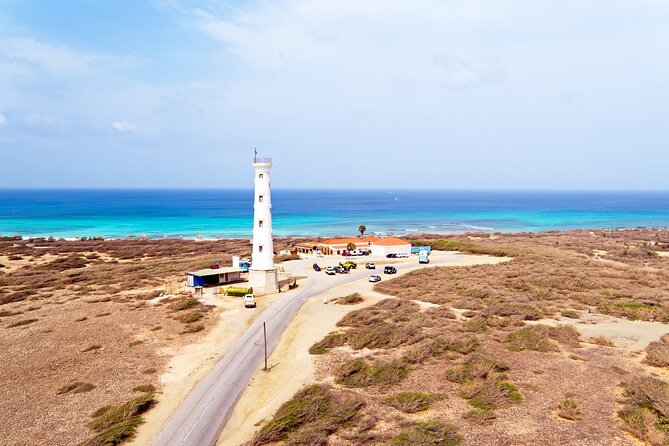
- Stop 1: California Lighthouse and the story behind the name
- Stop 2: Boca Catalina Beach and Catalina Cove’s nesting season vibe
- Stop 3: Alto Vista Chapel with 18th-century roots
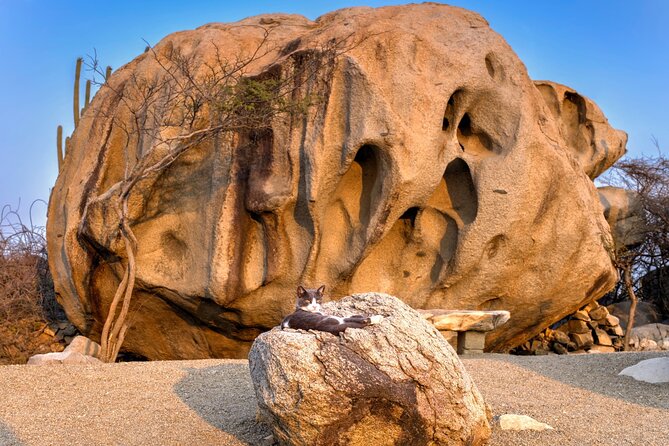
- Stop 4: Casibari Rock Formations and the volcanic feel
- Stop 5: Ayo Rock Formations, alien-looking shapes, and ancient petroglyphs
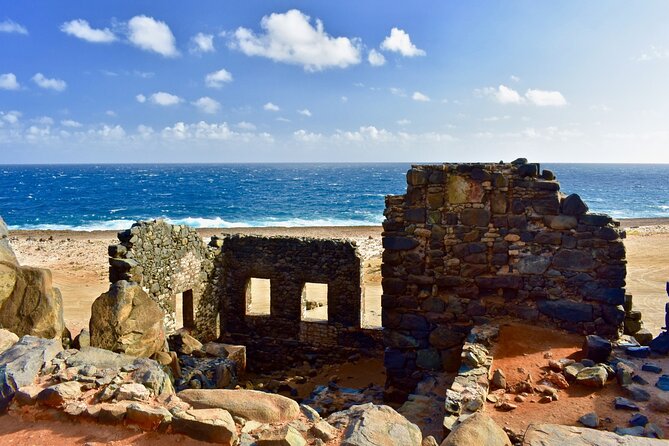
- Stop 6: Bushiribana Gold Mill ruins from the Aruba gold era
- Stop 7: Donkey Sanctuary Aruba and a humane pause in the route
- Stop 8: Balashi Gold Mill Ruins and the quiet skeleton of the past
- Stop 9: Hooiberg lookout, 541 feet, and the 600-step payoff
- Timing and how to pace the route without rushing your day
- What makes the story format worth it (pirates included)
- Practical tips so the tech does not get in your way
- Who this self-guided Aruba tour suits best
- Should you book Scenic Aruba Self-Guided Driving and Walking Audio Tour?
- FAQ
- How much does the Aruba self-guided audio tour cost?
- How long does the tour take?
- Can I use it without cell service?
- Do I need to buy tickets for the stops?
- Where does the tour start?
- What do I need to do to start the audio?
- Can I cancel and get a full refund?
Key highlights I think matter
- Offline maps that keep working even when cell service disappears on the road
- Hands-free location audio, with stories starting automatically as you arrive
- A route built around famous Aruba stops, from California Lighthouse to Hooiberg
- No ticket hassle at each stop, since the story points are marked as admission-free
- One purchase covers your group car, priced per group up to 4
- Valid for a full year, so you can reuse it on a later trip day or return visit
How the Action audio app really works in Aruba
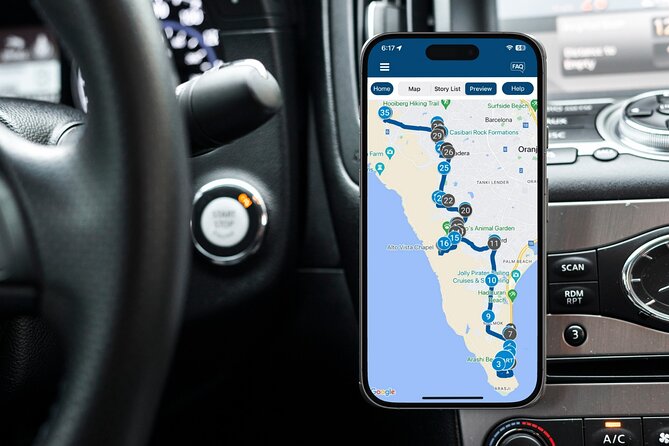
You do not meet a guide. Instead, you download the Action audio tour app, enter a password sent by email/text, and then run the tour on-site. The key move is to download the tour while you are on strong Wi‑Fi or cellular, because the experience is designed to work offline after download.
Once you start the audio tour app, the phone does the heavy lifting. The stories are meant to play automatically based on your location, which is ideal when you are parked, walking, or standing at a viewpoint and do not want to tap your screen every few minutes.
Getting audio into your car
For driving parts, I recommend thinking ahead about sound. The guide suggests connecting your phone to your car stereo via Bluetooth, USB, or AUX. It also notes compatibility with Apple CarPlay (navigation features coming soon) and says Android Auto support is on the way, so you will likely be able to use a normal audio setup without fighting the app.
Headphones help for walking
For the walking tour portions, the guidance recommends bringing headphones/earbuds. That is smart in Aruba, where you might want to hear narration clearly while also enjoying the beach breeze and natural sounds.
Price and group value: $39.99 per group up to 4
At $39.99 per group (up to 4 people), the math is simple: if you are traveling as a small group, you can spread the cost across seats instead of paying per person. Since it is priced per car, not per person, this is often better value than bus tours or private guides if you do not mind driving yourself.
You also get a longer runway than many one-day attractions. The tour is valid for an entire year, so you are not locked into using it only on one afternoon. If your Aruba plans shift, or you come back later in the trip for a second look, you still have the audio.
Start point reality: what to do when nobody is waiting
The tour starts at Natural Bridge Aruba (Santa Cruz), and the experience is explicitly self-guided. That means you go to the start point on your own, then start the app once you are onsite. There is no check-in desk and no person waiting with a schedule card.
From there, you should follow the audio cues to the next story point. The tour notes that if there are multiple tour versions in the app, you should choose the one that matches your planned starting point and direction. This matters because one small mismatch can turn an easy afternoon into a frustrating loop.
Where the route starts and what first story you’ll hit
The provided route begins with a story at the California Lighthouse, which includes an explanation of the landmark name and the unfortunate events that led to the lighthouse being built. Even though your physical meeting point is Natural Bridge Aruba, your audio should guide you to the first major stop.
Driving + walking route: the Aruba sights, stop by stop
The stops below are built around short story segments (about 10 minutes per stop), and they are labeled as admission ticket free at each story point. In practice, you should treat those 10 minutes as narration time, not sightseeing time. If a view holds you longer, you can pause the tour and take your time.
Stop 1: California Lighthouse and the story behind the name
This is a great first stop because it gives you context immediately. You will hear where the lighthouse got its name and the unfortunate events tied to why it was constructed.
Practical tip: If you are prone to motion sickness, this is a good moment to slow down, get oriented, and take photos before you get back in the car.
Stop 2: Boca Catalina Beach and Catalina Cove’s nesting season vibe
Next up is Boca Catalina Beach, with the audio pointing you to Catalina Cove. The story connects the cove to sea turtles that lay eggs, and it also explains why seagulls show up in force looking for a meal.
Practical tip: Even if you are not there during peak activity, the cove is worth a pause for ocean color and a calm break in your driving schedule.
Stop 3: Alto Vista Chapel with 18th-century roots
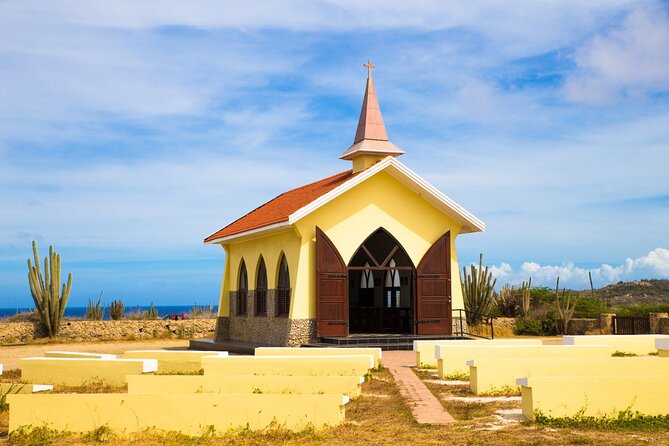
You will pass the Alto Vista Chapel, and the narration traces its roots back to the 18th century. If you like places that still feel lived-in, this is one of those stops where the story adds texture beyond just a quick photo.
Drawback to consider: If you are trying to keep the whole route to the shorter end of the time range, you may want to spend only a brief moment here and save extra time for the rock formations and lookout.
Stop 4: Casibari Rock Formations and the volcanic feel
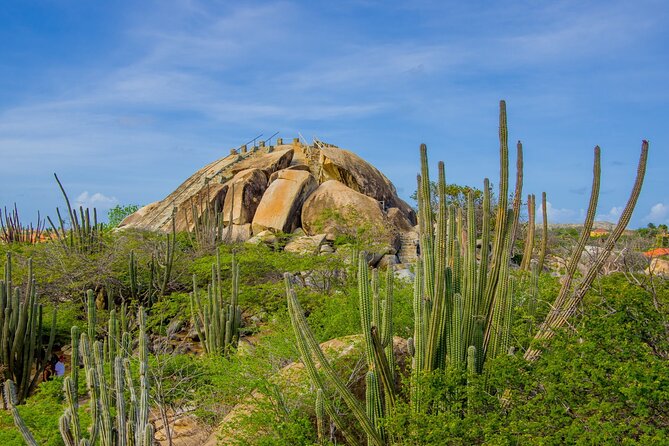
The Casibari Rock Formations are the next big visual hit. The narration describes huge volcanic boulders that stand out against the rest of the scenery, so you will not need a guide to find the wow factor.
This is also a smart stop for stretching. You can park, take a few photos from different angles, and let the narration do its job.
Stop 5: Ayo Rock Formations, alien-looking shapes, and ancient petroglyphs
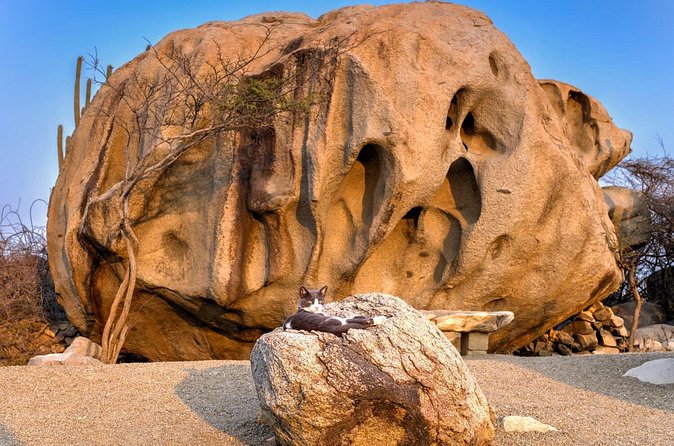
The route continues to Ayo Rock Formation—described as slightly alien-looking. The audio connects the place to spiritual significance for the Arawak and points out petroglyphs that date back thousands of years.
This is one of the best “read the place with your ears” stops. The story gives you something to look for while you are standing there, instead of treating the rocks as just scenery.
Stop 6: Bushiribana Gold Mill ruins from the Aruba gold era
Next comes Bushiribana Ruins, specifically the Bushiribana Gold Mill. The narration frames it as a remnant of Aruba’s gold industry dating back to the 1800s.
Practical tip: Ruins are great for quick history moments, but they can also be hot and exposed. Keep water handy and take shade breaks when you can.
Stop 7: Donkey Sanctuary Aruba and a humane pause in the route
After the ruins, you will reach Donkey Sanctuary Aruba. It is described as a volunteer organization caring for over 100 donkeys.
This stop changes the tone of the day in a good way. After rocks and industrial remnants, the sanctuary feels personal and different, and it can be a meaningful break even if you are not a “donkey person.”
Stop 8: Balashi Gold Mill Ruins and the quiet skeleton of the past
Then you move on to Balashi Gold Mill ruins. Like Bushiribana, it connects to the gold rush, but the narration also notes that it has not been active for a long time, leaving a skeleton-like remainder.
If you like comparing sites, this pairs well with Bushiribana. You get the same theme—gold industry remains—without the experience feeling repetitive.
Stop 9: Hooiberg lookout, 541 feet, and the 600-step payoff
Your final stop is Hooiberg Lookout. The audio calls out that it sits at 541 feet above sea level and offers views of the island and the water below, if you are willing to climb 600 steps.
This is the stop where you decide how active you want the day to be. If you take breaks, slow your pace, or split the route into two days, you can still make the story work.
Timing and how to pace the route without rushing your day
The tour is listed as 1 to 2 hours (approx.), but that estimate depends on how long you pause at each place. Since each story point is around 10 minutes, you could complete the core narration quickly. If you also want photos, a beach moment at Catalina, and a proper look at the rock formations, it is easy to stretch into the full two hours.
I like that the app is built for real travel pacing. You can start at your chosen time, pause anywhere, and resume later, which gives you a lot of control over heat and crowds.
What makes the story format worth it (pirates included)

The tour is not just directions. It includes commentary on pirates of the Golden Age, with narration tied into the named stops. Even without the details of each pirate tale in front of you, the bigger point is that the storytelling turns scattered landmarks into a connected mini-adventure.
For me, that is what keeps a self-guided audio tour from feeling like a checklist. You are not only driving to see rocks and ruins. You are also hearing why these places matter and how people of different eras would have understood them.
Practical tips so the tech does not get in your way
Here are the few things I would do before you ever park at Natural Bridge:
- Download using strong Wi‑Fi/cellular so offline audio actually works later
- Make sure you pick the correct tour version if the app offers multiple starting points
- Bring headphones/earbuds for walking portions
- Plan one calm photo stop so you do not spend the whole route scanning for the next cue
- If audio behaves oddly, the guidance says you can contact support using info in the app or on your voucher
One note from the vibe of the system: it is easy once it clicks, but getting started might take a little patience the first time you use a location-based audio app.
Who this self-guided Aruba tour suits best
This tour is especially good for people who want flexibility. You can go at your own pace, stop for snacks, and skip anything that does not grab you.
It also fits well for:
- Couples or small groups sharing one purchase (up to four people)
- Travelers who prefer driving themselves rather than timing their day to a bus
- Anyone who likes history-with-a-story rather than long museum-style lectures
- People who want a plan that still allows detours and breaks
If you are the type who hates apps or you never want to troubleshoot anything on your phone, this might be a heavier lift. In that case, you might prefer a traditional guided tour where someone else handles the setup.
Should you book Scenic Aruba Self-Guided Driving and Walking Audio Tour?
I would book this if you want an Aruba route that feels personal: pick your start time, let the narration guide your stops, and enjoy places like California Lighthouse, Ayo Rock, the gold mill ruins, and the Hooiberg steps without paying for a full guided day. The value is strongest when you travel as a group of up to four and you are comfortable navigating on your own.
I would hold off if you know you will not download the tour properly before you go, or if you do not want to manage audio setup for walking or car playback. A self-guided tour can be effortless after setup, but it is not a no-touch experience.
FAQ
How much does the Aruba self-guided audio tour cost?
It costs $39.99 per group for up to 4 people.
How long does the tour take?
The experience is listed at about 1 to 2 hours.
Can I use it without cell service?
Yes. The tour includes offline maps, and it is designed to work without cellular or Wi‑Fi after you download it.
Do I need to buy tickets for the stops?
No attraction passes are included, and the stops in the route are marked as admission ticket free for the story points.
Where does the tour start?
The start point is Natural Bridge Aruba (Santa Cruz, Aruba), and the end point is the same location.
What do I need to do to start the audio?
After booking, you get instructions and a password by email/text. On-site, you open the separate Action audio tour app, choose the correct tour version if needed, then start at the first story point so the audio begins automatically.
Can I cancel and get a full refund?
Yes. You can cancel for a full refund up to 24 hours in advance. If you cancel less than 24 hours before the experience start time, the amount paid is not refunded.