REVIEW · SAN ANTONIO
San Antonio River Walk Self-Guided Walking Audio Tour
Book on Viator →Operated by Drive with Action · Bookable on Viator
San Antonio’s River Walk tells stories fast. This self-guided audio tour strings together 30+ moments over about 1.6 miles, from the waterway’s highlights to major Spanish-era landmarks. I love that it’s built for real strolling, not a rushed checklist.
Two things I really like: you can start and pause anytime, and the app plays hands-free, location-triggered audio as you walk. You also get offline maps after downloading, which matters along the River Walk where you don’t always want to chase a cell signal.
One consideration: admission tickets aren’t included, so if you want to go inside the big sights like the Alamo, you’ll need separate tickets. You’ll still get strong exterior history from the route, but it won’t replace entry if you’re hoping for that.
In This Review
- Key moments that make this River Walk audio tour worth it
- How the audio tour works on the River Walk (and why it feels easy)
- Price and value: $14.99 for a 1.6-mile history walk you can reuse
- Start at River Center, end at Alamo Plaza: what your walk feels like
- Stop-by-stop: what you’ll hear along the River Walk, from water to the Alamo
- Stop 1: San Antonio River Walk and the bigger city story
- Stop 2: Stargazer Citlali (Pedro Reyes, 2022)
- Stop 3: Labor Plaza and a poem under your feet
- First neighborhood moment: stop when you reach the stairs
- Stop 4: Rosita’s Bridge and the meaning of a name
- Marriage Island: love stories with a heart-shaped clue
- Tower Life Building and a Spanish-style plaza
- Stop 5: San Antonio City Hall and the Main Plaza connection
- Stop 6: Presidio San Antonio de Bexar and the mission’s protection
- Stop 7: Spanish Governor’s Palace (built 1749)
- Stop 8: The Alamo and the numbers behind March 6, 1836
- Stop 9: Esquire Tavern and what happened right after Prohibition
- Stop 10: Aztec Theatre and Hollywood’s early era
- Small practical tips that improve the experience a lot
- Should you book this River Walk self-guided audio tour?
- FAQ
- How long does the San Antonio River Walk self-guided audio tour take?
- How far do I walk?
- Do I need Wi‑Fi or cellular service during the tour?
- Is the tour offered in English?
- Are admission tickets included for stops like the Alamo?
- Can I cancel for free?
Key moments that make this River Walk audio tour worth it
- GPS-triggered stories that play as you reach each stop, so you don’t constantly tap your phone
- Offline maps after the initial download, for an easier walk with fewer connectivity headaches
- Stargazer Citlali (Pedro Reyes, 2022) and its star symbolism across cultures
- Labor Plaza details including the spiral-walk poem by Octavio Quintanilla
- Marriage Island wedding lore tied to the island’s heart-like shape
- Long-format storytelling across Spanish landmarks, the Alamo era, plus the Esquire Tavern and Aztec Theatre
How the audio tour works on the River Walk (and why it feels easy)
This tour is self-guided, so nobody meets you at the start. You begin at River Center (159 Dolorosa) and the audio starts when you reach the first story point. After that, the stories play on their own based on your location, which is the biggest quality-of-life win here.
You’ll use Action’s Tour Guide App on your phone, with a password sent by email and text after booking. Download the tour while you’re on strong Wi‑Fi or cellular, then it works offline. That’s a smart setup for a walk where you might not want to depend on perfect signal.
The pace is flexible. You can start at any time in the app flow, pause whenever you want for photos or a snack break, then resume without losing your place. The full walk usually lands around 1–2 hours, depending on how often you stop for side looks along the water.
I also like that you’re not locked into one “correct” speed. There’s no group dynamic to fight, and you can linger at the spots that click for you. If something isn’t your thing, you can skip forward rather than forcing it.
You can also read our reviews of more tours and experiences in San Antonio.



Price and value: $14.99 for a 1.6-mile history walk you can reuse

At $14.99 per person, this is priced like a practical add-on for a casual day. The real value is that you’re not just paying for narration—you’re paying for a full route with more than 30 audio stories and offline usability.
The tour also includes lifetime access with no expiry, so you can reuse it later without buying again. If you’re a “read once, forget later” person (no judgment), replaying it on a return trip is a big perk.
You’ll also get extra audio content for stories you want more of, not just the main run. That turns the experience from one-and-done into something you can stretch. And if you’re traveling as a couple, you can share by splitting headphones and listening to the same tour.
Just keep expectations aligned: it’s a walking tour with stories. It doesn’t include admission tickets or entry fees. So it’s best when you want context and clarity while you stroll, not when you’re planning to do paid indoor stops as part of this price.
Start at River Center, end at Alamo Plaza: what your walk feels like
Your route runs from River Center at 159 Dolorosa to 300 Alamo Plaza, and the total walking distance is about 1.6 miles. The audio is designed in segments, often around 5 to 15 minutes each, so the day stays modular even if you pause.
The tour direction matters because the app selects the audio version based on your starting point and direction. When you’re on-site, launch the correct version for where you’re standing so you don’t get stories that feel out of sync with what you’re seeing.
You’ll also want your phone’s GPS working. The “no tap required” design depends on location cues, so keep the phone accessible and let it find where you are.
For timing: the route is long enough to feel like a real walk, but short enough that you can do it between other San Antonio plans. It’s also compatible with spontaneous breaks, like grabbing a drink or stepping away from the main path.
Stop-by-stop: what you’ll hear along the River Walk, from water to the Alamo
Stop 1: San Antonio River Walk and the bigger city story
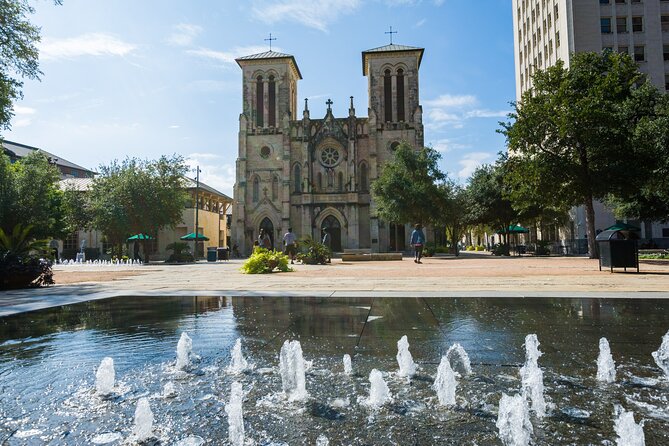
You start with the River Walk itself and quickly move into the idea that San Antonio is more than just one headline sight. The audio frames the River and points you toward major nearby anchors like San Fernando Cathedral. It also sets up the city’s tense, embattled history—so when you reach later landmarks, they don’t feel random.
This opening segment is useful because it gives you a map in your head: where power sat, how the city formed, and why the Spanish and later Texas eras shape the look and layout.

Stop 2: Stargazer Citlali (Pedro Reyes, 2022)
Next up is Stargazer Citlali, a sculpture by Mexican artist Pedro Reyes unveiled in 2022. The audio asks you to notice the star held in the figure’s hand, and it explains the symbolism: the Lone Star state idea, plus a literal star in the sky viewed across time by many cultures.
I like this stop because it’s short, visual, and reflective. You’re standing still enough to really see the piece, and it breaks up the heavy history so the walk feels human.
Stop 3: Labor Plaza and a poem under your feet
Labor Plaza shifts from monuments to people—dedicated to labor history in San Antonio. The audio highlights the many small details honoring the labor movement over the years. It also calls out the spiral walkway poem: So that Our Crossing May Never be Obstructed by former poet laureate Octavio Quintanilla.
If you only skim, you miss the best part of Labor Plaza. This is one of those stops where the audio’s focus on tiny details pays off, because it trains your eyes to notice what you’d otherwise walk past.
First neighborhood moment: stop when you reach the stairs
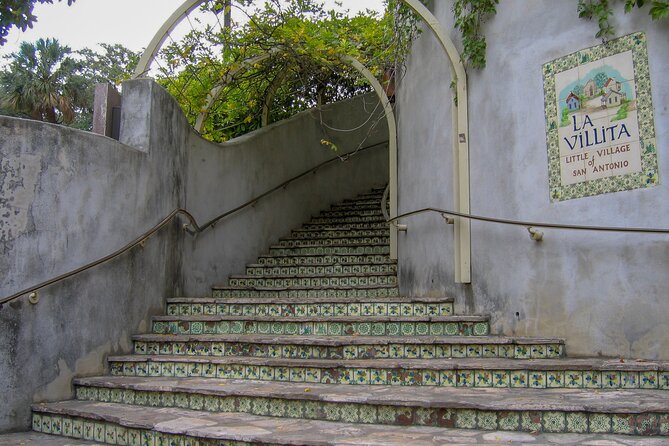
After Labor Plaza, the tour switches to the river’s earliest neighborhood story. The audio notes that this was the first neighborhood in San Antonio, with simple houses built along the banks. Then it gives you a very practical instruction: when you reach the big set of stairs on your left, stop walking.
That pause cue matters. It’s the tour telling you to orient yourself—where the river sits, how the neighborhood likely hugged the water, and what you’re looking at from the right angle before the next section.
Stop 4: Rosita’s Bridge and the meaning of a name
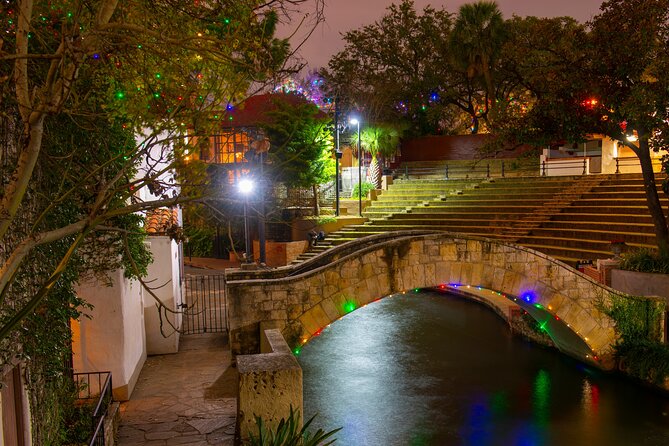
Rosita’s Bridge arrives next. It’s ivy-covered and gets its name from Mexican-American singer Rosita Fernandez. This stop is a nice reset after the stairs cue because it’s scenic, easy to find, and it gives you a “breathe for a second” viewpoint along the river.
You’ll get a feeling here for how much the River Walk is designed for walking, lingering, and photographing—while still wrapping in history so it doesn’t feel like decoration only.
Marriage Island: love stories with a heart-shaped clue
Then comes a small island sticking into the river that the audio describes as shaped like a heart. It’s Marriage Island, and the tour says more than 200 couples get married here each year.
Even if you’re not there for weddings, the “heart” detail is a fun way to look at the space. It turns an ordinary bend in the river into a place with ongoing personal stories.
Tower Life Building and a Spanish-style plaza
As you continue, you’ll spot a tall skyscraper on your left: the Tower Life Building, dating to 1929. The audio notes it’s a 31-story building rising 404 feet and that it was the tallest in San Antonio until 1968.
This is a good reminder that San Antonio’s story isn’t frozen in the past. The city’s skyline has its own timeline, and this stop helps you connect older settlement patterns to modern growth.
Right after that, the audio explains a plaza design pattern used by the Spanish in New World settlements: a big cathedral on one side, the plaza on the other. It frames this as the central hub during Spanish times, where town meetings happened and vendors sold wares.
That explanation makes the next landmarks easier to “read.” When you reach City Hall and nearby civic spaces, you can recognize how Spanish planning shaped what you’re standing on.
Stop 5: San Antonio City Hall and the Main Plaza connection
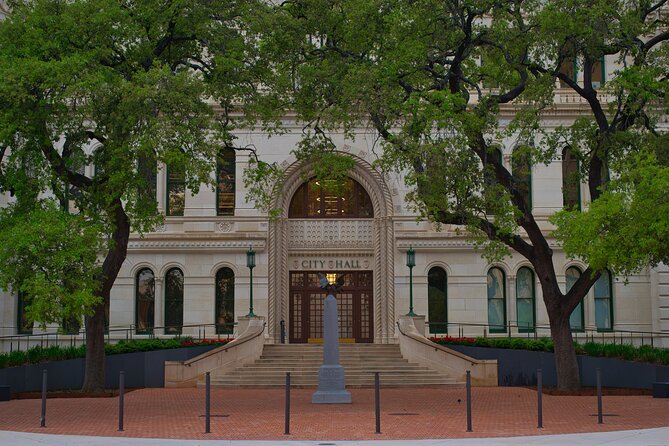
You’ll move to San Antonio City Hall, dated to 1891. The tour adds a key historical layer: the land under City Hall was the Spanish-era Main Plaza.
This is where the walking tour earns its keep. It doesn’t just label buildings; it links the present street layout to earlier planning, so the city feels like one long story instead of separate attractions.
Stop 6: Presidio San Antonio de Bexar and the mission’s protection
Next is Presidio San Antonio de Bexar. The audio connects it to the Alamo’s roots: when the Alamo was established in 1718, the Spanish built the presidio too. Soldiers were stationed here to protect the mission and growing town from raids by Native tribes or bandits, with about 50 soldiers and families initially.
This segment is heavier, but it helps you understand why fortifications and settlements were tied together. It also makes the later Alamo story feel more like a chain of events instead of a single dramatic moment.
Stop 7: Spanish Governor’s Palace (built 1749)
The Spanish Governor’s Palace comes on the right. The audio notes it was built in 1749 and originally served as residence for military commanders. Later it became the primary residence of the Spanish governors of the province.
If you want a clear picture of colonial power, this is one of the strongest stops. You’re not just seeing a landmark—you’re learning what it was used for, which changes how you perceive the architecture and location.
Stop 8: The Alamo and the numbers behind March 6, 1836
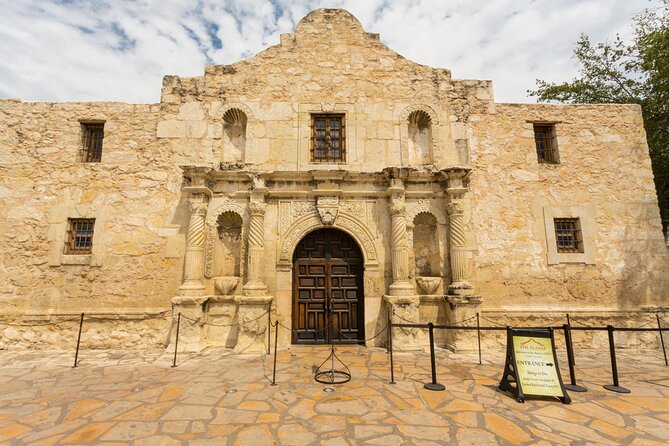
Then you hit the Alamo. The audio describes the full assault launched by General Antonio López de Santa Anna on March 6, 1836. By then, reinforcements had slipped through, but the tour says the defenders numbered just over 200 against Santa Anna’s thousands.
This is the emotional center for a lot of visitors, and the tour’s approach keeps it grounded in scale and timing. You’ll likely feel the weight of the place more after you hear the numbers and understand the imbalance.
Stop 9: Esquire Tavern and what happened right after Prohibition
After the Alamo area, you get a different kind of history at the Esquire Tavern. The tour says it opened in 1933, the year Prohibition ended. It also notes the tavern’s 100-foot bar and that it holds the title for the longest bar in Texas.
I like this contrast because it prevents the walk from turning into pure solemnity. You get a shift toward social life—where people gathered once laws changed and the city moved into a new era.
Stop 10: Aztec Theatre and Hollywood’s early era
The final stop is the Aztec Theatre, dating to 1926. The audio places it in early Hollywood’s golden age and mentions that it showed classic films back when Charlie Chaplin was a major name.
This ending works well if you like cultural history. You finish not with another war story, but with entertainment and the way technology and film shaped daily life.
Small practical tips that improve the experience a lot
Bring headphones or earbuds. The audio is the whole point, and outside noise along the River Walk can be louder than you expect.
Download the tour on strong Wi‑Fi or cellular while you’re still set up. After download, it works offline, but the initial step matters. If your phone struggles to download, you’ll feel it immediately once you’re walking.
Keep your walking pace realistic. The tour’s location-triggering wants you to move like a person, not like you’re speed-walking through a museum. If you stop for a long time, the next cue might lag until you’re back on the path.
If you want the best flow, stick to the tour route and its pace cues. The app expects you to be in the right corridor at the right time so the story matches what you see.
And if you’re visiting solo, this type of tour fits nicely. You get the benefits of narration without sacrificing control over your time.
Should you book this River Walk self-guided audio tour?
Book it if you want a straightforward, do-it-at-your-own-pace walk that explains what you’re seeing. At $14.99 you’re paying for a long chain of storytelling—30+ stories, offline use, and an efficient route from River Center to Alamo Plaza. It’s especially good if you like history but don’t want a group pace or a strict schedule.
Skip it or rethink it if your main goal is paid interior sightseeing. Since admission tickets aren’t included, you’ll still need to buy entry where you want to go inside. Also, if you prefer a live guide who can answer questions on the spot, this won’t replace that.
If you’re the type who loves walking first and reading later, this is a strong match. You’ll leave with a clearer sense of why San Antonio looks the way it does—under the river, beside the cathedrals, and all the way to the Alamo and beyond.
FAQ
How long does the San Antonio River Walk self-guided audio tour take?
The tour takes about 1 to 2 hours, depending on your pace and how often you pause for photos or snacks.
How far do I walk?
The route is about 1.6 miles long.
Do I need Wi‑Fi or cellular service during the tour?
You should download the tour while you have strong Wi‑Fi or cellular. After downloading, it works offline, and it includes offline maps so no signal is usually a non-issue.
Is the tour offered in English?
Yes, the tour is available in English.
Are admission tickets included for stops like the Alamo?
No. Attraction entry tickets or admission reservations are not included.
Can I cancel for free?
Yes. You can cancel for a full refund up to 24 hours in advance of the experience start time.