REVIEW · ARCHAEOLOGICAL SITE OF OLYMPIA
Olympia: The Famous VR Glasses Tour with Audio Guide
Book on GetYourGuide →Operated by Olympia Back In Time · Bookable on GetYourGuide
Ancient Olympia can feel like scattered stones—until the headset turns it into a place again. I like the 3D reconstructions that show the sanctuary as it likely looked, and the audio guide that makes each stop make sense as you walk. One thing to plan for: the headset time can feel tight if you also want to fit in the museums the same day.
You’ll pick up the VR kit at the office called Olympia Back in Time (search it on Google Maps; it’s across from the main church) and get a quick demo on using the glasses and the virtual map. Then you’re free to go at your pace around the site, with the audio guiding you through 15 iconic monuments.
In This Review
- Key points to know before you go
- Picking up your VR kit at Olympia Back in Time
- From ruins to 3D: what the VR actually does for you
- The self-paced route across 15 monuments
- Ancient Gymnasium and Palestra: training where you stand
- Phidias Workshop and the Temple of Zeus: the statue moment
- The Ancient Stadium: athletes, competition, and a crowdless thrill
- Nymphaeum of Herodes Atticus and the Olympic Flame ceremony
- Timing your 2-hour headset window with Olympia’s museums
- What it costs, and where it’s a real value
- Who this VR tour suits best (and who might skip it)
- Should you book Olympia Back in Time?
- FAQ
- How long is the Olympia VR glasses tour?
- Where do I meet for the tour?
- What’s included in the price?
- Is the entry ticket to Ancient Olympia included?
- What languages are available for the audio guide?
- What do I need to bring?
- What happens if I arrive late?
Key points to know before you go
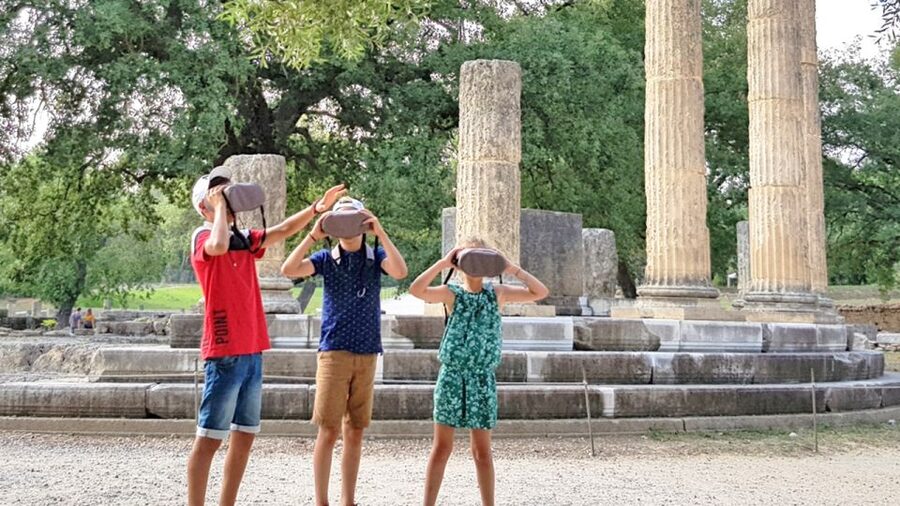
- 15 monuments in virtual 3D: you’ll see major structures visually “rebuilt” over the ruins
- Temple of Zeus + Statue of Zeus moment: you get inside the scale that’s hard to grasp on foot
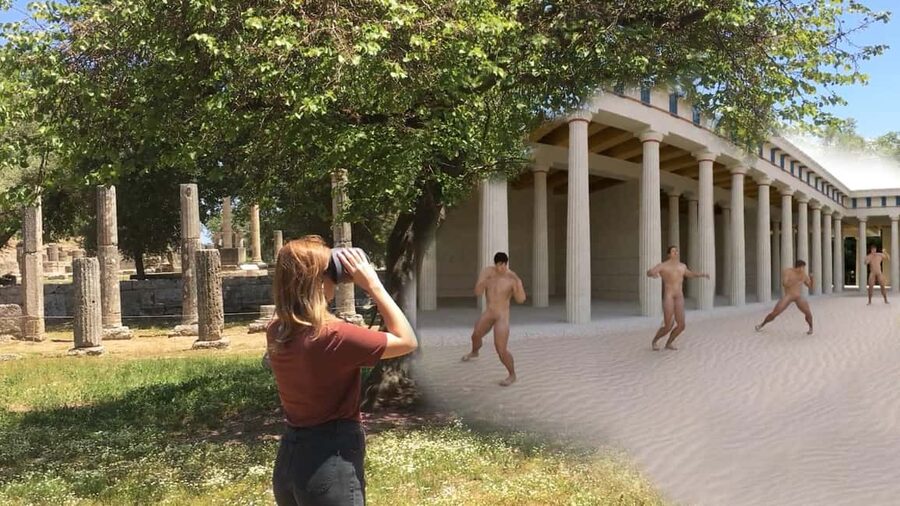
- Athletes in the Ancient Stadium: racing and competition scenes add energy to the site
- Herodes Atticus water system visuals: the Nymphaeum comes back to life instead of being a guess
- Audio + map navigation: the audio guide is meant to run with the route, so you don’t feel lost
- You can move at your own pace: great for photos and for travelers who don’t want a big-group script
Picking up your VR kit at Olympia Back in Time
This experience starts off-site, at the partner office for Olympia Back in Time. The meeting point is easy: search Olympia back in time on Google Maps, and aim for the spot across from the main church. It’s a practical setup because you’re not trying to wrestle with instructions while you’re already inside a windy, spread-out archaeological site.
In the office, you get a quick, simple introduction on how to use the VR glasses and the audio guide. You’ll also get a live demonstration and tech support, which matters because VR hardware can be temperamental anywhere. One helpful detail from the experience: the route works through cues on the headset, and you’ll want to pay attention early so the rest of the visit feels smooth.
Before you go, pack the basics they require: bring your passport or ID card. The tour also notes that a passport/driving licence/ID deposit is required, so don’t show up with only a phone and hope for the best. And yes—bring comfortable shoes. Even if the “past” is fun to watch, your feet still do the walking.
From ruins to 3D: what the VR actually does for you
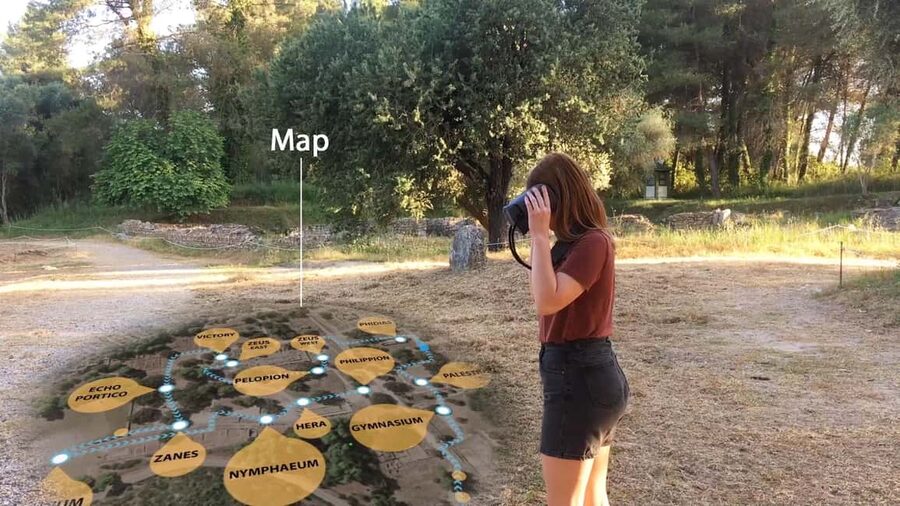
At Ancient Olympia, your brain is working in two modes: what you see is real stone, but what you’re trying to picture is ancient architecture, color, sculpture, and crowds. The VR glasses are built to bridge that gap fast.
What I really like about the way this tour is set up is that you don’t just get a single big “show.” Instead, you move through the site while the VR layers the past onto the present. That means the scale of places like the Temple of Zeus becomes clearer, and structures that look like “a few columns” start turning into recognizable spaces.
The audio guide then does the second job: it gives you the story line so the visuals aren’t random. In reviews, people repeatedly highlight that the audio commentary is straightforward and keeps the flow moving—short enough to stay engaging, but detailed enough to change how you interpret what’s around you.
A realistic consideration: the visuals are digital and can feel more like video-game imagery than crisp museum-grade realism. Also, at least a few people reported the headset sometimes losing location or needing a moment to reorient. When that happens, the fix is usually simple—stay calm, listen for the audio’s guidance, and match it to the physical signs on site.
The self-paced route across 15 monuments
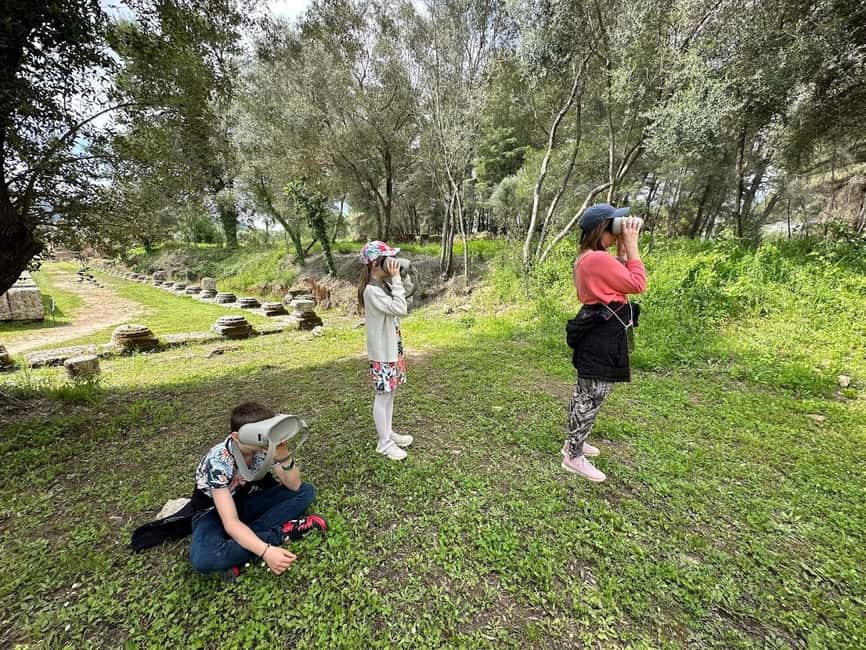
You’re not stuck in a rigid, hour-by-hour script. You follow the audio guide and virtual map, and you can keep moving at your own pace. That’s one reason this works so well for families and mixed-age groups: kids often stay interested because the experience keeps changing scene-to-scene, not because they’re forced to stand and listen.
The tour highlights 15 monuments, and the route is built around the sanctuary’s big story: athletic training, major religious architecture, and the spectacle of the games. You’ll see the VR version of the site as it comes alive in 3D—then you’ll physically stand in the ruins right where the VR action is pointing you.
A small but important tip based on the on-site instructions people referenced: when you’re directed by arrows/route cues, it helps to follow the direction the system asks for even if your body is facing a different way. After a short stretch, it gets easier to understand what the headset is expecting.
Also plan your movement around crowds. The experience can be a little disorienting if it’s busy—because you’re basically wearing VR and may not notice others around you right away. Give yourself enough space when passing people and avoid the busiest lanes if you can.
Ancient Gymnasium and Palestra: training where you stand
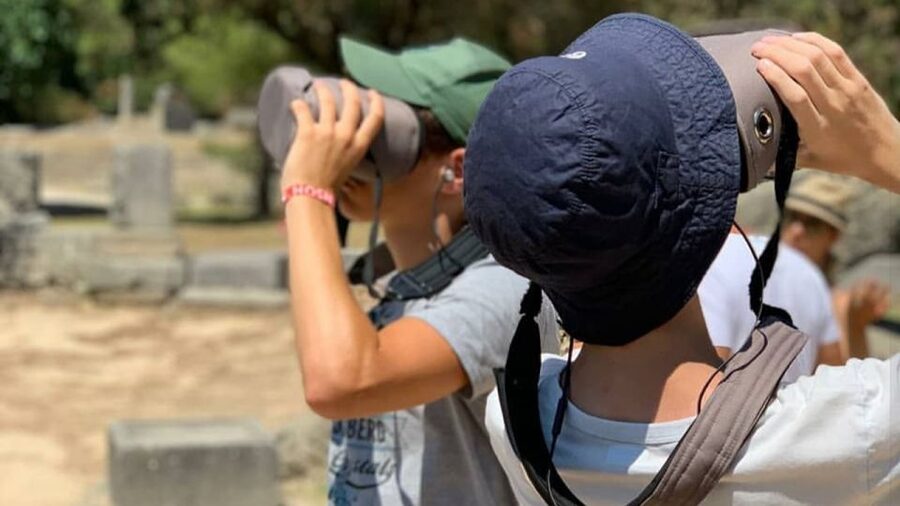
Some ruins are hard to emotionally connect with. You can admire stonework, sure. But the Ancient Gymnasium and Palestra are different because they’re about daily work—training, discipline, and effort.
In the VR, these spaces become places with motion. Instead of looking at remnants, you see the athletes training and understand the vibe of preparation. The audio guide adds the context: what the training was like, why the sanctuary mattered, and how this was a real athletic world, not just a ceremony you watch from a distance.
The VR experience at these stops is especially useful if you’re visiting with kids or teens. Sports make the past feel understandable fast. You don’t have to read a long explanation on a sign. You can just look, listen, and mentally connect the dots.
A practical downside: if you’re expecting the route to fully replace walking the site, it won’t. You still need to be present and attentive, because the magic comes from the combination: your body at the ruins, VR visuals in your headset, and audio stories in sync.
Phidias Workshop and the Temple of Zeus: the statue moment
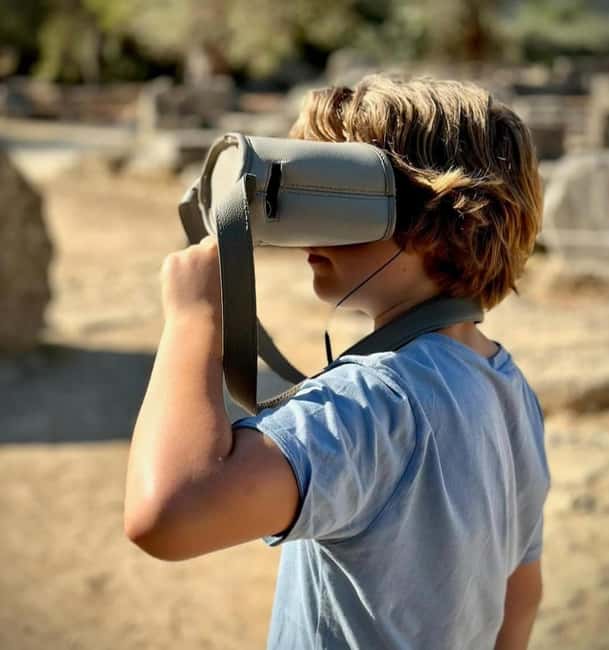
Two of the most talked-about parts are the craft and the spectacle. First comes the Phidias Workshop, where you’re virtually placed in the area linked to the creation of the statue of Zeus. For many visitors, it’s the first time they really register that these weren’t only places of worship or sport—they were also hubs of skilled work and big creative ambition.
Then comes the big one: the Temple of Zeus. The highlight here is that you can virtually walk inside the colossal temple and see the Statue of Zeus in its original splendor. This is the kind of moment that changes your perspective instantly. From the outside, the scale of major temples can be difficult to read. In the headset, the interior becomes believable.
Why this matters for your visit: you’re not just learning facts. You’re building spatial understanding. Once you’ve experienced the virtual interior, the real ruins make more sense—what the building was meant to contain, what it was meant to impress, and how visitors would have felt walking up to it.
If you’re the type who likes photos: this is a great stop to pause and get your bearings. The VR scenes do not mean you’ll capture perfect “Instagram reality,” but they do help you frame what you’re seeing on the ground.
The Ancient Stadium: athletes, competition, and a crowdless thrill
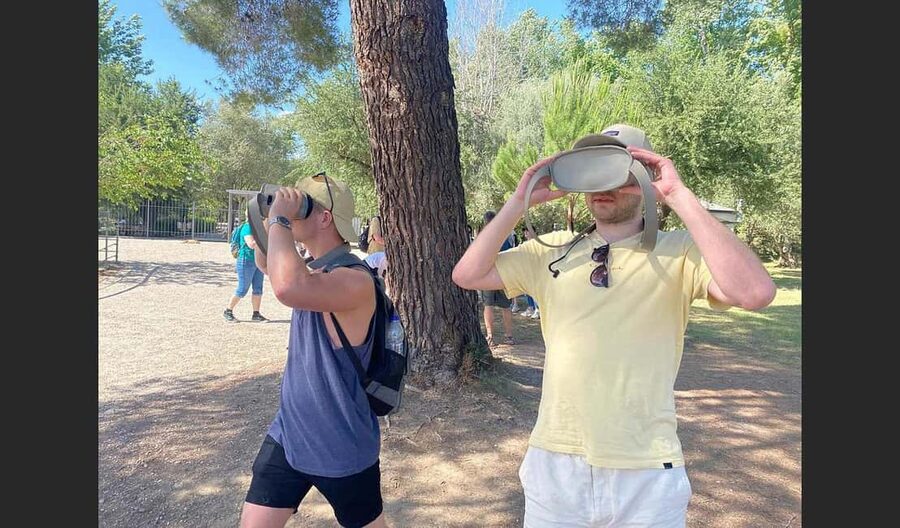
The Ancient Stadium is where the experience turns from architecture to emotion. With VR, you get transported into a live, ancient sporting event. Athletes compete, and you’re positioned as a viewer—close enough to feel the event’s momentum.
Even if you’re not a “sports history” person, this is one of the easiest ways to grasp the Olympic spirit. It doesn’t require you to imagine crowds from scratch. The VR shows you the action, and the audio guide helps connect it to what you’re standing near.
A word of caution, because VR + crowds can be tricky: if it’s packed, being visually cut off from your surroundings can make passing people awkward. Keep your movement controlled, and if you need to stop for better audio clarity, do it off to the side.
The payoff: once you watch the competition scene, the stadium stop stops being “more seating ruins” and becomes the place where it all happened.
Nymphaeum of Herodes Atticus and the Olympic Flame ceremony
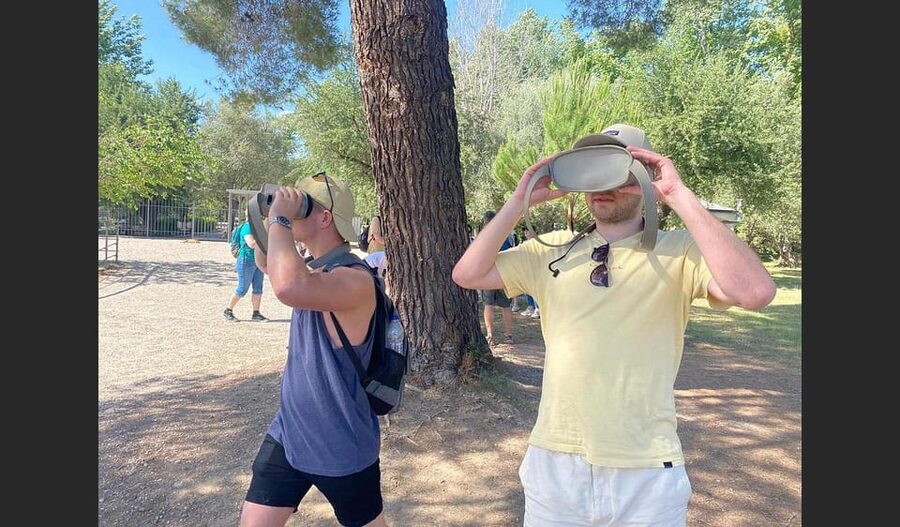
Two later stops add a different kind of understanding: practical engineering and ritual drama.
First is the Nymphaeum of Herodes Atticus. In VR, it’s fully restored, and the point isn’t just to look pretty. The audio ties it to a real problem: water shortages in summer. In ancient games, thousands of spectators converged on the sanctuary—so systems like this mattered. You start to see Olympia as a working event machine, not only a religious venue.
Then you end with the lighting of the Olympic Flame ceremony. It’s a modern link, but the tour frames it as part of the lasting power of the games idea. The value here is that you leave with a sense of continuity: the location was a stage for competition long ago, and the tradition still shapes how people imagine Olympia today.
These stops are also good pacing anchors. By the time you reach them, you’ve already built context with the training spaces and the major temple architecture. So the ritual and the water system land more clearly than if they were your first stops.
Timing your 2-hour headset window with Olympia’s museums
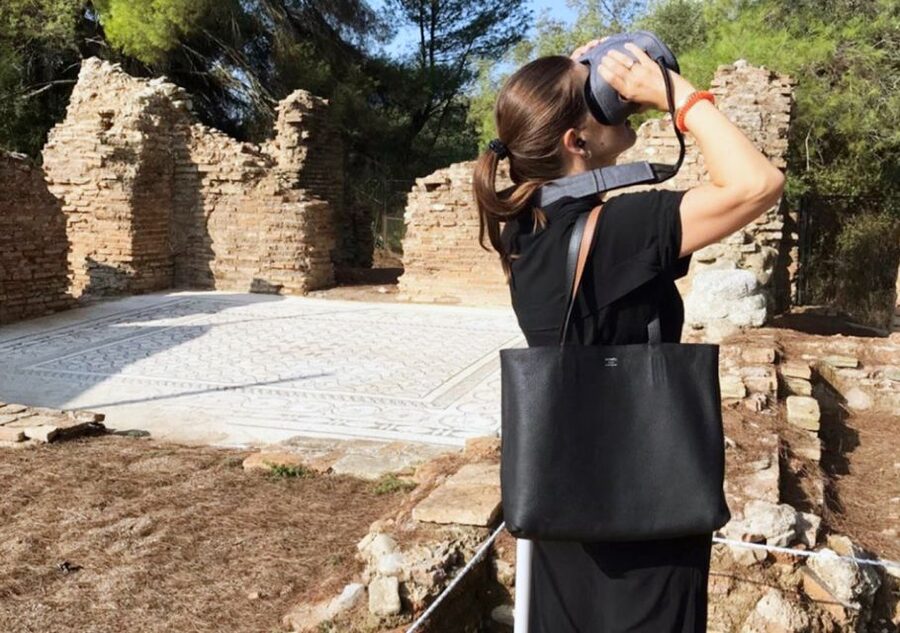
A big practical consideration is time. The experience is sold as 2 hours, which is great if you want the VR layer and then keep exploring on foot without feeling pressured. But if you plan to add the museum(s) (especially the Museum of Olympic History), you should think ahead.
One of the most useful pieces of advice from real-world experiences: if you do the VR at the site first, you’ll avoid feeling rushed later. If you start with the museum and then try to squeeze VR in after, you can end up fighting the headset return window and you may feel shortchanged by the last part of your day.
Here’s how I’d plan it:
- If the museum is a priority, do it either before VR only if you’re confident about your timing, or after VR with a shorter museum visit.
- If you want the full VR effect, treat the headset portion as the “main event” and let the museum be the bonus.
Also, remember that even self-paced still means guided sequencing through numbered areas. You’ll move faster than you think when you’re following cues and audio, but you might also want extra time at the stadium and Zeus temple scenes because they’re visually dense.
What it costs, and where it’s a real value
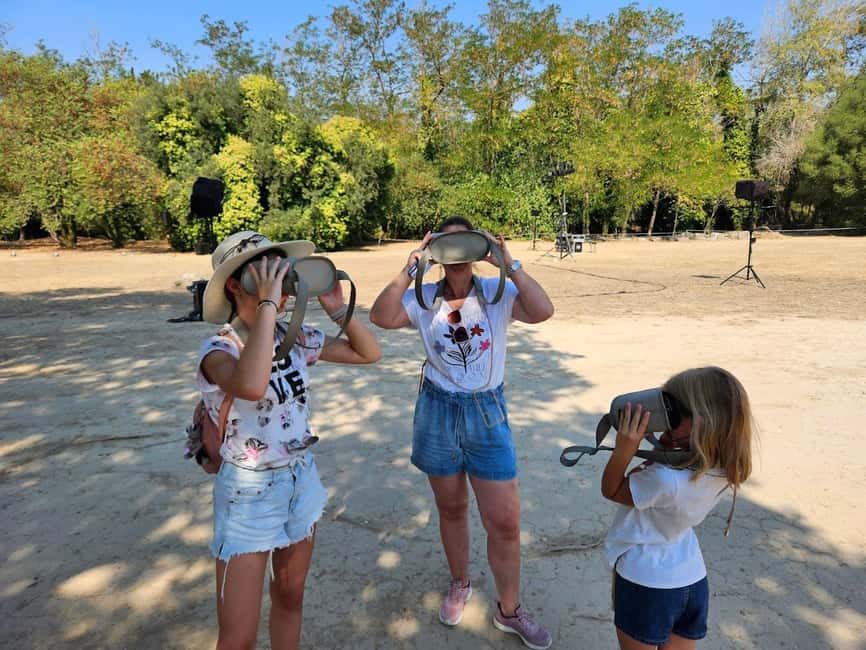
The price is $29 per person for the VR glasses rental and the audio guide, plus a live demo and technical support. On top of that, Olympia entry is not included, and it’s listed as 20€ (with free entry for certain age groups: EU visitors under 25 and non-EU visitors under 18).
So the real decision is: is the headset worth paying extra on top of the site ticket?
In my view, for many people the answer is yes—because this tour fixes the biggest problem with archaeological sites: you can’t always “read” what you’re looking at. At Olympia, a lot is ruined stone. The VR layer turns that into recognizable spaces and gives you a story to attach to those spaces. That’s not a small upgrade. It changes your understanding, not only your entertainment.
It’s also strong value for families. Reviews repeatedly point out that kids stay engaged, and teens often get more out of it than they expect because they’re watching action rather than standing in silence.
Two money-smart considerations:
- Budget for the separate entry ticket unless you qualify for free entry based on the stated rules.
- If you’re traveling as a group, remember the device time is limited—so you may want to go at times when crowds are manageable, which reduces the chances of feeling frustrated while wearing the headset.
Who this VR tour suits best (and who might skip it)
This is a great match if you want:
- A self-guided experience with structure (audio + virtual map)
- A fast way to understand Olympia without paying for a traditional group guide
- A stronger connection to the games through athlete scenes and the stadium stop
- A fun learning tool for kids and teens
It may be less ideal if:
- You strongly prefer to rely only on what’s on-site (signs, museums, and your own reading)
- You dislike wearing gear that blocks your normal view for extended periods
- You’re trying to do a very packed day where every minute is already scheduled (the headset time is the constraint)
One more note I’d keep in mind: if you’re planning both site and museums, decide what you want to “win.” The VR experience is the part that can feel wasted if you run out of time.
Should you book Olympia Back in Time?
If you’re visiting Ancient Olympia and thinking that ruins might feel flat, I’d book it. The big reason is simple: it turns the site into a readable story—training areas, the Temple of Zeus and the statue moment, the stadium competition, the Nymphaeum water system, and the flame ceremony. You’re paying extra, yes, but you’re buying understanding.
If you’re budget-tight and only want the site itself, you can still enjoy Olympia without the headset. But if you want your day to feel like more than a walk among stones, this VR tour is one of the most practical ways to get there.
FAQ
How long is the Olympia VR glasses tour?
It runs for 2 hours.
Where do I meet for the tour?
Find the office by searching Olympia back in time on Google Maps. The meeting point is across from the main church.
What’s included in the price?
Included are the virtual reality glasses (rental), an audio guide, a live demonstration, and technical support and information.
Is the entry ticket to Ancient Olympia included?
No. Entry is listed as 20€, with free entry for EU visitors under 25 and non-EU visitors under 18.
What languages are available for the audio guide?
Audio is available in Dutch, French, English, German, Spanish, Italian, and Greek.
What do I need to bring?
Bring your passport or ID card, and wear comfortable shoes.
What happens if I arrive late?
Late arrivals (over 45 minutes) will be canceled without a refund.