REVIEW · NEUSTIFT
Neustift Monastery: Admission with audio guide
Book on GetYourGuide →Operated by Kloster Neustift · Bookable on GetYourGuide
Nine centuries fit in one calm walk. At Kloster Neustift, I love the baroque basilica with 365 angels and the way the audio guide turns the cloister into a timeline you can actually follow. The one drawback I’d flag is that the main entrance can be hard to spot when you first arrive.
You’ll explore most of the complex at your own pace, using a free audio guide loaded in the HEARONYMUS app. Just remember to bring headphones, because the experience lives in your ears as you move from church to cloister to museum to the old library hall.
In This Review
- Key highlights worth your time
- What Kloster Neustift really is (and why it works as a self-guided visit)
- The church and cloister route: the part you should start with
- Museum and the old library hall: when the monastery turns scholarly
- The free HEARONYMUS audio guide: how to make it actually enjoyable
- Admission price and value: what $15 gets you here
- Entrance-finding and ticket hiccups: the small issues to plan around
- Getting there smoothly from Bressanone/Brixen (train, bus, or car)
- What to bring and what rules to expect on site
- Who this audio-guided monastery visit suits best
- Should you book the Kloster Neustift audio guide?
Key highlights worth your time
- 18 chapters of storytelling that cover almost nine centuries of art and monastery life
- Free audio guide in English, Italian, and German so you can match your pace to your language
- A self-guided walking route through the old collegiate church and cloister
- Museum stops and the famous library hall that make the place feel both scholarly and atmospheric
- The baroque church details often described as jaw-dropping, including 365 angels
- Easy arrival by car with free parking, plus bus links from Bressanone/Brixen
What Kloster Neustift really is (and why it works as a self-guided visit)
Kloster Neustift is an Augustinian collegiate monastery in South Tyrol (Trentino-South Tyrol), and it’s the kind of place where one building teaches you how centuries changed the world. The big win here is that you’re not stuck in a rigid tour group. You move through the abbey complex, and the audio guide provides the connective tissue between what you see and what it meant.
The audio guide is structured like a guided walk, but it’s flexible. You get 18 chapters, and the content is designed to follow you through the abbey church, cloister, museum, and the famous old library hall. If you like architecture, music, education, and the economic side of monastery life, this is a rare mix of art and everyday purpose.
The monastery also has a strong “look closer” vibe. That’s important because some of the most impressive moments are in the details—exactly the kind of things you’ll appreciate more when you’re not rushed.
The church and cloister route: the part you should start with
Your walking tour typically begins with the abbey church and continues into the cloister. This is where you get the strongest sense of the monastery’s long life, because you’re seeing a space shaped for worship, learning, and community over time.
I especially like how the route gives you variety without feeling scattered. You’re in a church setting, then you step into the cloister, which naturally shifts your rhythm. The audio guide helps by framing what you’re looking at within that broad sweep of near-nine centuries of architectural and cultural history.
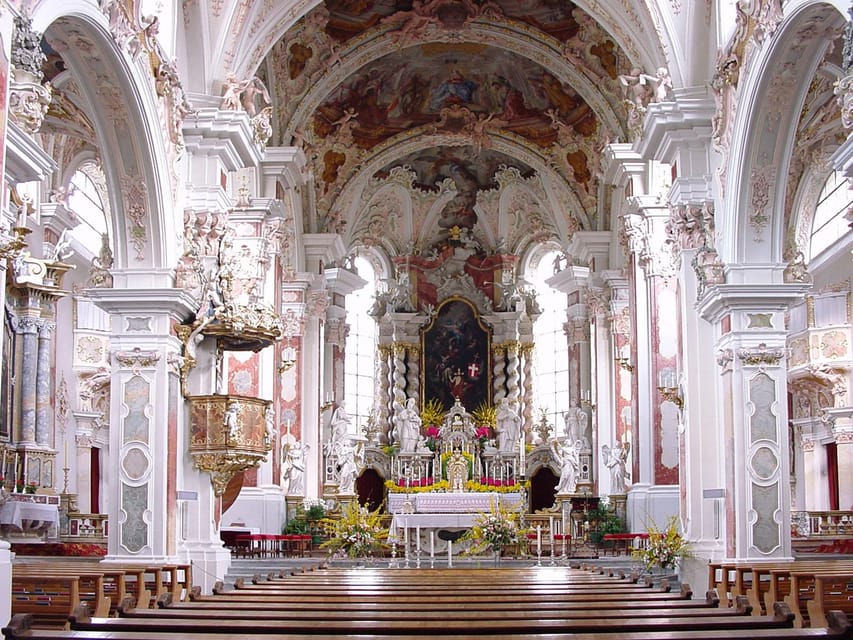
The church itself gets consistently high praise for its baroque impact. One of the most memorable details people call out is the basilica’s 365 angels, plus marble-like pink decorative elements described as faux marble. Even if baroque isn’t your usual style, the sheer theatrical craft here tends to win people over fast.
Practical tip: pause. In a place like this, the audio guide will keep moving, but you don’t have to. Take a minute to scan the church interior before you move on—then let the next chapter catch up to what you’ve already noticed.
Museum and the old library hall: when the monastery turns scholarly
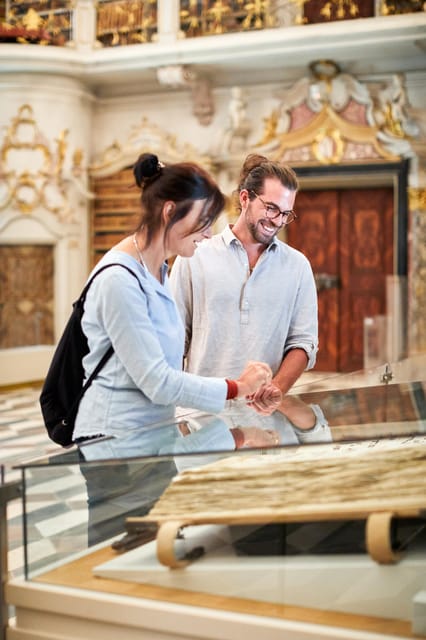
After the church and cloister, the visit shifts into museum territory and then into the famous old library hall. This part matters because monasteries aren’t only about buildings. They’re also about knowledge: collecting, teaching, copying, and preserving.
The audio guide approach is helpful here because a museum display can feel like a checklist if you don’t have context. With the 18 chapters playing in sequence, you’re more likely to connect objects to the larger story of how the monastery functioned across time—educational, musical, and economic threads woven together.
Then comes the library hall, the highlight people specifically mention when they talk about why this place is worth paying for. Even if you’re not a book person, you’ll likely enjoy how the room changes the mood of the whole visit. It’s harder to fake that kind of atmosphere.
One consideration: museum spaces can be easier to breeze through than the church. I recommend treating the library hall as the “slow-down moment.” Let the audio chapter play without multitasking, then look around after it ends. The effect often lasts longer that way.
The free HEARONYMUS audio guide: how to make it actually enjoyable
This is the heart of the experience. You download the HEARONYMUS app (from the App Store or Google Play), then enter the keyword Kloster Neustift to get the audio guide free of charge. The guide is available in English, Italian, and German, and some content may appear in its original language.
The best part is that it’s designed as 18 chapters—so you’re not stuck with one long track you can’t manage. You can time your pauses naturally: stop for photos, step into the next room, then let the next chapter start guiding your attention.
A small practical note: bring headphones. The admission includes the audio guide, but the audio is still only useful if you can listen comfortably. If you forget headphones, you’ll be forced to skip the main value of the visit.
Also plan for a learning curve with apps. Even if everything works smoothly, give yourself a few minutes before you enter to download and confirm the right guide. This is the kind of thing that can steal your first impressions if you’re rushing.
Admission price and value: what $15 gets you here
The price is $15 per person (for one day), and it includes admission plus the free audio guide. That makes this less like a “buy a ticket to stand in front of things” experience and more like a self-paced guided tour you control.
Here’s why I think it’s good value: you’re paying for access to a full complex—church, cloister, museum, and the library hall—plus an audio framework that explains what you’re seeing. Without that guide structure, you’d lose a lot of the meaning. With it, you get the feeling of a curated storyline while still exploring at your own speed.
Is it as good as a live guided tour? It depends on how you travel. If you love Q&A and human explanations, you might miss that interactive layer. The big compromise is that you’re responsible for moving along the route and listening for cues.
But if you’re happy to explore on your own and want a strong context layer, this is one of those “audio guide done right” experiences.
Entrance-finding and ticket hiccups: the small issues to plan around
I’ll be honest: there are a couple of friction points you should handle up front.
First, signage for where the main entrance is can be poor. If you arrive for the first time, give yourself extra minutes to orient yourself before you decide you’re lost. If you’re arriving by car, follow the signs to Vahrn and then toward Kloster Neustift, then use the free parking lot at the entrance to the monastery grounds.
Second, online reservation can be tricky for some people, and there have been cases where paid tickets were not accepted at the entrance. That’s not something you can fully control, but you can reduce stress: keep your booking confirmation accessible, and arrive with a little extra buffer time so you’re not starting the visit tense.
None of this should stop you—just treat the first 10 minutes like part of the experience, not an afterthought.
Getting there smoothly from Bressanone/Brixen (train, bus, or car)
Getting to Neustift is straightforward, and the location is set up for day-trippers.
By car: take the Brenner highway A22, exit at Brixen/Pustertal, then follow signs toward Vahrn and then toward Kloster Neustift. There’s free parking at the entrance to the monastery grounds, which makes timing easier when you’re exploring on your own.
By train: travel to the train station in Bressanone/Brixen. From there, bus connections go to the monastery.
By bus: local bus lines run directly from Bressanone/Brixen to the monastery, and the bus stop is located very close to the site.
What I like about this: you can choose the transport that fits your day. If you’re doing South Tyrol as a loop, driving gives you control. If you’re using public transport, the bus proximity means you’re not dealing with a long walk before you even start listening.
What to bring and what rules to expect on site
This visit is simple on paper, but you’ll have a better time if you prep the basics.
Bring:
- Headphones (needed for the audio guide experience)
Not allowed:
- Pets (assistance dogs are allowed)
That’s about it, which is great. Less guesswork means you can focus on the actual visit.
If you know you’re sensitive to crowd noise, plan around it. Monastery spaces can be calm, but you’ll still want to hear the audio clearly. Solid headphones help you hear the narration while still taking in the building’s quiet.
Who this audio-guided monastery visit suits best
This is a great match if you enjoy:
- art and architecture you can study slowly
- religious buildings with a strong decorative identity
- “learn as you walk” travel
- history told through objects, rooms, and spaces rather than lecture halls
It’s also ideal if you prefer a self-guided experience. You get the whole complex route, and you can decide how long to linger in the church versus the cloister versus the museum.
If you’re the type who wants a person to explain things in real time, you may feel limited. The experience does not include a guided tour. You’ll be relying on the 18 chapters to do the teaching.
Should you book the Kloster Neustift audio guide?
Yes, you should book this if you want a full-day monastery experience with built-in context and you like exploring at your own pace. The free audio guide in English, Italian, and German, plus its 18-chapter structure, is the difference between passively seeing rooms and understanding why they were designed the way they are.
I’d skip it only if you strongly need a live guide for explanations and questions. Also arrive with a little extra time for orientation, especially if the entrance signage seems unclear, and keep your confirmation ready in case of ticket-check confusion.
If you’re looking for a day in South Tyrol that feels both cultural and practical—walkable, paced, and full of concrete details—this one is easy to recommend.