REVIEW · KANSAS CITY
Kansas City Self-Guided Walking Audio Tour
Book on Viator →Operated by History with Action · Bookable on Viator
Kansas City has a talent for mixing old glamour with hard truths. This self-guided audio walk strings together downtown landmarks into a story you can follow at your own speed. Hands-free audio plays as you approach each spot, and offline maps help you keep moving even if signal is spotty.
I like that the format stays simple: download once, then just start the first cue and let the route guide you. I also like the choice of stops—theatres, civic buildings, and neighborhood history—so you’re not just looking at pretty facades. One possible drawback: this walk is mostly about the past, so if you’re craving today’s street life and current scene, you’ll want to add your own exploring between stories.
In This Review
- Key Points You’ll Actually Care About
- What This Kansas City Audio Walk Really Feels Like
- App Setup and How the Tour Starts (So You Don’t Miss the First Cue)
- Route Snapshot: From 601 E 12th St to 1000 Locust St
- Stop-by-Stop: Folly Theater and the 12th Street Theater Era
- Hotel Phillips (Former Glennon) and Harry Truman’s Haberdashery Connection
- Jackson County Courthouse: Shared Architecture Logic
- Barney Allis Plaza and How Jazz Clubs Disappeared
- The Mark Twain Statue: Nostalgia from Hannibal, Missouri
- The Majestic and Tom Pendergast’s Drink-and-Politics Reality
- Garment District: When One Industry Fed a City and the Nation
- 21c Museum Hotel Kansas City: From Savoy Steaks to Truman’s Lunch Habit
- New England Building and the Changing Meaning of Tall
- New York Life Building: Kansas City’s First Skyscraper
- Muse of the Missouri Fountain: A Memorial You Walk Past
- 1000 Walnut St and William Anderson, the Bloody Bill Story
- Ilus W. Davis Park: Civil Rights-Era Timing and National Shock
- Value and Price: Why $14.99 Often Makes Sense
- The Best Way to Do It: Fit, Pace, and Small Tactics
- Who Should Book This Kansas City Audio Tour?
- Should You Book It or Skip It?
- FAQ
- How long is the Kansas City Self-Guided Walking Audio Tour?
- Is this tour guided by a person?
- What language is the tour available in?
- Do I need cellular service or Wi-Fi during the tour?
- Where do I start and where does it end?
- What time can I take the tour?
- How do I start the audio on my phone?
- What’s included in the price?
- Can I use the tour more than once?
- What if I need to cancel?
Key Points You’ll Actually Care About
- Offline first: download while you have strong cellular or wifi, then use the tour without service.
- 33+ audio stories in 1.7 miles: lots to listen to, not just quick landmark readouts.
- Lifetime access: no expiry, and you can reuse it anytime on any trip.
- Pay once, control the pace: start and pause whenever you want for photos and breaks.
- Downtown walking with an easy loop: starts near 12th Street and ends at 1000 Locust St.
What This Kansas City Audio Walk Really Feels Like
This tour is built for walking, not hustling. You get a route that runs about 1 to 2 hours and covers roughly 1.7 miles, with multiple short story stops along the way. Instead of a lecture, you get location-triggered narration that plays automatically when you’re near each point.
The best part is how low-friction it is. Once you download the app and enter your password, you’re not managing menus every five steps. You’re just walking, pausing when you want, and letting the audio do the timing.
The storytelling leans into Kansas City’s identity: theatres and performers, civic architecture, political power, and the industries that shaped everyday life. You’ll get names and context that connect different blocks into one bigger picture, which makes your “what am I looking at?” moments much less random.
App Setup and How the Tour Starts (So You Don’t Miss the First Cue)
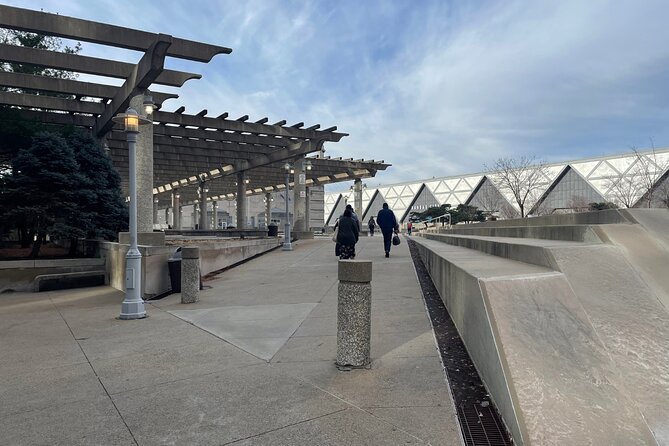
Before you go, you’ll receive an email and text with setup instructions and a password. The key practical detail: you must download the tour while you’re on strong wifi or cellular, because it then works offline afterward.
On site, you open Action’s separate audio tour guide app. If there’s more than one version, choose the one that matches your planned start and direction. Then you stand at the starting point and launch the tour; after that, the audio should begin automatically as you reach the first story location.
One small planning tip that matters: bring earbuds or headphones. The tour is hands-free, but audio only works if you can hear it over street noise. If you’re traveling as a couple, you can share the experience by splitting headphones, since the tour is designed for a small group experience on your devices.
Route Snapshot: From 601 E 12th St to 1000 Locust St
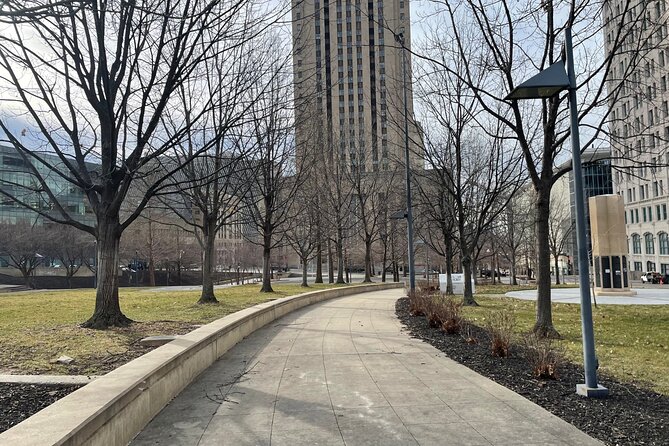
Your tour begins at KC Area Credit Union, 601 E 12th St, Room G-61, Kansas City, MO 64106. It ends at 1000 Locust St, Kansas City, MO 64106, and you’ll finish after the final story at that location.
The hours listed run from 9:00 AM to 7:00 PM, Monday through Sunday. Since the tour is self-guided and you can pause, you can time it to match daylight, your appetite for walking, and when you want to stop for photos.
Because the route is downtown and the distance is manageable, you won’t need a full-day commitment. It’s a great option when you want culture and context without booking a separate guided group slot.
Stop-by-Stop: Folly Theater and the 12th Street Theater Era
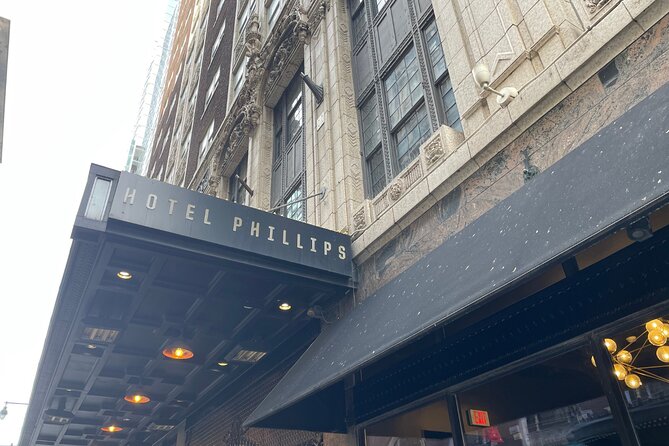
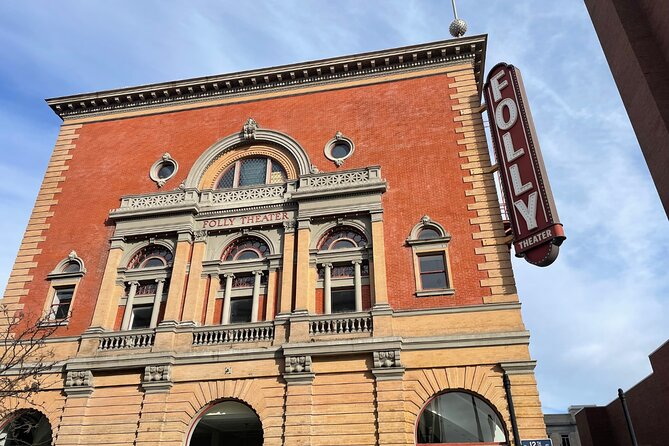
Your first big moment is the Folly Theater, a surviving landmark from the early 1900s theater scene. The story frames what it meant for Kansas City residents to walk the stretch and choose entertainment like it was daily life. It also sets up a theme you’ll keep seeing: buildings are more than buildings here—they’re tied to people, careers, and shifts in local culture.
What I’d watch for: the comparison to the other historic venues in the area. The audio ties the Folly to a time when Kansas City had a three-theater “one stroll” entertainment option along 12th Street, including places tied to jazz and dramatic productions.
You’ll hear names connected to stage and screen legends, including Shirley Booth, Humphrey Bogart, and the Marx Brothers. Even if you only recognize one or two, that’s a quick way to anchor the Folly in a larger American performance story.
Practical note: this first stretch is where you’ll likely get your bearings. If you’re new to walking tours, start with a slower pace here so the audio and your rhythm sync up before you move on.
Hotel Phillips (Former Glennon) and Harry Truman’s Haberdashery Connection
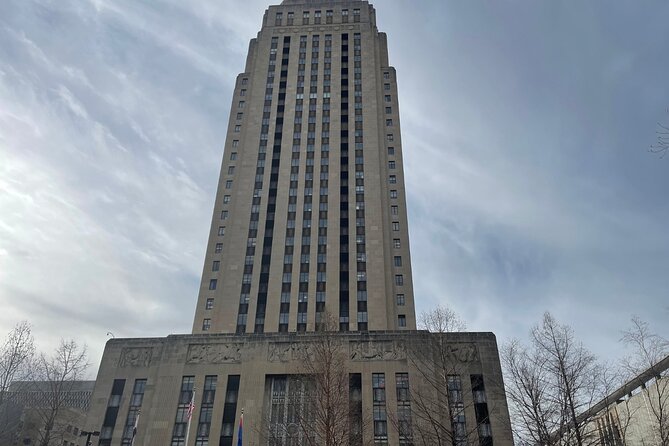
Next up is Hotel Phillips Kansas City, part of the Curio Collection by Hilton. The narrative points to the older Glennon Hotel on the same corner and explains a detail that’s easy to miss: “haberdashery” meant a men’s clothing shop, not a whimsical souvenir stall.
The story links the Glennon to Harry Truman, giving you a very human entry point into history. Instead of abstract politics, you get a specific image—Truman moving through commerce and then, later, into his broader public role.
This stop is good when you like “people stories.” It helps you understand why places in downtown can feel packed with meaning even if the street looks modern today.
Jackson County Courthouse: Shared Architecture Logic
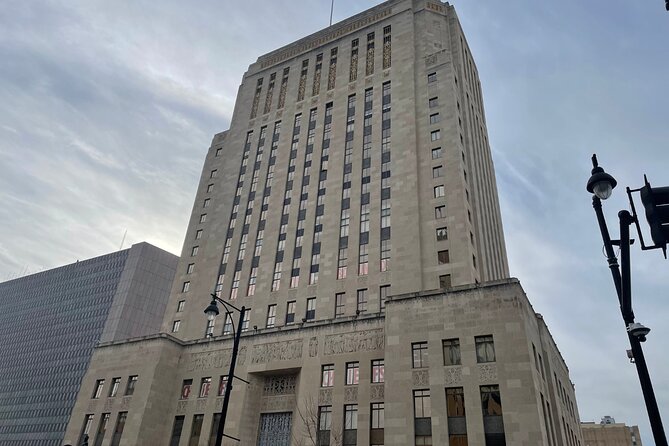
At the Jackson County Courthouse (built in 1934), the audio makes a smart connection: it points out a resemblance to City Hall. The reason is practical and interesting—both structures were designed by the same architecture firm.
This kind of comparison is one of the benefits of an audio format. You can look at a building and immediately understand what to notice next—symmetry, proportions, and how official architecture telegraphs authority.
Time here is short, so don’t plan a long photo session. Instead, treat it like a visual check-in: listen, look once or twice, and move on.
Barney Allis Plaza and How Jazz Clubs Disappeared
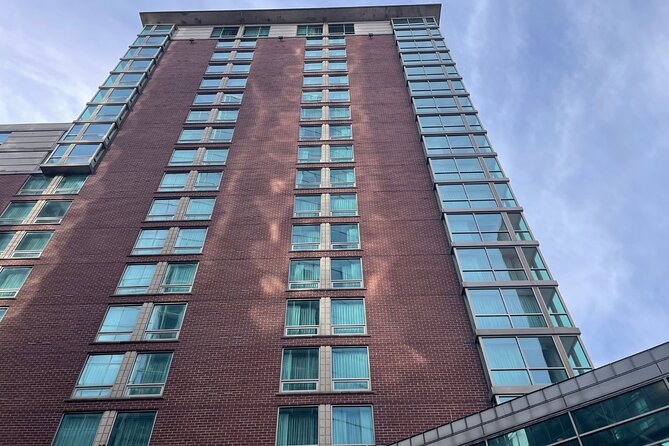
At Barney Allis Plaza, the story centers on what Kansas City lost when the Gayety was expanded. It explains that one premier jazz club was taken out of the equation as the area changed, and it underlines how important jazz was to residents.
This stop works best if you’re curious about culture that can vanish quickly. The plaza may look like open space today, but the audio brings back the idea of what this spot used to deliver at night—music, community, and nightlife identity.
If you like history that doesn’t sugarcoat change, this is a strong middle-stop.
The Mark Twain Statue: Nostalgia from Hannibal, Missouri
At the Mark Twain Statue, the narration focuses on Twain’s Missouri roots—his childhood in Hannibal and the nostalgia he carried even when his family stayed relatively poor.
This one is more reflective than architectural. It’s a pause that helps you shift from Kansas City’s civic and entertainment story into a writer’s lens: how early life shapes how people remember home.
It’s also a good moment to stand still for a minute, since the route keeps moving after this.
The Majestic and Tom Pendergast’s Drink-and-Politics Reality
At The Majestic, the audio goes back to 1911, when the bar opened because the Quality Hill neighborhood needed a quality place to have a drink. The narration also ties the story to Tom Pendergast, calling him James Fitzpatrick’s important ally.
This stop is a reminder that social spaces aren’t separate from power. Bars, hotels, and gathering spots often act as backchannels where deals happen, reputations grow, and community ties form.
If you’re interested in how politics actually operated at the street level, don’t rush this one. The story gives you a framework for reading downtown as a network, not isolated sites.
Garment District: When One Industry Fed a City and the Nation
The Garment District stop is the longest theme-style story on the walk. The audio explains that Kansas City’s garment industry was one of the largest in the U.S., second only to New York in the 1930s. It also notes that nearly a quarter of all clothing in the United States came from Kansas City during that era.
This is where the walk turns from famous names and landmarks into work-life history. You’ll hear about workers moving quickly between factories and production tasks, giving you a sense of daily rhythm behind the glamour.
Practical tip: keep an eye on street layouts here. Even if factories are gone, the scale of the industry helps you imagine how busy these blocks must have been.
21c Museum Hotel Kansas City: From Savoy Steaks to Truman’s Lunch Habit
At 21c Museum Hotel Kansas City, the story goes to the earlier Savoy era. The audio describes it as a fancy steakhouse in the early 1900s, and connects it again to Truman, who would walk a few blocks after selling hats and ties.
The narration even specifies the detail of Truman sitting in Booth No. 4 and ordering a steak cooked well-done with light vegetables. That kind of specificity is what makes history feel like it happened to real people with real routines.
This stop also helps you understand why downtown hotels and restaurants matter. They weren’t just places to eat—they were part of the social and political fabric.
New England Building and the Changing Meaning of Tall
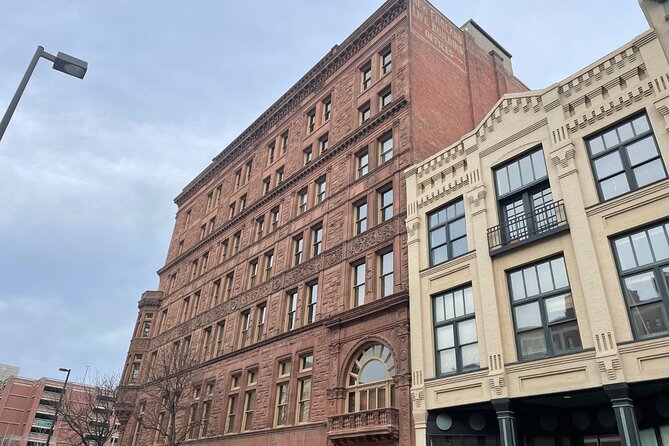
At the New England Building, the audio points out it’s a brownstone apartment building and notes that it used to be the tallest building in the city. That contrast—then vs. now—is a lesson in how quickly skylines evolve.
If you like architecture, this is a solid pause. You’re not getting a technical engineering lecture; you’re getting an “interpretation prompt” for what you see in front of you.
Short version: look up with the story in mind. The building feels different once you know what it replaced.
New York Life Building: Kansas City’s First Skyscraper
The New York Life Building is described as Kansas City’s first skyscraper, finished in 1890. The audio frames it as stately, brick-and-brownstone, and gives you a starting point for noticing why it was such a big deal at the time.
You’ll likely want to linger here for photos, but remember the walk is designed as a steady flow. If you stop too long, you’ll end up rushing later to finish the route.
A helpful strategy: take one good photo and one “look closer” moment, then keep moving.
Muse of the Missouri Fountain: A Memorial You Walk Past
At Muse of The Missouri Fountain, the audio explains it’s a statue commissioned in 1962 by banker James Kemper in honor of his son, who was killed in action while fighting the Nazis during World War II.
The statue depicts one of the Greek Muses carrying a fishing net, and it’s also a fountain. This stop blends art and memorial function, and you’ll probably find yourself reading the details more carefully than you expect.
Even if you don’t usually care about monuments, this one offers a reason. It’s not just decorative; it’s personal remembrance turned into public space.
1000 Walnut St and William Anderson, the Bloody Bill Story
At 1000 Walnut St, the tour adds a darker thread to the route: it connects the site to a famous Confederate bushwhacker named William Anderson, also known as Bloody Bill.
This stop can feel like a curveball if you expected only architecture and civic landmarks. That said, it keeps the tour honest about the fact that American history is complicated, and places often carry many layers.
Use the story as a prompt for further reading. The audio hints at a bigger context, but your own follow-up will turn this stop into real learning.
Ilus W. Davis Park: Civil Rights-Era Timing and National Shock
At Ilus W. Davis Park, the narration explains Mayor Davis’s election in 1963, during the Civil Rights Movement. It then places a major challenge on April 9, referencing the assassination of Martin Luther King Jr. in Memphis just five days earlier.
This is where the tour shifts into national history with local pressure. It’s not just “sad facts,” though. The timing helps you understand why a local leader’s role would become heavier and more urgent.
If you want an anchor for understanding the era, this stop gives it to you in plain terms.
Value and Price: Why $14.99 Often Makes Sense
At $14.99 per person, this is priced like a low-cost culture add-on. The value comes from two things you can’t fully buy at the same cost elsewhere: lifetime access and offline, self-paced storytelling.
You’re paying for more than audio. You’re paying for a route that’s built to reduce decision-making. You don’t have to figure out which landmark is worth your time, or where to walk next—just follow the cues.
Also, it’s a good fit for short stays. Since the walk is about 1 to 2 hours, you can slot it into a day even if your schedule is tight.
On the other hand, if you want lots of present-day commentary—shopping streets, food trends, what’s new right now—this tour is less designed for that. It leans historical, so expect the past to take center stage.
The Best Way to Do It: Fit, Pace, and Small Tactics
This is ideal if you like walking but hate being bored. The route gives you enough structure to stay engaged, yet enough flexibility to pause for photos, side stops, and slower listening.
To get the best experience:
- Bring headphones/earbuds so narration stays clear.
- Download the tour on strong wifi/cellular before you rely on offline mode.
- Keep your pace steady. The route is short, so rushing makes the story feel fragmented.
- If construction or temporary changes affect sightlines, adjust your route slightly while staying on the tour path. The idea is to keep the audio cues aligned.
One more practical note from the “how to enjoy this” perspective: don’t treat every stop like a museum exhibit. Many stops are quick, with 5 to 10 minutes of story time. Let the narration work like chapters.
Who Should Book This Kansas City Audio Tour?
I’d book this for you if you want an efficient downtown overview with story context. It’s especially good if you’re traveling solo or as a couple who likes control over timing.
It also works well if you’re the type who enjoys architecture, naming the buildings you see, and learning why a city looks the way it does. You’ll get plenty of those payoffs here—courthouse design connections, skyscraper milestones, and the way institutions shaped the skyline.
If you have mobility limits, note that the route is about 1.7 miles on foot. The tour is flexible to pause, but it’s still a walking experience.
Should You Book It or Skip It?
If you like history you can walk through and you want a low-cost way to see downtown Kansas City with context, this is an easy yes. The offline capability, hands-free playback, and lifetime access make it a reusable tool, not a one-and-done novelty.
Skip it only if you strongly prefer modern neighborhood commentary, or if you don’t want to manage a phone app at all. Otherwise, this walk is a practical way to connect landmarks into a clear story—without needing to wait for a scheduled guide.
FAQ
How long is the Kansas City Self-Guided Walking Audio Tour?
It takes about 1 to 2 hours for most people, and the route is around 1.7 miles long.
Is this tour guided by a person?
No. It’s self-guided. There’s no one meeting you at the start. You open the app and follow the audio cues.
What language is the tour available in?
The tour is offered in English.
Do I need cellular service or Wi-Fi during the tour?
No. You can use it offline after download, but you must download the tour while you have strong wifi/cellular.
Where do I start and where does it end?
Start: KC Area Credit Union, 601 E 12th St Rm G-61, Kansas City, MO 64106.
End: 1000 Locust St, Kansas City, MO 64106.
What time can I take the tour?
The listed opening hours are 9:00 AM to 7:00 PM, Monday through Sunday.
How do I start the audio on my phone?
After booking, you’ll receive instructions and a password. Once onsite, open Action’s audio tour app, choose the correct tour version if needed, then launch the first story from the start point.
What’s included in the price?
It includes the audio stories, offline maps, hands-free location-based playback, and a way to access extra story content. Foods and drinks are not included.
Can I use the tour more than once?
Yes. Access is new and lifetime, with no expiry, so you can use it anytime on any trip.
What if I need to cancel?
You can cancel for a full refund if you cancel at least 24 hours before the experience starts. If you cancel within 24 hours of the start time, the amount paid won’t be refunded.