REVIEW · SALERNO
From Salerno: Vesuvius & Pompeii with audioguide
Book on GetYourGuide →Operated by Around Vesuvio · Bookable on GetYourGuide
Two big Campania icons in one packed day. You’ll pair Pompeii with a Vesuvius crater visit without stressing over tickets or driving. I like how the tour keeps things moving with stress-free transfers from Salerno and time built in for both stops.
I also like the structure: a timed climb to Vesuvius plus a focused visit to Pompeii with an included audioguide and map. The main drawback to consider is pace and effort—Vesuvius involves a steep walk, and this tour is not suited for people with mobility impairments.
Key things I’d watch for
- Skip-the-line tickets included for both Vesuvius and Pompeii, so you lose less time to entry lines
- Vesuvius crater time is free-form, letting you go at your own speed on the path up
- Two hours at Pompeii is short, but the audioguide helps you pick up key stories fast
- ID required for the Pompeii audioguide (you’ll exchange it to rent the device)
- No large bags allowed, so travel light for easier movement
- 7.5 hours total from Salerno, with timed transfers that keep the day from dragging
In This Review
- A One-Day Pompeii and Vesuvius Plan From Salerno
- Salerno Pickup: Piazza Vittorio Veneto and the Banca Generali Spot
- The Ride to Vesuvius: What the Day Feels Like on the Bus
- Vesuvius National Park: Timing, the Crater Visit, and the Walk Up
- Transfer to Pompeii: A Short Travel Break Before Ancient Streets
- Pompeii Archaeological Site: Getting the Most From Two Hours
- The audioguide system (and why the ID exchange matters)
- How to use the map without feeling lost
- Audioguide expectations (set your mind right)
- A smarter way to plan your two hours
- Skip-the-Line Value: Tickets, Time Saved, and Where It Pays Off
- Comfort and Logistics: Shoes, Bags, and Real-World Timing
- What to bring
- What’s not allowed
- Bus comfort notes
- Timing: why you should arrive early
- Who This Tour Fits Best (and Who Should Skip It)
- Price and Logistics: Is $124.61 a Fair Deal?
- Should You Book This Salerno Pompeii and Vesuvius Day Trip?
- FAQ
- How long is the tour from Salerno?
- Where do I meet the tour in Salerno?
- Does the tour include skip-the-line entrance tickets?
- Is the entrance fee to Vesuvius and Pompeii included?
- Is an audioguide included for Pompeii?
- Do I need to bring ID?
- What languages are available for the audioguide?
- Is food included?
- Are large bags or luggage allowed?
- Is this tour suitable for people with mobility impairments?
A One-Day Pompeii and Vesuvius Plan From Salerno
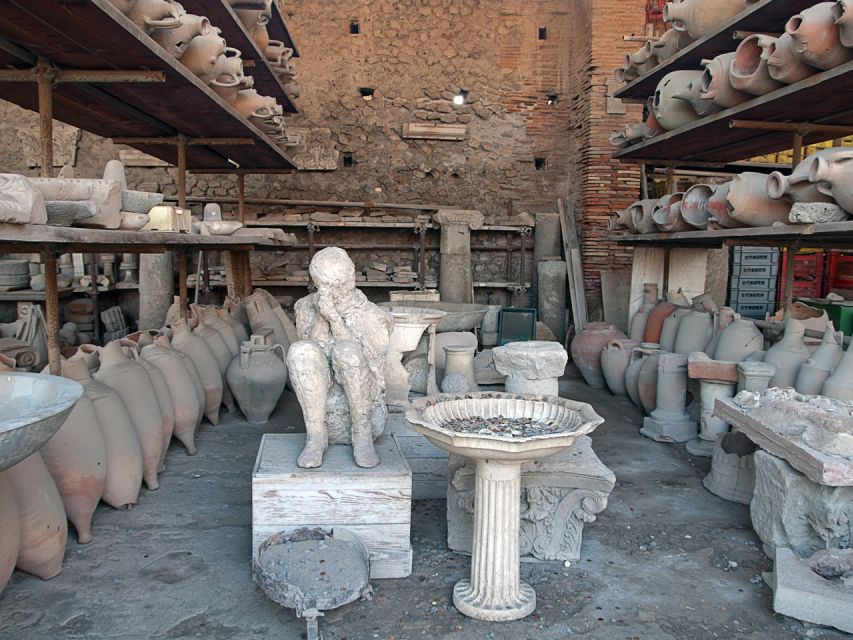
This is a classic “two-for-one” day in Campania, made practical. You leave Salerno and return the same day, hitting both the volcanic drama at Vesuvius and the preserved street life of Pompeii. It’s not a slow sightseeing stroll. It’s a plan that trades some lingering time for convenience and strong coverage.
What makes it appealing is the combo: you get the crater experience with scenic moments, then you drop into Pompeii and use the audioguide to understand what you’re seeing as you move around. In a region where independent logistics can turn into a scavenger hunt, this one keeps the gears running for you.
The time math matters here. You get about 1.5 hours at Vesuvius and about 2 hours at Pompeii. That’s enough to feel the scale and grab the highlights, but it won’t let you wander every street corner with zero pressure.
Salerno Pickup: Piazza Vittorio Veneto and the Banca Generali Spot

Your start point is specific, and that’s good. Meeting happens outside the Banca Generali in Salerno (it’s referenced as being exactly outside), and the itinerary also anchors the pickup and return at Piazza Vittorio Veneto, 6.
Why this matters: for a day trip like this, finding the correct bus quickly can set the tone for the whole day. If you arrive early and stand near the obvious landmark, you’ll feel calm instead of hunting. If you’re using a navigation app, double-check the storefront location before you commit to it.
A couple of real-world practical points to keep in mind:
- This is a coach/bus day, so you’ll want shoes that handle uneven pavement and stairs.
- You’re asked not to bring luggage or large bags, which helps everyone move faster at busy stops.
The Ride to Vesuvius: What the Day Feels Like on the Bus
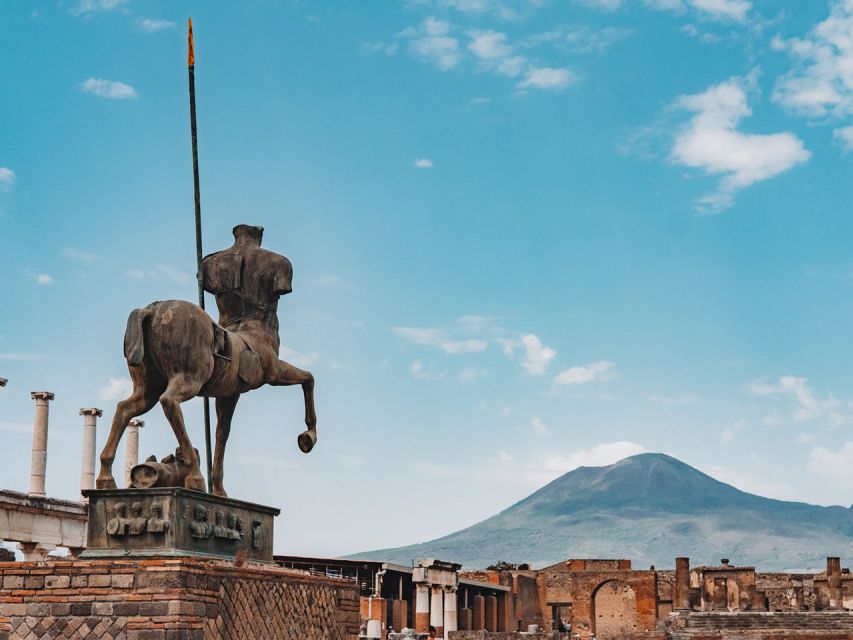
The drive to the volcano area is part of the experience, even if it’s not the headline. You’ll spend about 1 hour getting to the Vesuvius National Park, then you’ll be back on the bus for the move to Pompeii.
On a day like this, the bus time does two things for you:
- It protects your energy for the actual walking.
- It removes the stress of figuring out transit from Salerno to the volcano and on to Pompeii.
The driver is listed as Italian and English, which helps if you need quick clarification. In general, these tours run on a schedule, so pay attention during briefing and keep your timing tight when you’re ready to head back down.
Vesuvius National Park: Timing, the Crater Visit, and the Walk Up

Vesuvius is where the tour earns its name. You get about 1.5 hours in Vesuvius National Park, with free time to reach and visit the crater.
Here’s what you should realistically expect:
- You’ll have time to walk up, pause for photos, and visit the viewpoint by the crater.
- The time window is designed so most people can do it without feeling like they need to jog.
- Still, it’s a steep uphill walk, and it can feel harder than the distance suggests.
One thing I appreciate is that the tour doesn’t force you into a tight guided stop at the crater. You get free time, meaning you can slow down if the incline hits harder than expected. That also helps if weather changes—one of the easiest “wins” you can bring with you is a small rain layer (a poncho is handy) because conditions near the top can shift fast.
My practical tip: treat the climb like a short hike. Take breaks, keep your breathing steady, and save your sprinting for Pompeii’s flatter paths.
Transfer to Pompeii: A Short Travel Break Before Ancient Streets

After Vesuvius, you ride again—about 40 minutes—to the Pompeii Archaeological Site. This is where the tour’s efficiency shows. Instead of leaving you stranded between attractions, it keeps a steady rhythm: climb, crater time, bus ride, then Pompeii.
This matters because Pompeii is huge. When you arrive already tired, you don’t have the energy to correct course. A proper transfer timing gives you a better chance to arrive ready to use your two hours well.
Pompeii Archaeological Site: Getting the Most From Two Hours
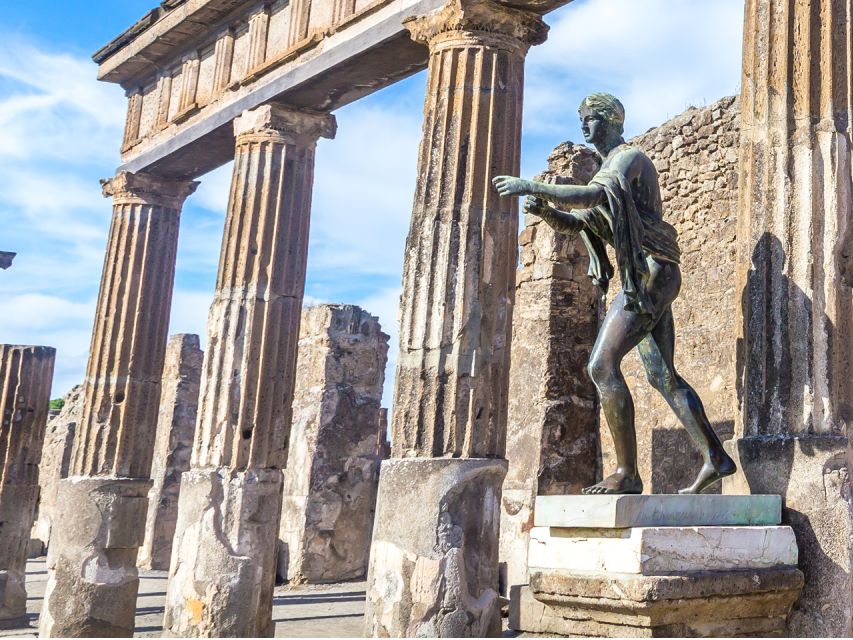
You’ll have around 2 hours to explore Pompeii Archaeological Site. Two hours sounds short until you remember how many streets and ruins there are. The trick is using your audioguide and map to build a path so you don’t burn time guessing what to see next.
The audioguide system (and why the ID exchange matters)
Pompeii includes an audioguide and map. You’re also told that it’s important to bring a valid ID document, because you’ll exchange it to borrow the audioguide for your visit.
This is a big deal for first-timers. Don’t plan to wing it with a screenshot. Bring your passport or ID card so you can walk in and start listening without delays. Once you have it, the audioguide is available in many languages, including Chinese, English, French, German, Hebrew, Italian, Portuguese, Russian, and Spanish.
How to use the map without feeling lost
The map is meant to help you connect what you’re hearing to where you are standing. Still, don’t treat it like a perfect GPS replacement. Pompeii is always changing—paths, access points, and information signage can differ from what an external map expects.
So I’d use the map for orientation, then lean on reality:
- Look for what the ground signage points toward.
- If you don’t line up exactly with an audio cue, keep walking and use nearby exhibits as your anchor.
Audioguide expectations (set your mind right)
Audio can be excellent, but it’s not magic. The tour provides an audioguide, yet its usefulness depends on whether you’re in roughly the right spot for the audio to match what you’re viewing.
If you’re standing slightly off, you might find the narration less helpful. My advice is simple: use the audioguide as a tool, not a substitute for looking. Pompeii hits you hardest when you connect details—doorways, street layouts, everyday objects—to the story being told.
A smarter way to plan your two hours
With only two hours, you’ll enjoy Pompeii more if you choose your own mini-priority list before you go. For me, I’d focus on:
- one main pedestrian route through the most obvious highlights
- one “wow” area where you can pause and absorb details
- a closing loop that gets you back without zigzagging across the entire site
If you arrive and try to see everything, you’ll end up rushing everything. This tour is best when you treat it like a strong sampler.
Skip-the-Line Value: Tickets, Time Saved, and Where It Pays Off

You’re paying for convenience, but in this case the math adds up. The tour includes skip-the-line ticket(s) for both attractions:
- Vesuvius skip-the-line ticket (valued at €11.68)
- Pompeii skip-the-line ticket for Pompeii (valued at €20)
On top of that, the price also covers transfers, booking fees, and the Pompeii audioguide and map.
Is $124.61 per person cheap? Not exactly. But when you add up what you’d otherwise figure out yourself—transport from Salerno, timed entry planning, and the hassle of arranging ticket purchase and navigation—the tour becomes a practical value play.
The key question for you is time. If you hate waiting in lines and want to spend your energy on the sights rather than logistics, this format is worth it.
Comfort and Logistics: Shoes, Bags, and Real-World Timing
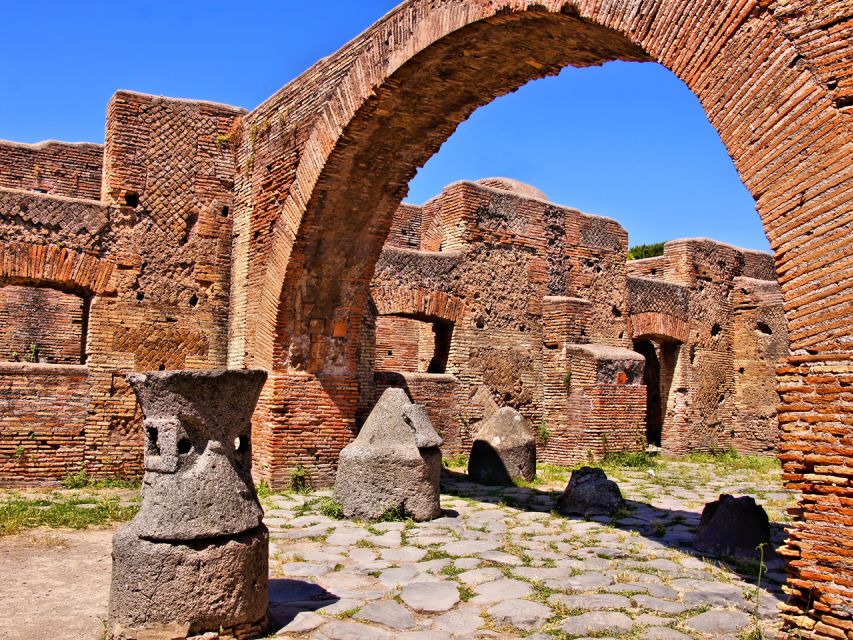
This day trip runs on a schedule, so small issues can matter. Here’s what I’d plan around from the get-go.
What to bring
- Passport or ID card: required for the Pompeii audioguide exchange
- Comfortable shoes: the Vesuvius walk is steep
- If you’re going in shoulder seasons or when weather can flip quickly, consider a light rain layer
What’s not allowed
- Luggage or large bags are not permitted.
This matters because Pompeii has a lot of foot traffic and changeable surfaces. Traveling light makes your experience smoother.
Bus comfort notes
The tour uses coach transport. That’s efficient, but you should expect basic comfort rather than luxury. If you’re sensitive to stuffy air, consider dressing in layers so you can adjust when the temperature inside the bus changes.
Timing: why you should arrive early
Some days can run late. It’s smart to arrive at the meeting point a bit early and keep an eye out for the correct vehicle rather than assuming it’ll be easy to spot. When you’re dealing with multiple pickup stops or similar vehicles, being early is your best insurance.
Who This Tour Fits Best (and Who Should Skip It)
This tour is a good match if you want:
- one-day coverage of both Pompeii and Vesuvius
- a stress-reduced plan from Salerno
- a structure that gives you “enough time” at each site instead of an all-day wandering marathon
It’s also a solid choice for people who prefer audioguides and maps. The language list for the audioguide is strong, so it can work for many visitors.
I would think twice if:
- you have mobility impairments, since the tour is not suitable for that
- you hate any uphill walking at all
- you need more time to explore Pompeii slowly—this itinerary is built for highlights, not deep, hours-long drifting
If you’re the type who plans to return to Pompeii later in life, this tour can still be a great first taste.
Price and Logistics: Is $124.61 a Fair Deal?
At $124.61 per person for a 7.5-hour day, you’re paying for:
- round-trip transfers from Salerno
- skip-the-line entries at both sites
- Pompeii audioguide and map
- the time blocks to do both Vesuvius and Pompeii
Food and beverages are not included, so budget for lunch on your own. But the big-ticket items are covered. If you’re comparing against the cost of just tickets plus transport plus your time spent planning, it becomes easier to justify.
I see this as a value choice for travelers who want a clean itinerary and less friction. If you’re the type who loves controlling every minute, you might prefer an independent plan. But if you’d rather trade a bit of flexibility for solid efficiency, this one fits.
Should You Book This Salerno Pompeii and Vesuvius Day Trip?
Book it if you want a simple, no-driving day that covers the two most famous sights near Naples in one go. The included skip-the-line tickets and Pompeii audioguide do a lot of the heavy lifting. You’ll still need to walk, and you’ll have to accept that Pompeii won’t be fully “done” in two hours—but you’ll come away knowing exactly what you saw.
Don’t book it if you’re mobility limited, or if you need long, slow time at Pompeii’s site scale. In those cases, you’ll feel rushed.
My final call: if you’re visiting Campania for a short window and you want Pompeii and Vesuvius in the same day without the stress of figuring it out, this is a smart booking.
FAQ
How long is the tour from Salerno?
The total duration is 7.5 hours (starting times depend on availability).
Where do I meet the tour in Salerno?
The meeting point is exactly outside the Banca Generali in Salerno, and the pickup/return area is listed as Piazza Vittorio Veneto, 6.
Does the tour include skip-the-line entrance tickets?
Yes. It includes skip-the-line tickets for Vesuvius and Pompeii.
Is the entrance fee to Vesuvius and Pompeii included?
Yes. Entrance tickets are included via the included skip-the-line ticket(s).
Is an audioguide included for Pompeii?
Yes. An audioguide and map are included for the Pompeii ruins visit.
Do I need to bring ID?
Yes. You must bring a passport or ID card because you’ll need to exchange it to rent the audioguide for Pompeii.
What languages are available for the audioguide?
The audioguide languages include Chinese, English, French, German, Hebrew, Italian, Portuguese, Russian, and Spanish.
Is food included?
No. Food and beverages are not included.
Are large bags or luggage allowed?
No. Luggage or large bags are not allowed.
Is this tour suitable for people with mobility impairments?
No. It is listed as not suitable for people with mobility impairments.