REVIEW · SETUBAL DISTRICT
Explore the Highlights of Evora: Self-Guided GPS and Audio Tour
Book on Viator →Operated by Niki Your TravelBuddy · Bookable on Viator
GPS guides you on foot, step by step. This self-guided Évora GPS-and-audio tour strings together the city’s standout sights with spoken guidance in your language, plus on-screen text and a map route. Two things I like a lot: the GPS accuracy for staying oriented, and the fact that you can follow at your own rhythm without a group schedule. One drawback to keep in mind: it depends on your phone working well—some folks run into download or audio timing snags, so it’s smart to be ready before you start.
You’re looking at a 2 to 3 hour walk that starts and ends at the fountain in Praça do Giraldo. Expect about 3 miles of walking if you keep moving, with lots of breaks built in because several of the stops are in squares, parks, and big outdoor sights like the Roman Temple and Évora’s walls.
The itinerary hits layers of Évora’s story—from medieval squares to Manueline-era splendor, Jewish Quarter streets, and Roman-era stone. If you want a guide who answers questions on the spot, you won’t get that here. Still, if you like practical directions and just enough context to appreciate what you’re seeing, this format is a strong match.
In This Review
- Key highlights you’ll actually feel on the walk
- Évora is built for a self-guided GPS walk
- Starting at Praça do Giraldo: Giraldo Sem Pavor and the city’s center
- Banco de Portugal: an impressive facade with a former prison past
- Igreja de São Francisco: where plain turns into opulence
- Royal Palace grounds: gardens, royal residence origins, and a museum since 1865
- Jewish Quarter streets and the city wall loop
- Agua de Prata aqueduct: 26 meters of proof that engineering is art
- Cadaval Palace and the Roman Temple: from Mudéjar blends to 2000-year stone
- How the audio tour actually works on your phone
- Timing, walking comfort, and what 2 to 3 hours really means
- Value for $8.05: what you get that a standard walking loop can’t
- Who should choose this Évora GPS-and-audio route
- Should you book this Évora self-guided tour?
- FAQ
- Where does the tour start?
- How long does the self-guided tour take?
- Does the tour end at the same place?
- What kind of guidance do I get?
- Is the Igreja de São Francisco visit included and free?
- What are the opening hours?
- Is this a private tour?
- What does it cost?
- Are service animals allowed?
Key highlights you’ll actually feel on the walk
- Accurate GPS with a visible route so you can keep your bearings fast
- Audio plus on-screen text, useful when you’re standing still to look around
- Igreja de São Francisco: an easy free interior visit that shows Portugal’s trading power in stone
- Évora’s long walls and Roman Temple give you that wow factor without squeezing into a bus schedule
- A mix of architectural styles, from Mudéjar and Gothic blends to Manueline touches
- A self-paced 2 to 3 hour loop, designed to fit a half-day in Évora
Évora is built for a self-guided GPS walk
Évora works well on foot because so many of the most meaningful sights cluster around the old center. That’s exactly where GPS tours shine. You get to wander the streets, then check the next step when you feel ready, instead of being pulled along at someone else’s speed.
I also like that the tour doesn’t lock you into one kind of sightseeing. It blends outdoor monuments (Roman Temple, walls, aqueduct) with smaller, more intimate stops (a church interior, palace spaces, neighborhood streets). In a place like Évora, that mix helps you feel the city instead of just ticking boxes.
The big practical point: you’ll need a working phone and enough battery. Since the experience uses GPS and audio, plan to start with a charge and decent signal. If your phone is on low power, it can turn a relaxing walk into problem-solving.
Starting at Praça do Giraldo: Giraldo Sem Pavor and the city’s center
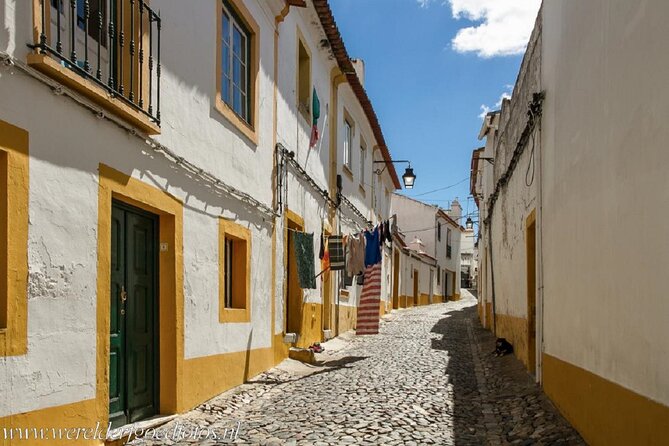
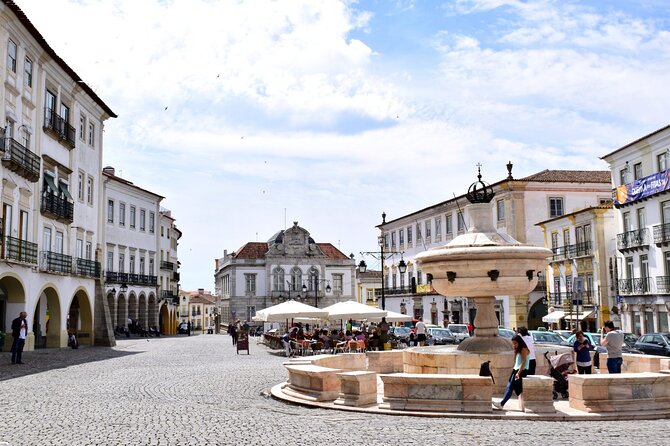
You begin right at the fountain in Praça do Giraldo (Praça do Giraldo 7, 7000-508 Évora). This square is the heart of the city and has that laid-back old-town feel even when it’s busy.
The tour’s first stop frames the square’s identity: it dates from the 14th century, and it marks where the old town hall used to be before the church of Santo Antão went up. Later, in the 16th century, the square took the name of Portuguese explorer Giraldo Sem Pavor.
Two buildings in your field of view matter here. One is Palácio de Dom Manuel, a striking 16th-century example of the transition between Gothic and Renaissance architecture. Even if you don’t read facades for fun, you’ll spot the shift in style—useful because the rest of the walk also compares eras and tastes.
Banco de Portugal: an impressive facade with a former prison past
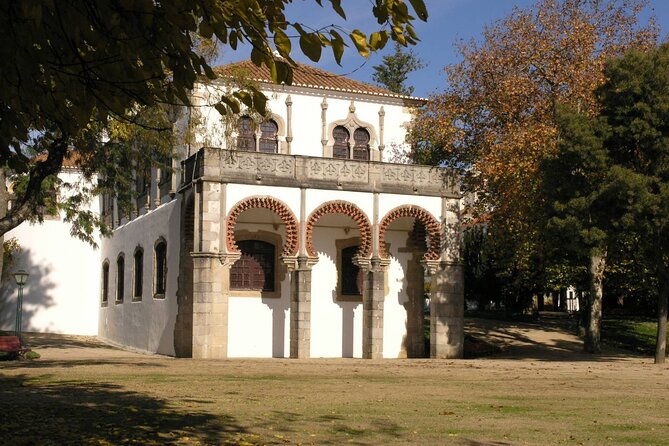
Next, you’ll pass the Banco de Portugal, one of the most photographed buildings in Évora. It sits where the city once had more than one civic function, including a prison and the old town hall.
That reuse is part of what makes this tour satisfying. You’re not just seeing pretty sights—you’re seeing how Évora’s spaces have been repurposed over time. When you look at a grand institution in a historic location, it’s easier to understand how cities survive by changing roles, not just by freezing in place.
If you like photos, this is a high-hit stop. If you prefer quieter viewing, aim to pause and look from one side, then walk around slightly. The stone and proportions play differently depending on where you stand.
Igreja de São Francisco: where plain turns into opulence
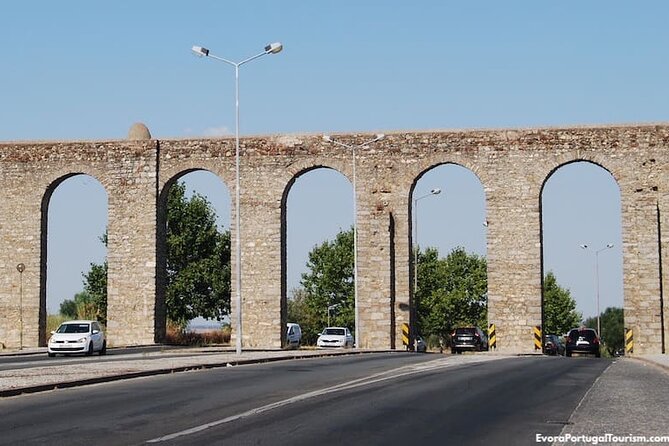
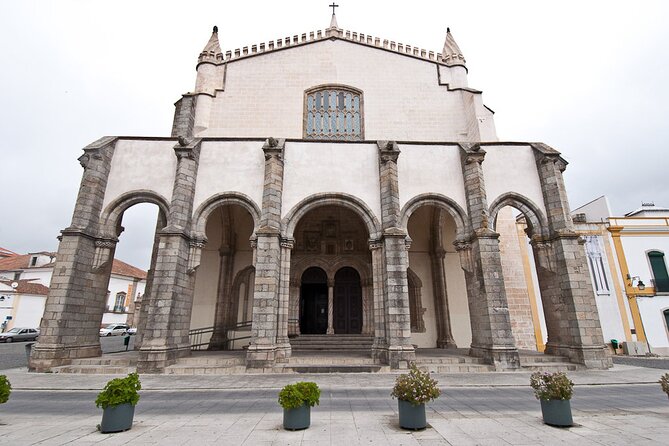
You’ll walk past Igreja de São Francisco, and the tour gives you the key contrast before you go looking. The original church, built in 1224 by the Franciscan Order, was reportedly extremely simple—no heavy decoration or rich materials.
Then comes the real payoff: at the end of the 15th century, when Portugal had become a major world trading power, the church was renovated with much more glamor and opulence. The result is a visible shift in what the building communicates. The church becomes a kind of physical snapshot of economic power.
Practical bonus: you’re encouraged to look inside, and the interior visit is free. This stop is one of the easiest ways to turn a mostly outdoor walk into something with a strong payoff without adding admission tickets.
Royal Palace grounds: gardens, royal residence origins, and a museum since 1865
After the church, the route brings you to a park area with a statue of Vasco de Gama and the royal palace integrated into the garden.
The Royal Palace of Évora is also known as the Royal Palace of São Francisco and the Palace of King Manuel I. It began as a royal residence, with origins in a monastery from the 13th century. You’ll get a sense that it grew over time, like many European power centers did—religious roots, then royal use, then public meaning.
One dated detail that helps you place it: in 1865, the palace became an archaeological museum. That’s useful because it explains why the palace spaces feel both monumental and meant for visitors, rather than purely ceremonial.
Even if you don’t spend forever inside, don’t rush the garden edges. The design ties the palace to the park, so your views change as you move a few steps.
Jewish Quarter streets and the city wall loop
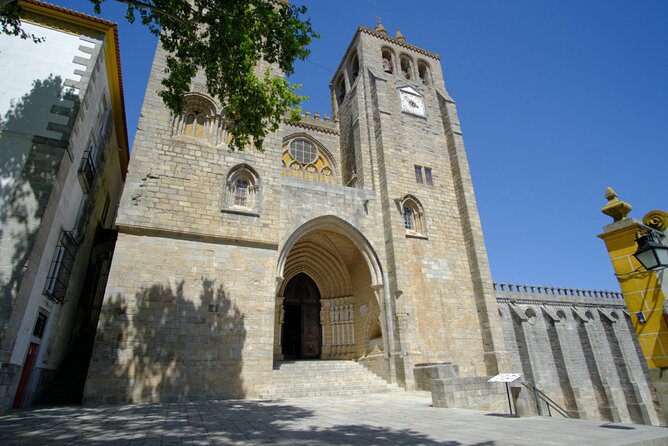
Next you move through the heart of the Jewish Quarter, described as one of the largest and richest Jewish neighborhoods in Portugal. This is a slower-feeling part of the walk because you’re moving through residential lanes and street textures rather than big showpieces.
Then the tour shifts into a big-scale experience: walking along Évora’s wall, about 6 km long. The goal isn’t to conquer every meter. It’s to get a strong impression of the city from its edges and understand how the wall shaped movement and security.
You’re given a fascinating anchor point: the oldest part of the wall dates from the third century. That detail matters because it turns the wall from just a boundary into a timeline you can see.
Tip for your own pace: when you reach sections with better sightlines, pause longer than you think you need. The wall works as a framing device for the city, and taking an extra minute or two is usually worth it.
Agua de Prata aqueduct: 26 meters of proof that engineering is art
The route continues to the Agua de Prata Aqueduct, one of Évora’s “how did they do that” moments. It runs about 18 km, and the highest arch reaches roughly 26 meters.
This is the kind of sight that makes an audio tour worth it. The tour connects the aqueduct to how water reached the city: it was connected to the fountain on Praça do Giraldo. So your walking loop closes a practical circle. You start at that fountain, you learn the aqueduct served that system, and you end up appreciating the city’s infrastructure as part of its charm.
For photography and distance: don’t just look at the aqueduct itself. Scan the surrounding area too. In many cities, these structures blend into the background until you realize how they relate to where people lived and gathered. The GPS route helps you keep your orientation, so you can look longer without getting lost.
Cadaval Palace and the Roman Temple: from Mudéjar blends to 2000-year stone
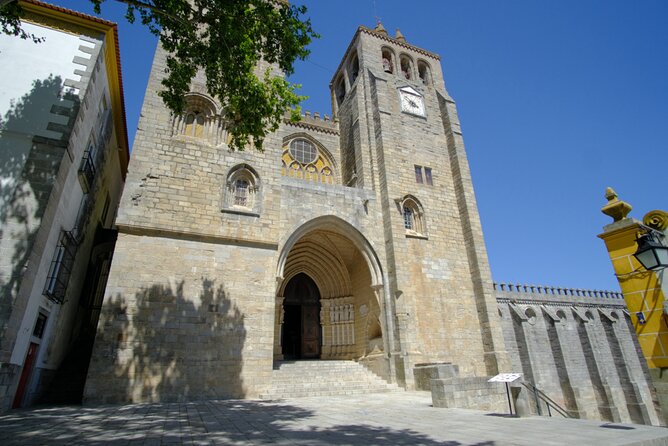
Near the Roman sights, you’ll come to Cadaval Palace, located opposite the Roman Temple. The palace is described as a unique blend of Mudéjar, Gothic, and Manueline styles, built in the 14th century on the ruins of a Moorish castle.
This is an especially good stop for people who love architecture but don’t want a course in art history. The tour gives you just enough classification so you can notice why the palace doesn’t look like a single era. You’re seeing layers of influence stacked in stone, like a conversation across centuries.
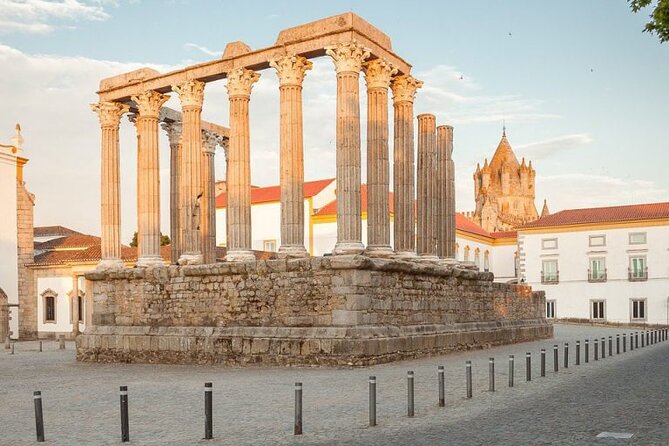
Then you hit the big calling card: the Roman Temple. The tour frames it as one of Évora’s most important historical ruins in Portugal and notes it’s been standing for about 2000 years.
This is the moment where the self-guided format can feel perfect. With a guided tour, you might rush through to keep everyone together. Here, you can slow down, find the best angle, and let your brain register that you’re looking at something that long-lived.
Don’t just stand in one spot. The temple reads differently depending on how you approach and where light hits. Use the GPS pauses you’re given to do a slow walk-around rather than one quick photo.
How the audio tour actually works on your phone
The tour guidance is built around three layers: GPS direction, spoken info in your language, and text on the screen with a map route you can follow visually. That triad is genuinely helpful because it lets you adapt to what you want in the moment.
If you like to listen, keep audio on and walk while the next directions play. If you’re stopping often to read details on buildings or to watch where the light falls, use the on-screen text so you can pause without missing the whole explanation.
Now, the practical caution from real-world use: if you’re traveling as two people in one group, you may find audio cues don’t perfectly sync on separate devices. You might hear one device start and the other lag a little. The fix is simple: when you arrive at a stop, wait a few seconds for your audio to begin before moving again, and don’t assume both phones will behave identically.
Also, because the experience relies on downloading and tech access, I’d treat it like any app-based plan: start with a quick check that the tour loads before you step too far away from where you can troubleshoot. One failed download can wipe out a chunk of your limited sightseeing time.
Timing, walking comfort, and what 2 to 3 hours really means
The duration is listed at 2 to 3 hours. In practice, that’s enough time to cover the core sights at a relaxed pace without turning your day into a marathon.
One review mentioned about 3 miles worth of walking, which sounds about right for an old-center route plus outdoor wall and aqueduct sections. Your exact distance will vary depending on how long you linger at the temple and whether you pause for palace gardens.
Because the tour runs during 7:00 AM to 7:00 PM (open daily within that window), you can choose a time that matches your energy. Early starts can be calmer for photos. Later in the day can be better for relaxing in squares and church interiors without rushing.
Value for $8.05: what you get that a standard walking loop can’t
At $8.05 per person, the value comes from the structure. You’re paying for an organized route that includes spoken guidance, on-screen text support, and map-based navigation, all aimed at helping you understand what you’re looking at while you walk.
You’re also not paying for added entry tickets here in the description—one key highlight explicitly says the Igreja de São Francisco interior is free to look into. That’s important when you’re budgeting a half-day.
There’s also a comfort factor baked in: this is marked as a private experience in the sense that only your group participates. In a self-guided format, that means you’re not negotiating pace with strangers, and you’re not waiting for someone stuck at a photo.
And if you travel with a service animal, the experience notes service animals are allowed, which is a real practical detail.
Who should choose this Évora GPS-and-audio route
This is ideal if you want to explore independently but still get context beyond a random map pin.
It’s a good match for:
- Couples and friends who like walking together at one pace
- Travelers who don’t want to commit to a fixed tour time
- People who like to stop and look when something grabs their attention (Roman Temple, palace garden angles, wall views)
- Anyone who benefits from having directions plus narration instead of only reading signs
It may be less ideal if:
- You dislike app-based navigation
- You want a live guide to answer questions as you go
- You need perfect audio synchronization across multiple devices without any waiting
Should you book this Évora self-guided tour?
I’d book it if you’re planning a half-day in Évora and you want a walk that reliably threads together the big moments: Praça do Giraldo, Igreja de São Francisco, the Royal Palace setting, the walls, Agua de Prata, and the Roman Temple. The GPS-and-audio setup is built to keep you oriented while still letting you linger.
Skip it or think twice if your phone tends to struggle with downloads or battery, or if you know you’ll be frustrated by having to troubleshoot tech mid-walk. The walking loop is great, but it’s only as smooth as your device and your readiness.
If you want a low-stress way to connect Évora’s eras—from third-century wall roots to 2000-year Roman stone—this format delivers.
FAQ
Where does the tour start?
It starts at the Giraldo Square Fountain, Praça do Giraldo 7, 7000-508 Évora, Portugal.
How long does the self-guided tour take?
Plan on about 2 to 3 hours.
Does the tour end at the same place?
Yes, the activity ends back at the meeting point.
What kind of guidance do I get?
You get GPS directions and spoken audio in your own language, with route info shown on a map and text on the screen.
Is the Igreja de São Francisco visit included and free?
The church interior visit is free.
What are the opening hours?
It runs daily from 7:00 AM to 7:00 PM.
Is this a private tour?
Yes, it’s a private experience, and only your group participates.
What does it cost?
The price is $8.05 per person.
Are service animals allowed?
Yes, service animals are allowed.