REVIEW · ARCHAEOLOGICAL SITE OF HERCULANEUM
Ercolano: Herculaneum Skip-the-Line Ticket & Audio Guide
Book on GetYourGuide →Operated by inStazione · Bookable on GetYourGuide
Herculaneum hits differently than Pompeii. What makes this experience work so well is the skip-the-line ticket plus a self-paced audio guide that lets you wander the ruins on your schedule. You’re not rushed, and you can linger where the details pull you in.
I really like that the audio tells you the story behind what you’re seeing: this Roman town was buried after Vesuvius erupted in 79 AD, and the site only resurfaced thanks to early Bourbon exploration. Later, in 1710, a farmer named Ambrogio Nucerino uncovered marble fragments while digging a well—and those pieces were eventually understood to relate to the theater area. That context turns “cool ruins” into something you can actually picture.
One drawback to keep in mind: the ruins and museums don’t offer free Wi‑Fi, and mobile signal can be spotty. You’ll want headphones (not included) and a fully charged phone, plus you’ll likely need to download the guide before you start.
In This Review
- Key Takeaways Before You Go
- Herculaneum’s Real Power: Close-Up Ruins You Can Read
- Skip-the-Line Tickets: What You Gain (and What You Still Do)
- The Smartphone Audio Guide: Your Best Friend and Your Responsibility
- What You’ll Learn While You Wander the Buried Streets
- How Long to Plan: A Realistic Four-Hour Walkthrough
- Logistics That Affect Your Day: Meeting Point, Transport, and Timing
- What’s Included and What You’ll Need to Bring
- Who This Tour Fits Best
- Should You Book This Herculaneum Skip-the-Line Audio Tour?
- FAQ
- How long is the Herculaneum ticket valid?
- Do I get a live guide with this experience?
- Is the audio guide downloadable on my phone?
- Will there be Wi‑Fi at the ruins or museums?
- Do I need to bring headphones?
- What do I need to bring for entry?
- What if I arrive after 6 p.m.?
- Is transfer included?
- Can I bring pets?
- Is the ticket refundable?
Key Takeaways Before You Go

- Skip-the-line is still practical: you get faster entry, but you may still collect a physical ticket on arrival.
- Download matters: you should save the audio guide content before entering because Wi‑Fi and signal are unreliable.
- Headphones are on you: the tour provides the audio guide, but you’ll want your own earbuds to hear it clearly.
- Herculaneum rewards slow walking: the site’s preservation makes it feel intimate even without a live guide.
- Audio controls can be finicky: a few people found the audio harder to use, so plan a little buffer time.
- Budget time like it’s Pompeii-adjacent: many visitors spend around four hours to see everything open.
Herculaneum’s Real Power: Close-Up Ruins You Can Read

Herculaneum feels human at ground level. The eruption of Vesuvius in 79 AD buried this wealthy Roman town, and what you walk through now is unusually well preserved compared to the more famous neighbor many people rush through first.
I like that your audio doesn’t just name things. It helps you connect the buildings to everyday life—so when you stand in a sheltered space or look at decorative surfaces, you can imagine people moving through the same rooms. One of the most repeated impressions is how you can almost feel Romans going about their business, not just touring ruins.
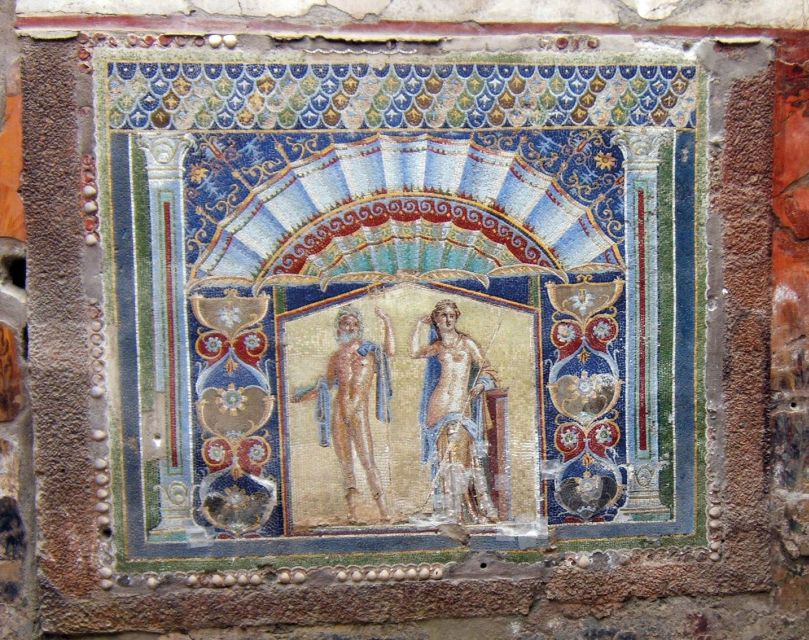
And because you’re doing it at your own pace, you can slow down for the details that matter. You’ll spend time around areas featuring frescoes, mosaics, statues, and even preserved elements like wooden screens and furniture. That kind of preservation is the big reason Herculaneum earns its own fan club.
Skip-the-Line Tickets: What You Gain (and What You Still Do)
A skip-the-line ticket is valuable on busy days, especially when school groups and tour waves stack up. The practical benefit here is less time stuck in a slow-moving queue and more time walking the site while you’re fresh.
That said, it’s not always a magic wand. One clear note: you may still need to collect a physical ticket when you arrive. The good part is that this check-in is described as quick, so you still feel the advantage compared with waiting in a long entry line.
Plan around reality: if you’re trying to make a timed plan with transport, aim to arrive with some slack. The more relaxed you are at the start, the more the self-guided format pays off.
The Smartphone Audio Guide: Your Best Friend and Your Responsibility

This is an audio tour you run from your phone. The audio guide is downloadable and intended to work while you’re there, but you’ll need to manage the technology side like a grown-up (in the good way).
Here’s the key rule: download everything before you enter. The ruins and museums don’t have free Wi‑Fi, and mobile coverage isn’t reliable. If you show up hoping signal will kick in, you risk dead audio at the exact moment you’re near the interesting sections.
Also plan for sound. Headphones are not included, and that matters. At least one experience stood out for pointing out how hearing can be difficult around other tourists; having your own earbuds keeps you in control, not the crowd noise.
One more practical note: some people found the audio harder to work because it didn’t behave in the order they expected. That doesn’t mean it’s broken, but it does mean you might want to arrive early enough to figure out the app flow before you start walking deep into the site.
What You’ll Learn While You Wander the Buried Streets

This isn’t just a walk-through; it’s a guided story delivered through audio. You learn how a wealthy Roman town became a buried time capsule after the 79 AD eruption, and you get the behind-the-scenes history of how the site resurfaced over time.
A standout detail in the tour narrative is that the memory of Herculaneum’s exact location was lost. In 1710, Ambrogio Nucerino was digging a well when he recovered valuable marble fragments. Those fragments were later understood to belong to the theater of the ancient city. That kind of “how did they find this place?” backstory makes you look at the site differently once you’re standing among the remains.
As you move through the ruins, the audio is built to match what you can actually see in front of you. People consistently highlight that the experience helps them understand how the town worked and what daily life might have felt like—especially because Herculaneum’s preservation lets details stay visible in a way that many other sites don’t.
How Long to Plan: A Realistic Four-Hour Walkthrough
You’ll likely want a few hours here to do it properly. Many visitors report spending about four hours on site, which lines up with what makes sense for a self-paced audio visit: slow walking, multiple pauses, and time to return to the places you liked.
If you only have a short window, you can still enjoy Herculaneum, but it’ll feel more like a highlights loop. With the audio guide, the real magic is that you can stop whenever a mosaic, a preserved structure, or a decorated surface catches your attention.
Because your ticket is valid for one day and starting times depend on availability, pick a start time that protects your energy. Later starts can be okay, but don’t plan to sprint out the door—this place rewards calm pace.
Logistics That Affect Your Day: Meeting Point, Transport, and Timing
Transfers aren’t included, so you’re responsible for getting yourself to Ercolano/Herculaneum. The tour info clearly lists transfer as not included, and reviews also reflect that transport can be a meaningful part of your budget when you’re coming from Naples-area ports or getting there by taxi.
Meeting points can vary based on the option you book, and the experience ends back at the meeting point. So keep your confirmation handy and treat it like your anchor. If you arrive confused, the audio guide won’t fix that problem—you’ll still need to find where to pick up your ticket and start.
One timing detail you should know: if your reservation arrives after 6 p.m., it’s processed the following morning after 8 a.m. That doesn’t affect you if you’re doing a daytime visit, but it can matter if your plans run late.
What’s Included and What You’ll Need to Bring
Included is straightforward: you get the skip-the-line ticket and the downloadable audio guide for your mobile phone.
Not included:
- Headphones (bring your own)
- Live guide
- Transfer
Bring:
- A passport or ID card
- A charged smartphone
- Headphones
That’s the practical checklist. The biggest “don’t forget” is the charged phone plus pre-download. If your battery dies, you can’t rewind time or download new content on the spot. The site also doesn’t provide the kind of connectivity you might expect in other big-city attractions.
Who This Tour Fits Best
This setup suits you if you like control. You can step out of the group rhythm and walk when you want—especially helpful when you don’t want someone talking at you over the crowd.
It also fits people who appreciate strong site preservation. Herculaneum’s intact surfaces and preserved interiors are what make it feel different, and the audio supports that kind of “look closely” experience.
If you need to pause often, the self-guided approach can be a benefit, since you can take breaks without feeling like you’re holding up a group. And if you’re comparing this to Pompeii, you’ll likely like the calmer scale and the fact that Herculaneum’s details stay readable without sprinting.
If you’re the type who needs crisp tech to work every time, keep in mind there have been reports of confusing audio order and hard-to-use audio. You can still make it work, but build in a little patience at the start.
Should You Book This Herculaneum Skip-the-Line Audio Tour?
Book it if you want an efficient entry, a self-paced visit, and an audio story that helps you understand what you’re seeing. For many people, that combination is the difference between “I saw ruins” and “I get why this mattered.”
Skip it (or consider another format) if you rely on convenience tech like Wi‑Fi and strong mobile signal at attractions, because here you’re told to download ahead. Also bring headphones—without them, the experience can turn into a frustrating sound scavenger hunt.
If your goal is to slow-walk through Roman life, admire preserved frescoes and mosaics, and connect the site to real historical clues like Ambrogio Nucerino’s 1710 discovery, this is a strong match.
FAQ
How long is the Herculaneum ticket valid?
The ticket is valid for 1 day. Starting times depend on availability.
Do I get a live guide with this experience?
No. What you get is a downloadable audio guide, not a live guide.
Is the audio guide downloadable on my phone?
Yes. The audio guide is downloadable on your mobile phone, and you’ll be sent instructions to download the smart audio guide.
Will there be Wi‑Fi at the ruins or museums?
No free Wi‑Fi is available. Mobile network coverage is not always good, so you should download the audio content before you go in.
Do I need to bring headphones?
Yes. Headphones are not included, and having your own will help you hear the audio clearly.
What do I need to bring for entry?
Bring your passport or ID card, plus a charged smartphone.
What if I arrive after 6 p.m.?
Reservations arriving after 6 p.m. are processed the following morning after 8 a.m.
Is transfer included?
No. Transfer is not included, so you’ll need to arrange your own transportation.
Can I bring pets?
No, pets are not allowed.
Is the ticket refundable?
This activity is non-refundable.