REVIEW · ANDROS
10-Day Inn-to-Inn Self-Guided Trekking Holiday Andros Trail – Cyclades
Book on Viator →Operated by One Foot Forward · Bookable on Viator
Andros doesn’t do cookie-cutter hiking. This self-guided trek threads ravines, old stone watermills, ancient towers, and sea towns across the Cyclades. I love that you get a real “walker’s pack” briefing plus practical logistics like luggage transfer and daily breakfast. One thing to plan for: the walks can be hotter and more hilly than you expect on a Greek summer timetable.
The route is set up so you’re free to move at your pace, but not alone in planning. You’ll follow trails between villages like Gavrio, Batsi, Menites, Andros Town, Apoikia, and Arni, with key historic stops along the way. If you want a trip where you can enjoy the island without playing map-chess all day, this one fits.
In This Review
- Key moments that make this trek work
- Why Andros hiking feels different from other Cyclades
- Entering the trek: Gavrio arrival and your Walker’s Pack
- Logistics that protect your vacation time: luggage transfer and breakfasts
- Day 1: Port to hotel, then Greeks mezes and trail briefing
- Day 2–3: Froussei Valley watermills, Agios Petros Tower, and arrival in Batsi
- Day 4–6: Fardia Strada to Menites, Panachrados Monastery, and the Andros Town medieval core
- Day 7–9: Apoikia ravine detours, Arni’s forest valley, and the ridge line to Batsi
- Day 10: back to Gavrio for your departure
- Price and value: what you’re really paying for
- The biggest pros: organization, communication, and trail confidence
- One consideration before you commit: heat and physical demand
- Who should choose this Andros trek (and who might not)
- Practical booking advice to make your first morning easy
- Should you book this Andros self-guided trek?
- FAQ
- Where does the trekking holiday start and end?
- What’s included in the price for this trip?
- Is this a guided hike or truly self-guided?
- What daily support do you receive?
- How physically demanding is it?
- Are service animals allowed?
- What should I know about accommodation in Apoikia?
Key moments that make this trek work
- Walker’s Pack briefing in Gavrio: trail guidance plus island tips before day one even starts
- Daily breakfast and eight nights included: you’re never scrambling for meals or beds at the end of a hike
- Ancient and Venetian-era route flavor: Agios Petros Tower and the famed Fardia Strada trail
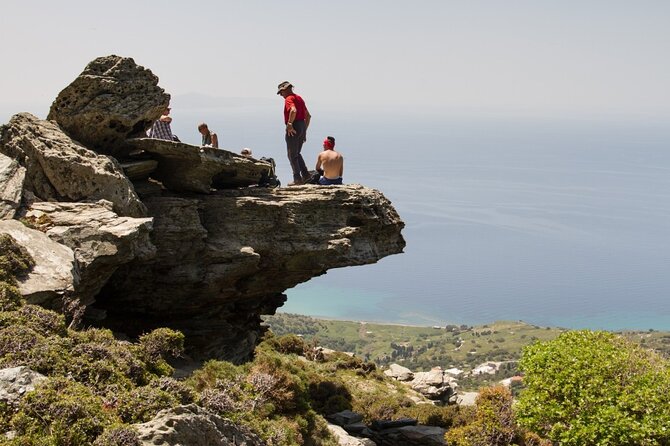
- Water-powered Andros feel: ravines, mills, and Dipotamata’s stone watermills show up more than once
- Reliable on-the-ground logistics: praised for communication and smooth transfers by the team behind the scenes
Why Andros hiking feels different from other Cyclades
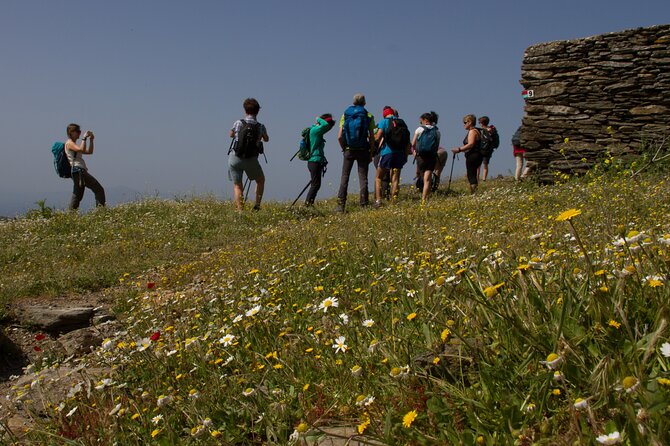
Andros has a different personality than the more famous, sun-and-white-walls islands. Here, you walk through ravines and inland routes that make the Cyclades feel less like dry postcard scenery. You’ll see how water shaped daily life—old watermills and streams show up right in the hiking story.
I also like the mix of “big sight” and “small detail.” One day you’re passing the Agios Petros Tower (Hellenistic, 4th–3rd century BC). Another day it’s quieter: a descent to Batsi’s bay, or a side detour toward small waterfalls near Apoikia. That rhythm keeps the trip from feeling like one long postcard photo stop.
The drawback is that the self-guided setup still requires you to be comfortable following routes day-to-day. The good news: the program is designed to be navigable. Still, if you want someone walking beside you to interpret every stone, you may find self-guided less satisfying.
Entering the trek: Gavrio arrival and your Walker’s Pack
Your trip starts in Gavrio. You’ll meet at the port, get driven to your hotel, and check in on day one. The welcome includes drinks and Greek mezes, so you’re not just standing around waiting for the paperwork to happen.
The most important part is what comes after: you’ll meet a team member and receive your self-guided documentation called the Walker’s Pack. This is where you get the practical trail briefing—what you’ll be walking, how the program runs, and local recommendations to help you choose what’s worth your time when you’re tired but hungry.
What I’d watch for here: your walker’s pack is only as useful as the prep you do before you start walking. Take a few minutes the first evening to mark the basics—morning start location, your end point each day, and any practical notes for heat or trail difficulty. The trek runs best when you treat this briefing like part of the itinerary, not a formality.
Logistics that protect your vacation time: luggage transfer and breakfasts
This is where the trip earns its value. You get eight nights of accommodation included, plus daily breakfast. That matters more than it sounds. After a full day on foot, you want a bed and a meal that are already handled—not a “let’s figure it out later” moment.
You also get luggage transfer, so you’re not hauling your bag up every steep bit. That one choice can turn a solid hiking day into a comfortable one. It also makes the route more flexible because you can pack less “just in case,” and focus on what you actually need on the trail.
One more practical win: it’s a private tour for just your group. That means the experience is paced and run around you, not shoehorned into a big-group schedule.
Day 1: Port to hotel, then Greeks mezes and trail briefing
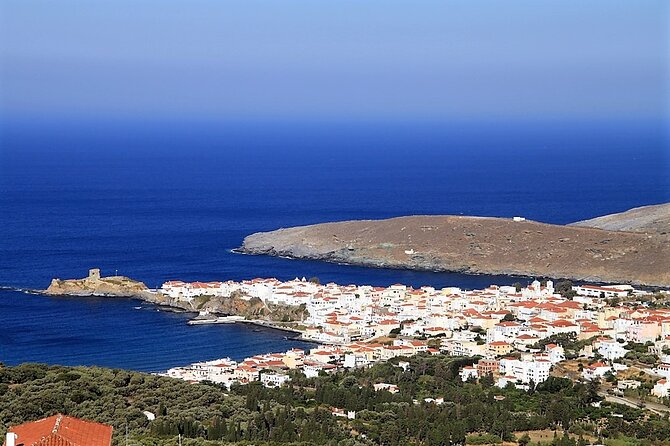
Day one is about getting your bearings fast. You’ll be met at the port in Gavrio and driven to your hotel. Then check in, relax, and enjoy welcome drinks with Greek mezes.
Later, you meet the team and get your Walker’s Pack with a briefing about the trails and island highlights. Think of this as your pre-hike training session—minus the sweaty part. It sets expectations so the first morning feels like day one of a plan, not day one of guessing.
Day 2–3: Froussei Valley watermills, Agios Petros Tower, and arrival in Batsi
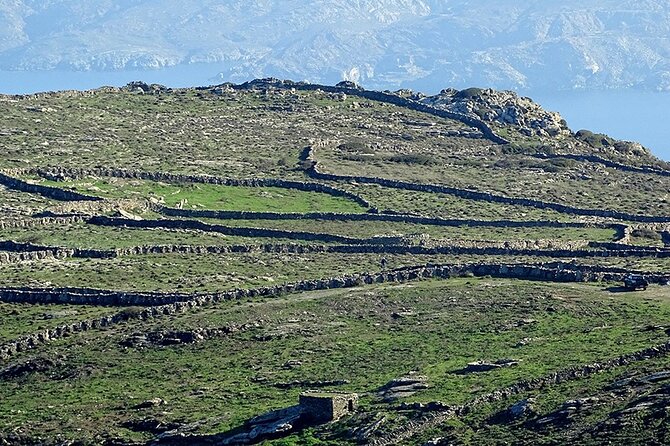
Day two begins from Froussei Valley. You walk through a ravine between Ammolohos and Palestou along a stream. This is one of the more special-feeling segments because you’re following the water story of Andros. You’ll pass old stone watermills and the remains of a millers’ village that served surrounding areas until the mid-20th century.
Then the trail climbs. You cross through the village of Ammolohos and reach the top of the mountain at around 600 meters. After that, you cross higher slopes with big views toward the port and sea, finishing in Gavrio.
Day three shifts the vibe. You start in Gavrio town and head toward the homonymous village stretch, passing the Agios Petros (St. Peter) Tower. It’s Hellenistic and noted as one of the best preserved in the Cyclades, so it’s not just a random ruin—it’s one of the clearer “why history matters” stops on the trek.
From there you continue past a picturesque village to the Monastery of Agia. After that, the route descends to Batsi. Batsi is known for its round bay and clear water—meaning your legs get a reward that looks like a postcard, but you worked for it.
Practical note: day two has the feel of a longer, more climbing-heavy opener. If you’re arriving with fresh legs, use that day to ease into pace rather than sprint.
Day 4–6: Fardia Strada to Menites, Panachrados Monastery, and the Andros Town medieval core
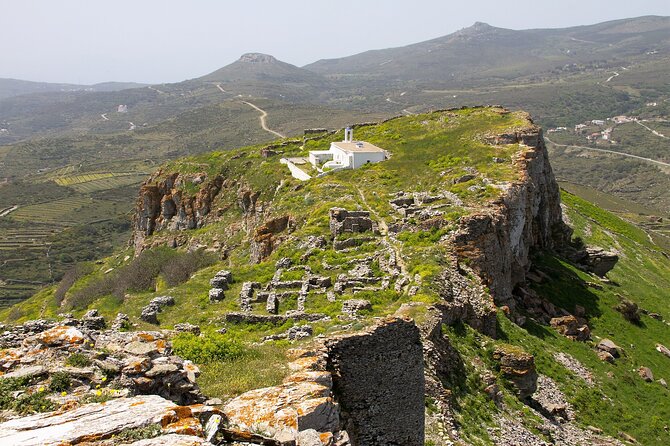
Day four is a demanding walking day. You start from your hotel following one of Andros’s oldest and longest routes, called the Fardia Strada, associated with Venetian times. The trail heads toward Pitrofos Village, then you cross the mountain with sea views before finishing at Menites.
This is one of the days where route variety matters. It’s described as a combination of multiple paths from the island’s hiking network, so you shouldn’t feel like you’re repeating the same terrain for hours. Still, plan for elevation and focus on steady steps over speed.
Day five moves into the Gerakonas mountain range and the monastery zone. You start from Ormos Korthiou, and the route combines two areas of the Andros hiking network plus part of the Andros Trail Race route. The highlight is Panachrados Monastery, located around 550 meters on Gerakonas.
After the monastery, the trail heads south toward the Korthi area villages, then brings you down toward a seaside town with agricultural scenery and sea views along the way. This is the kind of day that helps you understand why locals still use these paths: you’re seeing how people farmed, traded, and moved between inland and coast.
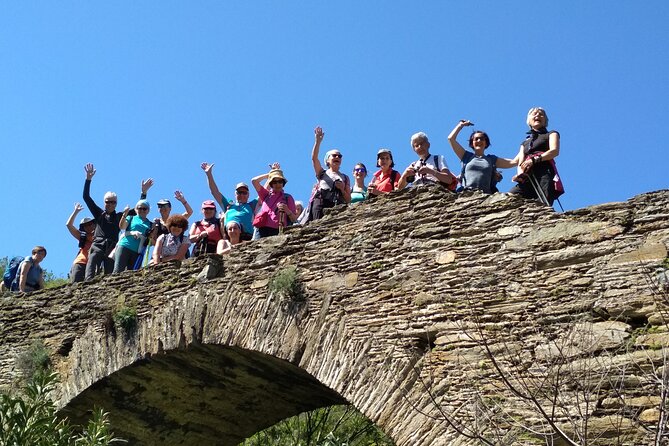
Day six brings you to Andros Town and the old road system that connected major points of the island. This walk is described as the old road to Hora, once the main connection linking two medieval castles. You’ll pass the Upper Castle and the gorge of Dipotamata, where you can see stone watermills and an arched bridge, plus the village of Sineti.
If you like seeing how geography shaped life, this is the day. Ravines, bridges, watermills—Andros is telling its story through practical infrastructure, not only through museum stops.
Day 7–9: Apoikia ravine detours, Arni’s forest valley, and the ridge line to Batsi
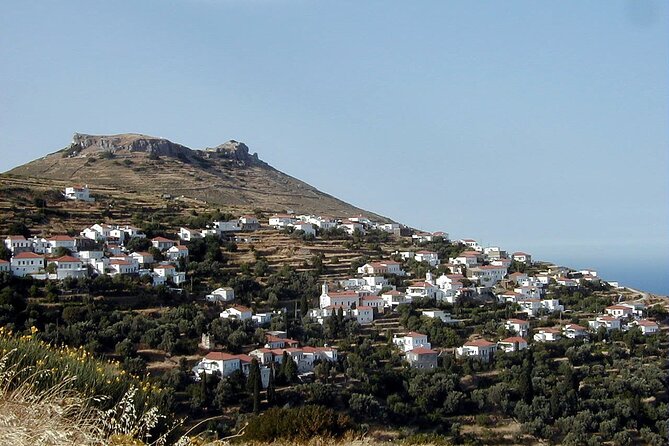
Day seven is relatively shorter, starting from the capital toward Apoikia Village. The trail runs through major settlements connected to seamanship and rural Andros. It also goes up parallel to the Pythara ravine.
One detail you shouldn’t skip is a detour toward small waterfalls. The program notes that this is worth a look, even if you’re tired and tempted to keep walking straight. Small diversions like this are what often make a self-guided trip feel personal.
There’s also a real-life contingency baked in. Depending on season, Apoikia’s hotel may be closed. If that happens, you’ll walk a 12 km circular route and overnight back in Andros Town. That’s not a flaw—it’s a practical way to keep the route alive year-round.
Day eight is about moving from Apoikia through Vourkoti toward Arni, described as the greenest forested valley on the island. You’ll walk on the ridge near Kouvara, the highest point of Andros. The payoff is big views and varied scenery—this is the day that likely rewards any effort you saved earlier.
Day nine descends from Andros’s highest mountain area and heads from Arni valley toward Batsi. The route is described as one of the greenest hiking routes with significant biodiversity. Dense vegetation shows up here, and you’ll reach the sea through greenery with views back toward the mountain and down to the coast.
If you’re wondering how to pace the last days: treat days eight and nine as your “save energy, enjoy the scenery” window. Even if you feel strong, these sections are meant to be lived slowly.
Day 10: back to Gavrio for your departure
On day ten, your departure time determines the final step. You’ll get a transfer back to the port, and the activity ends back at the meeting point.
This is one of those days where the structure matters. After nine days of planning around trail ends, knowing day ten has a straightforward exit helps you avoid last-minute stress.
Price and value: what you’re really paying for
At $1,037.16 per person for roughly 10 days, the fair question is: what’s included that you’d otherwise have to chase?
Here’s the core value:
- Eight nights accommodation included
- Daily breakfast included
- Luggage transfer included
- Private format for your group
- Self-guided support via the Walker’s Pack and team briefing
- Multiple day transfers from hotel to trail starts and back to your overnight base
When you add those pieces up, the cost starts to look less like “you pay for walking” and more like “you pay for removing the friction.” Hiking is only part of the holiday. The rest is transport timing, meals, beds, and baggage. This trip is set up to handle those, so your main effort stays on the trail.
You’re also paying for something harder to price: confidence. In the trip feedback, the organization is repeatedly praised, and the trail documentation is described as extensive and helpful. That kind of support can mean the difference between a relaxed hike and an afternoon spent solving navigation puzzles.
The biggest pros: organization, communication, and trail confidence
The most praised aspect across the feedback is the organization. Communication is called consistently excellent, and the info material plus personal briefing gets described as extensive and very helpful. That lines up with what the trip promises on day one: you start with guidance, not guesswork.
I also like the human side that shows up in the names people mentioned: Ariana and her crew. Ariana is credited with attention to detail and strong coordination, and Dimitri and Joseph are named in connection with the reliable on-the-ground driving help. That matters because self-guided trips still depend on real logistics working on real days.
Another high point: the route is described as well signposted. When you combine that with the Walker’s Pack, you get a self-guided hike that still feels controlled. You’re free, but you’re not fragile.
One consideration before you commit: heat and physical demand
The trip notes a moderate physical fitness level. Day four and several other segments are described with challenging elevations. Also, one piece of feedback flags that the hiking felt hotter than expected.
My advice: don’t book this as a casual stroll. Book it as a workout with views. If you’re not used to hiking with elevation and sun exposure, train a bit before you go—short local hikes with stairs or hills can help.
And bring more water protection than you think you need. Even when Andros is cooler than nearby places, the effort of walking uphill in direct sun adds up fast.
Who should choose this Andros trek (and who might not)
This trek is a great fit if:
- You want self-guided freedom without giving up structure
- You like historic details you can actually walk to (towers, monasteries, castles)
- You’re comfortable following marked trails and reading your route notes each evening
- You want that Cyclades mix of inland paths and sea towns
You might rethink it if:
- You want a full guided commentary with someone leading every step
- You’re not comfortable with elevation and hotter conditions
- Your group needs ultra-simplified logistics without contingency planning
Practical booking advice to make your first morning easy
Before you go, treat the Walker’s Pack like a tool, not a souvenir. Plan to spend a few minutes each evening:
- Confirm your next day’s start and finish points
- Check any notes about routes and any seasonal issues (like the Apoikia hotel situation)
- Pack for sun and walking comfort first, everything else second
Also, aim to keep your expectations aligned with a self-guided format. You’ll have team support and documentation, but you’re still doing the walking. The better your routine on day one, the more you’ll enjoy the quiet satisfaction of moving through Andros at your pace.
Should you book this Andros self-guided trek?
I’d book it if you want a structured self-guided hiking holiday: eight nights and breakfasts handled, luggage transported, and a trail plan that’s detailed enough to keep you confident. The value comes from logistics that reduce stress, plus an Andros route that mixes water stories, ancient towers, monasteries, and sea-town rewards.
I’d pause only if you know you dislike uphill days or you need a fully guided experience. If you’re honest about your fitness and your comfort with following routes, this is the kind of trip that makes you feel like you learned an island, not just visited it.
FAQ
Where does the trekking holiday start and end?
It starts in Gavrio (meeting point at Gavrio 845 01, Greece). The experience ends back at the same meeting point.
What’s included in the price for this trip?
The trip includes eight nights of accommodation, daily breakfast, and luggage transfer. You’ll also receive self-guided documentation called the Walker’s Pack.
Is this a guided hike or truly self-guided?
It’s self-guided. You’ll get a briefing and route materials in the Walker’s Pack, then follow the trails independently each day.
What daily support do you receive?
On day one in Gavrio, you’ll meet a team member and receive the Walker’s Pack with information and local recommendations. Transfers are provided to get you to the start of each trekking day and back to where you’ll stay.
How physically demanding is it?
The tour is listed for travelers with a moderate physical fitness level. Some days include challenging elevations.
Are service animals allowed?
Yes, service animals are allowed.
What should I know about accommodation in Apoikia?
The itinerary notes that depending on the season, the only hotel in Apoikia may be closed. If that happens, you’ll do a 12 km circular route and overnight in Andros Town instead.